How to fight fatigue during the day? 5 important factors
 Author:
 Do you ever wake up and feel like you haven't slept all night? Even though you have a busy schedule, you can't bring yourself to do anything, you're fed up and would rather close your eyes again. Of course, this is normal from time to time and everyone has experienced it. The problem arises when you are more often tired than sleepy. Fortunately, in our article today, we'll take a look at the most common causes of this increasingly common problem and we'll also suggest effective solutions.
Article content:
- What's behind daytime fatigue?
- Can supplements help?
- How long will it last?
- What can I take away from today's article?
What's behind daytime fatigue?
There can be a variety of causes behind daytime fatigue, from poor diet to serious illness. While there may be more than one trigger for poor sleep and consequently daytime fatigue, these are definitely among the most common:
A very common cause of fatigue is poor diet
Although it may not be so obvious at first glance, our diet plays a very crucial role not only in gaining muscle mass, but also in how we feel and sleep during the day. The right diet is of course a very complex topic based on the individual requirements of each athlete and unfortunately we can't give you a one-size-fits-all guide in a single article, but when it comes to sleep and fatigue, pretty much all of the commonly given advice applies - that is, that the diet should be balanced, varied and rich in various micro and macronutrients. To do this, you need to have an optimum calorie intake, eat plenty of fruit and vegetables and make sure you are drinking the right amount. In order to feel refreshed during the day, according to available research, it is important to focus especially on the intake of iron (iron deficiency is more common in women due to menstruation), magnesium and B vitamins.

A varied diet that is rich in vitamins and minerals and does not contain too many simple carbohydrates is essential for good sleep and minimal fatigue during the day.
Not too stressed?
Hectic times, excessive work tasks and rushing around are the reasons why we are under almost constant stress. And this affects the quality of sleep and subsequent fatigue during the day quite significantly. According to expert sources, stress and anxiety are one of the problems behind insomnia. If you're stressed, you may get headaches, problems concentrating and feel exhausted during the day. Meditation or other forms of relaxation can help, and of course, it's also a good idea to play sports and keep fit. If you feel like you're in over your head, we definitely recommend taking a look at our Eight tips to beat stress.

Excessive stress affects productivity and is a killer of quality sleep.
You may be underestimating your sleep
Probably the most rational explanation found for fatigue during the day is poor sleep at night. There are a huge number of factors that can affect the quality of that sleep - primarily whether you look at your phone before falling asleep, how regular your sleep schedule is, the conditions you sleep in and how much caffeine you consume in a day. We've covered this issue in more detail in a separate article , 10 tips for better sleep, and if you feel like you're not getting the optimal amount of sleep at night, you should definitely check it out. It also doesn't hurt to keep your own diary in which you can write down details about your sleep - for example, how much caffeine or alcohol you've taken in during the day, when you fell asleep and when you got up, and other important information. Although it may sound strange, if you happened to go to a doctor with your sleep problems, he or she would most likely request this information from you as well.

Sleep is absolutely crucial for us and should not be underestimated. Six hours a day is really only enough for very few people.
Sport can be an important help
When you spend a long time worrying about a work task, you know that your concentration decreases and the length of time the task takes increases. In this case, it's extremely important to play sport regularly and compensate for work (especially sedentary work) by being active in the gym or in nature. Try to spend at least half an hour doing sport every day. As well as relaxing, you will also get a good night's sleep. But even with sport, the more the merrier. You should definitely beware of overtraining, which can, paradoxically, make your performance and your sleeping patterns rapidly deteriorate.

It's ideal to play sports every day, but it's always important to move within your physical limits. After all, sport is meant to be a pleasant way to relax, not just another stress in your life.
Chronic illnesses are not a common cause of fatigue
Try to dig into your conscience and think about whether there is a reason for your tiredness during the day after all. Are you eating a healthy and balanced diet? Do you read books before bed and avoid the phone? Do you exercise regularly and supplement with important substances, even in the form of multivitamins? Then you may actually have a chronic disease that affects your energy levels - most commonly diabetes or hypothyroidism. If you are experiencing other symptoms besides fatigue, it is definitely a good idea to see a doctor and have the appropriate tests. But rest assured, these causes are rarely behind fatigue and more often than not, poor lifestyle is to blame.
Can supplements help me?
Maybe. As in many previous articles, it should be noted that supplements are only the imaginary tip of the solution to the problem. When you're stressed about catching up on computer work before bed, it's naive to think that a melatonin pill will make everything better. On the other hand, if perhaps you're travelling and have what's called jet lag due to the time change, a good quality melatonin can really help. Similarly, complex sleep products are not a bad idea either, but it definitely needs to be preceded by your diligent efforts to address the cause.
Recommended

Czech Virus Melatonin
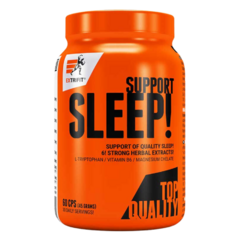
Extrifit Sleep!
How much longer will it take?
Fatigue during the day is obviously bad and spoils a full work and social life. If it affects you regularly and you can't get rid of it, a visit to the doctor is necessary. But for most people, all you have to do is watch your diet, play enough sport, not be so stressed and emphasise your sleep routine and things will improve. How long? Ideally, you should see changes after just a few days. If not, it's likely that something else is behind your sleep and if you don't know what to do yourself, again, an appointment with a specialist is in order.
What to take away from today's article?
The main thing you should take away from today's article is that your daytime fatigue is probably caused by one of 5 main factors, or various combinations of them
- A diet that is high in sugars and low in vitamins and minerals.
- Excessive stress that worsens mood, reduces productivity and impairs sleep quality.
- Poor sleep, which can be caused by blue light, irregular sleep routines and inappropriate conditions.
- Little sport to tire you out and then improve falling asleep.
- Chronic illnesses like diabetes or hypothyroidism, which , although less common, can seriously impair your efficiency.
Fortunately, the solution in most cases isn't that complicated and if you address the cause of your fatigue, you'll see for yourself that the problem will improve within a few days.
No posts have been made yet.