





How to choose the right resistance rubber?
 Author:
 It may not be easy for everyone to find their way around the wide range of resistance rubbers, so here is a guide to materials, dimensions and resistance levels. We'll also discuss why more expensive rubber doesn't necessarily mean better quality and show you some sample workouts.
Article content:
- Is a higher price a guarantee of quality? Absolutely NOT.
- More resistance is not always better
- Types of resistance rubbers and their uses
- How to choose the right resistance and size of rubber for weight training?
- Practical examples
- 4 reasons why it makes sense to get a resistance rubber
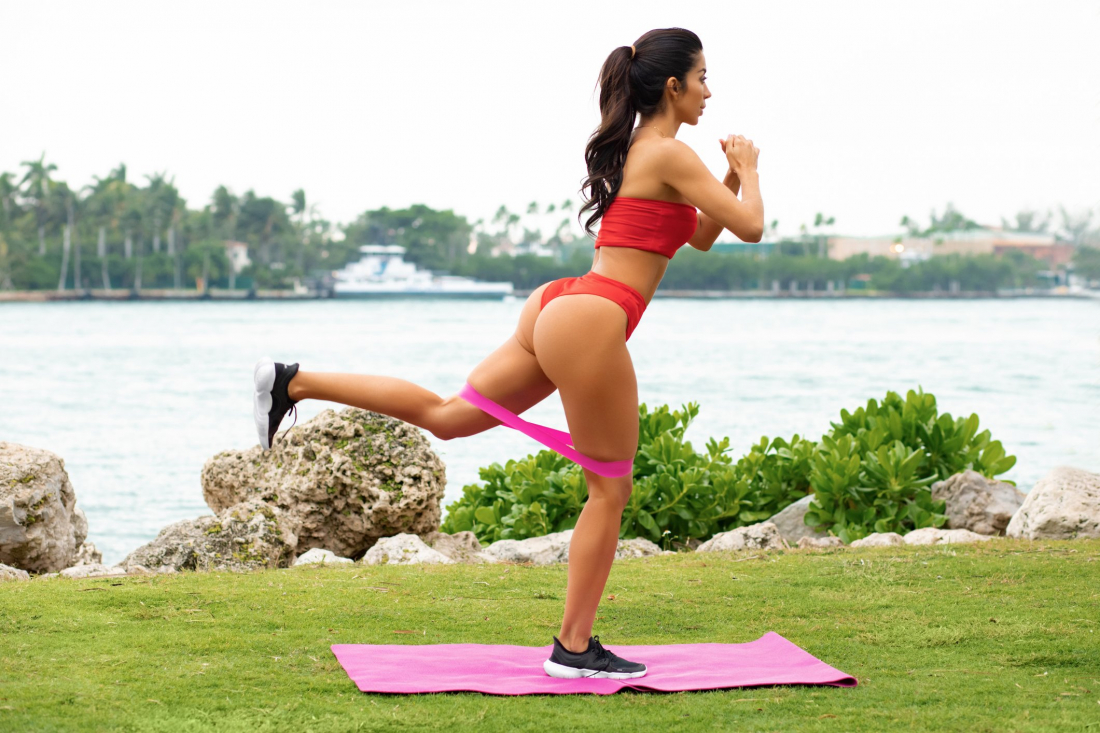
Is a higher price a guarantee of quality? Absolutely NOT.
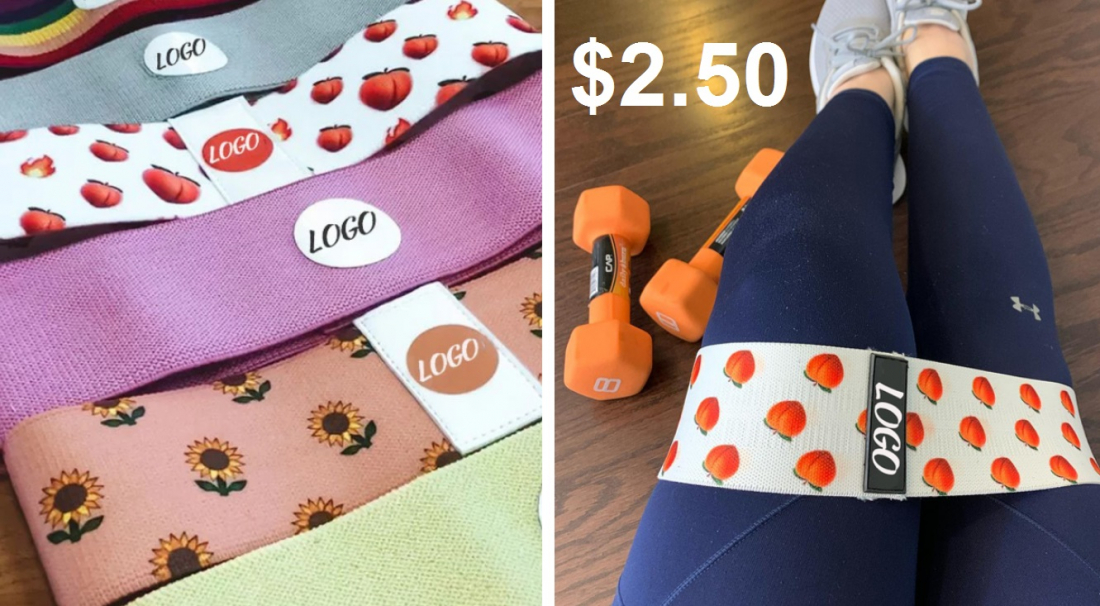
Resistance bands have been on a tear lately, with more than one fitness influencer offering their own booty band with their logo. Textile resistance bands are the most popular, and women like to use them to exercise their buttocks. If you've ever searched for them online, you may have noticed how wide the price range is for this type of product, with prices ranging from 100 CZK to 800 CZK per piece. Do you think that if you pay more, you will get your hands on a better quality product? Probably not, most textile resistive rubbers are made in a similar way and from similar materials.
The production price of textile resistance rubber is very low, many influencers and sellers of these rubbers buy them for tens of crowns in China and have their logo printed on them. From my own experience I can say that I have one resistance rubber ordered directly from China, while my friend has a rubber many times more expensive, ordered from an unnamed fitness couple in the Czech Republic, when we compared, we found that it is a completely identical product, differing only in the logo.
If you want to financially support a particular person or company, buy the more expensive rubber, why not, anyway, the same function will be fulfilled by the cheaper product and with the money saved you can buy a supplement or other exercise equipment.
More resistance is not always better
Most of us probably think that the more resistance we choose, the better results we will get and the more we will work out with it. Not really. If we buy a rubber with a lot of resistance and it's very stiff, it may not be suitable for all exercises, as we won't be able to do them technically correctly and to the required extent. For example, if we squat with a rubber that is too short and stiff, we will have trouble maintaining proper knee position.
Types of resistance bands and their uses
1) Latex resistance bands
They are, as the name suggests, made from natural latex, which is extracted from the rubber tree.
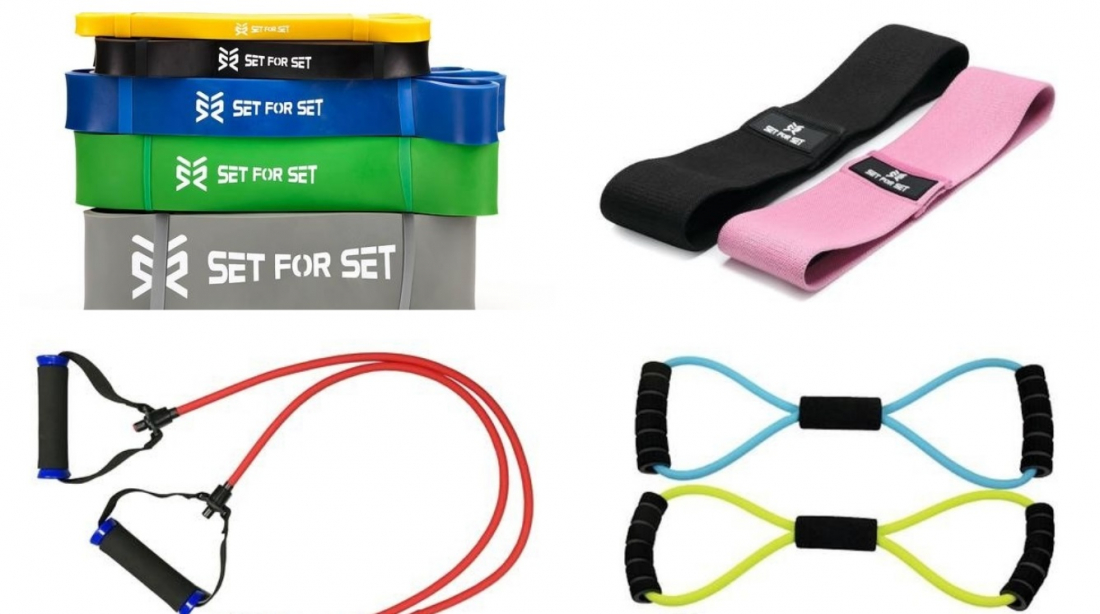
- Long loop rubbers - they are suitable for full body exercises (squats, push-ups, extensions, pull-ups,...). They are ideal for exercises when we need to dig into the rubber (during push-ups, when we can't do them with our own weight and need help) or when we want to press the rubber (during squats).
- Shorter, wider, flat rubber bands connected in a circle - suitable for squats, lunges, hip thrusts, etc.
- Therapeutic rubbers - very flexible and thin, usually a strip of rubber that is not connected in a circle, used for stretching, to improve flexibility, for rehabilitation after injuries.
2) Textile resistance rubbers
A combination of polyester and latex is most commonly used to make them, they are popular mainly for lower body workouts, they are good for squats, lunges, hip thrusts etc, their advantage is that they don't tend to roll when exercising as latex elastics can.
3) Resistance rubbers with handles
Anchored to a door or post, these are ideal for exercising biceps and triceps, shoulders and back, the handle makes them easy to hold and they don't dig into your hands.
4) Rubber expanders
An expander consists of two handles with rubber bands stretched between them, they tend to be shorter than traditional resistance bands and are used to strengthen the muscles of the arms, chest and back.
How to choose the right resistance and size of rubber for strengthening?
Above we have discussed the different types of resistance bands and what they can be used for, now let's take a closer look at how to correctly determine the size and resistance of a weight training band. Of course, whether you are an advanced exerciser or a beginner plays a role. We can tell that we have chosen the right rubber by being able to do the full range of the exercise with it and feeling the exercised muscle after 10-12 repetitions, if we feel nothing, we probably need to reach for a higher resistance or choose an extra load (e.g. dumbbells).
Recommended
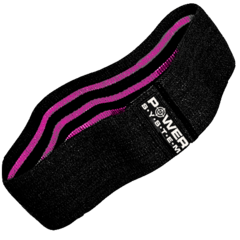
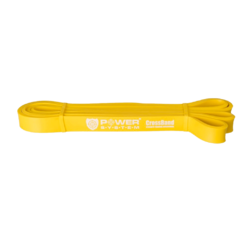
Power System Booty Band
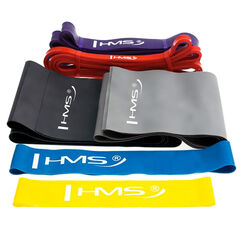
HMS Set fitness gum GU04 a GU05
Examples from practice
Choosing the right eraser is a bit of a science, but these examples can give you a better idea:
1) a 55 kg woman is looking for a textile resistance rubber to exercise her lower body
For exercises such as kneeling stumbling, unbracing, squats (with or without weight)
- beginner - length of the rubber approx. 41 cm, resistance 6-11 kg
- advanced - length of rubber approx. 37 cm, resistance 13-18 kg
Hip thrust (with or without weight)
- beginner - length of the rubber approx. 36 cm, resistance 13-18 kg
- advanced - rubber length approx. 32 cm, resistance 18-23 kg
2) man 90 kg looking for latex resistance rubber to help with push-ups, he is a beginner, he can hardly do one push-up on his own without help
- a long loop rubber might suit him, length approx. 100 cm, resistance 26-36 kg
3) man 85 kg, intermediate exerciser, looking for a latex rubber to use as additional resistance during push-ups and squats (with or without weight)
- a long looped rubber, length approx. 100 cm, resistance 18-27 kg would suit him
4) female 60 kg, intermediate, looking for a resistance rubber with a handle to exercise her back and shoulders
- a resistance rubber with a length of 120 cm and a resistance of 13-18 kg might suit her
Ed. note: sometimes the length of the resistance bands is not indicated, but the circumference, so pay due attention to reading the product description to avoid buying a band that is too short/long. The lengths in the examples above are always in the unstretched state.
4 reasons why it makes sense to buy a resistance rubber
1) Extra load
Using resistance rubber will increase the difficulty of the exercises you perform. We can get it when we are not satisfied with the exercises with our own weight or when we want to take the training with weights to a higher level - for example, a hip thrust or squat with a large barbell and a resistance rubber will give us even more work, the resistance can be used very well when trying to improve in weightlifting, when we attach the rubber to the axis during bench press.
2) Compact and affordable exercise equipment
Resistance bands are considerably cheaper than dumbbells. They are also compact and lightweight and we can take them anywhere with us.
3) Improved mobility
With their help, we can improve our mobility, flexibility and joint mobility. They can be used to stretch, warm up and activate a specific muscle group.
4) Assist in exercises
They are a great aid for those who have not yet mastered unassisted push-ups and other pull-up or push-up exercises.
Image and information sources: bodybuilding.com, verywellfit.com, setforset.com, mirafit.co.uk, alibaba.com, bootymaxx.com
No posts have been made yet.








