





Stop believing everything they say! The 3 biggest myths of healthy eating!
 Author:
 In the world of fitness and healthy eating, we are confronted with different opinions on different topics every day and it is becoming increasingly difficult to navigate the chaos. In this regard, I find several problems that need to be taken into account if we are trying to better navigate and seek out the truthful information:
Problem 1: Study nazis
The first problem is that studies are often misinterpreted (misinterpreted), and other times they have no application in the real world and with ordinary clients. People who keep referring only to studies fail to realize that what is on paper may not be valid in real life for many different reasons.
These people then tend to dismiss anything that isn't proven in studies and need paper documents for everything that works, otherwise they'll send you to hell with everything that still needs scientific backing.
Studies are a great thing, no doubt. But what we often miss is that the translation to everyday life needs to take into account a lot of other variables in order to accept studies as universally valid.

Problem 2: Bro scientists
The second extremist group is people who base their opinions solely on experience. They say that studies are useless and that everything has to be figured out by trial and error.
If something works for them, they don't know why, but it must work if they do it and have success with it. Further, they build a business on claims that defy everything that has been proven so far. An example is the claim that the caloric theory doesn't work...
Is this the right position? In my opinion, definitely not.
Problem 3: Everyone has the right to express themselves today - thanks to the Internet
Don't get me wrong, freedom of speech is a great thing, but not when it comes to healthy eating. The internet is the thing that has made all information more accessible and quickly searchable. Again, a great thing! But not in the case of healthy eating.
People who just sit behind a computer and eat biscuits are telling others how they should eat and people listen to them. People who have never produced real results are misleading with false advertising and false stories.

Ergo: don't become a slave to scientific papers. Put into practice what has been scientifically proven and see if it really works. If not, find out why it does. Do you have results that don't quite match scientific knowledge? Find out why that is. Want to follow the advice of internet "experts"? Find out what results they have a track record of helping clients and don't give money to sources that are not trustworthy.
In today's article, we'll look at 3 recurring myths we still tend to believe:
Myth #1: The ketogenic diet is the only way to lose fat!
Just typing this makes my muscles tone and adrenaline rise. I simply hate this statement and have developed a strong allergy to it over the past few years. In fact, the ketogenic diet is credited with fat-burning benefits that can be associated with any isocaloric diet (caloric deficit).
In recent years, a large number of proponents of low-carbohydrate and ketogenic diets have emerged. These people often argue that if we do not consume carbohydrates, or only very low amounts, there is less insulin secretion and therefore less storage of carbohydrates in fat stores.
Well, this is not true!
If one goes into ketosis, there is more fat oxidation, which is true. It's just... More fat oxidation does not automatically equal more fat loss! Fat loss only occurs during a caloric deficit, period, end of story.
So, if you consume excessive calories from fat, you will automatically increase body fat, just as you would if you consumed excessive calories from carbohydrates.
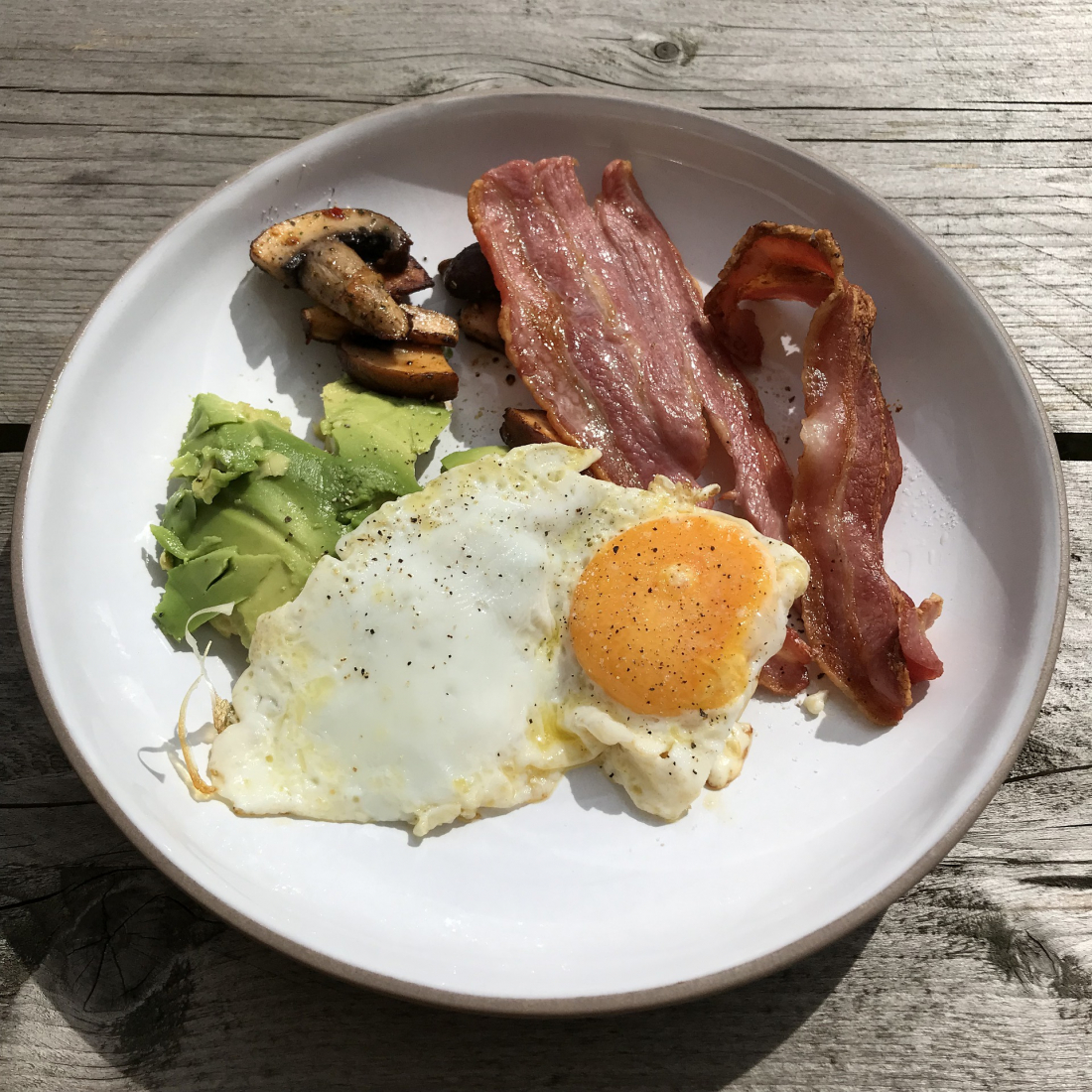
Ergo: the ketogenic diet is not the only way to lose fat, as even one of the diet's biggest popularizers, Dr. Dom D'Agostino, admits! However, if the ketogenic diet suits you, you feel good on it, you can maintain a calorie deficit and have good results on it, go for it! I also think the ketogenic diet has great uses for a number of health issues.
Do I prescribe the ketogenic diet to my clients? Yes, but only in exceptional cases.
Myth #2: I can't eat carbs because they make you fat!
People often associate me with being an advocate of a low-carbohydrate diet. This is true, but only to a certain extent.
The low-carb diet has its wide-ranging applications and has the advantage over the ketogenic diet of being far more sustainable in the long run. Who wants to go strictly keto and avoid all carbs for the rest of their lives (or even just a few weeks or months)? Some people can do it, but at what cost... The choice is of course up to each of us, we all prefer what suits us personally better.
As for carbs, they really do have an isulinogenic effect, so they instruct the pancreas to start secreting insulin. However, this does not automatically mean that they are a necessary evil!
Recommended
Reflex Sleep Prep
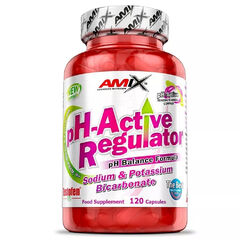
Amix PH Active Regulator
Moreover, there is no scientific evidence that obesity is caused primarily by carbohydrate consumption and the insulin response to carbohydrate consumption.
I MUST MENTION HERE THAT GENETICS PLAYS AN EXTREME ROLE IN CARBOHYDRATE TOLERANCE AND HORMONAL RESPONSE!!!
I have met people who can eat carbs from morning till night and they will function great both hormonally and cognitively. Conversely, those who can only look at a picture of a cake once every six months at most, otherwise their blood test results get worse, they feel under the weather and have a harder time losing fat. For such people, a low-calorie, cyclical ketogenic, or ketogenic diet is a more appropriate type of eating .
An indicator of genetic carbohydrate tolerance is the FAT LINE UNDER THE FAT (Poliquin, Bioprint, 2012) as well as blood results of HbA1C (glycated hemoglobin), which shows how our red blood cells are being destroyed by glucose over the past few weeks (8-12).
Another great indicator is copies of the AMY1 gene in the mouth. However, genetic testing is needed for this.
Standards:
1. Fatty skin fold under the scapula (measured by callipers in Bioprint software):
- under 10mm = excellent genetic carbohydrate tolerance (recommendation: high-carb diet)
- 10-15mm = average genetic carbohydrate tolerance (recommendation: low to moderate carb diet)
- 15+mm = poor genetic carbohydrate tolerance (recommendation: low carb, cyclic ketogenic, ketogenic diet)
2. HbA1C (glycated haemoglobin, measured from blood, fasting, 12 hours since last meal):
- healthy value = up to 5.6% (in my opinion it should be below 4%!!!)
- increased risk of diabetes = 5.7-6.4%
- diabetes 6.5% or more
3. AMY1 gene set:
- more than 10 copies = excellent genetic carbohydrate tolerance
- 4 copies or less = poor genetic carbohydrate tolerance
Ergo: Get lab tested and find out what your genetic tolerance is!!! Again, if you are comfortable with a low carb diet, stick to it, if you feel comfortable with increased caloric intake from carbs, no problem. But again, if you want to lose fat, you need to get into a calorie deficit!
Myth #3: Salt is bad for your health!!!
Remember when everyone told you as a kid that you shouldn'tsalt, that it's bad for our health? I think all of us remember it quite vividly.
Do you still hear it today? No wonder, because this myth still persists and people believe everything that is written in popular magazines and articles on the Internet. So let's look at it from a broader perspective and also with the help of scientific studies to satisfy the group called "Study Nazis".
And since there is a grain of truth to every myth, let's just say that too much salt may not be good for everyone, specially for people who react to increased salt intake by raising their blood pressure. On the other hand, a meta-analysis that looked at more than 6,200 patients found no link between salt intake, high blood pressure and increased risk of heart disease.
Salt is a source of sodium, an essential mineral whose consumption is a very important part of overall health.

Some symptoms of insufficient salt/sodium intake:
- deterioration of electrolyte balance
- less water retention
- muscle cramps
- general body weakness
- headaches
- irritation
HOWEVER, IT IS IMPORTANT TO MONITOR THE RATIO OF SODIUM AND POTASSIUM INTAKE!
The two minerals work in harmony with each other, so they should always be looked at together.
Our Paleolithic ancestors, according to scientists, maintained a potassium intake of around 11,000mg per day through the consumption of fruits, vegetables, plants and roots, while sodium was around 700mg, a ratio of 1:16 in terms of sodium.
Due to industrialization, processed foods and lower soil quality, we have now arrived at a ratio of 1.36:1 in favour of sodium (3400mg sodium and 2500mg potassium).
This implies that we should adequately include potassium sources in addition to salt intake, which include:
- bananas
- black beans
- oranges
- avocados
- raisins
Ergo: it's all about balance. If someone is sensitive to salt and reacts with elevated blood pressure, they should keep their salt intake down, but not at zero! Worry about a balanced ratio of sodium and potassium.
!! Always consult your doctor about salt intake !!!
Sources:
Hall KD, Guyenet SJ, Leibel RL. The Carbohydrate-Insulin Model of Obesity Is Difficult to Reconcile With Current Evidence. JAMA Intern Med. (2018)
Hall KD. A review of the carbohydrate-insulin model of obesity. Eur J Clin Nutr. (2017)
Low Copy Number of the Salivary Amylase Gene (AMY1) Is Associated with Obesity, Dyslipidemia, and Chronic Low-Grade Inflammation but Not Insulin Sensitivity and Secretion, BARBORA DE COURTEN, AYA MOUSA and NEGAR NADERPOOR
Stamler J, et al. Relation of Dietary Sodium (Salt) to Blood Pressure and Its Possible Modulation by Other Dietary Factors: The INTERMAP Study. Hypertension. (2018)
Reduced dietary salt for the prevention of cardiovascular disease: a meta-analysis of randomized controlled trials (Cochrane review).
No posts have been made yet.








