





Folic acid plays an important role in optimizing our overall health!
 Author:
 Vitamin B9, better known as folic acid, is one of the essential micronutrients that should not be missing from our diet. But is it worth supplementing with supplements? And what is the importance of folic acid in pregnancy? We will look at more than that in this article.
Article content:
- What is folic acid and where can we find it?
- What is folic acid important for?
- Is its supplementation needed? And how to choose it?
What is folic acid and where can we find it?
Folic acid, also referred to as vitamin B9, is a very important part of our daily lives because it is essential for the synthesis of nucleic acids (and therefore DNA), plays an indispensable role in the process of blood formation and is also particularly important for the proper development of the fetus. It also helps red blood cells to mature, influences proper cell development and is behind the formation of some proteins.
You can supplement folic acid from a variety of natural sources such as fruits, vegetables, whole grains, sprouts, nuts and even some meats. As the name suggests, leafy vegetables such as lettuce, cabbage and spinach are among the highest in folic acid. Asparagus, oatmeal and pomegranates, for example, also contain some folic acid.
It is worth noting, however, that folic acid in the form of a good quality supplement has a higher bioavailability than folate in food, as mentioned not only in scientific articles but also in studies.

Folic acid can also be found in avocados, asparagus, nuts, oatmeal and other sources.
Foods rich in folic acid
Folic acid occurs naturally in many foods. Here's an overview of some of the richest sources:
| Food | Folic acid content (µg/100 g) |
| Spinach |
194 |
| Asparagus | 149 |
| Brussels sprouts | 110 |
| Broccoli | 63 |
What is folic acid important for?
Although we have already introduced some of the important functions of vitamin B9 in the previous paragraph, this substance is also important for our health because of a number of other properties that are not talked about as much. These include:
Supporting mental health
Low blood folate levels are associated with impaired mental functioning and an increased risk of dementia and Alzheimer's disease, as studies have shown. In addition, there is research showing that taking folate or folic acid can alleviate symptoms of mental illnesses such as postnatal depression, schizophrenia or bipolar disorder.
Breaking down homocysteine
Folate helps reduce homocysteine levels, excess levels of which some sources suggest are associated with a higher risk of heart disease. Thus, folate may reduce the risk of cardiovascular disease, according to some studies - for example, a reported meta-analysis monitoring up to 80,000 participants showed that individuals supplementing with folic acid had up to a 10% lower risk of stroke and a 4% lower overall risk of cardiovascular disease.
Support for certain diseases
In addition, vitamin B9 may also be associated with positive benefits in certain chronic diseases. For example, some research talks about the fact that folate can improve blood sugar regulation and therefore may have its uses for people with diabetes, for example. Other literature has linked it to lower levels of inflammatory markers such as C-reactive protein and, given its ability to reduce high homocysteine levels, it has also been mentioned as having potential use in chronic kidney problems, which are often characterised by high homocysteine levels. For these problems, however, it is also advisable to consult with the treating physician before starting supplementation.

Folic acid is often recommended in pregnancy, but it is a good idea to consult a doctor for dosage.
It is also worth pointing out that, in addition, folate deficiency is often associated with headaches, frequent physical fatigue, irritability, lack of appetite and, for example, greater susceptibility to colds.

Why is it important in pregnancy?
As folate is important for proper cell development and tissue growth, it is also essential for the proper development of the baby and sufficient intake is important for the prevention of many defects and diseases. Therefore, independent American organisations made up of experts on the subject recommend that women planning a pregnancy should supplement with 400 to 800 μg of vitamin B9 per day before becoming pregnant and during the first two to three months of pregnancy. Reasonably adjusted intake of this vitamin can be a good prevention against autism spectrum disorders and can lead to better mental function in the child.
Are there any negatives?
On the other hand, it is important to note that according to studies conducted, children of mothers supplementing more than 1000 μg of vitamin B9 per day had worse mental performance than children of mothers taking 400 to 1000 μg of this substance. In the case of adults, taking excessive amounts may lead to an increased risk of prostate cancer according to some research, but further studies are needed in this regard.
Recommended daily dose of folic acid
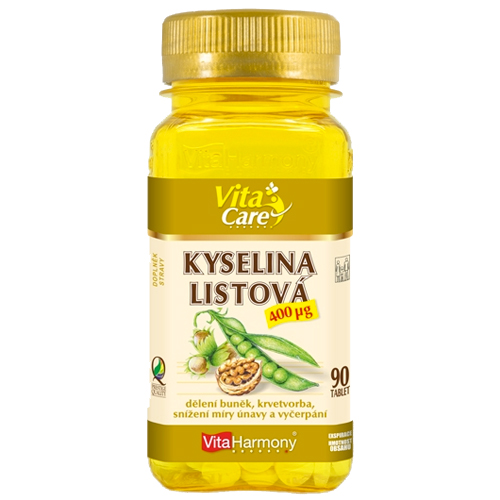
The recommended daily allowance (RDA) of folic acid varies according to age, sex and physiological state. For adult males and females, a daily intake of approximately 400 µg is generally recommended. Pregnant women should increase their intake to 600 µg per day to support healthy fetal development. Breastfeeding women should take approximately 500 µg per day.
Adequate intake is essential because folic acid deficiency can lead to serious health problems such as anaemia or complications in pregnancy. On the other hand, too high an intake can have side effects, including masking a vitamin B12 deficiency. Folic acid effects include promoting DNA synthesis, red blood cell formation, and brain health.
Is its supplementation needed? And how to choose it?
Vitamin B9 has a place in supplementation, either on its own or as part of a B-complex vitamin, according to the scientific research to date. However, supplementation is not nearly as simple as it might seem.
According to expert articles, a significant percentage (other sites even report more than 30%) of people have a genetic mutation that prevents the body from making active and bioavailable L-5-methylfolate from folate, and so they are deficient in this nutrient even when their intake is sufficient. For these people, then, according to the above source, it is better to supplement directly with supplements containing methylfolate - but while the scientific studies conducted acknowledge this possibility, they point out that there is not yet enough data to confirm the greater effectiveness of 5-MTHF in women with a mutation in the MTHFR enzyme (a reductase that is necessary for the proper utilization of folate).
However, pregnant women would be advised to consult their physician regarding possible supplementation and follow their advice. For normal athletes with a varied and balanced diet, folic acid supplementation either through a B-complex or in the form of isolated supplements may be sufficient. If you don't mind paying extra, you can try the aforementioned methylfolate, which can be found, for example, in Puhdistamo's Vitamin B12 Folate supplement.
What to take away from the article?
The main thing you should take away from this article is that folic acid is a very important nutrient for our health, which performs many different roles in the body. Although its sources include fruits, leafy vegetables, various sprouts and some meats, a relatively large proportion of the population may struggle to get enough of this nutrient from their diet, so it may not be a bad idea to think about supplementation. In the case of pregnant women, we recommend consulting a doctor, who will certainly be able to guide you better than internet articles, which often differ quite a lot in their recommendations. However, for athletes who want to supplement this vitamin responsibly, we recommend the aforementioned Puhdistamo Vitamin B12 Folate.
Recommended
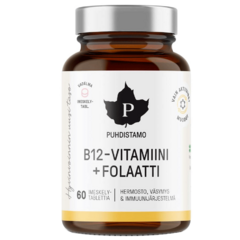
Puhdistamo Vitamin B12 Folate
Source of the introductory image: Puravia.cz
No posts have been made yet.








