





Is sport in pregnancy beneficial or should it be completely taboo?
 Author:
 Exercise in pregnancy is quite a hot topic. For every woman, pregnancy is one of the most beautiful periods of life, but it is also very demanding. For some women, it can be hard to cope with the changes to their bodies and they dread the idea of giving up activities that fulfill them. Should women continue to exercise, whether strength or aerobic, or would they prefer to skip the activity altogether? What sporting activity should they choose? We will look at all this.
Content of the article:
- Why engage in physical activity during pregnancy?
- In the past, sport in pregnancy was a complete taboo, can we now say yes to sport during this period?
- What changes can occur in pregnancy and affect your fitness?
- Is there an optimal time that a pregnant woman should engage in exercise?
- Who should definitely not exercise?
- What activities are safe during pregnancy?
- What types of exercise to avoid during pregnancy?
- When should activity be discontinued?
- What about supplements during pregnancy?
- When can I start exercising after giving birth?
- What can I take away from the article?
Why engage in physical activity during pregnancy?
If a woman was active before becoming pregnant, there is no reason not to continue doing so during pregnancy. Continuing to exercise can greatly help you combat several negative symptoms that can occur due to changes (both physical and hormonal) in the body. There are several scientific studies that have concluded that being active during pregnancy can prevent what is known as gestational diabetes, which is more commonly known as gestational diabetes.
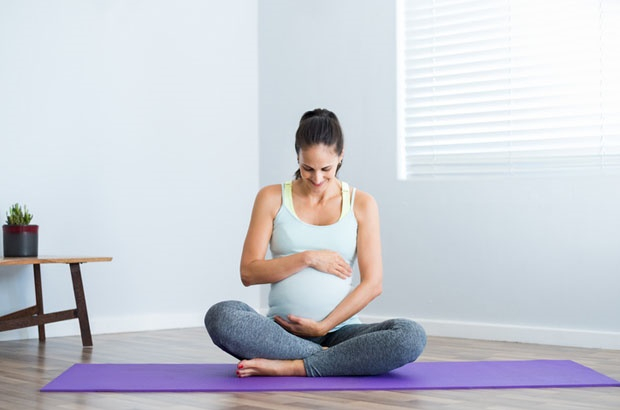
In addition, physical activity can be beneficial in improving your posture, which can relieve back pain, and also prevent lumbar lordosis, which occurs due to a change in the body's center of gravity and is quite common during pregnancy. Last but not least, exercise is also a perfect way to relax, relieve stress and help you build the strength that will be needed later on during childbirth. It is also interesting to note that, according to modern research, women who are active during pregnancy are less likely to need a caesarean birth.
What else we must not forget to mention is the fact that physical activity is good for weight management. It is certainly not news that during pregnancy, due to hormonal changes, women's cravings change and they often eat more. Even though the number of kilograms gained during pregnancy is one of the last things you should be concerned about, sensible physical activity can help you reduce your overall weight gain, which you will certainly appreciate after giving birth.
Previously sport in pregnancy was a complete taboo, can we now say yes to sport during this period?
As already mentioned, if a woman was already active before giving birth, there is little reason to stop being active during pregnancy. Of course, everything in moderation and you also need to listen to your body, reduce the intensity and choose the right type of exercise that suits you. Appropriate physical activity in pregnancy can even be very beneficial (see first paragraphs) and for healthy women should be an undoubted part of pregnancy.
If a woman has not exercised before pregnancy, it is probably not a good idea to start during pregnancy, especially with a demanding activity such as strength training, as you cannot predict how your body will react. On the other hand, you can start with a less demanding activity, but it is very advisable to consult a professional to teach you how to perform the movements correctly so that you don't get injured or the movement doesn't harm the fetus. Also, definitely consult a doctor when exercising in pregnancy and if there are any threats, it is better to skip it and take up activities like walking and other not too strenuous activities.
What changes can occur in pregnancy and affect your fitness?
The physical and hormonal changes during pregnancy place additional demands on the body. And there are plenty of them happening. It is very important to listen to your body (and your doctor) and adjust your exercise regime, activities and intensity based on your needs. The baby developing inside you and the other hormonal changes that take place as a result increase the demands on your energy and oxygen supply . There are also changes related to circulation and blood volume. The hormones produced during pregnancy cause the ligaments that support your joints to stretch, increasing the risk of injury. The added weight and uneven distribution of your weight shifts your center of gravity. The extra weight also puts stress on the joints and muscles in your lower back and pelvic area, making it easier for you to lose your balance. Which can ultimately result in lumbar lordosis, as we mentioned in the introduction.
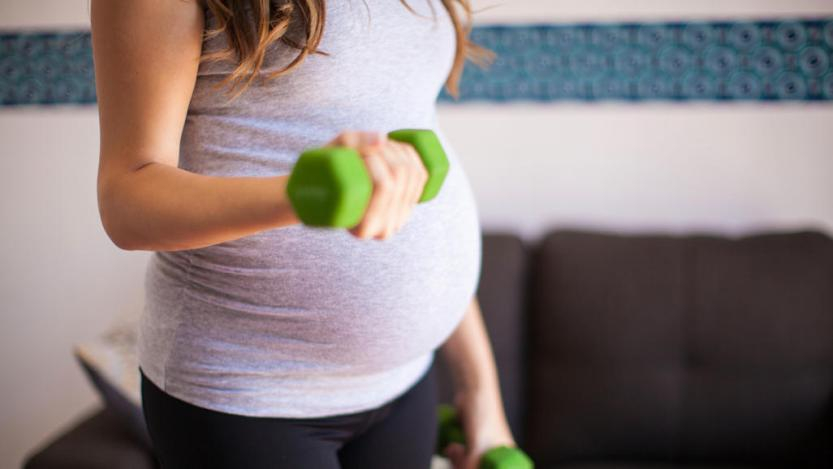
Is there an optimal amount of time that a pregnant woman should engage in exercise?
According to The American College of Obstetrics and Gynecology, the recommended amount of time a woman should engage in physical activity during pregnancy should be around 30 minutes each day. The ideal is to combine strength training (tailored to your condition and fitness level, of course!) and aerobic activities, including light walking. But it should be noted that we don't have many other relevant sources to back up this claim, so the optimal time can be considered a very subjective factor.
Who definitely shouldn't exercise?
If you have a medical condition such as asthma, diebetes, or some kind of heart condition, exercise may not be suitable for you. Other factors that are not favourable are - bleeding or spotting, risk of miscarriage or recurrent miscarriage, weak cervix, or risk of premature birth. In such situations, it is really better to stop the activity and take care of the health of the baby and yourself first. Always consult a doctor before starting an activity and monitor the condition of the fetus while it is being performed.
What activities are safe during pregnancy?
Although recommendations for physical activities are often very "cautious", we can say that safe activities do exist. As we have already mentioned, if the body is used to the activity, it should not cause too much trouble even if the woman is in a different condition. We can say that the vast majority of sporting activities are safe if they are done in moderation, with care and with an appropriateload , and especially if the woman has been doing them before becoming pregnant. So yes, even strength training can be safe. However, it is really very important to listen to your body and to stop the activity immediately in case of any negative reaction. It is true that the rules of strength training for pregnant women are nowhere precisely defined.
Recommended

Näno Supps Epic Juice
HMS Lavice pod velkou činku LS 3050
Czech Virus Nitro Virus V2.0
GymSupps Balíček pro krásu
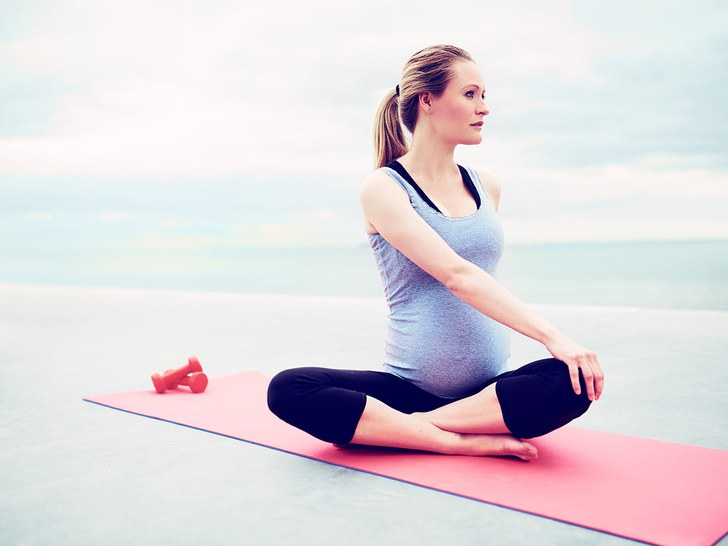
The safest activities are considered to be swimming, walking, cycling (ideally on a stationary bike), elliptical machines or steppers. These activities carry a really low risk of injury and negativity for the fetus, benefit your health and body composition, and you can continue them practically until you give birth. However, it is really important to moderate the intensity. Adjusting the intensity of the activities should happen regularly according to the period of pregnancy and also the physical condition of the mother. Yoga or pillates is also another suitable exercise.
What types of exercise to avoid in pregnancy?
We have already said something about appropriate activities, but of course there is the flip side and therefore activities that you should completely skip during pregnancy. These include activities where you need to hold your breath such as diving, as well as sports where there is a risk of falling - skiing, horse riding. Contact sports such as basketball, hockey, volleyball, football and others are also not suitable . Activities where sudden and rapid changes of movement, jumping and skipping are inappropriate. Also, beware of exercising in hot and humid environments. Never exercise to exhaustion!
When should I stop the activity?
You can stay active until the last minute if your condition allows it. However, if you experience any of the following factors, it is advisable to seek medical advice, consult a doctor and stop the activity.
Negative symptoms may include:
- Headache
- Excessive heartbeat
- Abdominal pain, pelvic pain, or weak contractions
- Chest pain
- Dizziness, nausea
- Joint swelling
- Muscle weakness
What about supplements during pregnancy?
We have already addressed this topic in this article. So, in short - most quality products, such as protein or vitamins, are perfectly safe and you can continue taking them even during pregnancy. Beware of stimulants, fat burners and other substances that could harm you.
When can I start exercising after giving birth?
You will need to ask your doctor for the answer to this question. It's true that pregnancy and childbirth are a big strain on a woman and you need to give your body enough space to cope with it - physically and hormonally. Although you will certainly want to get back to your original shape as quickly as possible, definitely don't rush things and follow your doctor's instructions.
Most women, however, can safely exercise with little intensity one to two weeks after vaginal birth (or three to four weeks after a cesarean birth). But start really slowly and don't try to overdo it!
What to take away from the article?
Nowadays, there is practically nothing unusual about exercising in pregnancy anymore. As research suggests, maintaining an active lifestyle is, in most cases, strongly to the benefit of both the woman, the course of the pregnancy and the health of the baby. Make sure that your activity is done at a reasonable level and intensity, and regularly consult your doctor about the fetal condition. If a woman is engaged in the activities she was engaged in before becoming pregnant, there is virtually no problem in continuing them. However, beware of contact sports and other activities that could put your pregnancy at risk. Physical activity is undoubtedly part of a healthy lifestyle, and pregnancy is not an obstacle that should mean ending an active lifestyle. You just need to approach exercise sensibly.
What must also not be forgotten is a sufficient, balanced and wholesome diet and drinking regime. The body requires more energy because it provides the vital functions of two organisms. Make sure you get enough of all nutrients, including vitamins and minerals, and also increase your fluid intake during exercise.
Recommended
Czech Virus Testo Virus Part 1

Nutrend Magneslife instant drink powder

Czech Virus Sleep Ritual
Sources:
https://www.ncbi.nlm.nih.gov/pmc/articles/PMC4622376/
https://www.ncbi.nlm.nih.gov/pubmed/26036300
https://www.ncbi.nlm.nih.gov/pubmed/12054385
https://www.ncbi.nlm.nih.gov/pubmed/22325300
https://www.ncbi.nlm.nih.gov/pubmed/21247811
https://www.ncbi.nlm.nih.gov/pmc/articles/PMC5499505/
https://www.ncbi.nlm.nih.gov/pubmed/26595585
https://www.webmd.com/baby/guide/exercise-during-pregnancy#1
No posts have been made yet.








