




Jay Cutler: Is eight reps the minimum? A legendary bodybuilder revealed his rule!
 Author:
How many reps are ideal for building muscle mass? It’s a question that has been debated in the fitness community for several decades. Some swear by heavy sets of five reps, while others prefer lighter weights and a higher number of reps.
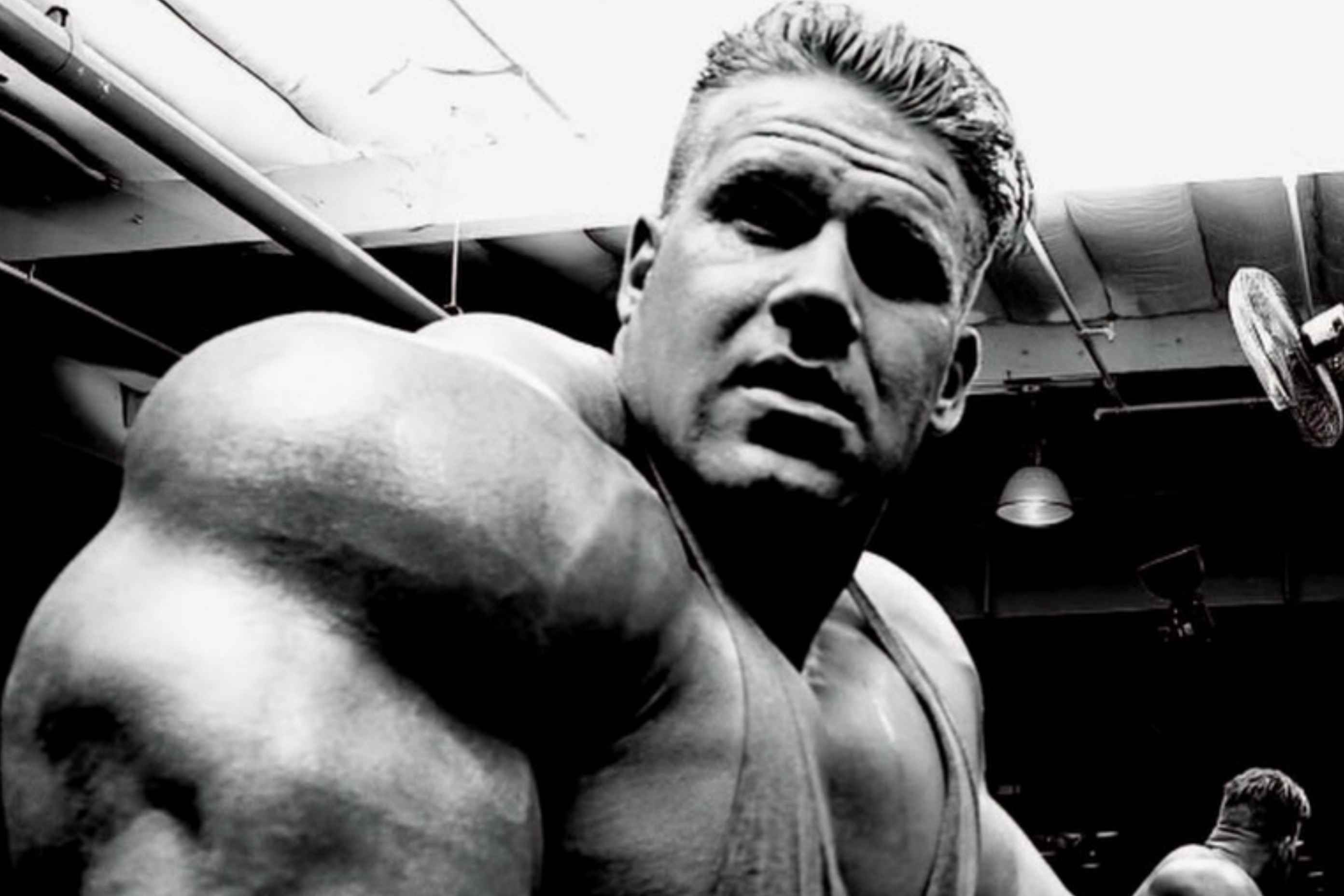
Four-time Mr. Olympia winner Jay Cutler, however, has a fairly clear opinion on the matter. In one of his recent videos, he explained that during his professional career, he considered eight reps to be the lower limit he didn’t want to go below during a typical bodybuilding workout.
Even more often, though, he used sets of ten to twelve repetitions. Based on his experience, this range suited him best.
Why did Cutler prefer 10 to 12 reps?
Throughout his career, Cutler became famous for his high training volume and extraordinary muscle proportions. In 2006, he dethroned eight-time Mr. Olympia champion Ronnie Coleman and ushered in his own successful era. His training philosophy was based on regularly loading the muscles with sufficiently heavy weights and a large number of working sets.
According to Cutler, eight repetitions was the minimum at which he began to feel significant muscle fatigue. However, he felt best doing ten to twelve repetitions. He also admitted that he occasionally used sets of fifteen or twenty repetitions.
So this wasn’t an absolute ban on other training ranges, but primarily a matter of his personal preference.
What Does Science Say? Eight Reps Are Not a Magic Number
Although Cutler’s recommendation is based on an exceptionally successful career, current studies show that muscle growth can be achieved across a relatively wide range of repetitions. For example, a meta-analysis published in 2017 found that training with both lighter and heavier weights can lead to similar gains in muscle mass, provided the load is sufficiently challenging.
Heavier weights, however, generally provide a greater advantage in developing maximum strength. This means that a high-quality set of five repetitions isn’t necessarily any worse for muscle growth than a set of twelve repetitions.
Likewise, higher rep counts aren’t necessarily ineffective.
More important than any single specific number is an appropriate load, sufficient intensity in each set, and long-term training progress.
Today, Cutler trains a little differently
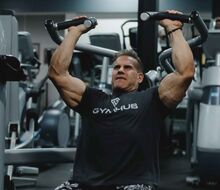
Interestingly, as he’s gotten older, he’s also adjusted his own approach. At 53, he says he no longer focuses primarily on maximizing muscle mass. Instead, he pays more attention to long-term health, mobility, and the ability to train regularly.
He admitted that these days he sometimes uses heavier weights with a lower training volume, provided his joints allow it. His advice thus serves as a reminder that training needs to be adapted not only to one’s goals but also to the body’s current capabilities.
The number of repetitions matters. But it’s not the only factor
Whether you train in the five-, ten-, or twenty-rep range, muscle growth requires long-term stress on the muscles and adequate recovery. Protein intake is also an important component, as it contributes to the growth and maintenance of muscle mass.
If you can’t comfortably meet your daily protein needs through your regular diet, GymSupps XWhey Protein is a practical option. For repeated short-term, high-intensity workouts, GymSupps Creatine Monohydrate can also be a suitable supplement.
Jay Cutler managed to build one of the most impressive physiques in bodybuilding history. His experience can serve as inspiration, but eight repetitions is not a universal threshold below which muscles stop growing.
Recommended
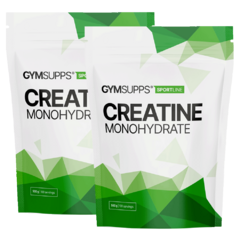
Creatine Monohydrate 500g 1+1
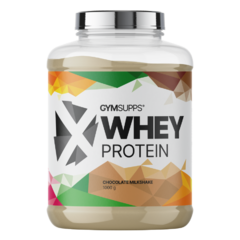
GymSupps XWhey Protein
No posts have been made yet.