




At 53, Jay Cutler Is Changing His Arm Workout! Less volume, heavier weights, and a focus on recovery
 Author:
Jay Cutler is one of the most successful bodybuilders in history. He has won Mr. Olympia four times and is renowned for his extraordinary muscle mass, broad shoulders, and one of the most impressive sets of quadriceps of his era. And although he ended his professional competitive career long ago, regular strength training remains an important part of his life.
In a new video released on October 27, 2026, he demonstrated his current approach to arm training. This time, however, he didn’t focus solely on the exercises themselves. He also explained why his training philosophy has gradually changed over the years.
Fewer sets, but heavier weights
Cutler was known for his high training volume during his professional career. A large number of working sets was a hallmark of his training. Today, however, he admits that he’s trying to find a different balance. In his own words, he’s gradually reducing his volume and, conversely, using slightly heavier weights for some exercises.
The main reason is recovery. Cutler doesn’t want strenuous training to exhaust him to the point where it becomes difficult to recover from it. At the same time, he emphasizes that when selecting weights, he pays close attention to how his joints respond to them. If a certain movement causes him unpleasant pain, he doesn’t want to perform it with heavy weights at any cost.
His current approach, therefore, isn’t based on constantly breaking personal records. It’s more important to maintain a regular training routine as a manageable, long-term part of his life.
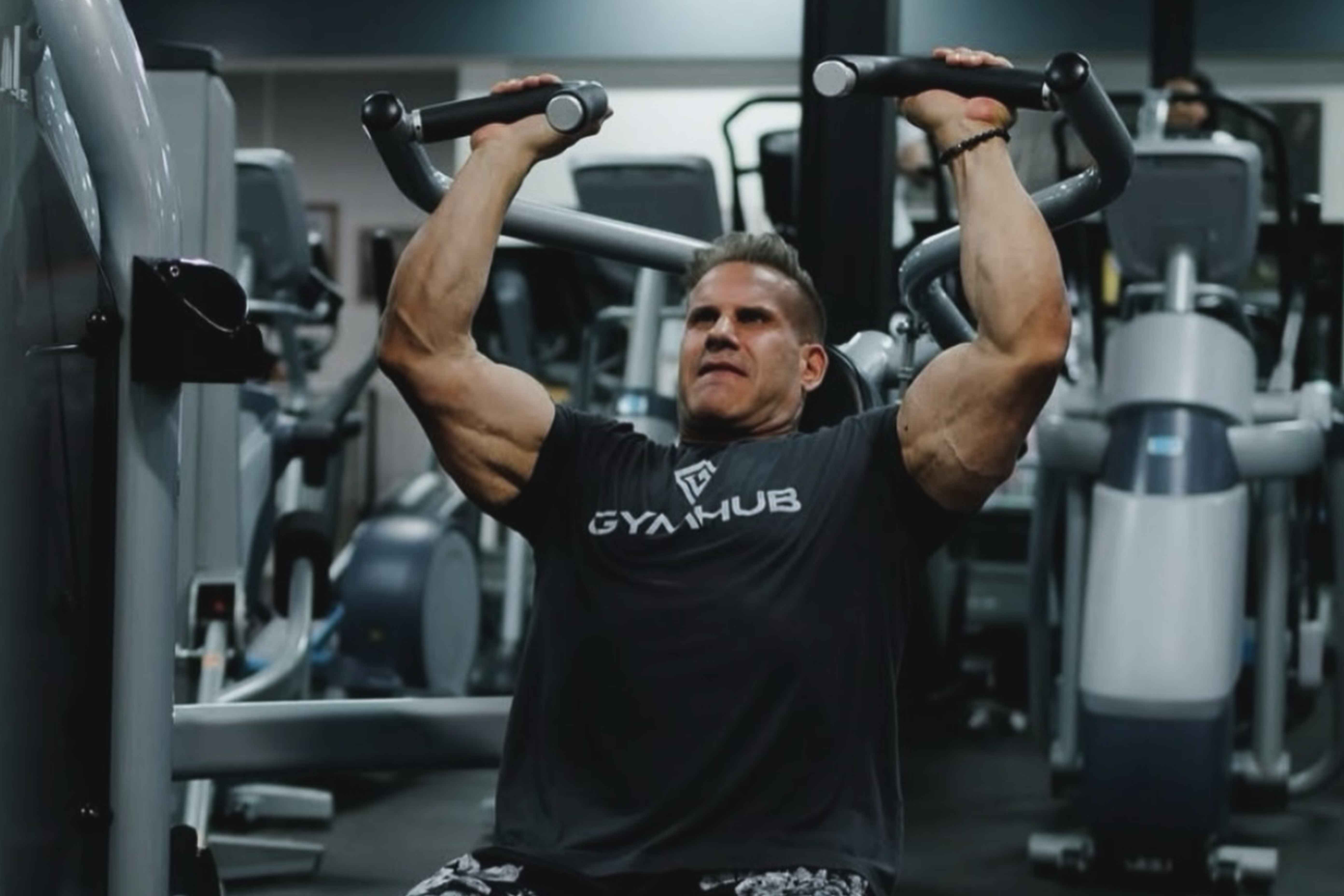
Why does he start with pre-exhaustion?
One method Cutler still uses is pre-exhaustion. The principle behind it is that the athlete first performs an isolation exercise and only then moves on to other movements. Cutler used this method, for example, when training his biceps.
First, he did bicep curls on the machine, and only then did he move on to barbell curls. In his experience, this order helps him focus better on the muscles being worked. However, it’s important to distinguish between the personal preferences of a famous bodybuilder and generally accepted rules.
Pre-exhaustion is neither the only nor the proven best way to build muscle mass. The choice of exercise order should primarily correspond to the training goal, the athlete’s experience, and their individual capabilities.
Eight Exercises for Biceps and Triceps
In his latest video, Cutler presented a workout consisting of eight exercises. He began the triceps portion with a cable pulldown and continued with several variations of extensions. He then moved on to the dip machine. During this exercise, he noted that he personally avoids fully locking out his elbows.
This was followed by a biceps workout, in which he combined machines, a barbell, and special dumbbells.
Triceps:
- Cable pulldown
- Seated overhead triceps extensions on the pulley machine
- Overhead triceps machine
- Dip machine
Biceps:
- Seated biceps curls on a machine
- Barbell biceps curls on an incline bench
- Alternating bicep curls with J-Bell dumbbells
- Bicep curls on a Scott bench with a machine
For the opening exercise targeting both triceps and biceps, Cutler performed two warm-up sets and three working sets. During the first part of the workout, he also worked within a range of approximately 10 to 12 repetitions. However, the published overview does not specify the exact number of sets for all other exercises.
He finished his workout on a stationary bike.
What can everyday athletes learn from his approach?
What makes Cutler’s training particularly interesting is how his goals have changed. While during his professional career he strove for maximum muscle mass and peak competitive form, today he places greater emphasis on maintaining physical fitness and long-term performance. That doesn’t mean, however, that he has stopped training with intensity.
He still uses challenging sets, isolation exercises, and various training techniques. The main difference is that he tries to better balance intensity with recovery. And it is precisely this approach that can also be inspiring for recreational athletes. You don’t have to copy a professional bodybuilder’s training volume to achieve results.
The key is to create a system that you can stick to over the long term.
A solid workout also requires quality nutrition
If you regularly train your biceps, triceps, or other muscle groups, don’t forget to ensure adequate protein intake. Protein contributes to the growth and maintenance of muscle mass, and getting enough of it is one of the cornerstones of sports nutrition.
A practical solution when you can’t prepare a regular meal is GymSupps XWhey Protein, which combines whey concentrate, isolate, and hydrolysate. You don’t have to drink the protein shake immediately after your last rep. For most athletes, total daily protein intake and a well-balanced diet are more important.
Just as Jay Cutler tailors his training to his current needs today, you should also choose your supplements based on your own goals and actual nutritional needs.
Performance isn’t just about the number of sets you do
Jay Cutler has spent decades building one of the most iconic physiques in professional bodybuilding. Today, however, he’s also showcasing another side of the sport: the ability to adjust one’s approach as age, priorities, and recovery needs change. His current arm workout remains challenging, but it’s no longer based on the idea that more sets automatically mean better results.
And that is perhaps the most interesting message of his latest video: an experienced athlete doesn’t always need to add more work. Sometimes, above all, they need to know how much is actually enough.
Recommended
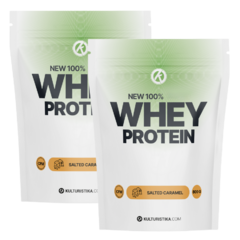
New 100% Whey Protein 800g 1+1
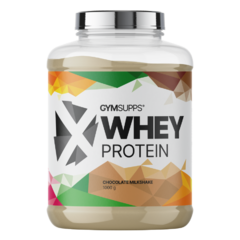
GymSupps XWhey Protein
No posts have been made yet.