




Workout Plan for Beginners (Week 1)
 Author:
It’s dark outside by four o’clock, there are just a few weeks left until Christmas, and most people tell themselves they’ll start exercising “in the New Year.” But why wait? If you start now, by January—when the gyms are packed—you’ll already have six weeks of training under your belt, along with proper technique and your first visible results. And the holidays won’t just mean extra pounds.
We’ve put together an eight-week plan for complete beginners just for you. Every Wednesday, a new episode will be released with specific workouts for the coming week and a single topic to help you understand why you’re doing what you’re doing. No two-hour workouts or complicated split routines—just three full-body workouts a week. They’ll even fit into the pre-Christmas rush.
And the first week? It’s intentionally easier than you’d expect. Most beginners go overboard at the start, can’t move the next day, and don’t make it to the third workout. We’re taking the opposite approach.
How the plan works
You’ll train your whole body 3 times a week, ideally on Monday, Wednesday, and Friday. Always take at least one day off between workouts—muscles don’t grow during exercise, but during rest afterward. Each workout will take you about 45 minutes, including a warm-up. You’ll alternate between two workouts, A and B. This week you’ll do A–B–A; next week, B–A–B. A new episode comes out every Wednesday, where you’ll learn what to add the following week.
The goal of the first week isn’t to push yourself to the limit. The goal is to learn the exercises, find the right weights, and leave the gym feeling like you could still do a few more reps. That’s why, for now, you’ll do just 2 sets, leaving 3–4 reps in reserve in each set.
Why a full-body workout?
When you’re just starting out, your body is mainly learning the movements. Your nervous system is figuring out how to engage your muscles properly, and every rep is essentially a coordination exercise. The more often you repeat a given movement, the faster you’ll master it. With full-body training, you work every muscle group three times a week, whereas with a classic split (“Monday chest, Tuesday back”), you only work each group once.
Furthermore, research shows that muscle growth isn’t determined by whether you do a full-body or split routine, but by how many high-quality sets you do per week for each muscle group. For a beginner, a full-body routine is simply the easiest way to achieve this without unnecessarily long workouts.
What You’ll Need
- A gym membership. The plan relies on dumbbells, a bench, pulleys, and a leg press, which you’ll find almost everywhere.
- Comfortable clothing and sturdy shoes. For squats and deadlifts, shoes with flat, stiffer soles are better than soft running shoes.
- A water bottle and a towel.
- A phone or notebook to track your weights. We’ll get to that later.
And most importantly, patience. You’ll improve quickly in the first few weeks, but you won’t see results in the mirror until later. Eight weeks is the ideal amount of time for exercise to become a habit.
Workout A (Monday and Friday)
Workout A
| Exercise | Sets × Reps | Rest | What to Focus On |
|---|---|---|---|
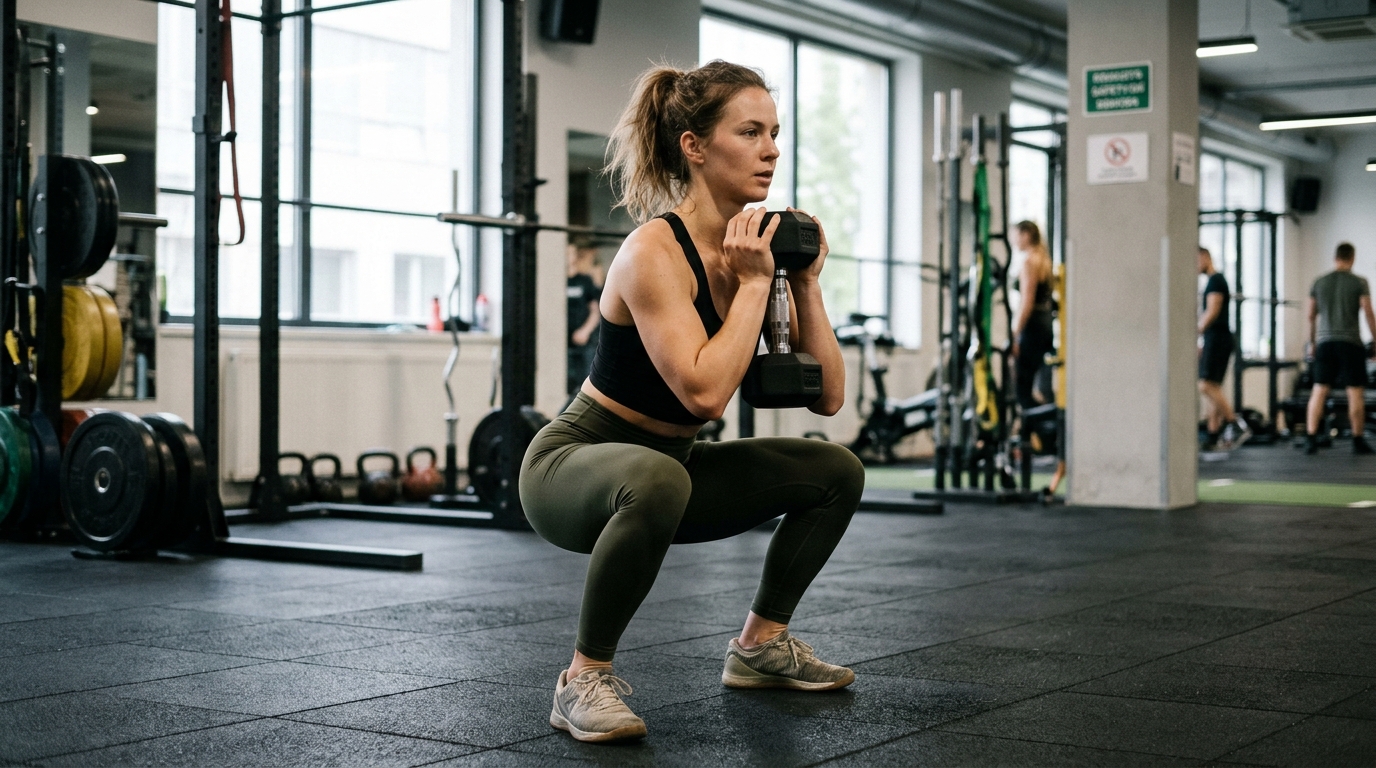
| Goblet Squat | 2 × 10–12 | 2 min | Chest up, knees pointing toward your toes |
| One-arm press on a flat bench | 2 × 10–12 | 2 min | Shoulder blades pulled together and down |
| Upper pulley row | 2 × 10–12 | 90 s | Pull your elbows toward your sides, not your hands |
| Romanian deadlift with dumbbells | 2 × 10–12 | 2 min | Keep your back straight; the movement comes from your hips backward |
| Plank | 2 × 20–30 s | 60 s | Toned glutes, don’t let your lower back sag |
Workout B (Wednesday)
| Exercise | Sets × Reps | Rest | What to Focus On |
|---|---|---|---|
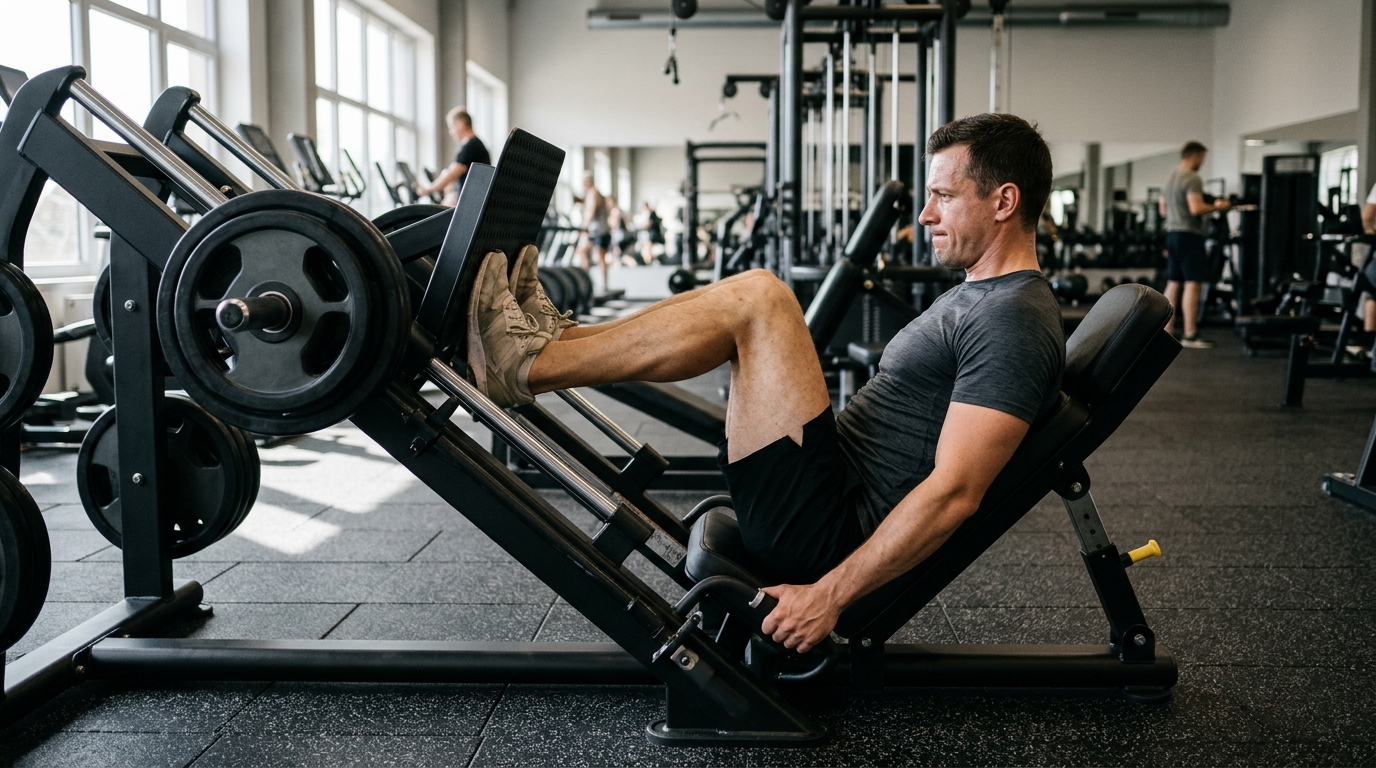
| Leg press | 2 × 10–12 | 2 min | Knees do not cave in during the lowering phase |
| Seated one-arm overhead presses | 2 × 10–12 | 90 s | Do not lean back; keep your core engaged |
| One-arm rows while leaning forward | 2 × 10–12 per arm | 90 s | Supported on a bench, back straight |
| Hip thrusts on a bench | 2 × 10–12 | 90 s | Squeeze your glutes for one second at the top |
| Face pull on the pulley | 2 × 12–15 | 60 s | Light weight, pull the ropes toward your face |
| Dead bug | 2 × 8 per side | 60 s | Hips pressed against the mat |
For each exercise, you’ll find a video and a detailed description of the technique in our Exercise Database. Before you start your workout, check out any exercises you’re not familiar with.
Why these exercises?
Each workout covers the basic movement patterns that form the foundation of all strength training: the squat, press, pull, and hip hinge. Once you master these, you’ll be able to tackle more challenging barbell variations later on.
- The goblet squat is the best first squat. The single dumbbell held against your chest naturally “pulls” you into an upright position, making it easy to learn the correct technique.
- The Romanian deadlift teaches you to hinge at the hips while keeping your back straight. You’ll use this skill both at the gym and in everyday life, such as when lifting bags.
- Single-arm presses are gentler on your shoulders than barbell presses, and each arm has to work independently. This way, you’ll quickly discover if one side is weaker.
- Pull-ups and pulldowns balance out all the pressing exercises. Most of us sit hunched over all day, so a stronger back will also improve your posture.
- Planks and dead bugs teach you to stabilize your core. A strong core is the foundation for a safe squat and deadlift.
Machines (leg press, pulleys) are intentionally included in the plan. Beginners can safely load heavier weights on them, and the muscles get a solid workout even if their free-weight technique isn’t perfect yet.
How to Choose Your First Weight
The most common question from beginners: How much should I load? You’ll find the answer yourself—all it takes is a simple test.
- Pick a weight that feels light and do 10 reps.
- If you could do more than 4 additional reps, add weight.
- You’re looking for a weight that lets you do 10–12 reps and makes you feel like you could do 3–4 more. Your form must remain consistent from the first rep to the last.
- Write down the weight. That’s your starting point.
If you change your form on the last rep—twisting, using momentum, or rounding your back—the weight is too heavy. Leave your ego in the locker room; here, the winner is whoever sticks with it for eight weeks.
Warm-up: 8 minutes that are well worth it
- 3–5 minutes of light cardio (stationary bike, rowing machine, or brisk walking uphill) to warm up
- Dynamic mobility: arm circles, lunges with torso rotation, leg swings—10 reps of each
- 1–2 warm-up sets of the first exercise using half your working weight
Skip static stretching before your workout. Research shows that holding stretches for long periods can temporarily reduce strength. You can stretch after your workout or on your rest days.
Three technical rules for each exercise
- Control the lowering phase. Don’t let the weight drop. Count to about two on the way down; on the way up, feel free to go faster. A slow lowering phase is just as important for the muscle as the lifting phase.
- Full range of motion. It’s better to use a lighter weight and perform a deep squat than to use a heavy weight and do a “half-squat.” A full range of motion builds both strength and flexibility.
- Breathe. Before the heaviest part of the lift, inhale into your abdomen and brace yourself; exhale only after you’ve passed the hardest point. You don’t need to hold your breath for the entire set.
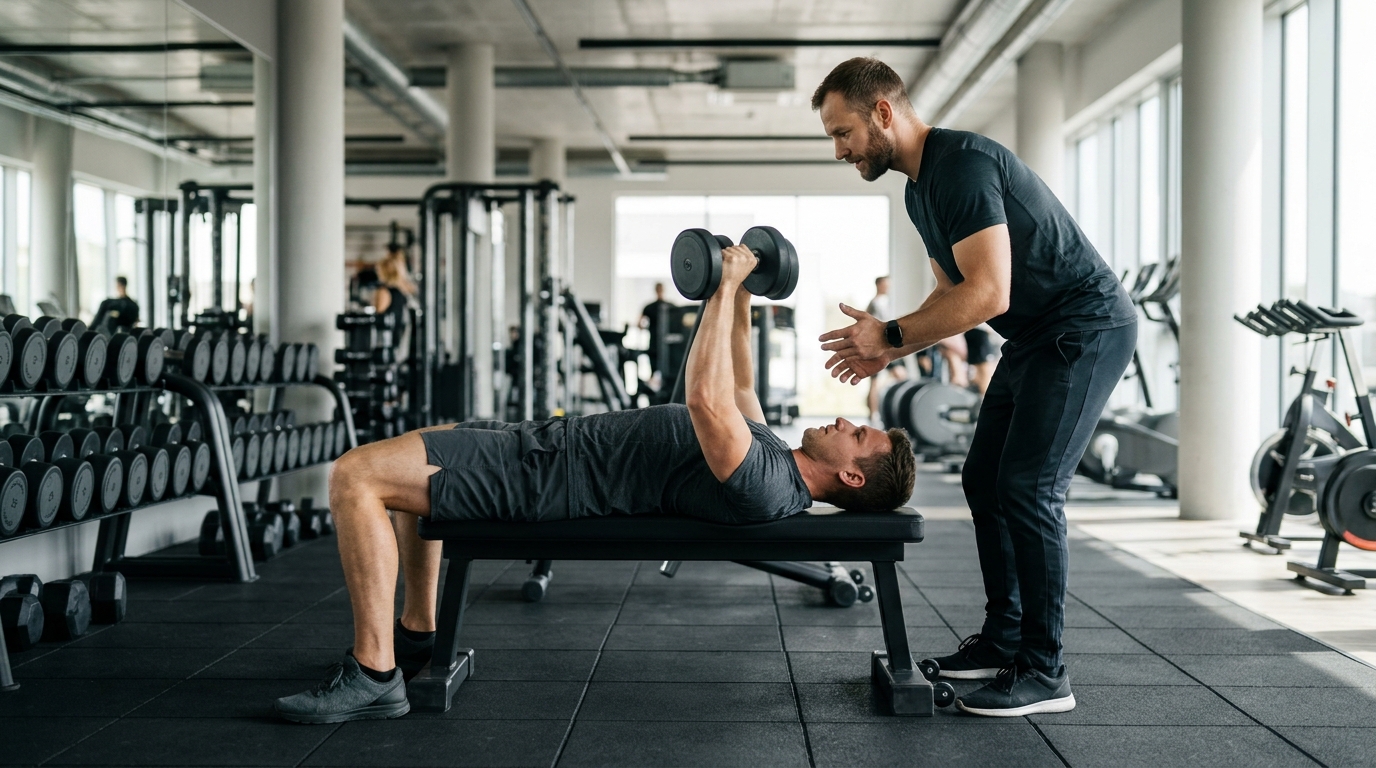
If you’re unsure about anything, don’t be shy about asking the trainer on the floor. A quick technique check in the first week will save you months of correcting bad habits.
Muscle soreness: what’s normal and what isn’t
Even if you take it easy during your sets, you’ll probably feel your muscles a day or two after your first workout. This is a normal reaction to the unfamiliar strain, and it will get less intense with each subsequent workout. Light exercise, a walk, or a short bike ride on your day off will relieve it more than lying on the couch.
However, muscle soreness isn’t a measure of a good workout. Just because you don’t feel any pain doesn’t mean the workout didn’t work. On the contrary, be on the lookout for sharp, stabbing pain in a joint or pain that worsens with movement. In that case, skip the exercise and consult a specialist.
Keep track of every workout
After each exercise, jot down the weight and number of reps for both sets in your phone or a notebook. This way, by the end of the week, you’ll see exactly where to step it up. Without notes, you’ll be guessing—and guessing will halt your progress faster than anything else.
A simple note is all it takes, like this:
From this record, you can immediately see that you gave it your all on both sets of pulldowns and can increase the weight next time. For the dumbbell press, stick with the same weight until you can do 12 reps in both sets. We’ll explain this rule in detail in the next installment.
If you want to take your training even more “scientifically,” add a note to each set estimating how many more reps you had left in reserve. In a few weeks, you’ll learn to gauge your fatigue with surprising accuracy.
Nutrition and Recovery: Support During the First Week
The first week at the gym will take more out of your body than you expect—even if you’re exercising within your limits. Your muscles need fuel to repair themselves and plenty of rest; otherwise, by Friday, you’ll be too tired to train.
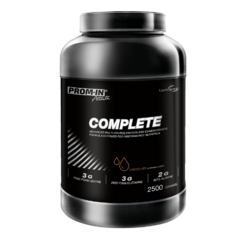
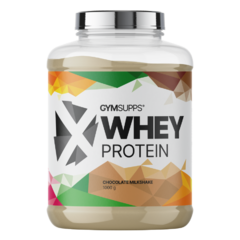
- Protein —beginners often consume far less protein than they should. One shake after your workout or for breakfast is the easiest way to make up for it.
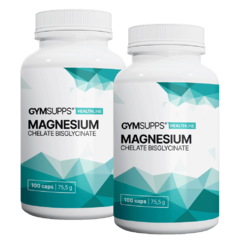
- Magnesium —it supports proper muscle function and quality sleep, which is crucial for recovery during the first few weeks.
Recommended

What's in Store for You Next Week
In Week 2, we’ll add a third set and learn the double progression —a simple rule that will help you know when and by how much to increase the weight. The new episode comes out next Wednesday.
Week 1 Summary:
- 3 workouts in the order A – B – A
- 2 sets for each exercise, 3–4 reps in reserve
- Find and write down your starting weights
- Always warm up; do static stretching only after your workout
Read also
- Just Starting to Work Out? A Guide to Your First 90 Days
- Full-Body vs. Split: Science Debunks a Common Myth About Muscle Growth!
- Ditch the mat—you’ll preserve your strength! Science has finally settled the debate on pre-workout stretching
Recommended
Prom-in Pentha Pro Complete
GymSupps XWhey Protein
No posts have been made yet.