





Why do various studies leave out fit women?
 Author: Šárka Randáčková
 An incredible number of studies have looked at nutrition, training and muscle issues in general. The vast majority of them, however, test men in good shape. Women in shape are minimally represented in them. And that's a big problem for the applicability of the studies.
I've read a few muscle studies and noticed that they only test men. My mind started scrambling. Strong muscles are useful for ladies too, so why do they appear so infrequently in studies?
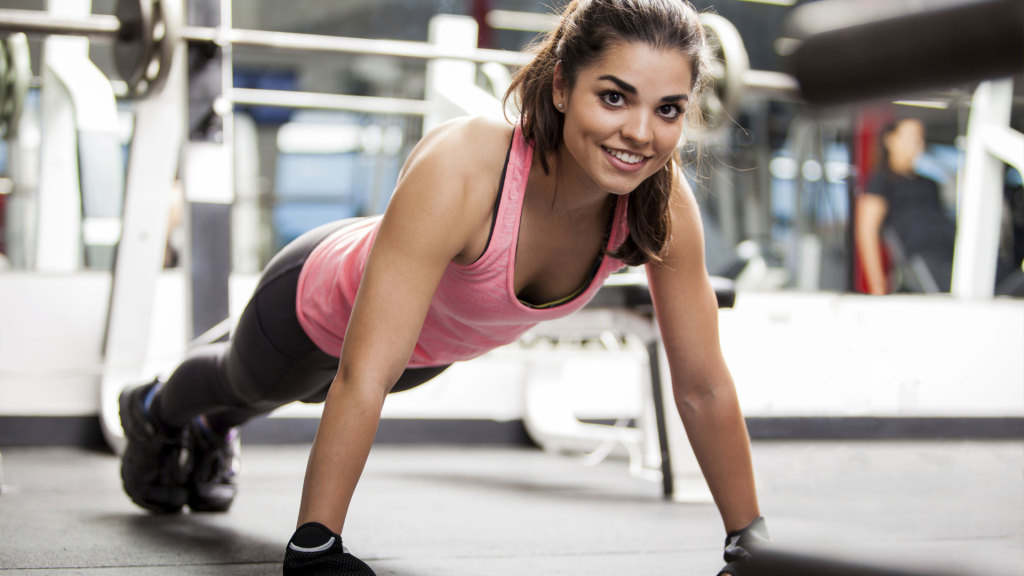
This is not a new problem!
One fun data point to start with:
In 1973, the first study of estrogen's effect on preventing heart disease was done on 8341 men... and zero women!
The same research on women was not done until 30 years later.
The results showed that artificial estrogen supplementation had been hurting women all those 30 years. But no one could have known that.
In the US, they have a special office to oversee the inclusion of women in scientific studies. Even so, women are not being recruited as subjects for scientific studies, especially women in good shape.
Research on women is usually divided into two basic areas:
1) Women's health (a little research)
There are hundreds of studies dealing with such fundamentally female issues as:
- The effect of the menstrual cycle on food intake
- Supplements potentially reducing PMS
- The effect of food on conditions such as endometriosis and uterine fibroids
2) Women's fitness (little research)
Extremely few studies have looked at women's fitness. And why are we surprised, right? We primarily want to help sick people, not healthy and strong individuals.
Plus, pharmaceutical research is always more lucrative than dietary ones.
But that doesn't change the fact that we have a much higher volume of research for healthy men.
Women's fitness is nowhere near the amount of research on men
In the 1980s, research on diet began to increase rapidly. Governments and supplement companies got involved. But again, only on men.
Creatine, for example, was tested exclusively on men in the 80s-90s. Back then, only men exercised. However, this is no longer the case today. Gyms are full of women and social networks are full of photos of ladies with strong, visible muscles.
So where are all the studies involving only women? This 2018 study tests the effect of a ketogenic diet on muscle and fat, but only in men.So does this 2017 study.
Legitimate reasons for the lack of research
There is no secret society against clinical testing of women.
Take ketosis studies, for example. This one from 2018 examines both men and women (although there are more men in it). The first problem is that researchers need to be able to find suitable subjects. And men, by and large, are more likely to enroll in such tests.
The other issue is funding. If a study is being conducted by a private company that sells a supplement for men, it makes sense that they would also test it on men.
The number of studies on women in fitness is increasing, but it's not revolutionary. For example, this little study on body composition. That's what I call baby steps.
The vast majority of studies on women are done with obese subjects. For example, this ketosis study. Unfortunately, an overweight lady is not physiologically equal to a fit lady. However, the same is true for men.
Another problem: Menstrual cycle
Menstrual cycles are a problem for studies. If you're doing a four-week study on body weight, suddenly you have another variable.
How do you account for the cycle and its various problems? Are digestive problems and water retention due to supplementation or menstruation? Moreover, the cycle is never the same for all women, making it impossible to get an accurate result even by averaging.
This is most problematic in studies with small sample sizes, where one major deviation completely throws off the entire result.
This doesn't mean we shouldn't do studies on women. It's just the opposite. We need to do them because the results of the male ones are unlikely to be valid for them.
What does that mean for you?
If I had a magic wand (or an investment fund), I would conjure up more studies on women, especially fit ones. I'd focus on classic topics like extended periods without food, carbohydrate intake, different diets at different times in a woman's life, etc. However, I am only a researcher with no investment fund.
Why is this important? To know if diet and supplements affect women differently than men. Otherwise we can't tell what is really optimal for half the population.
I recommend you just acknowledge that this problem exists. The more people know about it, the more likely someone will address it.
For every study someone throws at you, be concerned with the quality of the methodology and the sample of the population tested.
Did the study include individuals like you? Too often people use research as a collective yardstick that applies without exception and to everyone.
Source: www.examine.com - Nutrition research has a problem: fit women are severely underrepresented
Author: Kamal Patel
Translated by: Jaromír Uhlíř
Recommended
HMS Twist stepper s lanky S 3033

Nebbia RE-FRESH Mikina 591

Nebbia FIT Activewear funkční tričko s krátkým rukávem 440
GymSupps BCAA 4:1:1 Instant
Author: Šárka Randáčková No posts have been made yet.








