





Speed and strength training
 Author:
 Imagine two athletes standing side by side - each with 405 pounds loaded on the axle in front of them.
Assume they are identical in every way - except for one key fact. Athlete A is a high jumper, while Athlete B achieved his looks through traditional bodybuilding methods.
Neither of them has ever lifted the 405.
You don't know anything else about them. Which one of them are you gonna put your money on to pull this weight first?
Ten out of ten people, including those who hang around performance sports, will bet on a jumper. Why?
Because of his athletic background, you can bet that such a person can use his power quickly.
They both have the same maximum power output. But the one who can translate power into greater speed has a better chance of completing the stroke.
The takeaway is simple: learn to apply power quickly and you will be stronger. The actual process, however, is not so simple. In fact, it's different for every person - I'll explain this in the next article.
What a crazy father of a 14-year-old misfit can teach us
At Cressey Performance, we train a lot of high school athletes. About once a week, we have a dad come in and tell us that his kid needs to practice agility because he's not fast enough. For all of those, I recommend reading the article Make My Kid Run Faster.
The gist of the article is the fact that you can do as much speed training with your kid as you want, but without a strength base it won't do much good. It's like hanging those fancy dice on the mirror of a car that has no engine.
Sprinting and changing direction require substantial, reactionary forces, and without adequate strength potential to deliver eccentric control, unprepared bodies turn to mush. In order to apply power quickly, one must first have power.
How does this relate to incorporating speed work into strength training? Simply, if you don't have a decent strength base, speed training probably won't do you much good.
What is a decent strength base? If I had to guess from past experience, it would be about 1.5 times bodyweight for squats, 1.25 times bodyweight for bench press, and 1.75 times bodyweight for deadlifts.
For people who aren't at this level yet, but still want to get a feel for speed, I usually recommend adding a few warm-up sets to their first exercise. In those series they will focus on high concentric axis speed and perfect technique. So, if a 185 pound kid is getting to the 230 x 3 squat, he might do the following:
- Axis (45) x 8
- 95 x 5
- 135 x 3
- 155 x 3 fast
- 165 x 3 fast
- 175 x 3 fast
- 185 x 3
- 205 x 3
- 230 x 3 (first working series)
A normal warm-up for a guy like this might be 45x8, 95x5, 135x3, 185x3, 205x3 - and then a first work set with 230. In this case, however, he'll add three sets of speed work and not put too much strain on his body and add unnecessary volume to the workout, which would interfere with more important, working sets.
Not only will he get a chance to practice technique, but he will also learn that he should always be stripping the axle as fast as possible. It's all in the intent to develop power quickly - even if the axis speed isn't blinding, it will be in time.

What does speed training even mean?
I've seen some general recommendations on how to properly train speed in the gym, but I'm not sure there's one that's sort of universally accurate. Understand, the slower you are (regardless of how much power you can produce), the lower percentage of the max you'll need to use.
The fastest then, on the other hand, usually don't need to train speed at all. Their natural reaction ability simply allows them to lift heavy things, and thus accelerate. You can usually tell a person with such naturally fast muscle fibers by the fact that they will lift 99% of their max with their finger up their nose, whereas 101% will swat it like a fly.
They say it's easier to make a fast guy strong than a strong guy fast. Most people (including myself) are somewhere in the middle.
When we get this out of our throats, I usually let the sound of the axle guide whether I have the right weight loaded. If the axle is accelerating decently, you'll hear the discs hitting each other at the strongest part of the movement.
A good way to test this is to simply load what you think is the correct weight on the axle, use the smallest possible discs to do this, and leave a little room from the stops. If you can do this quickly, the discs will clank. If you don't go very fast, you won't hear anything.
And what weight are we talking about here? In most cases, it's smartest to stay between 40-70% of the maximum. There are exceptions, of course. A squat with a jump will call for a lower load, because that's where you'll really get off the ground. And the weightlifting exercises, which are great for overall strength production, sort of self-regulate because too much load will mean you won't complete the lift.
All of the previous paragraphs account for the fact that you need to add extra load, and pick up speed by doing so in a way that will affect your core exercises. But this may not always be the rule.
Ten ways to incorporate speed into your training program
A lot of people get stuck in a rut when it comes to speed in strength and conditioning training. No one seems to be able to do anything other that box squats and bench presses - but there are a number of other options.
- Sprinting: you don't need any equipment. It won't have quite the ideal carryover for strength exercises, but I don't know that running fast will make anyone a worse athlete. As far as weight, I've never been a fan of sprinting with a parachute. We'll be sprinting with a sled.
- Box jumps: you jump up, but you don't come back down - so it's not such a blow to the body. I've read of a fair number of fighters good at deadlifts who use box jumps with satisfactory results.
- Long and high legged box jumps: you can do them with bodyweight or added weight. If band resistance is added, these are my favorite exercises for lower body strength.
- Medicine ball exercises: Again, the carryover of these exercises won't be completely obvious at first glance, however, people generally spend too much time in the sagittal plane - strength training is no exception. Plus, it's crazy fun to try to bust it with medic bally. You can do variations overhead, rotational, and with flexion. I'd also include hitting a tire with a mallet in this category.
- Plyometrics in the non-sagittal plane: this is like the medicine ball. You won't see the carryover at first glance, but there will be some. You will move better. We use a nice line of heiden variations with our athletes.
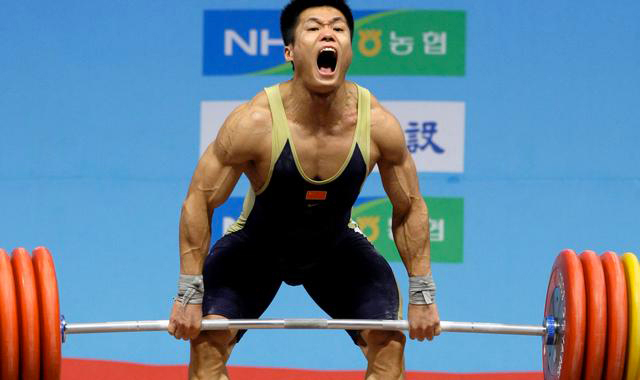
- Weightlifting: As mentioned, if you learn the technique and have enough mobility, you won't go wrong with weightlifting exercises as you increase the speed the axle travels. Repositioning, markets, lifts, lunges, whatever. If you're slow, they'll help.
- Squat Variations: I mentioned load variations above. However, you have other options. Different axes, free squats, box squats, Anderson squats, and different ways to work with loads (band and chains)
- Deadlift Variations: I increased my deadlift from 510 to 628 in less than a year, and I'm convinced it's due to the fast deadlifts I've been doing twice a week all this time. You can do it regular, sumo style, with a trap bar and a market grip.
- Bench press variations: as with the last two examples, it's easy to include variations. You can vary the width of the grip, use different axes, give yourself a pause at the bottom of the movement, and address the additional load in different ways.
- Plyometric, or clap push-ups: this can be a good variation for those who are bored of speed bench pressing - and it's a good exercise for travel where you don't have room for too much equipment.
How to choose the right exercise
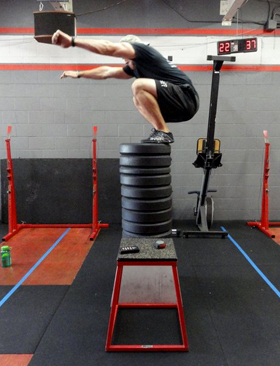 Many factors influence your choice of exercise. But the most important are a) your goal and b) your training experience.
If your goal is to pull a truck in a deadlift, you will need specific training. I'd stick pretty much exclusively to variations of the speed deadlift, and probably use some of those leg jumps and box jumps and a bit of squats where the emphasis is on the lower limbs.
If you're a regular gym goer who just wants to improve your athletic ability and maybe get some carryover on your core exercises, I would spin your speed work every month. Each month, I would use an exercise for lower and upper body that adds as little additional load as possible (jump variations, sprints, medicine ball work) and an exercise where you can load something up (speed box squats, speed deadlifts, or weightlifting exercises).
If you have two lower body workouts and two upper body workouts each week, you can simply include one exercise first in each workout. I fall into this category myself and do one day of speed bench presses and one day of speed squats or deadlifts each week, supplementing with a little sprinting and playing with medicine ball. In other words, I have some general stuff in there and other fairly specific exercises.
If you're decently equipped with speed, you can probably get by with two speed workouts a week. One for upper body, one for lower body.
You've probably already guessed that I'm not a fan of training speed in separate units, weeks, or even training blocks. I prefer it to be part of a complete training program and trained with other skills. Sometimes you can do more, but I don't mean that speed should be the only thing you focus on. Heavy weights and rep work definitely have their place in training.
When to incorporate speed work
In most cases, it will be best to put your speed work at the beginning of your strength training, right after your warm-up. However, there are a few exceptions to this rule.
I often put speed deadlifts after heavy squats.
We also sometimes include a compound workout where the speed exercise precedes a heavier load. In other words, you might do a heavy set of two-by-fours on the front squat, and then do twenty seconds of jumping jacks.
You'll rest for 2-3 minutes and repeat. There's a process called post-activation potentiation, where a heavy load on the front squat gets better neuromuscular coordination, engaging more motor units, and subsequently better performance on the following exercise. It works great. But you can't do it all the time or you'll tire your athletes out.
Finally, in certain cases, you need to incorporate individual speed training. Sprinting and medicine ball work, for example, can be used completely outside of gym training.
The idea is simple. Basically, it's just a matter of speed training when you're rested. Jumping on the box at the end of a strength workout is not only unproductive, it's actually dangerous.
Summary
Everyone needs speed. Some, however, noticeably more than others. However, some people aren't even far enough along to even consider speed training because they don't have a solid strength foundation. If you use the strategies mentioned above to incorporate speed training, I'm sure you'll start lifting big weights faster than ever before.
Written by Eric Cressey, translated by Jaromir Uhlir
No posts have been made yet.








