Repeat in reserve: Regulating the restraints for new arrivals
 Author:
 Tri-series are the new way!
Three exercises in a row and minimal rest. Add this unique triseries method to your workout and you'll accelerate muscle growth.
Your level of effort determines the effectiveness of your workout. It's the number of reps you do in relation to the number of reps possible within the triset, or the number of reps you have left 'in reserve' when you complete the triset. When you do 'heavy sets' you don't leave any reps in reserve. When you do 'easy sets', you keep enough reps in reserve. Keep this in mind when you perform these ascending difficult trisets. You will progressively use medium, high and very high efforts and you will know their difficulty using the RIR self-regulating system.
Remember that RIR stands for 'reps in reverse'. For these tris, you take three stations and after you've finished one, you go to the next one and then do the same, followed by a break. After each one you keep a certain number of reps in reserve. This allows you to progress without going into failure on the trisets.
Check out the training plan for some sample trisets (great for those who have a push/pull/legs split).
Three tips and how it works
- Start with a multi-joint exercise and then immediately follow it up with two related isolation or complimentary exercises.
- For each exercise, choose a moderate weight - the weight you would typically lift for 8-15 reps in one set. Yes, this is a wide range, but since this is not traditional percentage-based programming, the exact weight you choose is much less important. Because you're using moderate working weights, success is in the level of effort, or more accurately, the number of reps you keep in reserve.
- Don't worry about counting completed reps. Focus on the quality of the movement and your perception of effort. You will achieve an effective triset by self-regulation, or "spontaneously" determining the appropriate volume of reps based on perceived proximity to failure."
Trisets in practice
- End the first set when you feel you have only 3 good reps left (3 RIR).
- End the second set when you have 2 good reps (2 RIR) remaining.
- End the third set when you have only 1 good rep (1 RIR) left.
- Rest 2-4 minutes.
- Repeat the tri-set a total of 2-4 times.

Efficiency and fatigue: the big trade-off
The tri-series allows you to complete a workout in less time or fit more volume into the same number of minutes. However, without rest between exercises, fatigue can interfere with the performance of the second or third exercise. One strategy is to include "less demanding " movements or muscles, which can minimize your need to rest between exercises. However, if you are a physical lifter, you can use a split into pushes and pulls or body parts. In this case, you can perform tri-sets that load the same movement patterns or muscle groups.
Fatigue accumulation during trisets should be taken into account, especially when training similar or synergistic muscles. Fatigue is a temporary and reversible decrease in strength. It is related to chemical and mechanical changes in the muscle (peripheral fatigue) and a reduced ability of the nervous system to stimulate the muscle (central fatigue ). Both types of fatigue are likely to accumulate during our training through interrelated mechanisms.
Although it may shock you if you focus on the "burning sensation" of the muscle, this muscle fatigue can be the enemy of hypertrophy training. When the "pump" builds up, the relative distribution of load among the synergistic muscles changes. Compensation occurs whether you perceive it or not. There are likely to be more obvious effects, such as ending sets prematurely and having to reduce the weight. A classic case is when exercisers often blast their biceps during the back triceps.
Overall, fatigue opens the door to suboptimal training. The target muscles are ultimately deprived of mechanical tension: the main driver of your gains.
Fatigue is especially evident in high-volume training, compound exercises, and sets performed to failure. For the most part, it cannot be avoided, so it must be managed. Self-regulation through RIR is extremely useful for this purpose."


RIR for a better physique
Although technology can help us regulate our programs (devices to measure movement speed, smart watches to sense heart rate variability, etc.), the most accessible self-regulation technique requires no gadgets.
"Subjective autoregulation" relies on your perceptions to inform program adjustments. This is where RIR comes in. It combines your perception of effort with your predicted number of repetitions in reserve. Powerlifters and bodybuilders are like good neighbors. So even if you're more interested in muscle than maximum strength, keep RIR in mind. It serves as the basis for many self-regulated resistance training methods that allow you to manipulate the load, sets, and/or reps based on how you feel.
Choosing the appropriate exercise intensity for a triseries is challenging and can lead to training errors if repetition volume is fixed. Aside from the occasional "lucky guess," average weightlifters are unlikely to accurately select loads on their own that facilitate an ascending level of effort at preset repetition volumes for exhaustive triset training. So a very simple application of RIR works best: use RIR to autoregulate the number of reps per set (rep volume).
Simply perform reps until you find that you only have the target number of reps "in reserve".
Here's a reminder for ascending effort trisets: for the first exercise, you want to leave 3 reps in reserve. For the second exercise, you want to keep 2 RIRs and for the last exercise, you want to keep 1 RIR. On a good day, you will be able to do more reps. On a bad day, you will do fewer. You will probably perform more reps before reaching the target RIR during the first "round" of the triset than during the final one.
And as a bonus for bodybuilders, this method of self-regulation is extremely resistant to errors in load selection. We build muscle over a wide range of reps provided the sets are performed near failure. Whether we perform 6 or 16 reps in each set doesn't matter much. The ascending structure of the three sets will help you perform each set near failure while managing fatigue.
Exercise order: combination, isolation and isolation
Perform the multi-joint exercise first. This exercise is the most technically demanding and exercises the largest number of muscles, so you'll want to be fresh.
The second exercise is an isolation exercise related to the movement pattern. For your training goals, this should be a lower priority isolation exercise.
The third exercise is also an isolation exercise related to the primary movement pattern, but it exercises a muscle group with a higher priority. This muscle group will be relatively rested during the second exercise, allowing for partial recovery.
Recommended
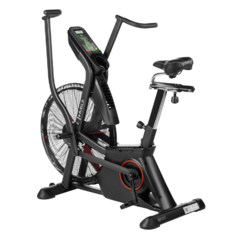
HMS AirBike MP5420

Puhdistamo Triple Magnesium

XGen 90cps + Omega 3 90cps

Nebbia Teplákové šortky HERO 295
Source: t-nation.com
No posts have been made yet.