





Overcome stagnation with these tips!
 Author: Šárka Randáčková
 Nothing is as frustrating as stagnation. At the first sign of it, most people sprint to the internet looking for a new workout. The result is that they never really improve. They don't improve their technique, they just search for a new training methodology over and over again.
Truly great and intelligent athletes analyze the gaps in their training. Sometimes it's diet, but mostly the training setup and intensity is to blame.
Here are three proven methods for overcoming stagnation.
1. Cluster series
These are several smaller series with minimal breaks. The number of reps is predetermined. For example, you will train 5 reps in the style of 1 rep, 20 second pause, etc. The secret? You'll be able to handle far more weight than with 5 classic reps without a pause.
Mini breaks can last 15-30 seconds, during which time the phosphocreatine system recovers. This is responsible for intense muscle contractions such as sprints and heavy exercises in the gym.
By doing this, you will be able to lift more weight for more repetitions. You will maximally exercise the fatigue-resistant motor units that are most important for strength and volume.
In addition, heavier weight creates progressive overload - the engine of volume and strength growth.

This is what it's going to look like:
- You will use 85-95% of 1 RM (weight for 3-5 reps), but you can do 4-6 reps with it.
- Classic 5x5 x 110 kg
- Bulk set 5x1-1-1-1-1 x 130 kg
- The difference in weight lifted is obvious. You'll improve your technique and concentration by doing more work and you'll build more muscle.
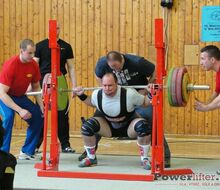
This method is best for complex exercises such as squats, deadlifts, overhead presses and bench press. You want optimal technique, not chasing fatigue. Higher weight and focusing on higher total reps is a recipe for improvement
2. Training with breaks
You'll train an activation set and one set to the max, which will include multiple smaller sets with short breaks.
The result? Again, more work than a traditional series.
Here's what it would look like with the one-arm push-up example:
- Work out 3 sets of 6-10 reps like normal. This will pick up some fatigue and get your nervous system going. After the last set, put the dumbbells down and rest for 15-20 seconds.
- Now practice 3 sets with breaks. It may look like this:
- 30 kilos x 5 reps.
- Pause 15-20 seconds.
- 30 kilos x 4 reps.
- Pause 15-20 seconds.
- -0 kilo x 3 reps.
Practice one set with breaks for 1-2 exercises in your workout and a total of 2-3 micro sets as part of your sets with breaks.
Even with this method, you lift more weight for more reps, putting more strain on the muscles that will grow. The short breaks between sets allow for a short, partial recovery that maximally fatigues the muscle fibers and stimulates growth.
This method is good for both complex and isolation exercises. Focus on optimal technique, but don't be afraid to go into muscle failure.
The difference between bulk sets and sets with breaks?
They're similar methods and some people use the terms synonymously, but there are small differences:
- Bulk sets are more focused on strength. Breaks are more focused on muscle fatigue.
- Bulk sets generally don't go into fatigue and failure. With breaks series, the metabolic load, while delayed, is the ultimate goal.
- Bulk series are best with a big axle and a proper load. Intermittent series can be practiced with a variety of equipment and loads.
- Bulk series use a predetermined load and volume of work. In a series with breaks, only the load is determined, the volume of work is not.
- Bulk series focus on a specified number of repetitions. A series with breaks focuses on fatigue accumulation and the maximum number of reps with a given weight.
3. Post Activation Potentiation (PAP)
This is an advanced training method combining heavy superset exercises with lighter, explosive ones. For example, you'll practice a heavy bench press, a 30 second pause, and a series of explosive push-ups with clapping.
PAP describes the immediate increase in muscle power during an explosive exercise performed after a heavy exercise. (1) This bridges the gap between strength and explosiveness. Think of it like putting a NO booster in your car.
Does it have a crack in it? You need a proper strength base and skills in the basic exercises to use PAP effectively, otherwise it will punish you in several ways...
- Extreme neurological fatigue, lethargy.
- Increased risk of injury due to fatigue and technique breakdown.
- You're gonna look like an idiot.
Optimally, you should pair biomechanically similar exercises. This will give you a good rehearsal of the movement pattern. Plus, you'll improve your inter- and intra-muscular coordination. Intermuscular coordination means your movements will be more coordinated.
Recommended

Nebbia Lounge mikina CLUB D’OR 642

Czech Virus Testo Virus Part 2

Czech Virus ZMA MAX
Nebbia Dámský sportovní overal INTENSE Focus 823
Intramuscular is an improvement in the following points:
- Increased rate of muscle fiber engagement, which will provide more strength.
- Engagement of more fibers.
- Synchronization of motor units that will contract essentially simultaneously.
What do you take away from this? Pairing biomechanically similar exercises with different loads will help you generate better power and activate more muscle fibers, which will improve strength and make your training more efficient.
Pairing exercises for PAP
The first exercise is always a heavy, complex exercise, the second is usually explosive.
- Bench + push-up with clap
- Shoulder press + medicine ball throw on the ground
- Squat + squat with jump
- Deadlift + kettlebell swing
This method is best performed with a heavy load (80-95%) on complex exercises and for 1-6 repetitions. Explosive exercises should be loaded either not at all or minimally and performed with the intention of maximum explosiveness.
PAP Example:
- A1. Squat 5x5, pause 30 seconds
- A2. Squat with lunge 5x5, pause 3-5 minutes
The metabolic load you feel should not be extreme with this method, but you should feel stronger and faster over time. The neurological demands are extreme, so stick to training blocks 3-4 weeks long, replacing them with something less intense or deload after that time.
How to get the best results
All three of the methods mentioned above will bring a new stimulus to your training and will help you overcome stagnation. However, increasing intensity without adequate improvement in recovery and caloric intake is useless. It will only dig your body a bigger hole to climb out of.
Always use only one of these methods while increasing caloric intake by 5-10%, especially from carbohydrates and protein. Get enough sleep, at least 7 hours. Endlessly increasing your workload will not bring you improvement - it will do just the opposite.
Train hard. Set your program so that you feel the intensity. Improve your recovery. If you do these methods correctly, there will be no stagnation that can't be overcome with their help.
Source: www.t-nation.com - 3 Next-Level Ways to Build Muscle & Strength
Author.
Author: Šárka Randáčková No posts have been made yet.








