





Cluster series, or the best strength training of all time!
 Author: Šárka Randáčková
 Twenty years ago, I was at Charles Poliquin's seminar in Montreal. I was 19 and competing in weightlifting. I was average, so I wanted to make up for my mediocre technique and late start in the sport. And Charles was the guy you went to when you were looking for strength.
I plucked up the courage to come to him at the break with a question:
Mr. Poliquin, what's the best method for increasing strength?
At first, he seemed rather surprised that I dared to disturb him at lunch. I explained to him that I was a weightlifter and desperately needed to get stronger. This changed his attitude considerably. Charles Poliquin really appreciates strength athletes, especially weightlifters.
He told me:
The best method for increasing strength is cluster sets.
That's great. I've never heard of them, but it sounds exotic, so it must work.
Note: A cluster is a set of several ones with a short to medium break. Usually it will be 5-7 ones.
He put it this way:
You do one rep, pause for 15 - 20 seconds, do another rep, do another 15 - 20 seconds, and so on. You go like that until you do 5 reps with a weight you can normally do 3 with.
I don't know if you noticed my disappointment. That was a normal weightlifting workout. Weightlifters just grab the axle, do one rep, return to the starting position (which takes about 15 seconds) and practice the next one.
I've trained like this before. Does that mean there is no quick way to great results?
Then he added:
This is how you practice squats, front squats and deadlifts. That'll give you a quick boost in strength.
That was new to me. I thought that was how you were supposed to do weightlifting exercises. The next week, a little skeptical, I tried it on squats.

The rest is history. My squat performance had never grown this fast before. In 6 weeks I improved from 205 kg to 240!
I know this may not be a typical result, but it definitely sucked me in. In the following months I improved my front squat from 180 kg to 220 kg, my back squat to 270 kg and my push press from 125 to 145 kg.
A couple of years later I reached my max on the bench press. I pushed 200 kg in Dave Tate's gym.
Cluster sets will probably stay with me for the rest of my life. I use them with a lot of my professional athletes and amateurs. The results are always impressive.
The only problem is that the traditional Poliquin method doesn't always work perfectly. Advanced athletes don't always manage 5 reps with their max at 3. For some, we've had to lower the weight.
I've put the cluster series through a thorough examination over that time and tweaked them a bit. We'll get to those options. But first, let's talk about why they work.

Why you should practice cluster series
Here's a list of their benefits.
You'll engage and fatigue fast-twitch muscle fibers.
They are maximally engaged, with a load of 80-82% of the maximum. With cluster sets, you are often at this level. This means that each repetition is doing the maximum for strength and volume. And you're not wasting work volume because all reps are at this maximum level.
You're making your fast twists even faster.
That's called engagement speed. The higher it is, the more times the fibers can work in a given amount of time, which is the real key to strength. Above 85% of the maximum, this speed increases exponentially.
You build muscle mass.
This is all about mechanical loading to the maximum of the muscle fibers. You have to engage them first, then they are under load with each extension, which stimulates their growth.
The higher the weight on the axle, the higher the mechanical load on your fibers. But as the weight increases, the number of reps you can do in a set also decreases. With cluster sets, however, this is not the case. At the optimal load level, this is where you train the most reps, which also makes this method a great volume workout.
You will numb the Golgi.
These bodies defend your body from yourself. When they sense that your muscles are creating more force than is healthy for them, they prevent the creation of more force. For most people, this system is set up pretty conservatively. But the more you exercise, the more it dulls these bodies, and you can use more of your strength potential. Cluster series are great here because you're training maximum heavy work.
Heavy weights will be more comfortable for you.
Cluster series are invaluable here. Many attempts at maxes end in the two steps you have to take with the axle on your back, or when you lift the bench axle off the rack. However, you'll be so practiced that you'll have no problem with fear or stability.
Your hard work will be better quality.
You'll maintain more strength between reps due to the break, and you'll also hold good technique better.

5 Cluster Series Types
Here we'll go over the 5 basic types of strength cluster series. There are other choices that are better for volume, but today we're here for strength.
1 - Cluster Series by Poliquin
Coach Poliquin popularized them. His method is the most commonly used. However, he didn't invent the whole concept.
His method works best for intermediate athletes. For advanced athletes, it's great for building muscle, but strength-wise it's not the best choice.
Rules
- Number of ones in one set: 5
- Pauses between sets of 1s: 15 - 20 seconds
- Load: 87 - 90% of your max, or your 3RM
- Number of cluster sets: 3 - 5
- Pauses between sets: 3 - 4 minutes
If you are very strong or have a high ratio of fast twitch muscle fibers, pauses of 15-20 may not be enough. Some people may need up to 30 seconds for cluster sets to be strength optimal for them. Cluster series according to Poliquin are definitely great for women because they don't need such a long pause between reps.
2 - The original cluster series by Carl Miller
Carl Miller has been coaching weightlifters for over 50 years, including at the highest levels (such as the 1976 Olympics participants). He first officially used the cluster series. He used two types. One had a higher volume of work and the other had a higher load.
The weight used depended on the exercise. Technically harder exercises were done with a lower load, squats, push-ups or deadlifts with a higher load.
Rules (higher volume of work)
- Number of one's in one set: 5 - 7
- Pauses between sets of 1s: 30 - 45 seconds
- Load: 85 - 92% for strength exercises, 80 - 85% for weightlifting exercises
- Number of cluster sets: 3 - 5
- Pauses between sets: 2 - 3 minutes
Notes: The pauses between sets can be extended for the last two sets if you are doing 4-5 sets in total.
Rules (higher load)
- Number of 1s per set: 2 - 3
- Pauses between sets of 1: 45 - 60 seconds
- Load: 87 - 95% for all exercises, overhead can go up to 82%
- Number of cluster sets: 3 - 4
- Pauses between sets: 2 - 3 minutes
This type of cluster series is better suited for very strong athletes or those who have a high ratio of fast-twitch muscle fibers. Such athletes will need longer breaks between sets. This is a pure strength program. It will be weaker in volume than the Poliquin method.
3 - Cluster series with eccentric overload
My love of hooks (weight releasers) gave rise to this method. You can add weights to these to overload the eccentric part of the exercise (lowering). When you get down, the hooks will remove themselves from the axis, and you'll be lifting a lighter weight on top.
Here are two examples of how to use the hooks. The first overloads the eccentric part of the exercise, the second creates an isometric overload.
Here is an example of a Cluster series on the bench press:
As far as the ratio of work to rest is concerned, you can use the same as in the cluster series according to Poliquin or Miller. The load will vary depending on the method you choose.
Rules (eccentric overload according to Poliquin)
- Number of ones in one set: 5
- Pauses between ones: 15 - 20 seconds
- Load: 75 - 80% on the axle, hooks to be completed to 100%
- Number of cluster sets: 2 - 4
- Pauses between sets: 3 - 4 minutes
Rules (intensive eccentric overload according to Miller)
- Number of ones per set: 5 - 7
- Pauses between ones: 30 - 45 seconds
- Load: 75 - 80% on the axle, hooks to be completed to 100 - 105%
- Number of cluster sets: 2 - 4
- Pauses between sets: 3 - 4 minutes
Rules (eccentric overload according to Miller with higher loads)
- Number of ones per series: 2 - 3
- Pauses between sets of 1s: 45 - 60 seconds
- Load: 80 - 85% on the axle, hooks to be completed to 105 - 115%
- Number of cluster sets: 2 - 4
- Pauses between sets: 3 - 4 minutes
Recommended

Nebbia Washed-off oversized tričko HERITAGE 355

Czech Virus Supreme Magnesium Complex
Nebbia Tvarující fitness legíny MY RULES 609
Nebbia NATURE-INSPIRED Sportovní crop top “Racer back” 549
The number of series is lower, because especially in the eccentric part the weights are already quite high. Why is eccentric overload good? It's a method that maximizes the rate of muscle fiber engagement, which is the real key to strength. In the eccentric part, you are engaging primarily fast-twitch muscle fibers. Over time, this will force your nervous system to engage the fibers faster, which will dramatically increase strength production. Other benefits? The stronger the muscle in the eccentric part of the movement, the less prone it is to injury.
4 - Cluster series by Mentzer
Mike Mentzer and his brother Ray are better known for their Heavy Duty training. They were incredibly strong bodybuilders and this training method helped them greatly. You can think of it as a more advanced version of the Poliquin or Miller method.
You start at 95-97% 1RM and train 3 cluster sets. Then you take 10% off and practice 2 - 3 more 1s. That's one cluster series.
The series looks like this..:
- Repeat 1: 97%.
- Pause 15 seconds
- Repeat 2: 97%
- Pause 15 seconds
- Repetition 3: 97%
- Pause 15 seconds
- Repetition 4: 87%
- Pause 15 seconds
- Repetition 5: 87%
You can set the work/rest ratio according to Poliquin or Miller.
Rules (Mentzer/Poliquin cluster series for intermediate)
- Number of ones per series: 5 - 6
- Pauses between ones: 15 - 20 seconds
- Stress: 95 - 97% or 85 - 87%
- Number of cluster series: 2 - 3
- Pauses between sets: 3 - 4 minutes
Rules (Mentzer/Miller advanced cluster series)
- Number of ones per series: 5 - 7
- Pauses between ones: 30 - 45 seconds
- Stress: 95 - 97% or 85 - 87%
- Number of cluster series: 2 - 3
- Pauses between sets: 3 - 4 minutes

5 - Gigantic cluster series
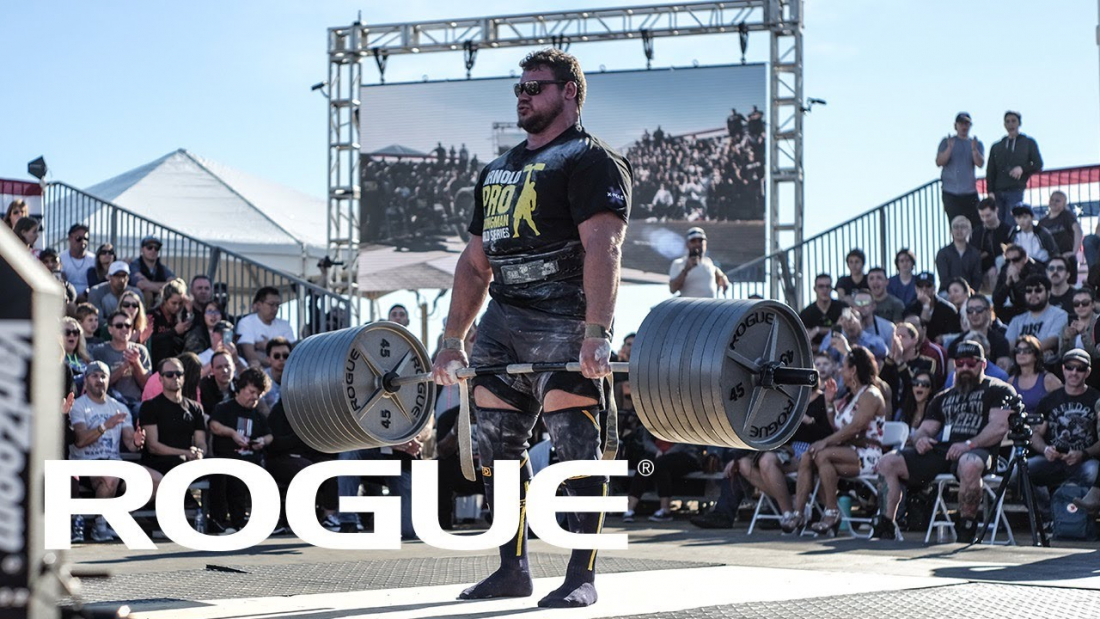
This method was made famous by me 12 years ago and was used by World's Strongest Man winner Martins Licis for his deadlift. It differs from the above methods in that you don't go for the max and the goal is to develop strength potential and endurance under high loads.
You set the time frame (usually 12, 15 or 20 minutes) and choose the intensity zone (80, 85 or 90%). You will work out either 1, 2 or 3 reps in sets. You will complete the maximum number of quality sets in the given time interval. The number of sets will depend on your fitness level, strength and muscle fiber ratio. Here are the parameters for each intensity zone.
Rules for the 80% zone
- Length: 20 minutes
- Reps per set: 3
- Target number of sets: 12 - 15
Rules for the 85% zone
- Length: 15 minutes
- Repetitions per set: 2
- Target number of sets: 9 - 12
90% Zone Rules
- Length: 12 minutes
- Repetitions per set: 1
- Target number of sets: 7 - 10
The sequence is such that you choose one of the intensity zones, and once you reach the upper end of the series range, you add weight.
Which method should I use?
There are 3 main categories (actually 4 with the giant cluster series).
- Poliquin's work to rest ratio (15 - 20 seconds of rest)
- Higher volume work to rest ratio according to Miller (30 - 45 seconds of rest)
- Higher volume work to rest ratio according to Miller (45 - 60 second pauses)
All of the routines above will give you a quick boost in strength. However, the stronger you get, the more you should gravitate towards Miller's principles, both for squats and deadlifts and for weightlifting exercises.
Poliquin's routines will give you a little more volume and can also be good for CrossFit practitioners and MMA fighters, as they need to maintain high levels of force generation with short breaks.
You can then choose from 3 methods for each category.
- Normal Series
- Cluster series by Mentzer
- Series with emphasis on the eccentric part
Series with an emphasis on the eccentric portion will deliver more stimulus than normal series, but will put more strain on the nervous system and require longer recovery. Such methods should only be used by people who have considerable strength training experience. And the volume of work should be kept low.
Gigantic cluster series are a slightly different sport and are not so demanding. Their main advantage is that you get used to higher weights. They are excellent for technique and neuromuscular coordination. Of the options listed in this article, you can practice them the longest and most people can master them.
If you want to increase strength quickly, definitely think about cluster sets. I started using them over twenty years ago and have never stopped. This method has stood the test of time and works for basically everyone. If you are in the mood for a quick improvement, give it a try.
Source: www.t-nation.com -The Best Strength Training Method of All Time
By Christian Thibaudeau
Translated by Jaromír Uhlíř
Author: Šárka Randáčková No posts have been made yet.








