





Losing (not only) post-Christmas pounds! Which type of training is more effective for fat burning - cardio or strength training?
 Author:
 For a very long time, cardio has been considered the most effective way of burning. First, cardio at a constant load for a long time was recommended, then the modern hit is the so-called HIIT, or high intensity interval training based on alternating intervals of high and lower load. Many people also live under the belief that if they want to lose weight they must only do cardio and if they want to gain muscle they must only lift weights. But in reality, nothing is just black or white, so let's take a look at what each type of workout can actually offer us and find out which is more effective for burning fat!
CARDIO - TYPES, PROS AND CONS
We'll look at aerobic exercise first. As we mentioned in the introduction, cardio has long been considered (perhaps still is) the most effective way to burn fat, with only changing opinions on which type is more suitable for this purpose. The truth is that you really do burn more calories in one go during cardio than you do over the same period of time with strength training. But that, as we'll find out later, is not the most important factor.

There are two basic types of activity:
- Low-intensity aerobic activity (i.e., about 50-75% of maximum heart rate [MHR]).
- higher intensity exercise (i.e., 75% MHR or more)
Longer aerobic activity at a consistent load will get you a pretty decent amount of calories burned at one time, but it has one drawback. Long cardio is a pretty boring affair, let's face it. Plus - since we do the activity at the same pace over and over again, the body adapts to the load quite quickly and stops responding to it. Of course, this problem is solved by extending the time or adding another long workout, which are not appealing prospects.
On the other hand, higher intensity activities will help you burn more calories overall, even after you're done training. An example of such a workout is HIIT (not to repeat ourselves, you can read more about it here - link). As an undeniable benefit, it should also be mentioned that this type of workout takes a maximum of 20-25 minutes if done correctly. Ideally, you should include this training on a day when you are not doing strength training. Research indicates that HIIT can burn 20-30% more calories than other activities. So, we can say that higher intensity activity is a more effective choice for burning fat, but we shouldn't completely condemn the other type of cardio training either.

Let's take a look at some of the benefits of cardio exercise.
All types of cardio workouts offer similar benefits, but we can still find some specifics with both low and high intensity activity. Let's first look at the general benefits of aerobic activities in general, regardless of their intensity.
- Aerobic activities strengthen muscles that aid breathing and lung function.
- They increase the number of red blood cells that transport oxygen around the body.
- By cardio you strengthen your heart muscles, so you are training your heart and making it more resistant.
- Aerobic exercise can also help you reduce stress and feel happier.
- Blood flow is improved during cardio.
Benefits of lower to moderate intensity activities (i.e. 50 - 75% MHR):
- These activities are suitable for people who are overweight or those who are not used to exercise as they usually do not put as much pressure on the joint system.
- You will burn a lot of calories during low to moderate activity as they are often done for long periods of time.
- This type of activity can be used as an active recovery after heavy workouts or, conversely, as a warm-up before strength training.
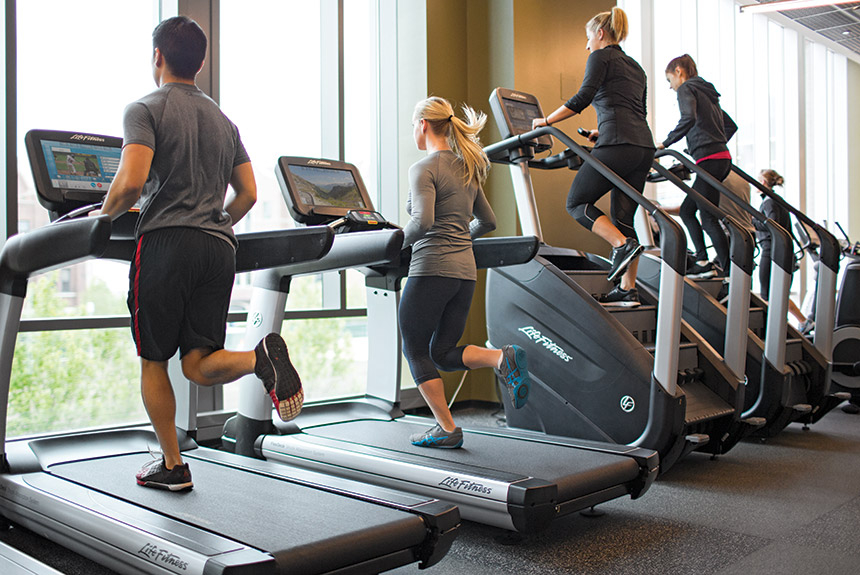
Pros of higher intensity activities (i.e. 75% MHR and above):
- You burn more calories and fat as a result.
- You will increase your metabolic rate during the workout, but even after it.
- It has a positive effect on improving performance, endurance and strength.
- These activities are also considered to prevent osteoporosis.
IS CARDIO REALLY A MORE EFFECTIVE OPTION FOR BURNING FAT?
Since strength training probably doesn't need to be described at length, let's get to the point of the article. We won't stretch you long, in fact, it can be said that the best activity choice for fat burning is not either activity alone, but a combination of them. The idea that cardio alone is best for fat reduction is a fallacy. Yes, you burn fat through strength training as well, and in the following paragraphs we will explain this process in more detail. However, we should still not forget to mention the basic point of reduction, which is CREATING CALORIC DEFICIT. If you don't follow this principle, it doesn't matter which type of exercise you choose, because without creating an inequality in the form of calorie intake < calorie expenditure, fat reduction cannot occur.
Strength training increases short-term calorie burn.
Studies show that strength training increases the metabolic rate for up to 38 hours after it is over. This means that strength training will increase the amount of calories burned per day compared to the normal state, even if you are not doing anything at the moment. Let's explain this with an example. When you work on the computer, you normally burn, say, 50 calories, but with strength training you can burn 60 calories. At first glance, this difference seems quite small, but if you multiply this number by 38, it's already a pretty solid difference that will be reflected in your daily calorie expenditure.

In the case of low-intensity cardio, you have to do the activity for a really long time to keep burning after the activity is over. And even then, the effect won't be as pronounced. What is more effective in this regard is really high intensity aerobic activity, i.e. HIIT. Its influence will result in an acceleration of metabolism similar to that of strength training even after the activity is over.
Strength training also increases long-term calorie burning.
The other factor that inherently plays in favor of strength training is the long-term effect on increasing metabolic rate. The fact that you burn more for a full 38 hours after your workout is great in itself. However, for observable results, you logically need to engage in strength training regularly and, more importantly, over the long term. The muscle mass gained from strength training actually increases your basal (resting) metabolism, i.e . it affects how many calories you burn even when you are not doing anything.
Regular strength training activity increases your body's muscle mass, which, as you know, burns more calories than fat mass, even at rest. So, to sum it up - the more muscle you have, the faster you burn and the better results you can achieve in terms of fat burning. In terms of muscle mass being relatively stable (if you load your muscles regularly and nourish them sufficiently, there is very little chance of losing them), strength training appears to be a very effective fat burning strategy in the long run.
A total change in the distribution of mass in the body.
One more undeniable advantage strength training has over cardio. Strength training results in firming, muscle gain and fat reduction at the same time, which ultimately leads to an overall change in your body. Aerobic activities can definitely help you reduce weight, but during the reduction process you usually lose not only fat but also muscle mass. So, you may lose weight, but practically not much changes in your body composition. However, if you engage in strength training while adhering to healthy eating principles and creating a calorie deficit, there's a greater likelihood that you'll gain muscle in addition to fat loss, and therefore get nicer curves.
AND THE WINNER IS..
The last line implies that doing only cardio for the purpose of fat reduction is no longer the most effective way to burn fat today. A combination of aerobic training (both low and high intensity training can be used), strength training and a properly chosen diet seems to be the best option . In a single session, you will actually burn the most calories with cardio, but if we look at the biggest effect in terms of calorie burning overall (i.e. during and after the workout), strength training wins, with HIIT right behind and long consistent low intensity activity at the bottom of the list.

However, that doesn't mean it shouldn't have a place in your workout at all! It doesn't have such a significant effect on fat burning compared to the other options, but low intensity aerobic activity can be used for example to warm up before a workout, to loosen up muscles after a workout or as a supplementary activity. Aerobic activities are generally very beneficial for heart health and the entire cardiovascular system, so we should not strictly exclude them from training just because they are more efficient ways to burn fat.
WHAT ELSE IS IMPORTANT TO MENTION!
How many calories you burn depends not only on the length, intensity and nature of your workout. You must also take into account your height, weight, muscle mass percentage and fitness level. So it can be said that burning calories, or fat, during activity is again a highly individual matter. In general, the recommended time you should spend exercising per week is 150 minutes. The time spent moving should also be filled with a variety of activities. Remember also to take into account that if you are working out, you will not necessarily experience numerical weight loss. Therefore, observe not only the numbers on the scale, but especially your body composition. Once again, it is also very important to have a correct calorie intake, as this is the basis for successful weight loss. Without a properly set calorie deficit, fat reduction is not possible or more difficult.
Sources:
https://link.springer.com/article/10.1007%2Fs00421-001-0568-y?LI=true
https://www.ncbi.nlm.nih.gov/pubmed/19127177
https://www.ncbi.nlm.nih.gov/pubmed/25162652
https://www.tandfonline.com/doi/abs/10.1080/07315724.1999.10718838
https://link.springer.com/article/10.2165/00007256-200636030-00005
https://www.ncbi.nlm.nih.gov/pubmed/18276898
https://www.ncbi.nlm.nih.gov/pubmed/9740552
https://www.ncbi.nlm.nih.gov/pubmed/19127177
No posts have been made yet.








