Introducing the 6 best core exercises that will finally strengthen your core!
 Author:
 If you have at least a little imagination (and experience), there are seemingly endless ways and exercises for every muscle group. What's more, if you don't have that imagination, all it takes is a few clicks and an uncle google or Youtube and yourstockpile of exercises is suddenly enriched with hundreds of new variations or brand new exercises you had no idea about. Millions of variations of squats, deadlifts, lunges that target a muscle group a little differently each time. Maybe you're "oldschool" and you're of the opinion that classic is classic and you stick to the tried and true basic variations that really work. However, trying new ones is worthwhile because you'll not only give your workout a new lease of life, but you'll also engage your muscles in a slightly different way.
Okay, enough of the opening lines about there being a billion variations of classic exercises, because today we're going to talk about core - that is, deep internal muscles. But to explain why the introduction about variation - because the core muscles are the group that there are about a billion different exercises for, and yet the deep inner muscles are the part that people very often completely neglect. Yet a strong midsection is important for most other core exercises, and a strong "core" not only helps you build strength, get better results and lift heavier weights, but is also very effective in preventing injury!
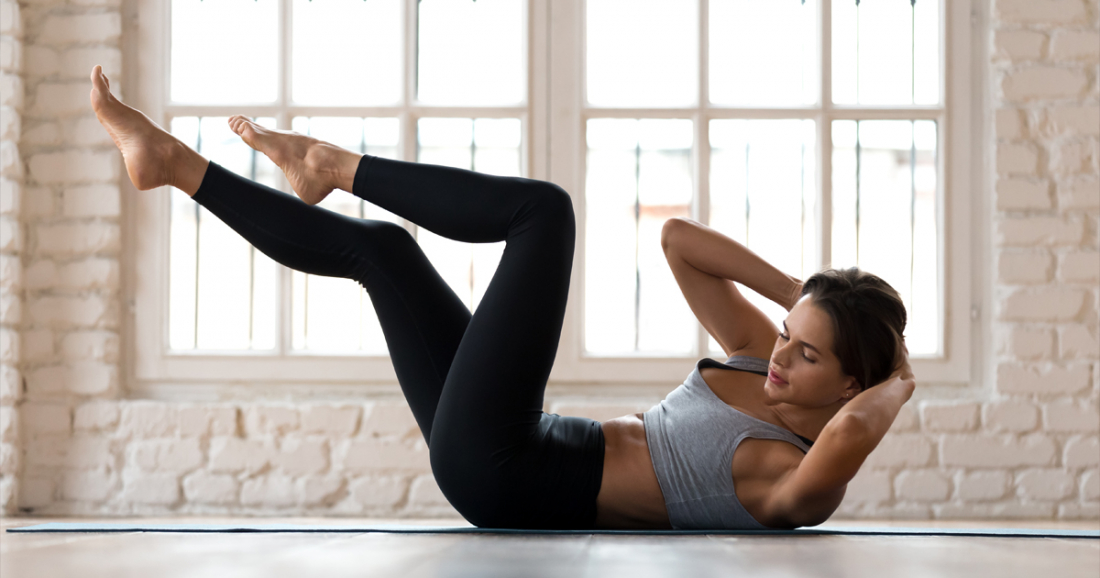
Still, most fitness enthusiasts limit themselves to classic crunches and sit-ups, which often lack technique and are often more detrimental than beneficial. Sure, having a fancy minimum sixpack is the dream of many a fitness enthusiast, regardless of gender. But beware - having a sixpack doesn't mean you have a strong midsection. Yet core exercises should form a significant part of our training, if only because a strong midsection is needed to perform many challenging exercises like the squat or deadlift. Most people probably think of the term "core exercise" as an exercise called the plank, and that's where their imagination ends. They then try pointless monthly challenges and exhaust their centre rather than strengthen it. It's time to look at the core in a little more detail! And that's exactly what we're going to focus on today - how to do core correctly and what muscles core actually represents!
Core is more than just a six pack!
When it comes to classic abdominal exercises such as crunches and sit-ups, you can hear all sorts of opinions from training experts as to the usefulness of these exercises, just like anything else. Some will tell you that they are very effective exercises for abdominal training, while others will warn you of the dangers that these exercises could pose to your spine. To each prong, a bit of truth. The truth is that sit-ups create undue pressure and compression in the spine. On the other hand - unless you do hundreds of them a day, the occasional inclusion of this exercise won't put your spine at too much risk. However, an excess of such movement is definitely not beneficial and there is no need to debate this at length.
If you're doing classic sit-ups 3 times a week for X-years, it's very likely to have a negative effect on your spine. This is to suggest one thing - if you want to protect the health of your spine, you need variety in your training. And this is perhaps more true with abdominal exercises than any other area! And just for the record - sit-ups and crunches are definitely not among the best and most effective abdominal exercises, so you don't have to take their restriction as a negative for your worked-out abs at all.
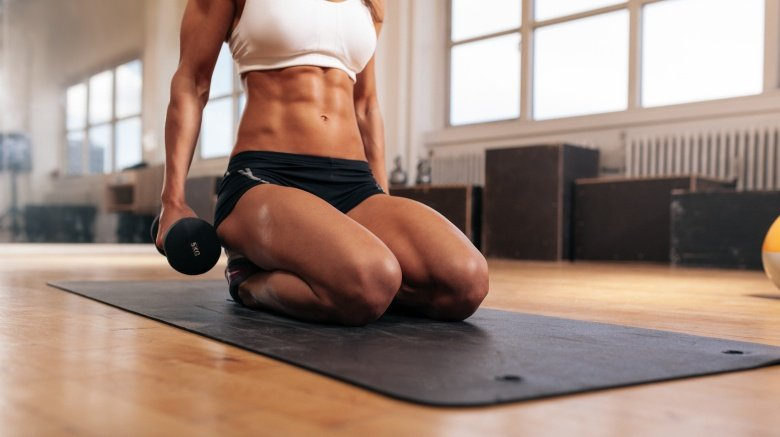
In fact, they primarily target the rectus abdominis, but that's not the only muscle on your belly. Maybe for most people it's the "key" one they want to strengthen because after all, the sixpack is the main one, but in reality it's definitely not the only muscle you should be focusing your training on. Maybe just the opposite. The deep abdominal exercises should be the foundation of targeted abdominal muscle training, and while you'll be able to push your performance ever forward and build strength, you'll probably need to be a little more creative than sticking with classic sit-ups.
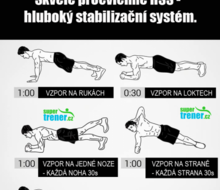
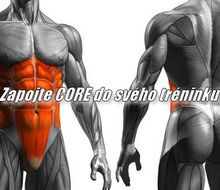
Although most people think of the core (deep stabilization system too) as just the sixpack, there are many other muscles that make up the core. Depending on who you ask, there are even more than 30 different muscle groups that make up the core. Many of these muscles are relatively small and act as synergists with the larger muscles that are the basis for heavy exercises. But what muscles are we actually talking about? Well, instead of unloading a list of all the big and small muscles on you here, let's simplify them into a few main areas:
Abdominal muscles
Although the rectus abdominis (rectus abdominis) is the dominant muscle in this category, it certainly doesn't do all the work. The abdominal muscles also include the internal oblique, external oblique, transversus abdominis, pyramid muscle, and quadriceps. The external and internal oblique muscles allow rotation of the trunk, while the internal oblique muscle also provides some compression/stabilization of the abdomen. The transversus abdominis hides underneath the main abdominal muscles (rectus abdominis) and is the one you should feel the most when you are trying to strengthen your core, as it helps create support for spinal stability. And finally, the quadriceps lumborum, which is a short muscle that runs from our pelvis to our rib cage with an attachment to our lumbar spine. This muscle actually directly controls the relative position of the ribs, spine and pelvis. The quadriceps lumborum muscle helps us perform lateral lunges, works during exhalation and also provides extension of the spine.

Back extensors/stabilizers
Core training has a lot to do with stabilizing the areas in and around the spine. Therefore, many of the muscles in the back are critical to core stability. To simplify things, we'll focus on the trunk extensors and the broad back muscles. The erector spinae (trunk erectors) is actually a group of three muscles that run from the pelvis to the base of the neck. Their main function is to protect the spine and to protect us from undue rounding of the back under load. This makes the muscles in this group key players in maintaining spinal rigidity and in our ability to build strength. The broad back muscle is the one you most likely associate with push-ups or pull-ups, but it also serves as a rotator of the trunk while preventing excessive rotations that can lead to injury.
Pelvic floor muscles
There are many muscles in the hip area, but the main ones we rely on for mid-body stability are the gluteal muscles, i.e. the gluteus maximus, gluteus medius, gluteus minimus, and the hip flexors. We should pay attention to the gluteal muscles not only to attract the attention of the opposite sex, but also because they are the primary engine for lower body strength. Weakness of the large gluteal muscles can lead to excessive load on the spinal extensors and back pain. The gluteus medius and minimus work very closely together to help us move our legs. In addition, they also prevent adduction of the leg (inward movement). This is especially helpful for us if we want to perform the squat and deadlift correctly. The iliopsoas (hip flexor muscle) is a muscle that runs from the front of our femur to the top of our pelvis and lumbar spine. The main function of this muscle is to flex the hip by lifting the femur up towards the trunk.
Why is core training so important anyway?
The aforementioned mid-body muscles act as stabilizers for the entire body, as is logical from the term deep stabilization system. The goal of training is simply to do specific exercises to develop and strengthen these stabilizers. If any of these core muscles are weakened, it can result in lower back pain and other negatives. Incorporating CORE training into your routine is essential for improving posture, increasing function and balance, and reducing the risk of injury - all of which enhance physical development within any exercise program. Here are the main benefits of this type of exercise:
Recommended
Nebbia Sportovní podprsenka se střední oporou ICONIC 230
GymSupps XGen
Nebbia Push-up šortky se šněrováním STRONG BEAUTY 429

Nutrend Delicious Bar
- Improving posture - Correct posture is essential for preventing back and neck pain while reducing the risk of injury.
- Increase functionality and performance - You benefit from core strengthening not only as an athlete, but also in all daily activities, especially as you age and become more prone to falls and injuries.
- Better balance and coordination - Sufficient core strength improves balance and coordination, which can reduce reaction time and improve mobility, resulting in an overall increase in performance and reduced risk of injury.
- Increased spinal support and reduced back pain - Those who sit at a desk for long hours may unknowingly hunch and round their backs. It's almost unbelievable, but up to 70% of Americans suffer from lower back pain, and I would venture to guess that it won't be much different here. Over time, this often leads to chronic back pain. Strengthening the muscles surrounding the spine provides better support for the back and can reduce the frequency and intensity of back pain.
- Reducing the risk of injury - Improving posture, improving balance, coordination and function, and increasing the strength of the muscles that support the spine help to significantly reduce the risk of injury.
- Foundation for most exercises - A strong mid-body is, dare I say, an absolute necessity for most exercises, whether they are strength exercises such as squats or deadlifts, or elements of strength and endurance sports such as skating, boxing and more. If you don't have a strengthened midsection, you often don't perform the exercise correctly and are much more prone to injury.
- Strong midsection = prerequisite for a developed abdomen - last but not least, core exercises are very important for developed abdominal muscles, which are a dream for many of us.
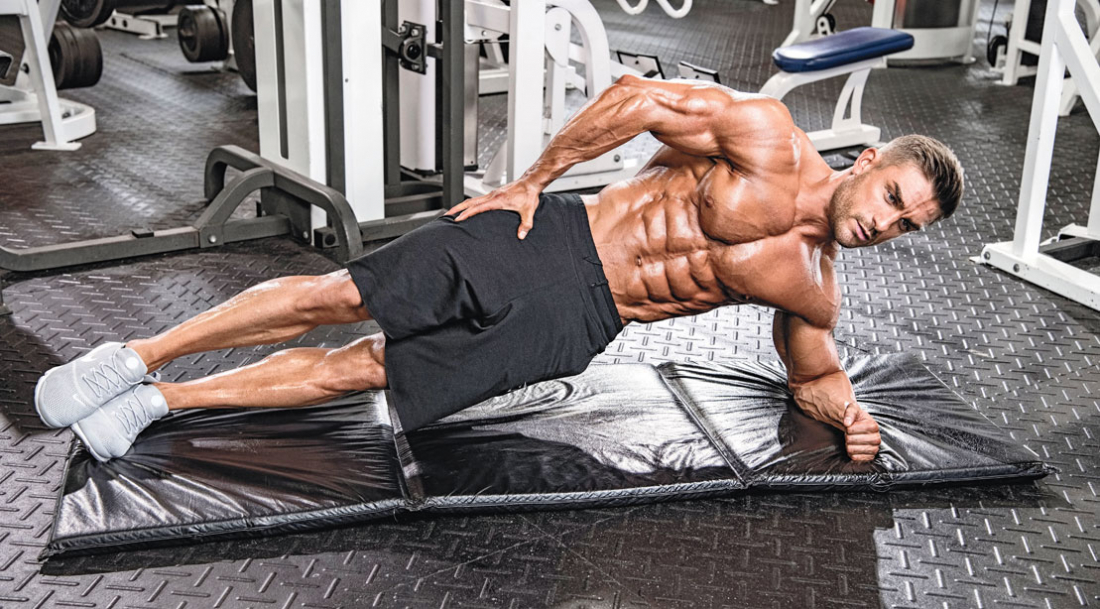
If core is not part of your training program, you should definitely consider incorporating it. Add core strengthening elements to your workout, or add a core-only workout at least once a week. Target range and reps may vary depending on your current fitness and goals, but start with lower weights and higher reps because if you've neglected core so far, it's not advisable to overdo it right away.
So how to train core?
When designing your workout, remember to think about variation, not just in terms of exercises, but especially in terms of the load on different areas. There are more exercises for the midsection than any other part of the body, which can be a disadvantage as you may neglect exercises targeting other parts of the core than the rectus abdominis. Core training is in no way limited by age, training level, or the type of sport you play. Moreover, it is very suitable as a post-rehabilitation exercise, to correct various imbalances and especially to eliminate and prevent the onset of back pain. You can use various aids such as bosu, gymnastic ball, trx, resistance bands, but you also do not have to use any aids at all. So, let's go over a few exercises that are good to include in your workout routine to strengthen your midsection.
Plank/ plank
This exercise probably doesn't need a long introduction. It's a seemingly simple exercise, but one that can be a real pain to perform and, what's more, it's not actually as easy as it looks. This exercise is one of the most complex exercises ever. The plank has two basic versions. The first one is the forearm rest position, the second one is the palm rest position. In these classic forms, there is no additional movement and are therefore static exercises, the aim of which is to keep the hardened body in this position for as long as possible.
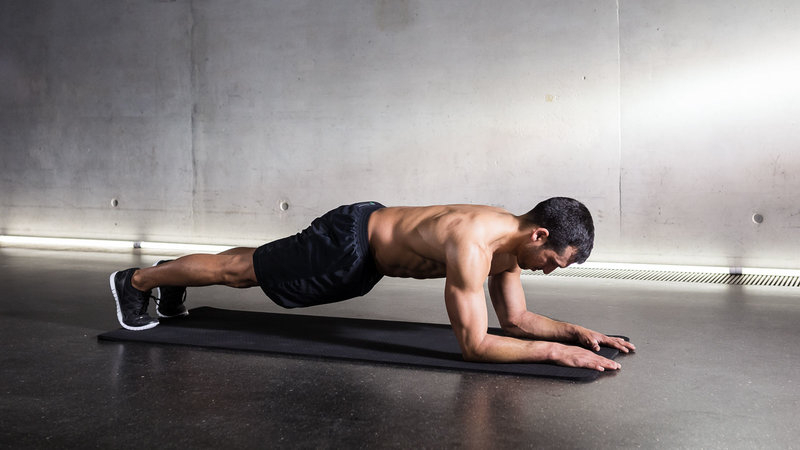
Execution. Hold onto your forearms and lift your torso off the ground. Push your butt up so that your lower body is in a stable position. At the same time, clench your abdominal muscles tightly. Your whole body should be in one plane, i.e. head, shoulder blades, back, butt up to the toes of your feet. The head should be in the same position as when standing, look at the ground and keep the neck relaxed to avoid excessive and undue pressure on the cervical spine. A very common mistake is arching in the back, which is caused by insufficient strength of the internal muscles. If you are starting with this exercise, do not try to break time records. Start with small intervals, but with precise execution. In addition, the plank then has many other variations.
V-UP
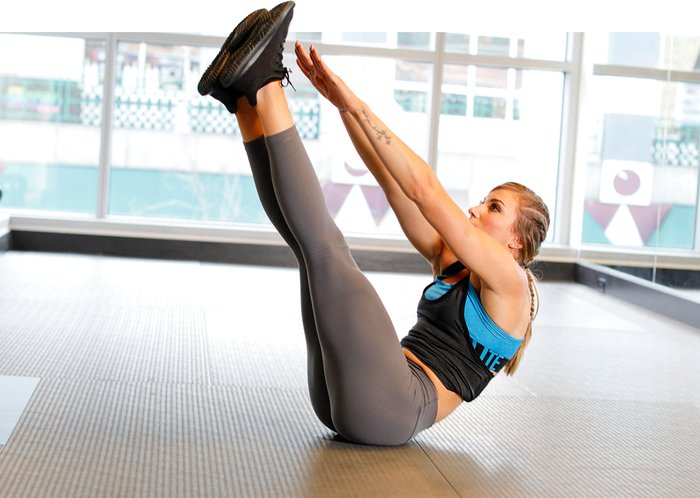
The name comes from the fact that in the loading phase of this exercise the body is shaped like a "V". The starting position is as follows. Hands should be touching the floor and extended behind the head. Raise your upper torso with your arms extended while lifting your legs so that your heels are pointing towards the ground. Ideally, your hands should touch your feet and then slowly return your body to the starting position.
Pulling your feet up on the ball
Pulling your feet up on the ball is a great exercise that also requires perfect balance and coordination of movements. Place the bottom of your shins on top of the exercise ball and position yourself as if you were going to do push-ups with your feet on the ball, hands shoulder-width apart. Exhaling, pull your knees towards your chest and keep your back straight. Straighten your legs by rolling on the ball back to the starting position and inhale.
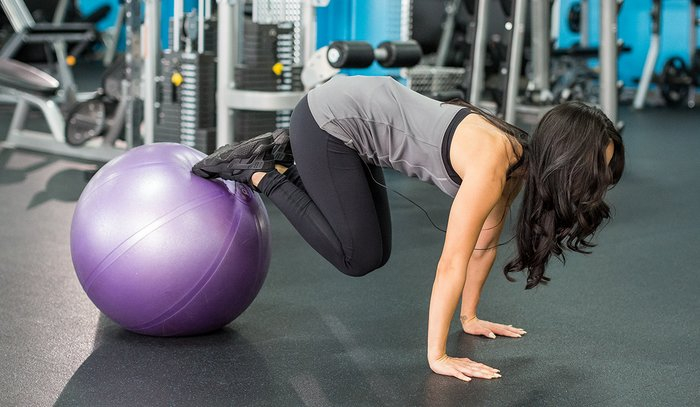
TIP: If this variation seems too easy, try ballpikes with only the toes remaining on the ball and the butt going up.
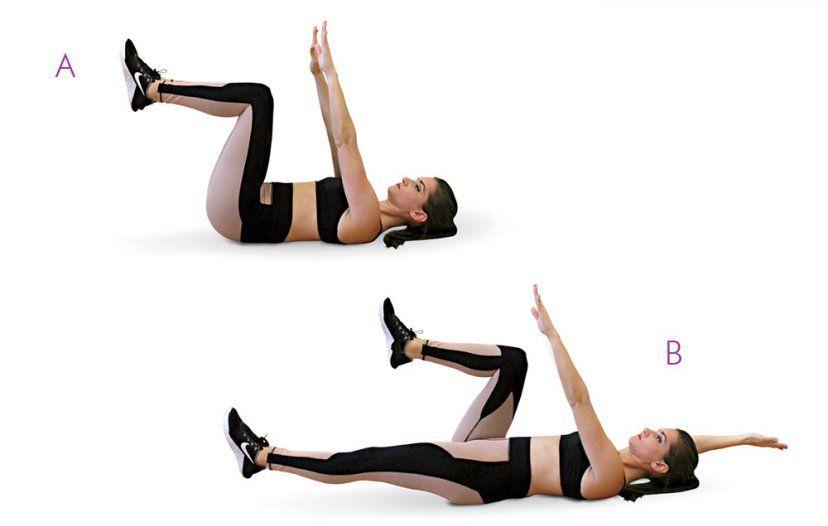
Dead bug
Lie on your back with your arms and legs in the air, bend your knees to a right angle but keep your arms straight. Push your lower back into the floor and brace your mid-body. Alternate lowering one leg until your heel almost touches the floor, while not pulling the opposite arm toward the floor above your head. Persist for a moment, bracing your core as much as possible as you lift both limbs back up and return to your original position. Repeat with the opposite arm and leg. Continue alternating for 30 seconds.
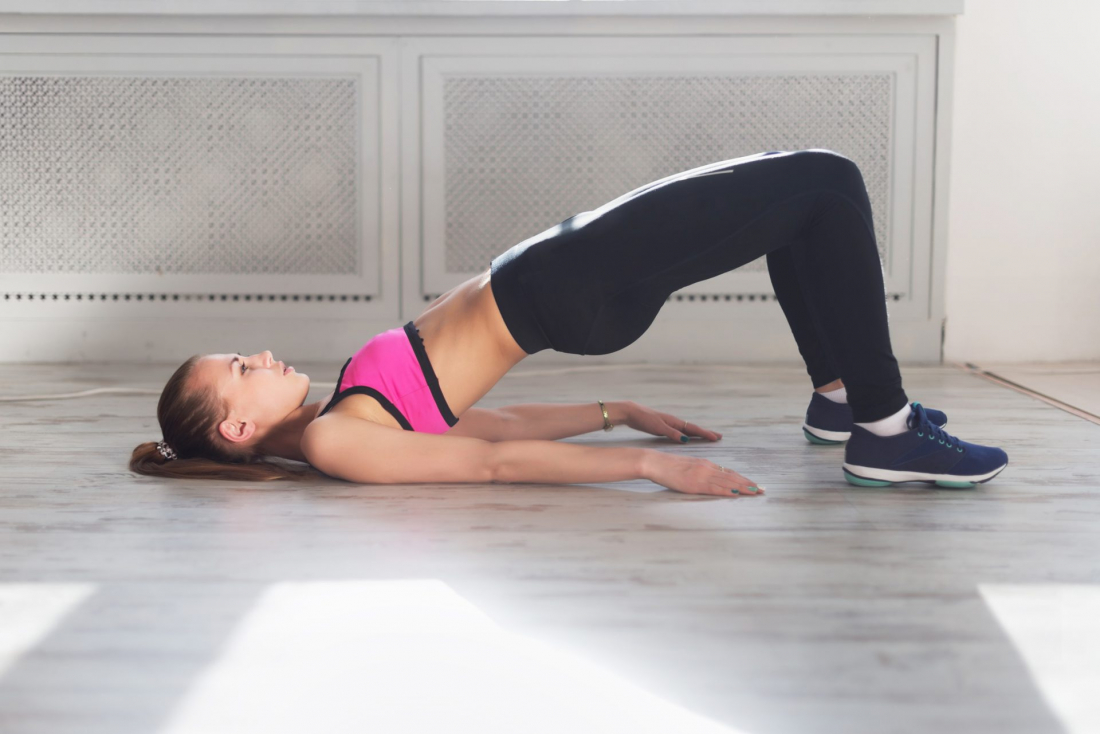
Pelvic bridge
Lie on your back, bend your legs at the knees and press your back firmly into the mat. Activate correct breathing. Then lift thepelvis and lower back up to the shoulder blades, the shoulders must remain on the mat. Keep the pelvis natural, do not force it as high as possible. Press the feet against the mat and the body at the same time. Hold the top position for a few seconds, then slowly lower yourself to the floor and repeat.
Of course, there are plenty of exercises, but we've chosen ones that even beginners can do. The core also engages during complex heavy exercises like the squat or deadlift, so never strengthen it before you go for heavy exercises. It could cause the center of the body to be exhausted and easily lead to injury. Ideally, strengthen the core on a separate day or at least at the end of your workout, or in combination with smaller groups. How often to do core training? Ideally, we should train the deep stabilization system at least 1-2 per week.
What to take away from the article?
The core muscles are probably one of the most underrated areas ever. It's a real shame that this is the case given the huge impact that the core muscles can have on our strength and performance. A strong midsection not only helps you increase the amount of rolls on your barbell, but also serves as effective injury prevention. An important thing to remember is the fact that the core muscles are more than just a six pack, and if we decide to include core strengthening in our training, we will definitely need to incorporate exercises other than the classic sit-ups and crunches. Mid-body exercises should definitely not be missing from any athlete's training regardless of age, experience or sport.
SOURCES:
https://www.ncbi.nlm.nih.gov/pubmed/9219209
https://www.ncbi.nlm.nih.gov/pubmed/14964586
https://www.ncbi.nlm.nih.gov/pubmed/16526831
https://www.ncbi.nlm.nih.gov/pubmed/18937521
https://www.ncbi.nlm.nih.gov/pubmed/28135584
https://www.ncbi.nlm.nih.gov/pubmed/23542879
No posts have been made yet.