





Incorporate these 5 exercises for better results!
 Author: Šárka Randáčková
 In today's article on KULTURISTIKA.COM you will find 5 exercises that you certainly don't do, but for better results you should!
1. Heavy goblet squats
Regular squats are fine, of course, but sometimes you can relieve your back with this variation. Goblet squats are often considered an exercise for beginners, the injured or those who need some lighter exercises. However, it has so many benefits that it can be used as a primary exercise.
The problem is that it's hard to get a proper load on them, as it's hard to get a one-handed barbell larger than 45 pounds into the basic position.
How to do it:
- Place the one-handed bar vertically on a flat bench.
- Stand perpendicular to the bench, facing the one-hander, and descend into a deep squat.
- With the palms of your hands, grasp the top disc of the one-handed bar.
- Lift the one-handed bar off the bench and lean closer to your center of gravity.
- Practice your reps and at the end, place the one-handed back on the bench.
Heavy goblet squats will destroy your midsection and quadriceps. It's easy to get deep because the one-arm will serve as a counterbalance. The exercise builds upper body strength while forcing the upper back to hold extension so the lower back is not at risk. It's also pretty easy to break the exercise. Just throw the one-armed barbell away.
2. Back extension with a focus on the buttocks
This exercise is extremely underrated. Proper execution can put extreme strain on the glutes. The key is to extend the time under tension. Most people just flap around like a dolphin at Sea World. That's not right.
In fact, extension is a stupid exercise for the lower back. The lower back is mostly made up of connective tissue and the deepest abdominal muscles. Outside of physical therapy, there's not much point in training them. It would be more effective to use the extension to train the buttocks.
How to do it:
- Start in the vis with your feet together.
- The movement begins by squeezing the glutes and pushing the pelvis into the padding.
- Push the pelvis forward, allowing the torso to move upward.
- Keep tension in the glutes the entire time.
Forget about adding weight for a moment and slow down the pace. You should feel massive tension in your glutes. Try 3 sets at a very slow pace and hold isometric tension for at least 30 seconds at the top. As your glutes shake with exhaustion, you'll feel your abdominals engage as well.
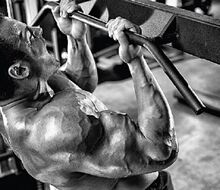
3. Pull-ups in cat and cow position
Chances are good that your back workout includes both single-arm and big-axle pull-ups, pulldowns and pulley rows. That's fine if you have reasonably mobile shoulder blades and are training them correctly. However, many exercisers don't excel at both.
Replace your favorite back exercise with this variation of pull-ups. It's heavy and will help with your lats and abs.
John's on it:
- Grab the extender and slide as far back on the bench as you can.
- Pull your upper body towards the pulley.
- Push your chin towards your chest and stretch your spine. Allow the shoulder blades to rise and extend.
- With an exhale, lift the chest and chin and pull the extender towards the sternum (elbows lead the movement).
- Pause for a moment before repeating again.
This variation is great for decompressing the spine and strengthening the abdomen and lower back. It's like pulling down a pulley while seated. Try doing it at the end of your workout.
4. Single-handed pulley pull-ups with rotation
Try replacing the classic one-arm pull-ups with these. They will also help with spinal decompression, which should be the basis of back training.
John on it:
- Take a basic position.
- Create space by putting your foot on the floor on the side you'll be pulling.
- Don't start with your shoulders perpendicular to the pulley, but rotate towards it. The movement is guided by the shoulder and elbow traveling back to the side of the body.
This variation engages the lats more by increasing the range of motion, and it will also engage the abdominals.
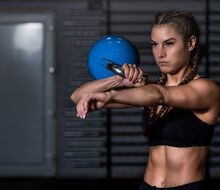
5. Kettlebell swing one-handed (with rotation)
Forget the classic two-handed swing.
This is considered Proprioceptive Neuromuscular Facilitation. This will help with poor posture, plus it serves as a cardio and abdominal exercise.
The strength of the exercise comes from the diagonal movement patterns that engage multiple joints and planes of motion. These patterns require rotational movements of the limbs and stability of the center of the body.
Why not practice the classic two-handed variation? Because it keeps your shoulders in a position of internal rotation. This variation eliminates that problem because there is shoulder flexion as you rotate the thumb of the swing arm downward at the bottom of the exercise and upward at the top of the exercise. This will improve the health of your shoulders, your prize posture and your strength.
Source: ww.t-nation.com - The 5 Best Exercises You Aren't Doing
By Michael Shaughnessy |
Author: Šárka Randáčková No posts have been made yet.








