





Huge and strong legs thanks to Mountain Dog training
 Author:
 Question: How many people in your gym have big, full, scary legs? What about on the stage of the last bodybuilding contest you participated in?
A: I can't speak for everyone, but there weren't many people like that in the ones I was in.
Why is that? Are respectable legs about genetics? Or do people not know how to squat? I'll tell you the reason I suspect later. But first, I'll tell you about myself.
My name is John Meadows, and I've been fascinated with size and sculpting from a very early age. I started competing in bodybuilding at the age of thirteen, winning local, state and regional titles and recently placing well in a national competition.
I make sure to not only have practical knowledge, but also formal education. I have a Bachelor's degree in Health and Fitness Management and my accreditations CSCS (Certified Strength and Conditioning Specialist) and CISSN (Certified International Sports Nutrition Society).
I studied under Louie Simmons, the best triathlon coach in the country, and have maintained a partnership with and learned from Dr. Eric Serrano for over 10 years. I currently maintain a nutrition and training website and try to balance that with raising 21 month old twins and my regular job at the bank.
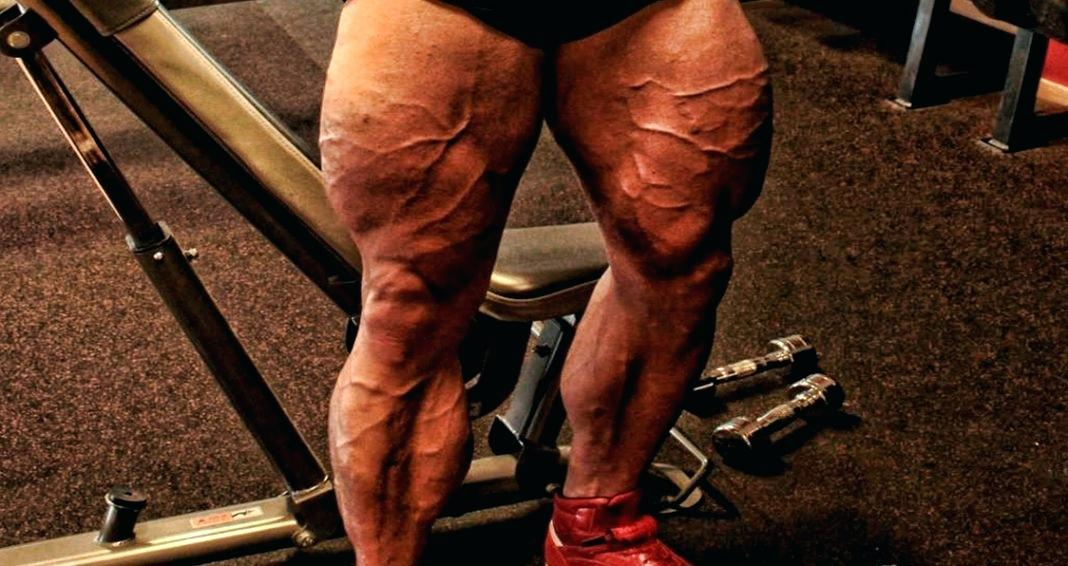
Mountain dog training
Enough about me though; what is this Mountain dog? Mountain dog is what I call an intense scheme of exercises, reps and techniques that is designed to push your body to the next level by not allowing it to adapt.
If you're looking for something that will take you 10 minutes a day, or some gimmick from a commercial, you'll be disappointed. The key to training progress is increasing intensity, so prepare to train hard.
I'll walk you through the main concepts of my leg training, and if you're unhappy with your lower body, I'd love to try it with you. At the end of the article, I've included some examples of leg workouts that I assume you'll enjoy - in that slightly twisted way.
Key routines
1. Performing a series = High Intensity
I incorporate five key practices into almost every leg workout:
3-second starts
If there's anything that has added the most mass/size for me over the years, it's this. It all started in the 90s when Dr. Eric Serrano and Charles Poliquin were talking about time under tension. I remember Eric telling me that the optimal duration of a set was 50-60 seconds, and I immediately incorporated that into my training. Well, it worked - tremendously.
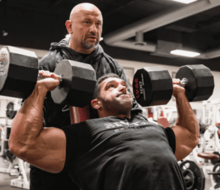
I don't mean that I still blindly follow the 50 or 60 or 70 seconds for volume. Your body can and will adapt to anything if you don't alternate it. Occasionally I started incorporating a set that lasted 2 to 3 minutes. I put on a leg press and with a decent weight, I practiced this lowering until my legs started to feel like they were on fire.
These 3 second triggers are used on the four primary exercises - leg presses, big axis squats, hacken squats, and deadlifts with legs extended. Occasionally we'll use it for other exercises, but these four become sheer madness using this technique.
Partial reps
Many of you are probably familiar with biceps elevens, a classic scheme using partial reps. However, these can also be used effectively for specific leg exercises.
My favourite lower body exercise using partial reps is the stumble. Partial reps are done from extension (from the outstretched legs), not contraction; so you can do 15 full reps and add anything between 8-25 partial reps at the end.
The pumping will be incredible, and when you get to the quadriceps workout, the squats and leg presses should feel much better. Use the partial reps for lunges, leg presses, front squats.
Sustained tension with heavy weight for many reps
I learned this in a Tom Platz seminar in the late 80's. Someone asked him how he created such massive legs. He replied that too often we focus on high weights for few reps or lighter weights for more reps, but the right way to do it is to use high weights for more reps.
This is obviously very intense, so you have to be careful. You can't get under the axle on squats with your max and want to do a lot of reps with it unless you want to throw it away, or worse, injure yourself. In fact, I'd recommend not using this on squats with a big axis, period.
I pushed this advice a little further, and saw good results when I stopped pumping my legs during my exercises, but rather pumped or held a constant tension. I know it's nothing new - Joe Weider invented it, right - but sustained tension with high weight produces incredible intensity. I primarily use this technique on leg presses, squats on the machine, and lunges on the multi press.
You have to be careful not to overdo it. One good set in a leg workout is enough (with the rest of the workout). This is a crucial test of your pain tolerance. How far will your head allow you to go? How much pain can you tolerate? These answers will determine the effectiveness of this protocol.
Rest/pause explosion
This is a great way to develop adductor strength and size. I found that my inner thighs/adductors started to get bigger as I started to lower some exercises as low as I could, stopping and pushing up as hard as I could. My training partners were the same way. I was helping one gentleman last year with his preparation for Mr. USA and he started using this technique in almost every workout. It was incredible to see how his inner thighs looked after six months.
We used this technique at Westside Barbell in Columbus when I was there in the 90's, and the resulting strength gains were phenomenal. Louie likes to do his famous 8 threes on speed squats and has produced some of the strongest guys on the planet. I just added a few reps, and voila, huge inner thighs.
Recommended

Nebbia Legíny se síťkou s vysokým pasem PERFORMANCE 480

Nebbia Sportovní podprsenka STRONG BEAUTY 424
Nebbia Sportovní racer back podprsenka AGILE 471
Use full range of motion, pause at the bottom and lift up strongly. This technique is especially useful on hacken squats and machine squats.
Crashing series
This is something that will test your resolve. Again, this is a well-known technique for arm training fanatics, but how many people will give a crazy shazen series of hacken squats or overhead squats a go? How about using the three-second technique and partial reps with it as well? We can use them on almost every leg exercise except free weight squats.
Watch the video.
2. Volume of work
There is currently an irrational fear of overtraining. It seems as if anything over three sets per bodypart is a recipe for zero gains, illness and injury. Is this a conspiracy to get people to stay away from gyms?
Mountain dog training uses a 3 cycle approach spread out over 12 weeks:
Phase 1 - Weeks 1-3
- Use moderate volume, gradually adding intense sets. I always try to get the most out of the minimum. In other words, for most people, even very advanced ones, adding the intensification techniques described above will be enough to give an initial shock to the legs.
- Why do 20 sets on the legs when you can grow great at 12? It will allow you to gradually increase the volume and intensity, and reap the rewards of increased hormonal response later. The total number of sets is between 11-14.
Phase 2 - Weeks 4-9
- Use high volume. Now start adding volume every week. For the next three weeks we will slowly add volume as your body gets used to the intensity from the first phase, and will need a boost. Generally, the number of sets will be between 16-20 and more intense sets will be added each week. This is a very tough six weeks.
Phase 3 - Weeks 10-12
- Use a low volume of work, all sets after warm-ups will be high intensity. The total volume of sets will decrease (8-10), but the ones you do will be the hardest ones of your life.
Deload - 2 weeks
- As with any heavy program, deload is one that will help you in the long run as you recover from the cumulative nervous system fatigue that comes with heavy work. However, everyone is different - I've seen people who needed deload after six weeks, and others who have trained for over 30 weeks full out and still improved.
- I generally recommend two lighter weeks after 12 weeks of brutal work; sometimes you have to take a step back to get two ahead.
3. Order the exercises
Some things you just can't find in books. You can learn about sarcomeres, myosin, sarcoplasmic reticulum, and all the rest. And I have to tell you, I love this stuff.
But you'll never read that you're supposed to get better hamstrings from squats and leg presses by first getting proper stumbling technique. This is something I've found out by experimenting on myself and it's been confirmed by working with endless amounts of clients.
In truth, I believe many exercise sequences work better for size and strength gains, plus they will protect you from injury. I just haven't the slightest idea how to prove it scientifically.
Here are some examples:
Hamstrings:
- Practice high-intensity stumbling before leg presses or squats, and you'll have better hamstrings.
- Practice hamstrings and quadriceps in the same workout - you'll be bigger and fuller overall.
- Practice stretching types of hamstring exercises (deadlifts with legs extended, Romanian deadlifts, etc.) after your hamstrings and quadriceps are fully pumped.
Quadriceps
- Practice leg presses and squats before hacken squats.
- Practice at least two quadriceps exercises before lunges.
- Don't practice any kind of lunge or hacken squat first in your workout - you won't engage the muscle properly and could hurt your knees in the process.
- If you have small quadriceps, don't practice pre-kicks, period; focus on squats, leg presses and hacken squats for overall development. Overkicks can be a great tool, but if you use them instead of complex exercises, they'll be more of a detriment. The same goes for lunges. They have their place in training, but there's no time for them until you've achieved some leg development.
4. Stretching and massaging the fascial tissue
Many successful programs such as Dante Trudel's DoggCrapp workout have focused heavily on fascial stretching, however John Parillo was probably the first to place proper emphasis on it. I actually started real training at Parillo's gym in the early 90's, so I may be slightly biased on this; I just know from experience that it works.
Fasciae are tough, dense connective tissues that extend throughout the body in a three-dimensional network from head to toe. Fascia surrounds every muscle in the body, every fiber down to the cellular level is surrounded by fascia.
From this, we can infer that the fascia determines the function and length of the muscle it surrounds, and furthermore, we can assume that poor function of this system will have broad implications for the entire body.
Restrictions in this three dimensional network can create many problems such as myofascial pain, poor posture, shortening and restrictions in skeletal muscle - all of which spell the end of hypertrophy!
You engage intense fascial stretching at two specific times: 1) when the muscle is extremely pumped and 2) at the end of the workout. Don't be lazy; take the time to do it, and you will be rewarded.
Any science?
Another extreme training system, right ? Can I prove it even works?
I could make it simple and mention some well-known bodybuilders who would put their hands in the fire for my methods, like Shelby Starnes of Troponin Nutrition. But there are also physiological prerequisites for this training to work great:
- The more fibers you can engage, the more fibers you potentially have to rebuild during the repair phase. Performing the sets according to the videos will engage the maximum amount of fibers.
- We know that working with heavy loads increases the diameter of the muscle fibers, which means they get bigger. However, we don't go crazy; we compose the exercises correctly and don't just follow the loaded weight, because you can't go on like this indefinitely.
- Taking on more volume will result in the desired endocrine system response, especially an increase in growth hormone and testosterone.
Sample Mountain Dog workouts
Now that you've read the theory to my program, let's take a look at some sample workouts:
Phase 1 Workout - Total Volume = 12 sets.
A) Lying Down, 4 sets. Have someone lightly push your lower back down while you do this to keep your hips down - you won't be able to load as much, but it will be more isolated.
- 2 x 20 (warm up)
- 1 x 15
- 1 x 12
- 1 x 8
Add weight in each set. Keep the breaks around 90 seconds.
1 x Shuffle series*
* Go back to the weight you did for 12 reps and do 10; drop the disc and do another 10 reps, then go back up the disc (heavier weight) and do 25 partial reps from the bottom - just start the reps and go back down. Small reps; the weight will only move a few inches.
B) Deadlifts with legs extended, 2 sets. Bend your knees at the bottom; take smaller discs to make the stretch better.
- 2 x warm-up
- 2 x 10*
*Clench glutes and hamstrings on each rep.
C) Leg press, 3 sets. Legs slightly wider than shoulder width and a little lower on the platform. Start lightly with one disc on each side; you should still feel it in your hamstrings and inner thighs during the first few sets when eccentric. Keep adding weight until you are adequately warmed up.
Do the negative portion of the movement for 3 seconds, but make the upward journey explosive. Give yourself 3 such sets with a weight that would be heavy for 10.
Fascial tissue stretch, 1 minute per quadriceps.
D) Hacken squat, 3 sets
- 3 x 10 reps in full range of motion.
On the third series, use the same weight but lower it down and stop, then push the weight up forcefully. Maintain constant tension - Do not overextend your legs. Do 10 reps like this, then take half the weight off and do 15 more reps to finish your leg workout.
Stretch the fascial tissue for 1 minute for each of the quadriceps and repeat twice.
Phase 2 Training - Total Volume = 17 sets.
A) Stumbling while seated, 4 sets. Full range of motion up and down.
- 2 x 20 (warm up)
- 1 x 14
- 1 x 12
- 1 x 10
Add weight for each set. Hold the breaks for 1 minute.
- 1 x 35 reps (!)*
* Go back to a weight that is 1 or 2 reels less than what you started with and do 35 reps. The first 10 will be easy, then the fire will ignite. It will be hard to get to 35, but do it, even if the last 10 are partial. Work your way through this series.
B) Leg Press, 3 sets.
Standard position; feet shoulder-width apart, thumbs pointing perpendicularly up and feet in the middle of the platform.
- 2 x warm-up sets. Gradually add weight until you get to a weight that you would normally do a maximum of 10-12 reps with. Stick to this weight.
- 3 x16, heavy weight and high reps.*
* All performed with sustained tension - no switching. You may need to help yourself with your arms. Try to work hardest at the bottom of the movement; this will concentrate on that drop on the quadriceps.
Keep the pauses to about 2 minutes.
C) Machine squats or hacken squats, 3 sets.
- 1 x warm-up series
- 3 x 8*
* Use a weight that allows you to lower it all the way down and take a very controlled break there. Push up hard, but don't overextend your legs. It won't even take much weight and your legs should be extremely pumped after 3 sets of 8 reps. Once again, lower it deep, pause for a second, and shoot back up.
Fascial tissue stretch, 1 minute for each quadriceps.
D) Squat to multipress, 3 sets.
- 2 x 8 reps with full range of motion, all the way to your heels.
- 1 x 8*
* For the last set, use the 1-1/2 technique. Sit all the way down, lift only halfway up, then back all the way down and lift all the way up - that's one rep.
Fascial tissue stretch, 1 minute for each quadriceps.
E) Deadlift with legs extended with one arm, 4 x 12 reps.
Don't lift until straight and bend knees slightly at the bottom. Focus on getting a good stretch and try to get a little lower on each set. Keep in mind that your hips are supposed to go backwards when you lower the one-armed dumbbells down. Keep the dumbbells lightly touching your legs.
Stage 3:
For phase 3, use your imagination; think of all the possible combinations of the above techniques.
Summary
This was an overview of Mountain Dog style leg training and an introduction to my overall strategy for building muscle size quickly. The techniques mentioned in this article aren't necessarily applicable to all body parts, but in my experience the legs can take a heck of a lot of work.
So I'm giving them a workout.
Going back to the first paragraph and why I think so few people have decent legs, I'll put it in two words: Pain tolerance. And the other two - work ethic - you simply need that to succeed.
Source: www.t-nation.com
Author.
No posts have been made yet.








