





Hip thrust is not just an exercise for women!
 Author:
 When you say hip thrust, most of us think of the big dumbbell exercise that women do to get a firm and nicely sculpted behind. In this article, we'll show you why everyone, regardless of gender, should include it in their workouts and how to practice it correctly.
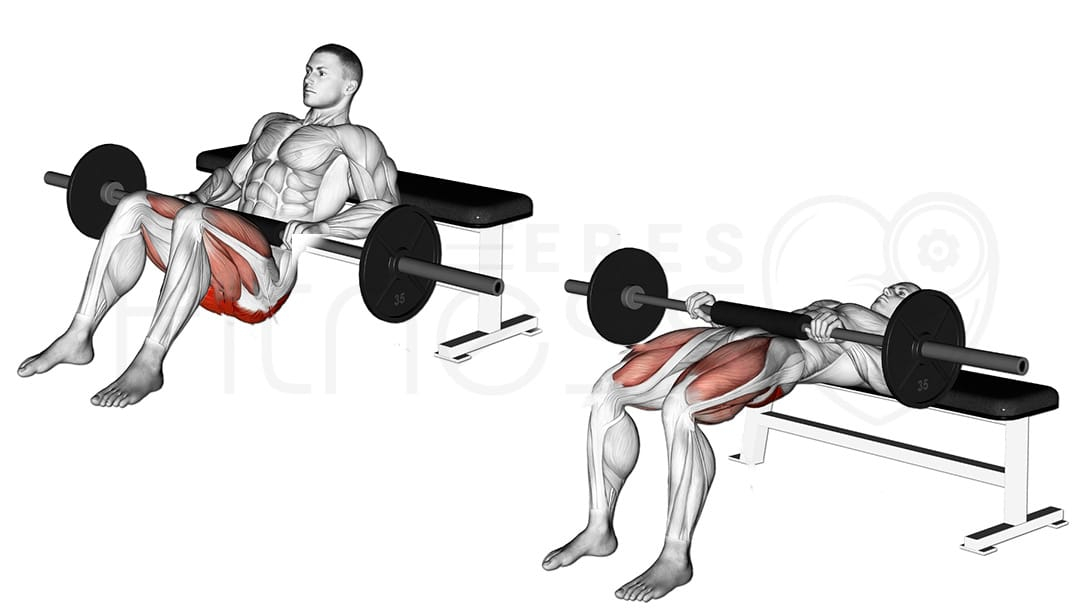
The claim that the hip thrust is perceived by a large number of people as an exercise for building a sexy behind is supported by one of the large-scale surveys of 7,628 respondents, which showed the following:
- 63% of exercisers include the hip thrust in their workout for purely aesthetic reasons, these are mainly women who want to build an attractive behind
- 17% practice it for injury and pain prevention
- 12% for building strength (e.g. squat, deadlift)
- 8% to improve performance (especially sprinting, high jump)
Let's change this view of the hip thrust! Let's see what benefits it brings to all of us, whether we are male or female.
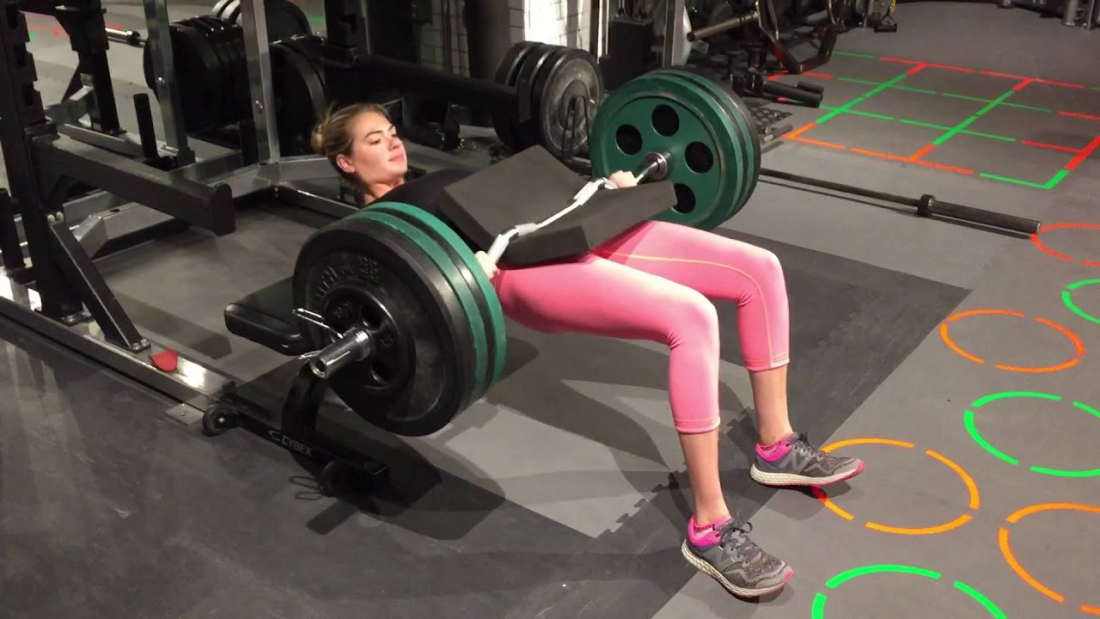
5 reasons to practice the hip thrust
1) Helps you lift more on both the squat and deadlift
Are you still at the same numbers when it comes to lifting maxes on the squat or deadlift? Incorporating the hip thrust regularly can help. This is an exercise that engages the glutes, hamstrings, quadriceps, adductors, lower back and lower abdominals.
The hip thrust activates the gluteal muscles more than a squat or deadlift, making it an ideal exercise for building gluteal strength and volume. A strong gluteus muscle is definitely needed for lifting heavier weights for the squat.
2) It is gentler on the knees and spine than squats
Deadlifts and squats with a large barbell can cause uncomfortable pressure or even pain in the spine for some when lifting heavier weights, but with a properly executed hip thrust, the spine is not as stressed even when lifting heavier weights. Similarly, this exercise does not put as much pressure on the knee joints. The hip thrust is regularly used, for example, by "The Rock" Dwayne Johnson, who suffered a lower body injury during his wrestling and football career. When training his legs, he always warms up with hip thrusts to achieve proper activation of the muscles of the lower limbs and lower back, reducing the risk of further injury. You can watch a video of his workout below.
3) Improve posture
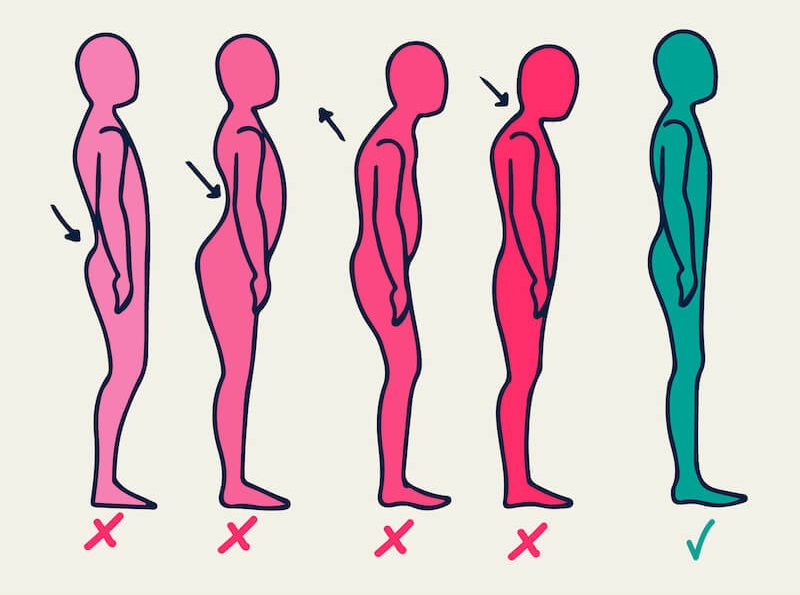
The gluteal muscles are involved in upright posture and correct pelvic posture, the large gluteal muscle controls the hip joint. Therefore, it is not uncommon for lower back pain to be caused by a weak gluteal muscle. In an age where a significant number of us spend most of our day sitting in an office, weakening of this muscle is not uncommon. Incorporating hip thrusts regularly will strengthen the glutes and help prevent looseness and poor pelvic tilt.
4) Supports sprinting performance
Strength training should not be absent from sprinters' training, and the most common exercise they include is undoubtedly squats, which are one of the most effective exercises for developing strength and muscle mass in the lower limbs. However, some of the studies conducted show that the hip thrust seems to be a more effective exercise in terms of overall performance improvement in sprinting than squats with a large barbell. What is the reason for this? The direction of force application plays a role - with the hip thrust we apply force in a horizontal direction, with the squat we apply force in a vertical direction.
5) It affects the shape, size and strength of the glutes
The hip thrust certainly cannot be denied a large contribution to building an attractive behind, and this is due to no other reason than the fact that when performing it, maximum load is placed on the gluteal muscles. We recommend trying the "inverted pyramid" method when training, where you perform the first set with a heavy weight, managing a maximum of around 8 reps, and gradually decrease the weight and increase the number of reps until you reach a point where your muscles are burning like hell. With this method it is very important to warm up sufficiently beforehand, as the very first work set is with heavy weight.
Doing a hip thrust correctly is not rocket science! How to do it?
The movement starts through the heels
By pushing into the heels during the movement, we achieve proper activation of the gluteal muscles, if we were to push into the toes, more hamstrings would be involved. The heels should never be lifted off the ground, you can have the whole feet on the ground or lift the toes slightly.
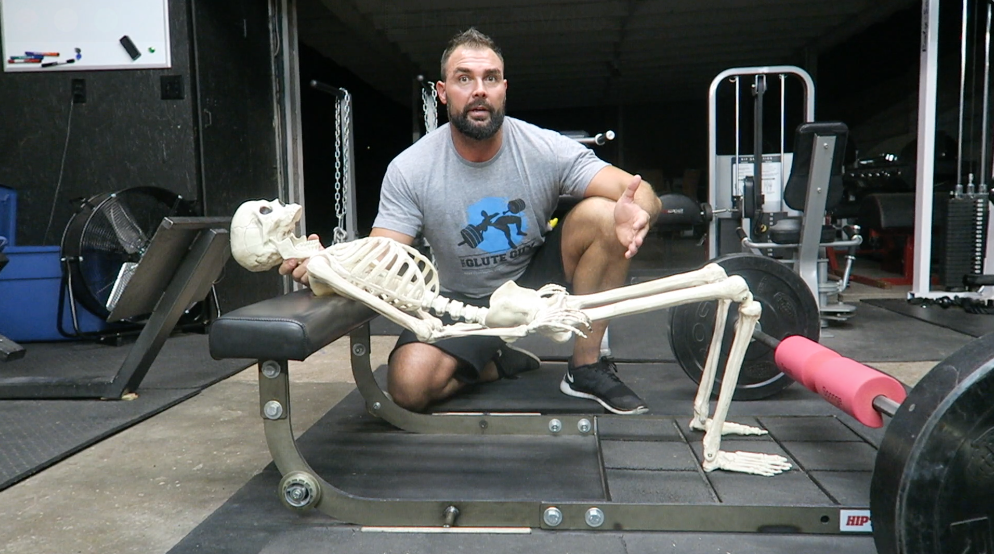
The shins are vertical to the ground
The walker should be in such a position that the shins are vertical to the ground at the top of the movement, if they are too close to the body, the quadriceps will be primarily loaded instead of the glutes, if the shin position is further away from the body, the hamstrings will be primarily involved.
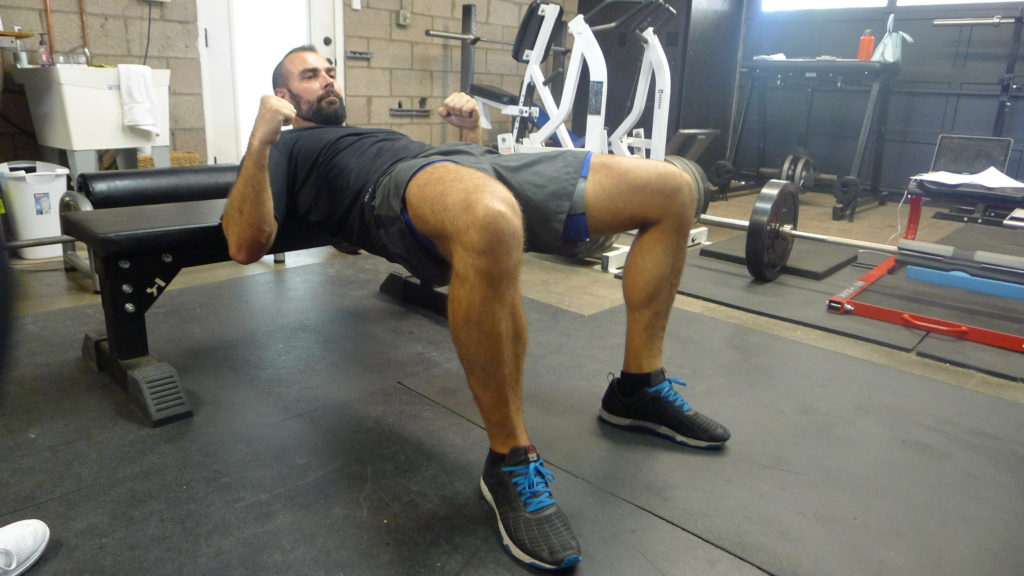
Keeping the knees apart
The knees should be facing away from each other, this increases the tension in the gluteal muscles and reduces the stress on the knee joint.
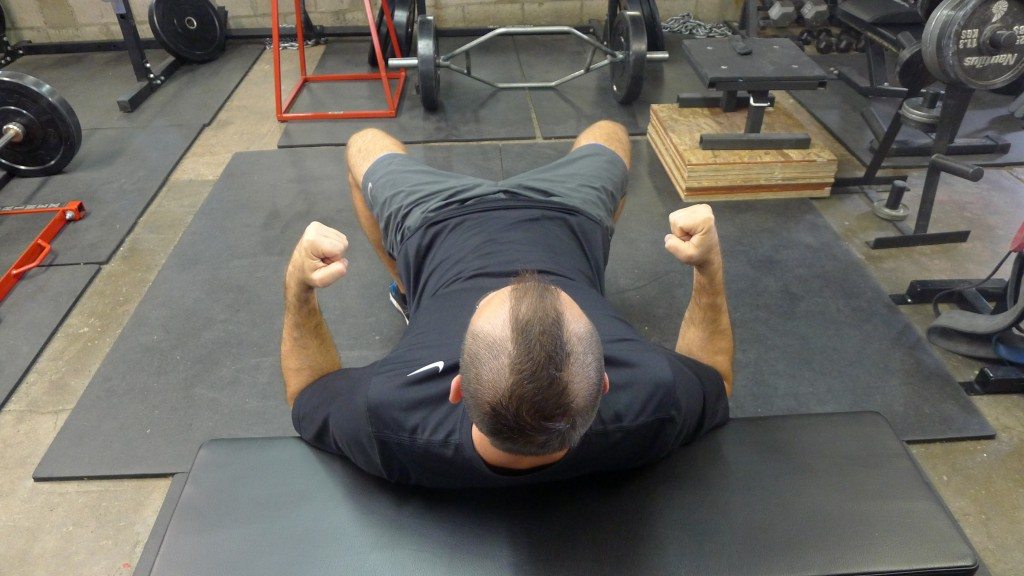
Maximum hip extension
With each repetition we should push the hips up as far as possible, this is the only way this exercise will bring the desired results. There is no point in practicing the hip thrust in an incomplete range just for the purpose of lifting more or doing a greater number of repetitions, because at the same time there will be less activation of the glutes. If we are unable to do the full range of motion with a loaded weight, it is better to lessen the load.
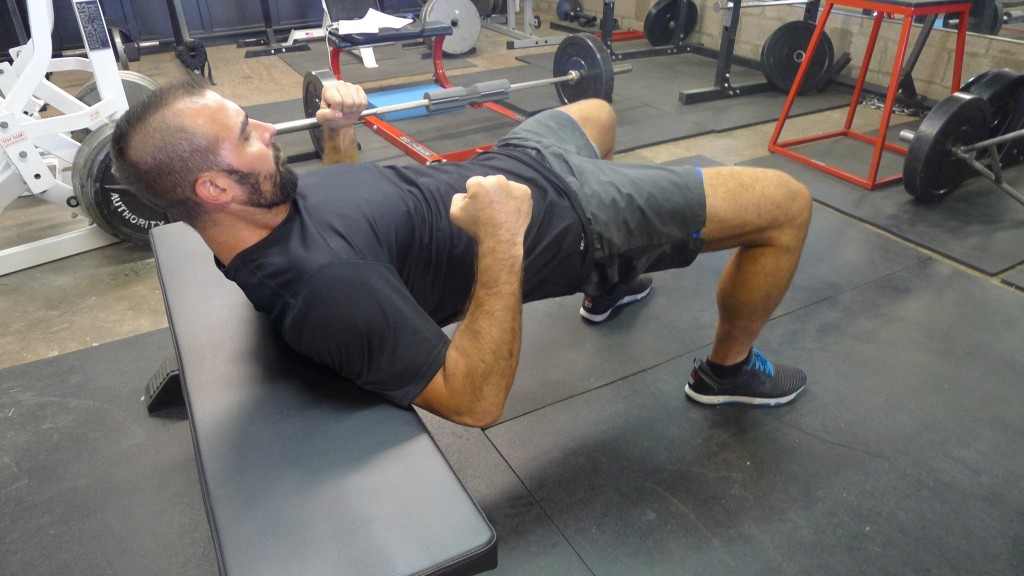
The pelvis is in a slight tuck
A slight under-setting of the pelvis prevents hyperextension of the lumbar spine, at the peak of the movement we should use the glutes to push the pubic bone towards the rib cage.
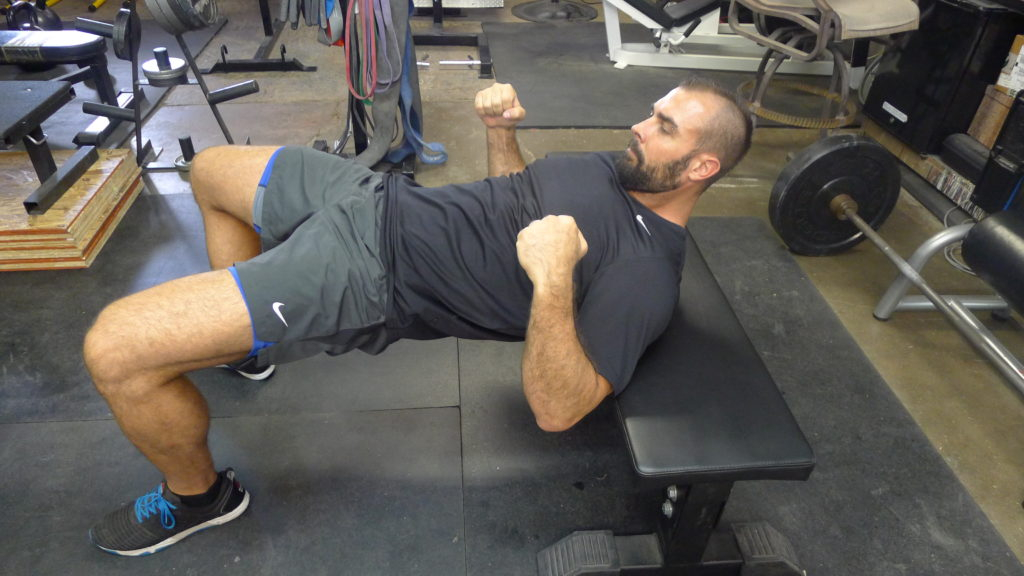
The ribs are pushing down
The ribs should be pushed down throughout the movement to prevent hyperextension of the spine and reduce the risk of injury.
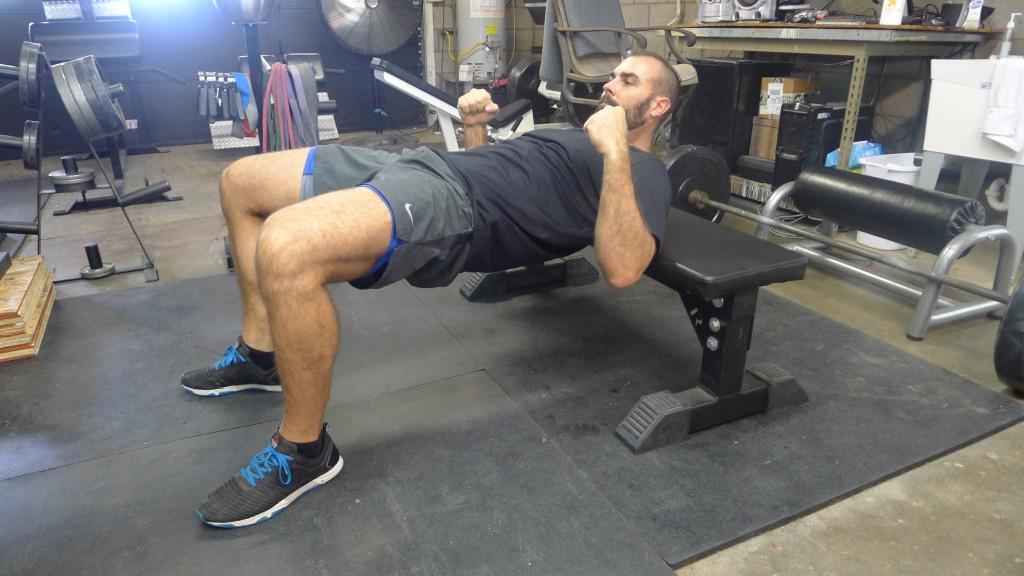
Gaze forward
Whether we are in the lower or upper phase of the movement, our gaze should always be forward.
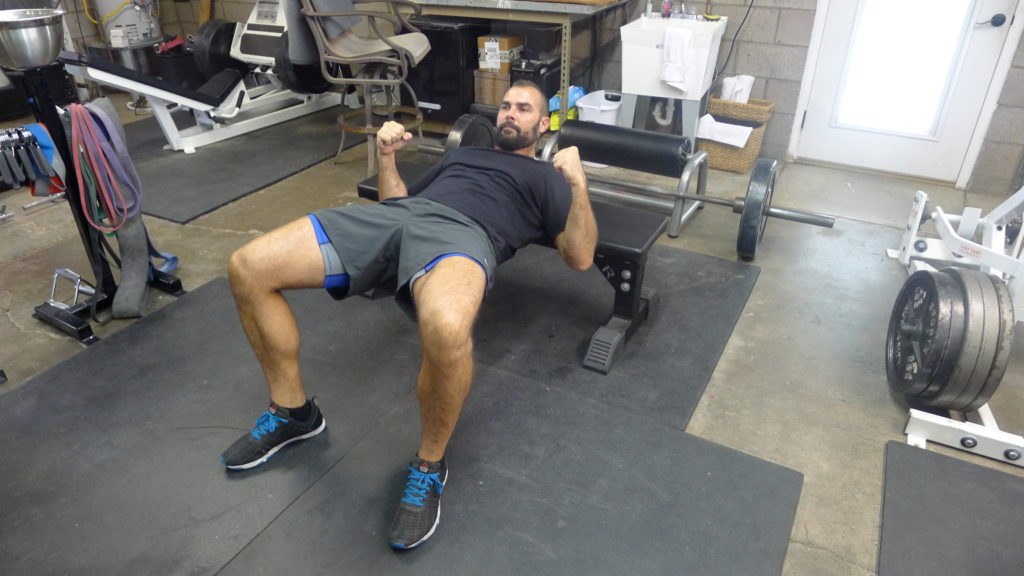
Take a deep breath before each repetition
Before each repetition, always take a deep breath in the down position and firm the middle of the body. This will improve spinal stability and give a better performance.
At the top phase, clench the buttocks and stay for a while
By pausing at the peak of the movement and contracting the gluteal muscles, we increase muscle tension and ensure optimal pace and control of the exercise.
The most common mistakes in hip thrust
Excessive arching of the lower back
- Cause: we put too heavy a weight on the barbell and our gluteal muscles are not strong enough to support it, so we tend to help our lower back.
- Solution: reduce the load and concentrate on hip movement to avoid movement in the lumbar spine.
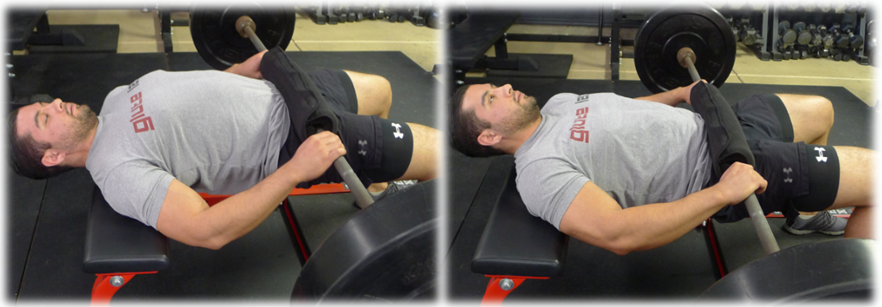
Poor neck position
- Cause: the gaze is not forward but downwards, we bend the neck, which in turn can cause discomfort or pain in this area.
- Solution: make sure that the neck is always in a neutral position during the exercise.
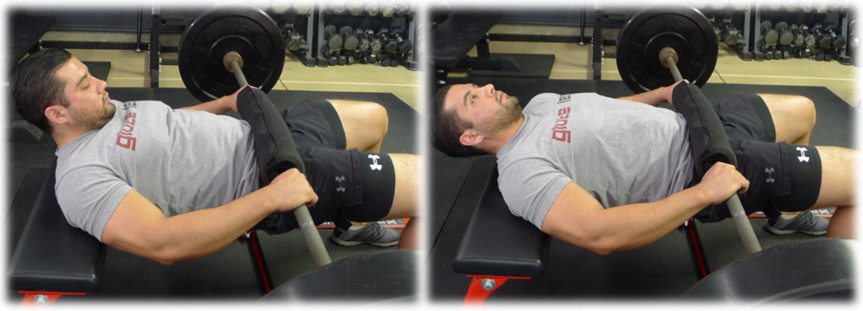
Incomplete range of motion
- Cause: lifting too much weight for which our strength is not sufficient, tight hip flexors
- Solution: reduce the load, regularly stretch the hip flexors
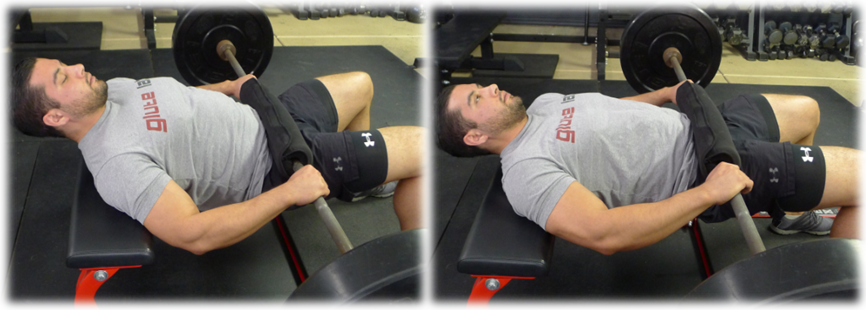
Leaning on fingertips
- Cause: ignorance of the correct execution of the exercise, overdeveloped quadriceps compared to other parts
- Solution: concentrate on always moving through the heels
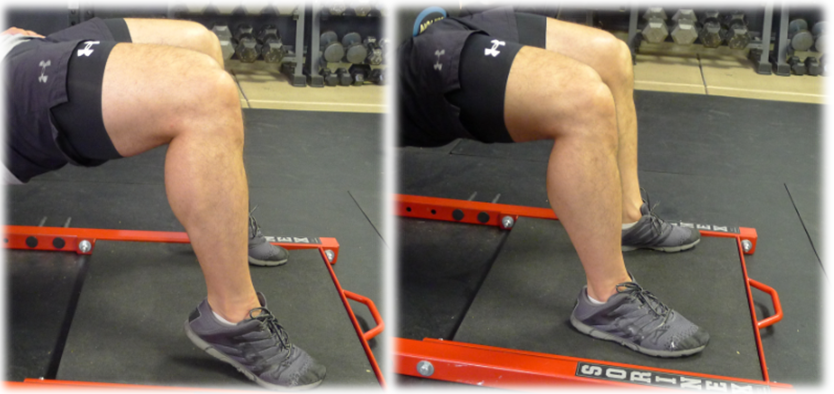
Shoulder shrugs
- Cause: tendency to hunch the shoulders and lift them towards the forehead
- Solution: make sure the shoulders are resting on the bench and pointing downwards
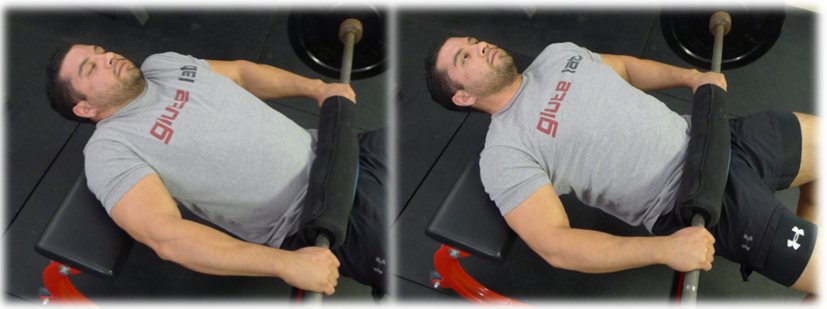
Bottom line
As we have seen, the hip thrust is definitely not a purely female exercise and can bring a number of benefits to anyone who incorporates it into their training on a regular basis. Will you give it a try or still can't shake the feeling that it's only for women and not for men?
Recommended

Maca 100cps + Ashwagandha 100cps
One Fitness Mechanický rotoped RW3011
Czech Virus Joint MAX Ultimate Blend

Czech Virus Essential Aminos
Sources of images and information: bodybuilding.com, bretcontreras.com - How to hip thrust, 10 steps to the perfect hip thrust, Hip thrust wiki page, barbend.com
No posts have been made yet.








