





Fasted cardio - a training myth or a great strategy for better fat burning?
 Author:
 How's the fasting cardio?
If your goal is to shed some pounds, or if you're already starting your swimsuit journey, you may have noticed that some experts recommend doing cardio before breakfast - that is, completely on an empty stomach - and consider this strategy to be the most effective in terms of burning fat. But is it really necessary to do cardio on an empty stomach, or are there more effective ways to reduce body fat?
The empty stomach cardio method was first come up with by Bill Phillips, a respected entrepreneur and author of a number of publications focused on weight training, supplementation and nutrition. The note that fasted cardio maximizes fat loss appeared in his book Body for life, which he published in 1999.

The method of performing cardio training quickly caught on not only among bodybuilders and other athletes who need to shed pounds, but also regular exercisers. The basic premise of this theory is that if you extend the time without eating, the amount of sugar circulating in the blood will decrease, leading to a drop in glycogen levels, which are simply stored carbohydrate stores. According to the experts who recommend this practice, this condition gives your body no choice but to use stored body fat for energy instead of glucose.
Another reason why fasted cardio is supposedly better is the low levels of insulin inherent in fasting, which leads to the breakdown of fat, ensuring a higher availability of fatty acids, which the body then uses as energy during exercise. Sounds quite logical doesn't it? So you want to burn as fast as possible? Hooray for cardio on an empty stomach! Or is it the other way around?
Metabolism under the microscope or it doesn't end with training!
Let's face it, most of the studies that support the notion that fasted cardio is better have only focused on the number of calories burned during the workout. Well, it's rather understated to only consider calories burned during exercise, don't you think? After all, metabolism doesn't just work during training, but throughout the day, and even at night. Normally, the body uses virtually all macronutrients during exercise to some extent - both fats, proteins and carbohydrates. The body chooses whether carbohydrates or fats will be the primary source for energy production depending on several factors (intensity, duration, etc.).
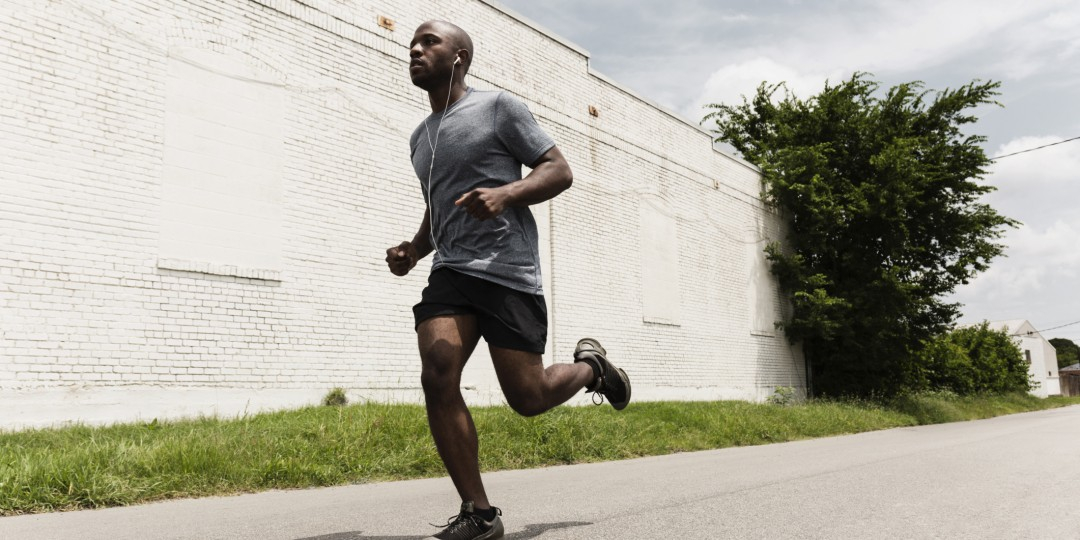
If the body uses carbohydrates as the primary source for energy production during exercise, then on the contrary, the use of fat burning after the exercise is over increases slightly. And if the body burns fat during exercise, it will reach for carbohydrates later. Which source the body uses depends largely on the intensity and duration of the workout. For example, during HIIT, which is also considered one of the best strategies for burning fat, the body uses carbohydrates more for energy production, but you already know that it will provide you with a faster metabolism and higher fat burning for several hours after the workout is over.
You will indeed burn more calories with aerobic exercise performed on an empty stomach, but there is a catch. You also have to take into account the training intensity. One Texas study compared fat burning in subjects performing a low-intensity activity - about 50% of their maximum heart rate, which is comparable to, say, walking or running at a slower pace. The subjects were divided into two groups -one had breakfast before exercise, the other did not. The researchers observed virtually no difference in the number of calories burned in this test .
This condition held true for the entire 90 minutes of the test, and only after that did fasted cardio start to become slightly more effective in terms of single-shot fat burning. So in the case of normal aerobic activities, it doesn't pay much to do them on an empty stomach. Aerobic activity on an empty stomach makes even less sense when you consider the impact of excess oxygen consumption after exercise - EPOC for short - and also the "afterburn" effect, which actually represents the time your body takes to "calm down" after the activity. Simply put, we also need to take into account the number of calories burned after the workout is over, due to the impact of that workout. And in this respect, fasted cardio is definitely not the first priority.
So is cardio with an empty stomach the best way to burn fat?
We can find studies that prove that cardio performed on an empty stomach (actually, this is generally true for activities performed over a long period of time at a constant pace) does burn more calories in one go, but that's not the deciding factor. So it can't be argued that it's the best way, because most of these studies only focus on calories burned during the workout, not throughout the day. It's just that with HIIT and strength training, the burn doesn't end with the workout itself, but these activities still support metabolic activity for several hours after the workout is over.
Studies show that with HIIT, which takes no more than half the time that cardio activities take at a constant pace, you can burn up to twice as many calories as with regular aerobic exercise. Even though you burn more calories in one go with long aerobic exercise, HIIT has an effect on your metabolism and fat burning for several hours after the workout is over, making HIIT logically more effective because you burn more fat and calories overall than you would with long aerobic activity at a constant load.
The question has crossed your mind - what about HIIT on an empty stomach? HIIT seems to be a very effective way to burn fat, it's just that if you do the activity on an empty stomach, you run the risk of not being able to perform as well because you won't have as much energy to do it as you would if you ate before the workout. In addition, there is also the risk that a higher intensity activity could make you sick (light-headedness, nausea) - if you choose this method, in this case you need to test what your body can handle. Some people find fasted exercise downright exhausting, others simply can't exercise intensely on an empty stomach. The same applies to strength training, which is not recommended to do on an empty stomach at all.
Moreover, if you are building muscle, you risk losing it by training on an empty stomach. Yes, cardio on an empty stomach can indeed have a catabolic effect on your muscles. Studies suggest that training under reduced glycogen stores significantly increases the amount of protein burned from tissues to produce energy from them. And you definitely don't want that. Therefore, before strength training, try at least a lighter breakfast or protein and a piece of fruit.
So what's the verdict?
As is the case with most things in fitness and healthy eating, there generally isn't one single "best" choice. However, fasted cardio doesn't really offer any revolutionary benefit. Yes, it may indeed be more convenient and preferable for certain types of people because they don't mind a full stomach when moving, but if we take a general perspective, there is a more efficient way to burn fat these days. That is a combination of strength training and HIIT exercises, a high intensity activity. Practically speaking, it makes absolutely no difference whether you go to exercise on an empty stomach, in the morning, or rather later. If it's a lighter activity, you can go on an empty stomach, but before strength training or HIIT, we definitely recommend some kind of easily digestible breakfast.
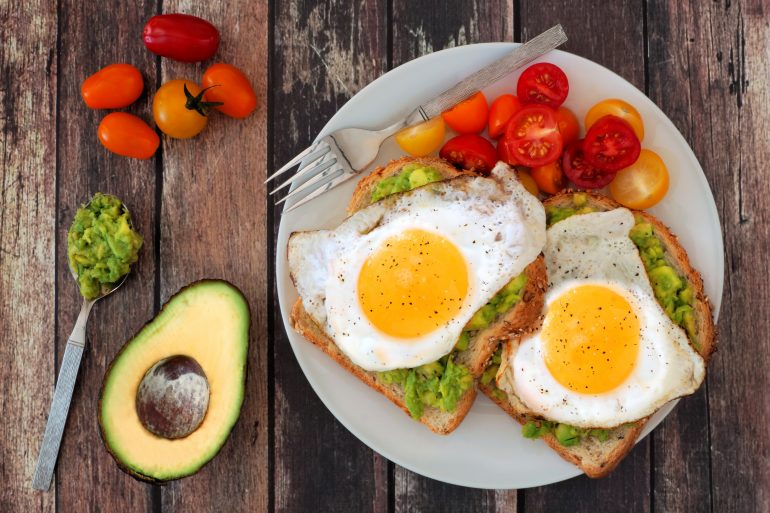
The article suggests that a better strategy is to eat before a more strenuous workout and give your body an energy boost so that you feel good about the workout as well. You can also go on an empty stomach as part of a lighter run, but again, this is unlikely to have a significant effect on fat burning. What we must not forget when talking about fat burning is a phrase you may already take as a cliché. This is because fat burning primarily depends on creating CALORIC DEFICIT through diet, i.e. taking in fewer calories than you expend. And by moving, you speed up the result of your efforts and actually increase the amount of calories you can take in by a little bit, because you expend more of them through activity.
If you do decide to go with the fasted activity option, include at least a bcaa, protein and a piece of fruit or a teaspoon of MCT oil beforehand. Avoid stimulants such as caffeine on an empty stomach and beware of fat burners. Before strength training or HIIT, opt for a lighter breakfast rather than going completely fasted. Again, how long after breakfast you can go work out for is very individual - some people just need an hour, others need more.
What to take away from the article
In the world of fitness, nothing is just black or just white. And so everything has its pros and cons, and it mainly depends on individual feelings. Fasted or not, it's not that important in the context of fat burning. What is more important is creating a reasonable caloric deficit. In the overall sum of calories burned, i.e. during activity and the so-called"AFTERBURN" effect, HIIT and strength training seem to be more effective than fasted cardio. But if you choose a lighter activity and you don't mind eating beforehand because of the feeling of fullness, you can go fasted. However, don't promise yourself any revolutionary benefits.
Recommended
Czech Virus Essential Minerals

Nebbia Teplákové šortky HERO 295
Czech Virus Testo Virus Part 1
Prom-in Joint Care Drink
Sources:
https://www.ncbi.nlm.nih.gov/pubmed/15896087
https://www.ncbi.nlm.nih.gov/pubmed/10329975
https://www.ncbi.nlm.nih.gov/pubmed/10726436
https://www.ncbi.nlm.nih.gov/pubmed/9831734
https://www.ncbi.nlm.nih.gov/pubmed/7380688
https://www.ncbi.nlm.nih.gov/pubmed/23340006
https://www.ncbi.nlm.nih.gov/pubmed/22366285
https://www.ncbi.nlm.nih.gov/pubmed/11090571
https://www.ncbi.nlm.nih.gov/pubmed/16825308
https://www.ncbi.nlm.nih.gov/pubmed/10726436
No posts have been made yet.








