





Correct the movement of your shoulder blades and hips and enjoy athletic longevity!
 Author: Šárka Randáčková
 The two primary places where people most often injure themselves in the gym stem from poor movement of the two basic junctions of the human body.
- For the upper body, it's the poor movement of the shoulder blades during the push and pull.
- For the lower body, it's a poor movement pattern of hip flexion and extension.
If you can solve these problems, you will not only stop the pain, but you will also be able to handle more weight and improve more.
Let's take a look at the most common mistakes and a few exercises to help you correct them.
The biggest mistake at the top of the body
You probably don't think about moving your shoulder blades very often. It's time to get started. The health of your shoulders depends on it. This is how your shoulder blades should be able to move.
Most people mess up pull-ups that should end in the extreme position of the scapular movement. Pull-ups are NOT about how far you pull your elbows behind your back. This only takes the tension off the lats and pulls the humerus head away from the glenoid and towards the rotator cuff tendons and the long head of the biceps.
If you do this often enough, your shoulder will start to hurt in the front because one of those tendons will become inflamed. Ignore this pain long enough, and you can say goodbye to heavy pressures.
Bench coaches also teach that people should pull their shoulder blades back during 1RM and not allow any movement. However, this has no benefits for people who want to get stronger and build muscle.
Lying on the bench will also prevent you from protracting your shoulder blades (moving them apart). You don't have to actively focus on it, but don't push your shoulder blades back. Allow them some movement, but don't overdo it. Then actively pull the blades back as you lower them. This can relieve the pain of pressure.
Vertical pushes allow greater freedom of movement of the shoulder blades. During the positive portion of the pushes with the single arm, major axis and landmine attachment your shoulder blades can and should actively rotate upward. During the negative portion, they should retract downward and descend.
Vertical pulls such as hunches and pulley pulls also allow for this. Concentrate on lifting (upward rotation) of the shoulder blades at the bottom of the hinge (at full extension). Then, pull the shoulder blades down along with the elbows while pulling the body up.
Each rowing variation should also allow for free movement of the shoulder blades. For the front squats, be careful not to get into too much thoracic spine flexion, which will round your upper back and overload your lower back. The thoracic spine should be mobile, the lumbar spine stable.
Good scapular control is like a smooth door opening. A bad one is like a door you have to kick to open. You end up damaging the hinges.
Scapular mobility, strong mid-trapezius and rhomboids will ensure the health of your shoulders. Neglecting these areas will ensure that you have a weak upper back for essential exercises like squats, deadlifts and overhead presses. You also won't have a very well-developed back.
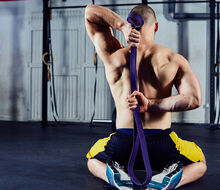
Exercises to help the top of the body
Here are three exercises that will improve your shoulder blade control.
1 - Pull-ups to the face with overhead pressure
You will start with a semi supinated grip (thumbs up) and pull your elbows back in a horizontal path. Keep tension in the upper back/traps and push the exercise up and out. Keep your neck in a neutral position the entire time. Follow the same path back.
Face pulls should always include retraction (movement towards you) and protraction of the shoulder blades (movement away from you). Overhead pressure adds upward rotation while the scapular retractors remain under tension.
2 - Reverse shear on pulleys
Most bodybuilders want better back shoulders. This exercise will help with them and improve the health of the shoulder blades.
Stand in a counter pulley stance and set the pulleys just above shoulder level. Start with your arms together or crossed. Start with your shoulder blades apart and pull them together as you extend your arms. Get to the end of your shoulder range of motion. Then allow the shoulder blades to slide forward to the starting position as you bring the arms back together.
This can be practiced with elbows extended or slightly bent. Just keep the same angle in them throughout the exercise. Resist the urge to bend and flex your elbows. The movement of your shoulder blades will force your middle trapezius and rhomboids to work together with your back shoulders, which will aid shoulder health.
3 - Arnold push-ups with one-armed push-ups
Hold the one-armed hands in front of your chest with your palms facing your body. Start with your shoulder blades back and down. Allow the shoulder blades to rotate upwards as you press upwards. They should move freely in the direction of pressure.
The shoulder blades should rotate a full 180° on the way up. On the way down, reverse the rotation and pull the blades back and down.
Arnold push-ups can be practiced standing or sitting, one-handed or two-handed.
Recommended

Czech Virus Immunity Shield Max
Nebbia Tričko s krátkým rukávem LEGENDARY 712
Czech Virus Sleep Ritual
Nebbia Crop top tričko GAME ON 610
The biggest mistake at the bottom of the body
When squatting or deadlifting, you probably don't think about hip flexion and extension very often. That's coach speak. However, it would pay to think like a coach here because that's basically who we are to ourselves, and for life.
Many knee and back problems stem from one simple thing. Weak glutes and poor hip movement. Ok, those are two things, but related.
Exercisers with poor hip control or mobility often force their hips into ranges of motion they are unable to handle. This puts a strain on the entire posterior chain, either upward (back) or downward (knees). Do this often enough and under a proper load, and the time bomb is on.
I hear a lot of nonsense about glutes not working properly. Your glutes work at any hip extension. However, they can be weak from poor movement patterns and too much sitting. You may also be pushing them into a position where they can't work effectively. This occurs along with too much movement in the lumbar spine. Imagine someone who looks like a dog performing a need during a deadlift.
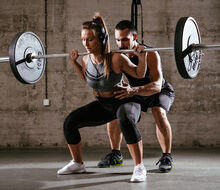
To restore good hip movement, flexion/extension of the lumbar spine must be minimized. Start by learning to keep your lower back straight. When lunging for a squat or deadlift, keep your shoulder blades retracted and your upper back straight. A round upper back puts a strain on the lower back. The abdominal tuck also keeps the lumbar spine in a neutral position.
Exercises to help the lower body
Here are three exercises that will strengthen the glutes and improve hip mobility.
1 - Deadlift with tight legs
Some call it the Romanian deadlift. This exercise teaches the correct range of motion for hip flexion. Not only does it strengthen the glutes and hamstrings, but it also teaches you a safe and painless way to lift loads off the ground. Untrained people round their backs while doing this, which increases the likelihood of a devastating back injury. Engaging the hips instead of the lower back eliminates this risk.
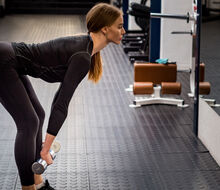
Start standing with your shoulder blades back, chest out and knees slightly bent (about 20°). Even though your torso is leaning forward, you focus on pushing your hips back. The goal is not to get the axis on the ground, but to maximize the range of motion of the hips while maintaining a neutral spine position.
Once the hamstrings and glutes are maximally extended, reverse the movement by shooting the hips forward. You want to stretch the hips, not the spine. At the top of the movement, flex the knees as well.
A small angle at the knees allows for greater hip mobility and shifts the load more to the glutes than the hamstrings.
2 - Pull through on pulley
The hip flexion here is similar to the exercise above. Only the force against you is in a different direction. The resistance is horizontal and the peak tension therefore occurs at lockout.
The exercise has some limitations in the weight loaded, which at some point will start to take away your balance, but we are not so much concerned with the weight as we are with the health of the hips. And that's where the pull through is a great teacher.
Start with your knees slightly bent to engage your glutes more. Keep your lower back in a neutral position. However, you can manage to push the lumbar spine forward a little, which will slightly increase glute involvement and prevent the hips from going into extension during the lockout.
Rotate the torso forward to load and stretch the glutes. Push the hips into the lockout with force to maximize extension. Bend the knees as you lockout. You will need to lean forward as the pulley is acting against your center of gravity. However, keep your weight on your heels.
3 - Single leg glute bridge
Lie on your back and pull one leg towards your buttocks. Straighten the other leg and lift it up.
Begin the movement by pushing the supporting leg into the floor, which will raise your hips but keep your shoulder blades on the ground. Try to push the working hip towards the ceiling. Practice all repetitions with one leg before switching legs.
Training program
All of these exercises can be individually incorporated into training programs. The deadlift with legs extended works as a good strength exercise, while the other exercises on the list are more in the supplemental category.
Each of them can be incorporated into a super-series without dramatically increasing overall fatigue or training time. Think of them as an investment in movement quality and joint health, not a way to brutalize your workout.
Source: www.t-nation-com - How to Lift Forever: 6 Bulletproofing Exercises
By Ben Mudge and Andrew Coates
Author: Šárka Randáčková No posts have been made yet.








