





Are you squatting in the right shoes?
 Author:
 Without the right shoes, Michael Jordan certainly wouldn't have won in Space Jam. Choosing the right shoes for you can be the difference between success and failure.
In gyms today, you'll find a variety of different footwear. Some people are wearing running shoes, others are wearing Converskis, and if you walk into a place that does CrossFit, people are likely to be wearing Metcons or Nanos brand shoes. In extreme cases, you'll run into someone in minimalist shoes or completely barefoot.
The options are many, and therefore shoe selection can present a significant problem. In this article, I will explain the effect footwear has on squatting. For each type of shoe, we will discuss the pros and cons.
Most of us wouldn't think of showing up to the start of a marathon in bowling shoes or going to play basketball in sneakers, but there is no shortage of poor footwear in gyms for mysterious reasons. Before we get into shoes, we need to be aware of the function of our feet.
A stable foot
The foot is the foundation of any functional exercise. Think of the feet as the base of a house of cards, responsible for the stability of the entire structure. If you want to squat well, your feet must not be indifferent.
The essence of the feet is high mobility. There are 25 bones and 4 different joints, which allows them to perform different movements. When squatting, however, the first step is to create stability. The neutral arch of the foot is the most stable position.
The support of this arch must be subordinated to the choice of footwear. Without a stable base, the technique of the entire exercise breaks down.
Standard running shoes
If you're training for a 5k race, running shoes are a good idea. They are definitely not the best for weight training. Experts say the soft sole makes squatting in running shoes feel like exercising on a big marshmallow.
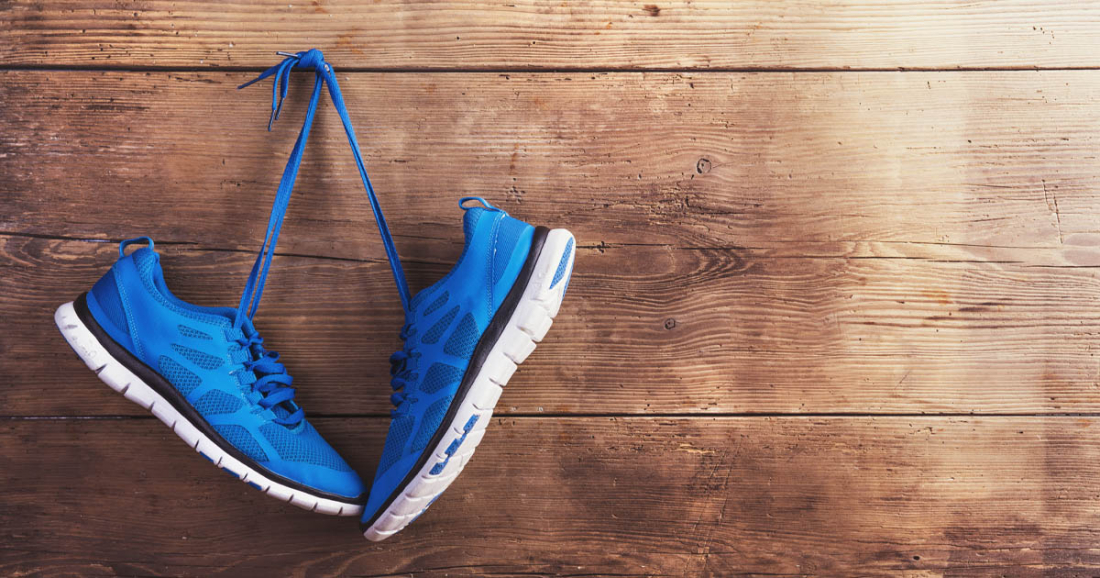
Running shoes are made to absorb force and shock and reduce the risk of injury while running. You don't want to be standing on air or gel padding when squatting. This will reduce your connection to the floor. And with heavy weights, you won't be able to maintain the aforementioned neutral arch in your foot.
Running shoes are great for running. I wouldn't attempt a squat max in them. Leave them to the runners.
Weightlifting shoes
The name tells us what they're for. The International Weightlifting Federation states that the purpose of these shoes is to protect the weightlifter against falling weights and to create a firm, stable surface .
These shoes are stiff and the sole will not squeeze. They have a visibly raised heel thanks to a heel made of wood, plastic or rubber. In most weightlifting shoes this will be a lift of about 2.5 cm. All weightlifters know them, of course, but the average gym-goer has probably never seen them.
Weightlifting shoes are beneficial for many reasons. When you put them on, the first thing you'll notice is the ability to squat lower with a more upright torso.
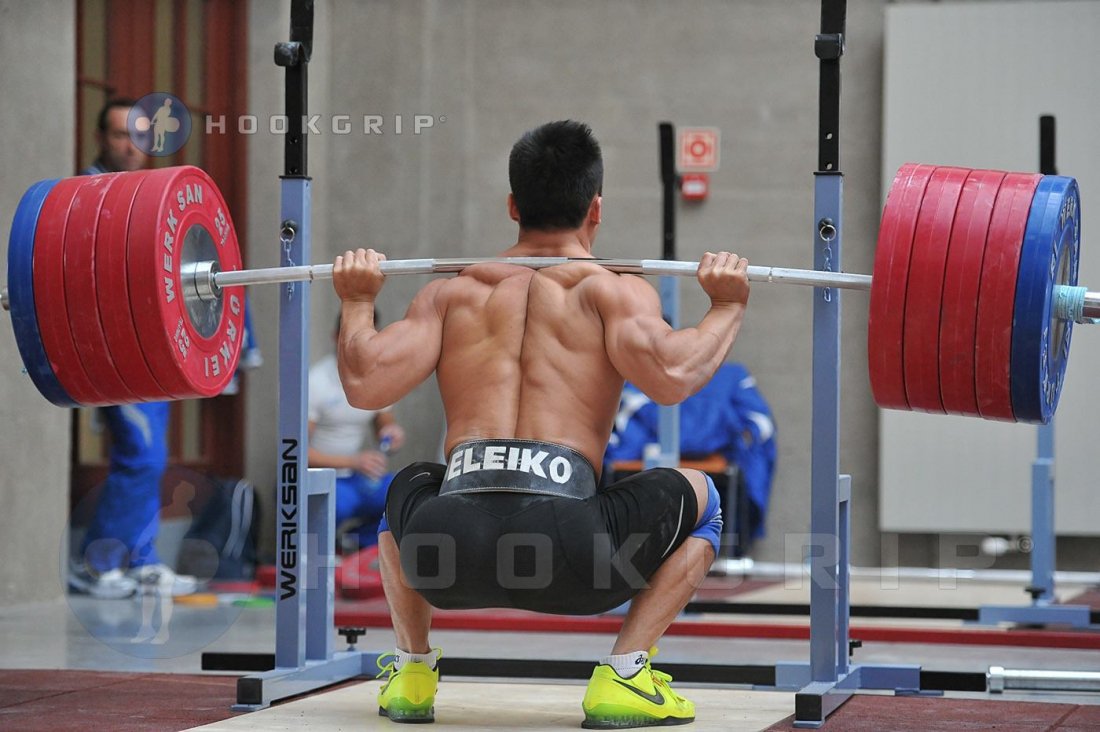
During the negative phase of the squat, the knees will eventually come forward to the toes. This will allow the hips to get as low as possible. The more your knees come forward, the more upright you can keep your torso. This translates to better technique in the front squat and overhead squat.
A more upright torso means less damaging forces acting on the lower back. Some tilt is necessary for balance (especially in the low-back axial squat), but you should aim for as upright a stance as possible. If you have ever had problems with your lower back, this type of shoe might help.
The elevated heel also helps maintain a neutral arch in the foot and an overall stable position. It also reduces tension in the muscles that are usually problematic when squatting (lateral head of the calf muscle, lower calf muscle and shin muscles). For these reasons, weightlifting shoes are great for anyone with ankle mobility issues. Additionally, they reduce potential squatting technique deficiencies such as the infamous buckled knees.
Although it will be hard to find such shoes under 3000, they are a good investment, regardless of the experience of the athlete. They have been proven to improve squat technique, increase power output and reduce dangerous stress on the knee. You don't have to be a weightlifter or CrossFit practitioner to own a pair of weightlifting shoes. If you have any desire to squat with high weights, you should invest in these shoes.
Flat-soled shoes
If you compete in powerlifting, you've probably seen someone training in Converskis. The non-compressible sole of such shoes provides good support and you don't have to rob a bank for them. They're terrible for running, but not too bad for squatting.
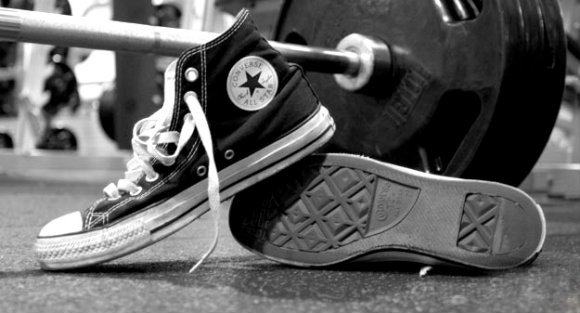
The sole is completely flat, or doesn't provide any assistance to people with limited ankle mobility, which can be a problem for some individuals during weightlifting exercises.
For some exercises, however, these shoes work very well. For example, squatting with the axle low on the back is a great exercise with them. This variation offers the highest torque coming out of the hips, or you can handle the highest weights with it. Your hips won't be far back and your knees won't come forward as much. If this exercise is important to you, choose a flat sole. If you can do front squats and squats with the axle high on your back in these shoes, these are the shoes for you.
Training shoes
In 1987, Nike changed the footwear industry when they created the Air Trainer, the first shoe designed for any kind of gym workout. The rise of CrossFit has only helped the popularity of this type of shoe. A characteristic of these shoes is a slight increase in heel height (usually 3-4 mm).
These shoes are a great substitute for running shoes in the gym. They don't have air or gel in the sole, so they don't compress. However, the heel increase is not as drastic as with weightlifting shoes, or they don't help athletes with ankle mobility issues as much.
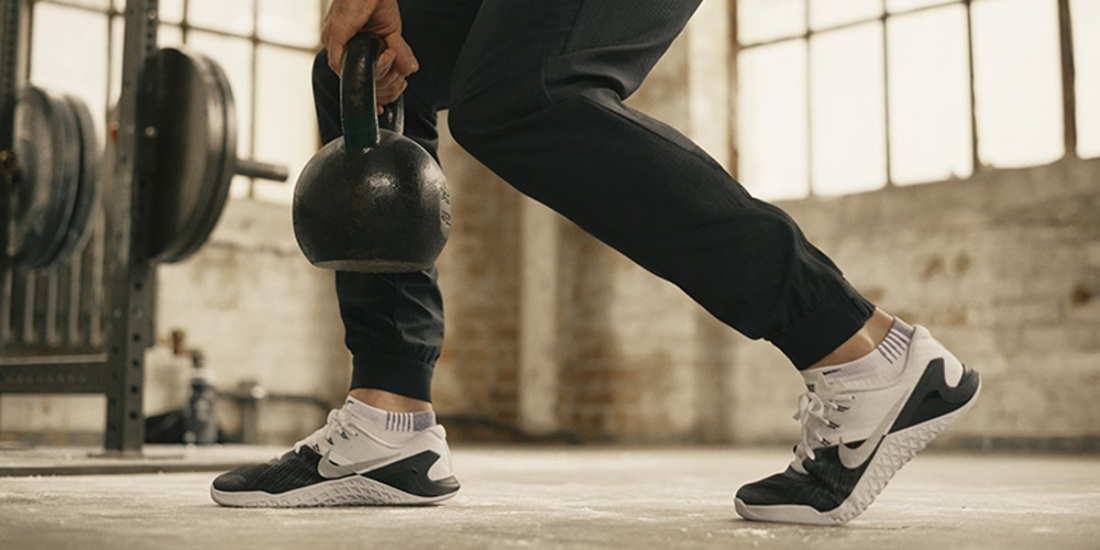
For CrossFit practitioners, these are great shoes because you can do exercises other than squat variations in them. You can jump in them, do English drills, and sprint in them. However, if you're all about squats and weightlifting, weightlifting shoes will be much better.
Barefoot squatting
Squatting has been growing in popularity in recent years. Proponents of this method claim that it increases stability, thanks to the body's awareness of the floor. It has been likened to wearing gloves on the hands. Shoes, in short, must reduce the sensitivity of the feet. Walking without shoes is about gaining awareness of foot stability.
Squatting without shoes has recently been subjected to research. Some people claim that it improves their awareness of foot position, but the scientific evidence for this is not yet there. However, it has been found that taking off shoes slightly changes squatting technique.
Without shoes, most people bend over more to maintain balance. In terms of technique, this may not be good for athletes who need to keep their body as upright as possible when squatting. This includes anyone who practices the high-back squat, front squat, and overhead squat.
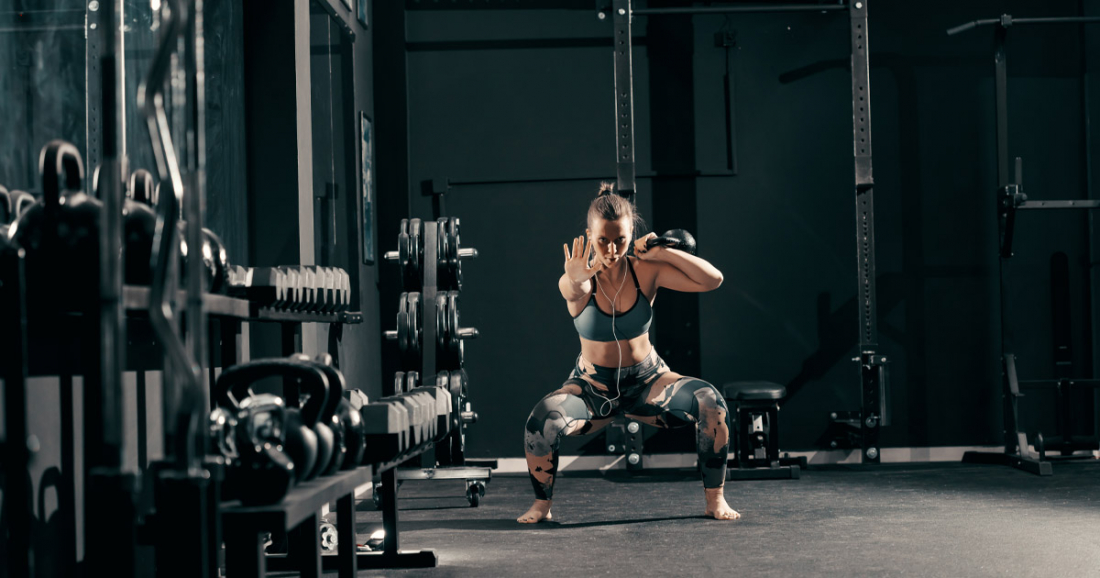
People with lower back problems should also avoid squatting without shoes. More tilt means more force is applied to the lower back. The spine is the most susceptible joint complex of the whole body, so it is not advisable to mess with it.
Overall, I would say this method is the least suitable. Not to mention the risk of dropping weights on your foot or catching mould in the gym. However, if you insist on bare feet, stick to squatting with the axle low on your back.
Minimalist shoes
Some manufacturers are coming out with barefoot shoe models, including ones with five toes. Such shoes should offer you the feeling of exercising without shoes, but still protect your feet a little.
Recommended

Creatine Monohydrate 500g 1+1

Nebbia Dámský top s dlouhým rukávem INTENSE Sheer 847
Nebbia Sportovní podprsenka se střední podporou TWIST-KNOT 423
HMS Posilovací kolo WA06
Research shows that such footwear has an effect on increased strength development and foot roll. Compared to training shoes, shoes with five toes should provide a firmer base when squatting. On the other hand, they reduce performance.
Very often I see athletes who cannot maintain a neutral arch in their feet wearing these shoes. This can impair their squat technique. Consult a professional before wearing such shoes. If someone with a medical background recommends it, focus on maintaining a neutral arch in the feet.
In our opinion, minimalist shoes and squats do not go together. However, if you practice squats with your own weight in them, they can have their benefits. Your foot muscles can get stronger, and with them, the awareness of your foot position.
Conclusion
Choose footwear according to your goals. If you desire to lift heavy weights, we highly recommend getting a pair of weightlifting shoes. If you're not so concerned about weight, opt for training shoes. If you run and occasionally go for a squat, you can probably do it in running or minimalist shoes.
And as always, when in doubt, professionals in the fields of strength training or orthopedics will be happy to help.
Translated by.
Source: https://squatuniversity.com/
No posts have been made yet.








