





Are complex or isolated exercises more effective?
 Author:
 Whether you're just starting out in the gym or you're already a seasoned lifter, today we'll explain two concepts - isolation and compound exercises. Complex exercises work several muscles/muscle groups and joints at once , whereas isolation exercises usually employ only one muscle. Do you know which type of workout provides which benefits and how to incorporate them to create a truly effective training plan?
Article content:
- Comprehensive exercises
- What are the main benefits of complex exercises?
- Summary of the benefits of complex exercises
- The negatives of complex exercises
- Isolated exercises
- Summary of benefits of isolated exercises
- So which type is better?
- What to take from the article?
Complex exercises
Complex exercises are simply those that target and use multiple major muscle groups and joints simultaneously. Most likely, everyone has some such exercise in their training plan, as most basic exercises are considered complex exercises . Let's give an example to understand this better. For example, the squat - The squat primarily engages the quadriceps, but proper technique requires you to also engage the midsection, hamstrings, glutes, and calf muscles. It is the multi-functional nature that makes squats an excellent addition to almost any workout.
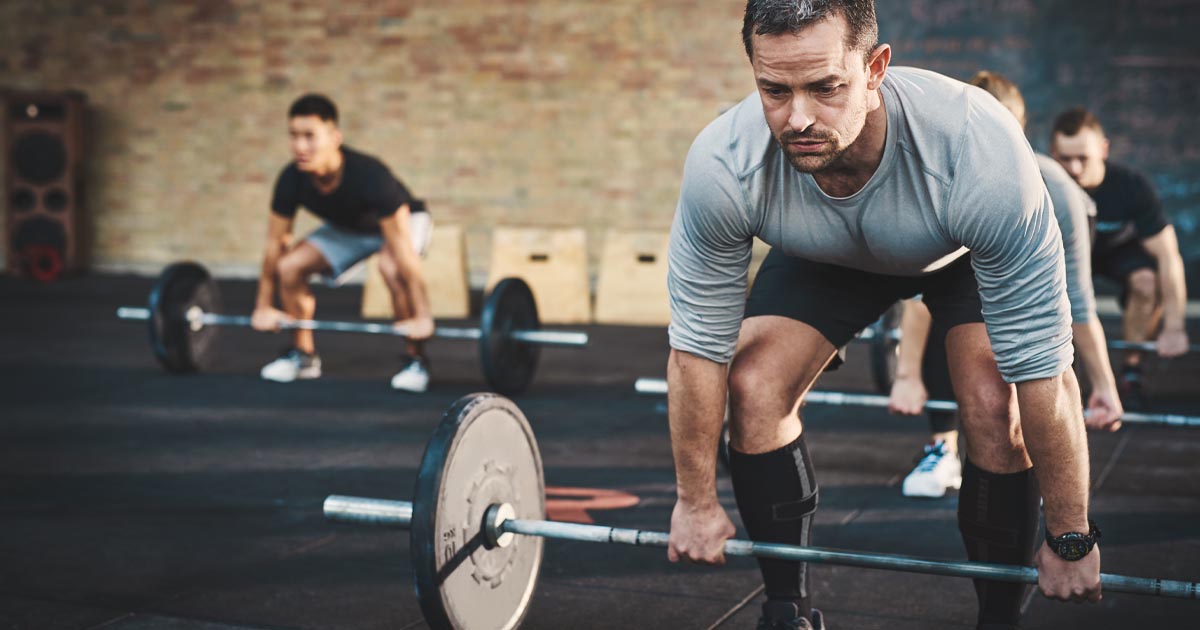
Another example would be the deadlift. The hips and knees work together to allow the body to tilt forward to lift the weight, using a variety of muscles to work together to create the movement necessary to perform this exercise. Believe it or not, when performed correctly, the deadlift engages almost every joint and muscle group in the body. Amazing, don't you think? Another example of a complex exercise is the shrugs, bench or push-ups.
What are the main benefits of compound exercises?
Since compound exercises engage multiple muscle groups and joints at once, there are several benefits. The main ones are that by engaging multiple muscle groups while performing them , we save time and use it efficiently. Complex exercises are ideal for those who are doing a full-body program (the whole body in one workout) or simply don't have time to go to the gym often. With complex exercises, you only need 3-5 exercises in one workout and you're guaranteed to be wiped out!
If your primary goal is to gain some fitness, compound exercises are an amazing way to achieve that. Plus, if we engage more muscles at once, we burn more calories because more muscles engaged means more energy needs. Not only improved fitness, but also more weight and muscle growth. Yes, complex exercises have a much greater effect on increasing strength than isolated exercises. This is due to the fact that your body uses more muscles to perform the exercise, which signals a greater hormonal response of testosterone and growth hormone, which help repair damaged muscle fibers due to the training load on the structure and thanks to this we can gain more muscle mass(assuming adherence to the principles of training nutrition and enough rest of course).
Comprehensive exercises are also ideal because they allow the body to move functionally and perform routine daily activities with ease - this is because exercises like squats and deadlifts actuallysimulate everyday movements like sitting down, bending over or getting up. If you're trying to improve athletic or other sports activities, complex exercises can be very effective in helping you achieve your goals.

Summary of benefits of complex exercises
- Effective and time-saving.
- We burn more calories during them.
- They help increase strength and are effective for building muscle mass.
- They improve the coordination of movements.
- Reduce the risk of overtraining.
Negatives of complex exercises
Not to just bring them up here, complex exercises have their drawbacks too, of course. Involving multiple muscle groups can create a kind of disparity in the distribution of muscle involvement, and so complex exercises end up engaging some muscles more than others. Some muscles may be overloaded, another muscle may be "lagging behind".
Isolated exercises
Isolated exercises stand opposite complex exercises, or rather than opposite - alongside them. Such exercises focus on engaging only one muscle group and joint. They therefore focus exclusively on a particular muscle and try to eliminate the involvement of other muscle groups. An example of this would be biceps raises.
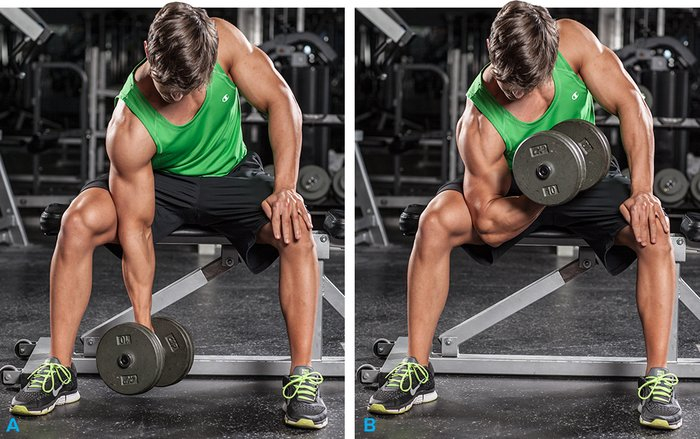
Incorporating isolation exercises can be beneficial when you want to work on one specific body part or need to correct a deficiency in that body part. For example, if you are recovering from an injury and need to strengthen a specific muscle, then it is ideal to add isolation movements until you build back the lost strength. Isolation exercises are highly recommended to be performed while seated to eliminate additional assistance movements of the body. Isolated exercises are also used for rehabilitation and physiotherapy.
Summary of benefits of isolation exercises
- Exercise specific muscles without involving other muscle groups.
- Possibility of targeting areas that you perceive as weaker than others and therefore serve as injury prevention.
- An effective method to help you gradually load muscles after an injury.
So which type is better?
Although many consider compound exercises to be the clear winner because they are movements that help you get a functional body, simulate normal daily activities, burn more calories and are also more effective in building muscle. But that certainly doesn't mean that isolated exercises are useless! On the contrary, they can be a great addition to your workout routine, especially when combined with a well put together workout based on complex exercises. This is because some muscles are engaged more than others during compound exercises, and therefore may be overworked, or conversely, muscles that aren't working as much may be weakened. And if you're recovering from an injury, isolation exercises may be much more appropriate than diving straight into compound exercises.
So, you've probably understood that both complex and isolated exercises have their place in training. Isolated exercises are great for working out lagging, under-engaged or smaller areas. Complex exercises are a great way to build overall strength and engage multiple muscles of the body. You should definitely include both types in your workout , as each has its benefits and one complements the other perfectly. Each of us is a little different, we have different goals and different abilities, so the ideal workout for each of us will be an individual affair - some people build on complex exercises, others use isolation exercises the same way. Neither method is worse, it always depends on the specific goal. Remember that building muscle or losing weight starts with proper nutrition!
Which type of exercises to include first?
We already know that both types of exercises have their benefits, but how do we incorporate them into our workouts to get the most out of them? In the case of a workout where you intend to combine both types, it is preferable to start with complex exercises. Why? In the case where you start training an isolated group, you will exhaust certain muscles and you won't be able to give as much performance when performing heavier exercises, or you may even get injured. Not to mention, there is no research that suggests any positives in terms of effects on muscle growth. Therefore, we should start with comprehensive exercises to exercise the muscles and then focus on "fine-tuning the deficiencies" with isolated exercises.
Another reason to always do complex exercises first is that complex exercises require more attention in terms of coordination of movements, technique, and also require more energy to perform them correctly. Recent research suggests that the most effective way to grow muscles is to load them with varying degrees of intensity - that is, load the muscle first with complex exercises, then move on to isolated exercises.

Which type to choose when reducing?
So far, we've talked mostly about building muscle, but it's not really that different when it comes to reducing. As we have already said in the previous paragraphs, during the performance of complex exercises there is a higher calorie burn due to the involvement of more muscle groups at the same time. If you are reducing, however, it is most important to focus on diet and create a reasonable calorie deficit in the first place. In terms of training, it is also most effective to focus on an appropriate combination of complex exercises, with occasional inclusion of isolated exercises. Again, the exercises help you to build muscle rather than reduce fat through nutrition.
What to take away from the article?
Both types of exercises - complex and isolated, have their uses and it is impossible to say clearly which type is better, because it always depends on the specific situation and also the training goal. Complex exercises have more benefits for muscle building, but isolated exercises should not be dismissed either! They can be a great supplement for lagging muscles, or for engaging muscles after an injury. It's good to combine both types. Generally speaking, it is advisable to start training with complex exercises because they engage more muscles that might be exhausted if isolated exercises are performed first, and fatigue could result in an inability to perform as well as you would otherwise, or even injury.
Recommended
Ashwagandha 100cps 1+1
Magnesium Malate 100cps 1+1

Nebbia Tvarující bezešvé flared legíny FLOW SEAMLESS 498

Nebbia Dlouhá everyday HERO mikina s kapucí 580
Sources:
https://www.ncbi.nlm.nih.gov/pmc/articles/PMC4592763/
https://www.ncbi.nlm.nih.gov/pmc/articles/PMC5744434/
https://www.ncbi.nlm.nih.gov/pubmed/23537028/
No posts have been made yet.








