





3 simple steps to improve ankle mobility!
 Author:
 Ankle mobility isessential for the most important exercise in your repertoire, the squat. Most limitations in ankle movement are due to decreased ankle mobility (ossification) or soft tissue (muscle and fascia ) stiffness. Today I'm going to introduce you to some simple tools that address these limitations.
I will also share with you a 3 step process to deal with a stiff ankle.
- Mobilize
- Roll on a foam roller
- Stretch
Mobilize the ankle
This should be the first problem you address. When testing for mobility, the ossification will show up as a twinge in the front of the ankle. Normal stretching and rolling will not help here.
One of the easiest solutions is mobilization with a rubber band. This will help with the natural sliding of the bones over each other. We're going to train this in a specific range of motion
If we look at the ankle, when we squat, the tibia moves backwards and the fibula moves forward. To improve this movement, and with it mobility, the rubber needs to help push the tibia backwards (1,2). Athletes often put the rubber too high on the ankle. This backward pull at the tibia causes the opposite of what we want to train.

Place the rubber below the level of the ankle

Push the shaft forward
Pull the rubber down and backwards
This type of mobilisation through movement has been used by therapists for years. The goal is to relieve any stabbing pain deep inside the joint.
Therapist Manu Kalia explains rubber mobilization in simple terms.
Rolling on a foam roller
After the ossification, the soft tissue release should come next . I usually recommend my athletes to spend at least 2 minutes rolling each area they want to release. All athletes should spend time rolling every day.
Therapist Dr. Mike Reinold has an excellent video to demonstrate the technique. Slowly roll over the leg muscles until you find the sensitive area. Stop at it and roll for about 10 seconds before moving on. In the pause, you can do some ankle pumping to make the whole thing more effective.
Stretching the soft tissues
Once you've finished rolling, the last step is stretching. Heel lowering is a good stretching exercise. Rolling and this stretching exercise will do you good to get rid of stiffness and get you ready for your workout.

Dr. Kevin Sonthana demonstrates heel lowering. We recommend holding the stretched position 5-10 times for 10 seconds each
Another version of this stretching exercise I like to use before squat training. It mimics the squatposition well and transfers the stretch into a quality squat execution. Start with a deep squat with a kettlebell, discus or large axle. From this position, shift your weight to one leg and push your knee so far in front of your toe until you feel a stretch in your lower calf. Hold the position for about 10 seconds and shift the weight to the other leg.
The Goblet Squat is a great tool for improving mobility before a workout. It will stretch not only your hips, but also your ankles. And stiff ankles can hurt your squat technique. This position is very close to the weightlifting version of the squat, which is excellent news for mobility.
Recommended sets and reps: 3 rounds of 10 second stretches on each side. For the goblet squat, you can use a discus or kettlebell dumbbell.
Test again and again
Progress needs to be checked. Always test using the same method and after you have done some mobility exercises. This will show you if you are getting the results you want.
Our goal is to see if the overall movement pattern during squatting is improving. The best way to do this is to perform a deep squat. Also try a deep squat on one leg. Has anything changed?
My goal here was to give you the tools you need to address ankle stiffness. If you want to be in competitive shape and move without pain, this issue is critical for you.
And rubber band mobilization, rolling and classic stretching are the answer.
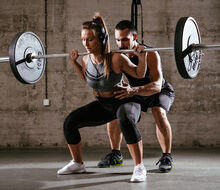
Recommended
Caffeine 100cps 1+1

Nebbia Intense Mini Top GOLD Mesh 830

Czech Virus Supreme Omega 3
Nebbia Boxy fit košile s kapsami STREET ICON 599
Sources:
Youtube, Instagram, https://squatuniversity.com/
Translated by: Jaromír Uhlíř
Author.
No posts have been made yet.








