





Tips on how to finally tackle your New Year's resolution this year.
 Author:
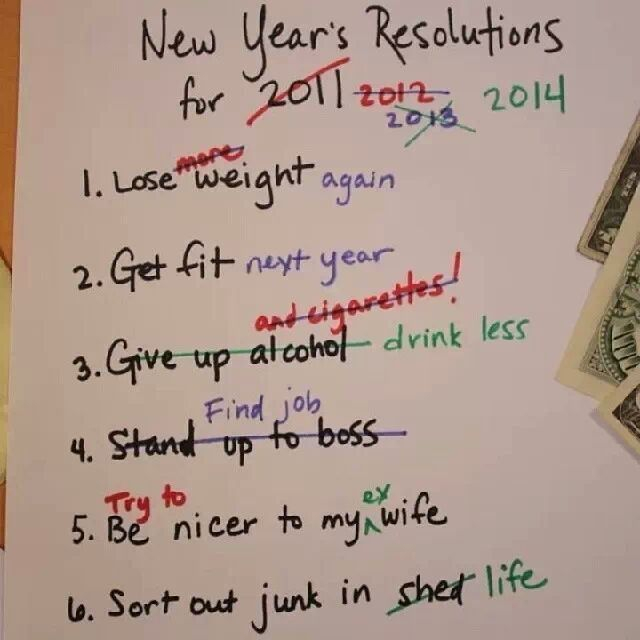
Here we go again. A new year and with it, New Year's resolutions. Do you want to lose a few kilos, get fit, start a sport, lift XXX kilos on the bench, run a half marathon, or simply just feel better in your body? If you're making the same resolution for the fifth year in a row, then there's probably a mistake somewhere. However.. you are not alone in this! Research shows that only 9% of people manage to stick to their resolutions beyond February. That's a pretty shocking statistic, isn't it? So... how about we try to do something about it! Let's give you some tips on how to keep your resolutions.
SET REALISTIC GOALS
They may say that those who dream small can't accomplish anything, but that's not always true! You wouldn't believe how many people fail on the fact that their New Year's goals are absolutely ridiculously high. If you set a goal that's too high and find that you can't achieve it as you'd like, you'll probably start to panic and give up your efforts. Did you set a goal to lose 15 kilos in January, train for a marathon in a month, squat 180kg in a month, or put on 5 kilos of muscle by summer? Then we have to disappoint you, but most likely you won't succeed. Choose smaller, incremental goals that you will increase as you reach them and keep moving forward as a result. Better regular small successes than one big failure. At the same time, don't set too many goals. If you concentrate on just one thing at a time, you are more likely to complete it than if you aim for several goals at once.

CHOOSE THE RIGHT PATH
Have you decided to make some changes to your lifestyle? Great! But be careful not to be too radical. If you've formed an incompletely good habit, try to eliminate it slowly. Because then it's much more likely to stick. At the same time, try to filter out the really important and workable advice. As you know, fitness, healthy living and healthy eating are really hot these days. We have a lot of wannabe smart opinions and advice that is not good to follow, whether in exercise or diet. If you're not sure, reach out to a trainer at the gym to explain your exercise technique. Better to invest in a few hours with a trainer than in medical treatment for an injury. (Be careful about choosing the right trainer though - see article here). Don't forget to pay attention to adequate recovery too.
When it comes to diet, you don't need to focus on all the modern trends - gluten-free, lactose-free and carb-free, unless you have a problem with those foods. In fact, eliminating them is not a prerequisite for successful reduction at all! You don't even need a New Year's detox, because if you have a functioning excretory system, you detox continuously and you don't need any additional preparations, juices or fasting.

Avoid too much restriction of caloric intake too. Reducing is indeed conditional on a caloric deficit, but eating too little, eating unbalanced, or cutting out all your favorite foods at once is definitely not a good tactic. Make sure your diet is varied, balanced, and above all, that you eat enough! It is equally important that you enjoy your food and that you enjoy your diet. In short, you should be able to build up a style of eating that you will ideally be able to stick with forever. If you're stuck on a diet, seek out a professional to help you build your diet.
DON'T BE TOO HARSH AND PLAN!
Another very common point where people give up on their resolutions is the moment when they realise they have to try harder because "it just can't be done right away". Whether you set a goal to lose a certain number of pounds, gain muscle, start going to the gym, or run a 10K, don't rely on it being free and easy! Plus, if you're not used to sports, it's not good to jump in headfirst, go to the gym 6 times the first week, lift ridiculously heavy weights, and then give up the second week because of pain or when you find out you don't actually enjoy it.
Climb your goals gradually and arm yourself with patience and a strong will! Learn the technique of the exercises first, then work on increasing the weights. Alternatively, if you find that the gym is not the place for you, that's okay! Find a movement that you really enjoy and don't force yourself into something you dislike. And the same with losing weight - you certainly didn't gain your pounds in a week, (unless we're talking about the pounds gained during the Christmas holidays :D) so you won't lose them in a week, unfortunately. There are some things that take time and patience. And it's the same with running, if you've never run further than 20 meters to a passing tram, don't count on being ready for a half marathon after a week. Patience and training make the master!
MOTIVATE YOURSELF!
Promise yourself a reward for completing each sub-plan. Buy yourself a new pair of shoes, something to wear, or maybe a nice piece of meat! And the same in reverse - if you skip a workout, significantly break your diet, or start pushing back your plans, punish yourself! Order yourself to walk to work, don't use the elevator, or do your least favorite chore. Some of us simply need motivation and to have a regimen set up for rewards and punishments, which makes it more likely for them to succeed. However, it's not just about rewards and punishments, it's also about willpower. Motivation can also come from sharing your goals with someone - you don't want to look like a 'looser' then, so you try harder and are more likely to stick with your goals as a result. Not only are you motivating yourself because you want to look good in front of the person you're confiding in, but what's more? You might convince her to start exercising/losing weight with you! Involve family, friends, colleagues or a partner. And then there's the old adage "it's better with two".

COMPARE RESULTS.
It's a good idea to establish some sort of starting point with which to assess your progress. This can be a photo, or write down your measurements, your performance from your first training session, or your first kilometre time. Set a date when you will compare and get started. For example, after a month or two, take your start data and start comparing. If you see some progress, then you are doing the right thing, if not, don't give up on your goal right away, but change your path to it! There have always been obstacles and there always will be and it is up to you how you approach them. Take even your failures as motivation and a lesson that not all paths are right.
WHAT TO SAY IN CONCLUSION?
A lot depends on how important the resolution is to you and how much you want it. A lot of people simply don't have the willpower to follow through with their resolutions. And what happens when you don't follow through?Nothing at all! Failing a resolution won't bring the world crashing down, and especially if you learn something in the process. Try to create habits for sport and eating that will last forever, not just to meet a numerical goal (think pounds lost, miles run, etc.). Maybe over time you'll find that it doesn't really matter to you if you lose 15 kilos or just 7 and get fit, or that you don't run a half marathon but get in decent shape, or that you find a liking for healthy cooking. In short, it's primarily about feeling good and doing things you enjoy and find fulfilling! That's more than any resolution.
No posts have been made yet.








