





Why does it make sense to supplement with coenzyme Q10? And does it matter which one I choose?
 Author:
 On the one hand, there are a number of supplements in the sports nutrition sector that athletes seek out and without which you may not be able to imagine your daily life. And on the other hand, there are supplements like coenzyme Q10. Very few people know this supplement, so it doesn't really excite anybody and nobody misses it in their supplementation. Yet it really has a lot to offer. Don't believe it? Our article today will make it clear once and for all. We will introduce you to the meaning, benefits and different forms of coenzyme Q10.
What is coenzyme Q10?
Although coenzyme Q10 is not easy to define, we should definitely try to do so at the beginning of today's article. So, coenzyme Q10 is a compound that our body needs for proper energy production inside our cells. It is a substance that our body can create on its own, however, as we age its production naturally decreases and that is why some signs of aging may start to appear. Many readers of our magazine will recall at this point that they have actually come across coenzyme Q10 many times in various cosmetics.
Most women are familiar with coenzyme Q10 from cosmetic products. But its uses are much broader.
Well, yeah, but how can it help me? The benefits of coenzyme Q10
If you're reading our article as an avid athlete, you may be thinking at this point that coenzyme Q10 is not for you and that signs of premature aging are absolutely not an issue. As a physically active individual, you may have greater requirements for this nutrient, which is also important for the functioning of muscle cells. So what are the benefits of coenzyme Q10?
It can improve performance during training
Let's get straight to the effect of coenzyme Q10 on training. During intense training, oxygen free radicals are generated and the accumulation of these radicals can result in so-called oxidative stress. And this then has a direct effect on our performance. But from the studies that have been done, it seems that supplementation with coenzyme Q10 can reduce oxidative stress levels and therefore support your training performance. But don't be tempted, there hasn't been much research done on this topic and further observation would be needed for an objective conclusion.
May improve fertility
In addition to being great for the skin, coenzyme Q10 may also affect fertility. As you probably know, the number and quality of eggs, which are a necessary condition for fertilization, decreases with age. What you may not already know is that coenzyme Q10 is also involved in this process - since its production is lower in old age, it doesn't protect the eggs from oxidative stress as effectively and they are therefore not as high quality. The same is true for men, who also experience a decline in sperm count and quality as they age. However, the available research (including interesting meta-analyses) suggests that coenzyme Q10 might actually delay this adverse effect for some time.

Did you know that coenzyme Q10 can improve training performance, among other things?
It may serve as a cancer preventative
Oxidative stress is nowadays associated with an increased risk of cancer, which stems from the fact that it damages cells and their structure. And since coenzyme Q10 helps to reduce oxidative stress, it may also prevent the onset or further development of certain types of cancer. Studies have even shown that women with breast cancer had low levels of coenzyme Q10. As you should know, however, correlation does not necessarily imply causation, so again, we need to wait for objective conclusions. There are also only a few studies conducted on this topic.
Protects our organs
Once again, we come to oxidative stress. It is not necessarily only the cells that affect fertility or our appearance that are damaged, but also the cells that affect the functioning of our body organs. Oxidative stress has been shown to affect, for example, the production of other substances that can adversely affect our memory or cognitive abilities. Studies have also linked lower levels of coenzyme Q10 to asthma or chronic lung disease, for example, and last but not least, it may be important for our cardiovascular health.

And finally... it protects the skin
A lot has already been written about the effects of coenzyme Q10 on the skin, but for completeness it is certainly worth mentioning everything in this article. However, given the antioxidant properties of this substance, it is not surprising that scientific research has found a link between the application of various creams containing coenzyme Q10 and a reduction in skin damage, whether from external influences (such as UV radiation) or internal influences (hormone levels, etc.).

Coenzyme Q10 protects the skin from both the sun and hormonal imbalances.
Coenzyme Q10 is also found in foods
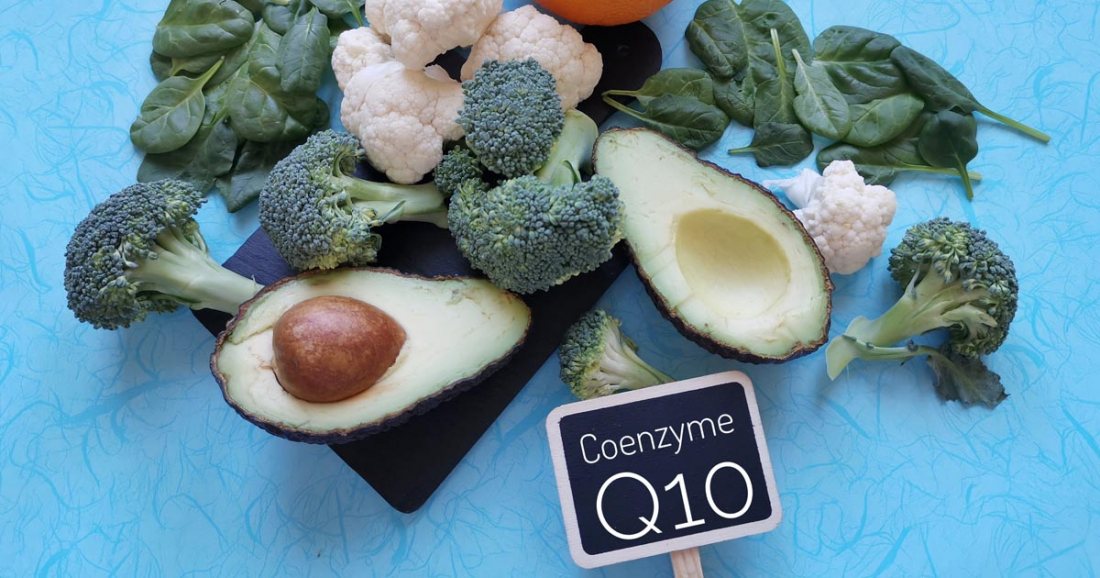
Coenzyme Q10 is an extremely important substance. However, like vitamins or minerals, you can also find it in common foods. Particularly rich sources are either various offal (and primarily beef) or vegetables such as spinach or broccoli. Other sources you can certainly reach for include corn or soybeans and products made from them. And if you don't give much to any of these ingredients, it's definitely worth considering whether it's worth supplementing with coenzyme Q10.
Which dietary supplement to choose? Not all are the same
When you look at the various vitamins or minerals in the form of dietary supplements, you will certainly notice that their price starts at a few crowns and ends at several hundred crowns. And the difference between such supplements is of course considerable - we even wrote a separate article about it. But it's similar in the case of coenzyme Q10, where more expensive supplements can offer much more.
Coenzyme Q10 is available in two basic variants - ubiquinol and ubiquinone, with the vast majority of professional works leaning towards the first mentioned variant. The latter makes up to 90% of all coenzyme Q10 contained in our body and is the most absorbable. If you are already looking for specific products, we can refer you to Life Extension Super Ubiquinol CoQ10, which really belongs to the top of the market.
How to take Coenzyme Q10?
Once you know which supplement to choose, you should also know how to take it. The standard dose of coenzyme Q10 should be somewhere between 90 and 200 mg per day. However, even doses above 500 mg are generally very well tolerated, and so if you take more coenzyme Q10, it may be unnecessary, but it shouldn't be harmful. Importantly, however, you must always take this substance with food, as it is a fat-soluble ingredient and is much less easily absorbed without fat. Some products, including the aforementioned Life Extension Super Ubiquinol CoQ10 are in tablets along with olive oil just for maximum usability.
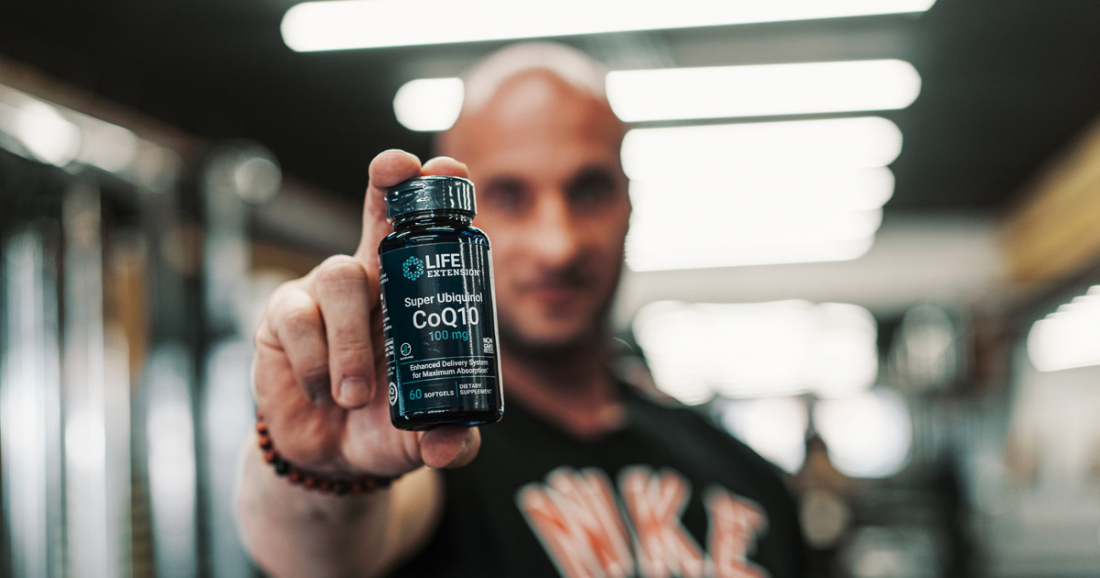
Coenzyme Q10 should most often be in a tablet resembling fish oil. That is, it contains an oil that promotes proper utilization.
What to take away from today's article?
There are several very important things you should take away from today's article. First and foremost, that coenzyme Q10 is a completely natural substance to the body that affects the proper production of energy in our cells. It also protects them from oxidative stress, which has applications not only in training, but also affects fertility, protects organs and skin and, last but not least, according to some studies, it can serve as a cancer preventative.
You can of course get it from food, good sources are beef tripe, broccoli, spinach or corn. But if you don't have enough of these foods, a supplement is definitely the way to go. There are a number of these on the market, but the ones in the form of ubiquinol are much better, even if you have to pay a little extra for them. For us, the most sensible supplement in this category is Life Extension Super Ubiquinol CoQ10, which also contains olive oil for maximum usability.
Recommended
Amix Coenzyme Q10
Viridian Co-Q10 with MCT
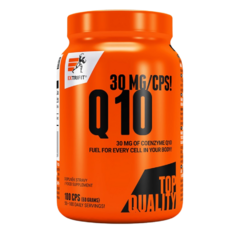
Extrifit Q10
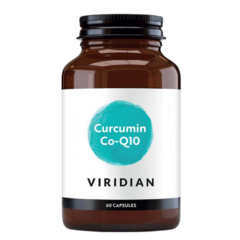
Viridian Curcumin Co-Q10
No posts have been made yet.








