





Why does (almost) everyone in the Czech Republic miss the "déco" in autumn? And why it's a bigger problem than you think.
 Author:
 Autumn is here. The days are getting shorter, the sun is losing its power and we are spending more and more time inside. But along with the summer comfort, we're losing something crucial to our health - vitamin D. You may think it's just another "fashionable" vitamin, but the numbers from the Czech environment speak clearly and are, without exaggeration, alarming. Vitamin D deficiency is not a marginal problem of a few individuals, but a silent pandemic that is gaining momentum in autumn and affecting the vast majority of us.
Shocking figures from the Czech meadows and groves
Let's take a look at some data that might make you rethink whether you have enough of the "dee". It's not scaremongering, but a hard reality backed up by studies conducted right here in the Czech Republic.
- Almost no one gets enough from their diet: according to the State Institute of Health (SZU), less than 1% of Czech adults can get enough vitamin D from their regular diet ¹,². This is an absolutely negligible number.
- The majority of the population is deficient: various estimates suggest that up to 60% of the Czech population is deficient in vitamin D ³. Other sources are even more pessimistic, stating that over 95% of us are deficient in our diet⁴.
- Children are in a similar situation: a study by the SZU of children aged 5 and 9 years showed that only about 14% had optimal levels in the spring months, while half of them were clearly deficient ⁵.
Why are we so miserable? The sun is not enough
The main culprit is our geographical location. Vitamin D is largely self-produced by the body in the skin thanks to the sun's UVB rays. But in our conditions, the sun is only strong enough from about April to September ⁶. From October onwards, the rays strike at such an angle that vitamin D synthesis in the skin is virtually non-existent, even if you try hard in the sun ⁷.
Add to that a modern lifestyle where we spend most of the day in offices, at home or in gyms under artificial lighting. We go to work in the morning in the dark, come back in the twilight. When does the body have a chance to make "rain"? And rely on food? As we have seen, this is almost impossible in our conditions.
Who is most affected? It's not just the elderly.
Although the elderly are the most at risk group (the skin's ability to make vitamin D decreases by up to 75% with age), the problem is far from being limited to them. Risk groups include:
- People working indoors: most of us.
- Children and adolescents: Their bones are still developing and need enough calcium and vitamin D for proper growth.
- Overweight and obese people: Vitamin D is fat-soluble and can be stored in fat tissue, reducing its availability to the body⁸.
It's not just about the bones: why is a lack of "dee" dangerous?
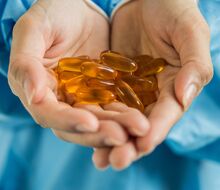
You may associate vitamin D mainly with osteoporosis and bone health. That's true - without it, the body can't absorb calcium effectively - but its role is much broader. Low levels are associated with a range of health problems:
- Muscle weakness and loss of strength: A new study has shown that people with vitamin D deficiency were 70% more likely to develop so-called dynapenia (age-related loss of muscle strength)⁹. Absolutely crucial information for athletes!
- Weakened immunity: vitamin D plays a vital role in the function of the immune system and deficiency is associated with a higher susceptibility to infections, including respiratory ones ¹⁰.
- There are studies suggesting a link between low vitamin D levels and a higher risk of cardiovascular disease, certain cancers and autoimmune diseases ¹¹.
What to do about it? Autumn is the time to act
The data speaks clearly. Relying on the autumn sun and a bohemian diet is like betting on winning the lottery. Experts agree that in our conditions, it's nearly impossible to maintain optimal vitamin D levels from fall to spring without supplementing ¹².
So, if you want to boost your immunity, stay strong in the gym and invest in your overall health, now is the best time to incorporate vitamin D supplementation into your daily routine. It's not just a marketing ploy, but a necessity backed by facts.
Recommended
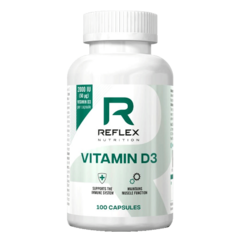
Reflex Vitamin D3
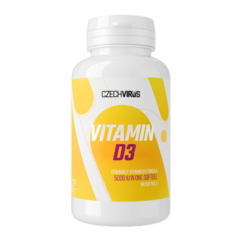
Czech Virus Vitamin D3
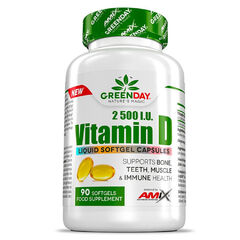
Amix Vitamin D 2500 I.U.

GymSupps Vitamin D3
Sources:
- ¹ Czech Pharmacy Chamber (2019, October 8). More than 99% of the Czech population is deficient in vitamin D from dietary intake. Pharmacists advise on how to supplement it properly.
- ² State Institute of Health. (2017, 25 February). Less than 1% of people get enough vitamin D from the usual Czech diet - this spells trouble in winter.
- ³ AGEL Pharmacy. (2022, May 9). Up to 60% of the population suffers from vitamin D deficiency. Why is "D" important?
- ⁴ Econea blog. (2024, January 23). 95% of Czechs have a deficiency of vitamin D in their food. What about you?
- ⁵ National Institute of Health. Are Czech children sufficiently supplied with vitamin D?
- ⁶ Czech Paediatric Society and Professional Society of Paediatric Practitioners of the Czech Academy of Pediatrics (2006, 22 December). Recommended practice for vitamin D supplementation in children and adolescents.
- ⁷ Lab Tests Online. Vitamin D. Why is there so much debate about it?
- ⁸ Internal Medicine for Practice.(2019). Vitamin D - when and why to test?
- ⁹ National Institutes of Health. (2023, April 4). Vitamin D deficiency linked to loss of muscle strength.
- ¹⁰ Solen.cz. (2021). Vitamins D, C and zinc are essential for immune system function and boosting immunity.
- ¹¹ proLékaře.cz. (2019). Vitamin D deficiency and its health effects.
- ¹² Actin. (b.d.). Up to one billion people suffer from vitamin D deficiency. Do you know what you are at risk of?
No posts have been made yet.








