





What to look for when choosing a protein bar?
 Author:
 Every now and then we have a day when we just don't have time to prepare a meal, we have to stay at work unplanned, or we go somewhere on a trip where it will be impossible to buy a proper meal, so we reach for such a small seemingly harmless option, which is just a protein bar. Or in the case of some, for whom a protein bar is a traditional snack or dessert. Either way, not all protein bars are a good choice for your diet, especially if you're trying to shed some pounds.
Unfortunately, just because a bar is called "protein" doesn't automatically make it a healthy treat. Some bars have a disastrous composition, others nutritionally pass for a full lunch, in others we find inappropriate sources of protein, and there are no exceptions to products that tempt customers to think that they are a protein (and therefore healthier or more dietary) version of their favorite bars full of sugars, but when you look at the nutritional content, you will find that if you have a classic and wash it down with protein, you will be better off not only nutritionally, but especially price-wise.
Protein bars are usually not exactly the cheapest thing to buy, so you need to know what's really worth investing in. So how to know what to look for in protein bars, what to look for when choosing them and what to find and what not to find in the ingredients of a quality product? These are exactly the questions we will try to answer today.
Article content:
- Total calories
- Carbohydrate content
- Number of ingredients used
- Sweetener content
- Important fibre
- Fat source content
- Type of protein used
- Amount of protein and its ratio to carbohydrate
- Best protein bars according to customer reviews
- What to take away from the article?

Total calories
The total calorie and nutrient content should definitely be what you should be interested in. Because in case you are trying to lose some pounds and you are following a diet with an intake of e.g. 1500 Kcal, it probably won't be the smartest choice to have a bar with five hundred calories, right. In such a case, it is much better to take this amount of calories from meat, vegetables and side dishes that will fill you up for a decent amount of time and moreover - it will be a bigger portion than a bar that normally has 40 - 80g.
On the other hand, if your goal is to build muscle and you struggle to take in enough calories every day, or even find it difficult, a five hundred calorie protein bar may seem like a miracle from heaven. Either way, it is very important to keep an eye on the nutrient content and total calories in the bar, as the nutrient content varies greatly from product to product. Ideally, the calorie value of a bar should be within 300 kcal.
Carbohydrate content
The second point that you should look at is the total carbohydrate content. As mentioned in the opening lines, some products hide behind the label "protein" but are full of sugars, syrups, dipped in sugar coating and so on. If you are deciding to buy a product of the reduction period, then you probably can't afford to take too much carbohydrates or sugar.
One of the main things to look for in the ingredients is where the carbohydrates that the bar contains come from. Ideally, you want to absolutely avoid large amounts of high fructose corn syrup (HFCS). If corn syrup is at the top of the ingredients, put the bar back on the shelf nicely and look for a higher quality product.
Number of ingredients used
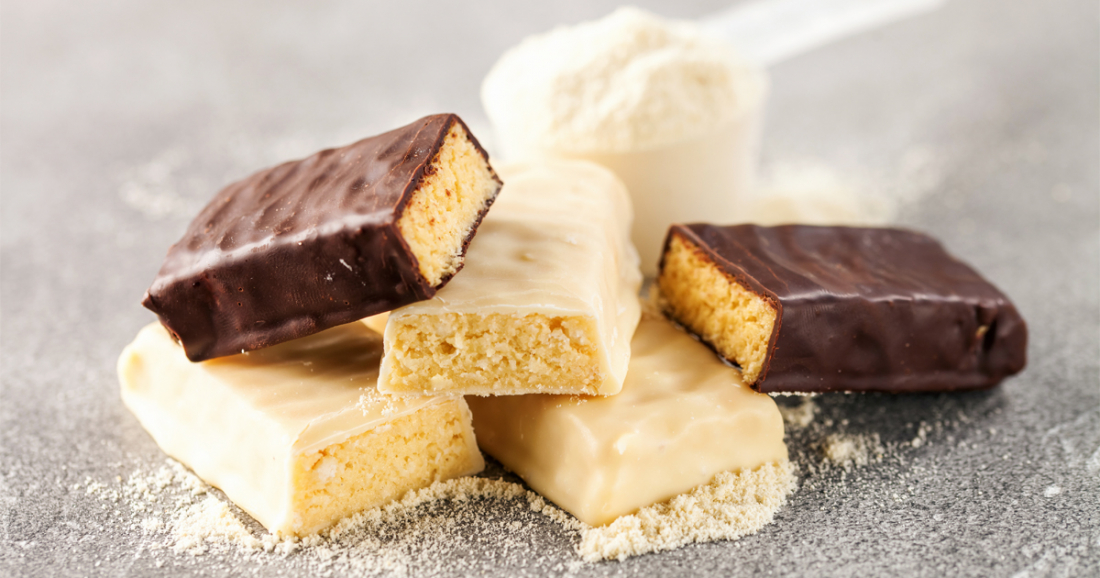
Another very important point to look at is definitely the ingredients used. Right after you check the nutritional values, also study what the product is made of and then compare it to the nutritional value to see where the calories and nutrients are probably coming from. Ideally, the ingredients in the bar should be as simple and pure as possible and contain only the necessary ingredients - see below.
Sweetener content
When you finally choose a protein bar that has a relatively low total carbohydrate count, then the next thing to consider is the presence of sugar alcohols. These are a subset of polyols that are very commonly used in the food industry as thickeners and sweeteners. In food, they usually serve as a non-caloric substitute for sugar, although they have a much higher sweetening power. The most commonly used sugar alcohols in bars are maltitol and xylitol. These polyols therefore have virtually no calories and, unlike sugar per se , have not been shown to be associated with tooth decay.
While one group of people will have no problem tolerating them, others may experience some problems after consuming them. In fact, some sugar alcohols (such as sorbitol, erythritol, xylitol, mannitol, lactitol and maltitol) can cause bloating or gas at higher concentrations. You will need to test for yourself how these substances suit you and how your body reacts to them.
Important fibre
And we'll stick with carbohydrates, because another type of carbohydrate you should find in a bar is fibre. Fibre has a satiating effect, so the more fibre a bar contains, the longer you should be satiated. Of course, as you know, you shouldn't completely overdo it with fiber either. However, a protein bar should contain no less than 6g of fibre. As far as the sources of fibre that are most commonly used in bars are concerned, these are fibres like oat fibre, corn fibre, inulin is often used now, or isomalto-oligosaccharides or fructo-oligosaccharides.
Fat source content
Next, before you buy the product, make sure you check what sources the fats in the bar come from and of course the total fat content. You certainly don't need to look for a fat-free product, some fat is needed in the bar for it to hold together and maintain its structure at all. Nutritionally, this is because fats slow down digestion and the release of carbohydrates into the bloodstream. However, be sure to avoid any product that contains trans-saturated fat, and watch out for bars with palm oil and palm kernel oil, which are types of saturated fat.
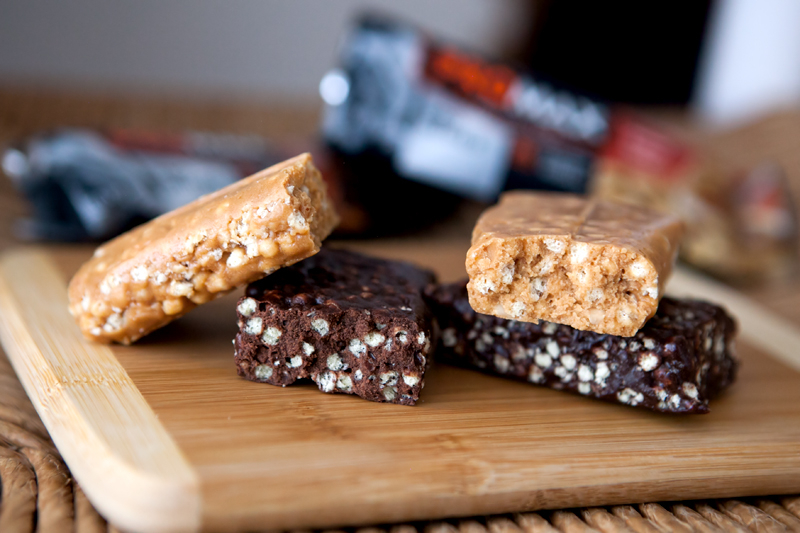
It's true that not all saturated fats are bad, but palm oil certainly cannot be considered a beneficial source - either nutritionally or in terms of environmental impact. Vegetable oils such as soya, rapeseed, palm, sunflower should be avoided in bars in general. Fats in the form of coconut oil, nut or peanut butter and seeds such as chia are significantly preferable.
Type of protein used
The type of protein that the product contains is also a very important criterion. Of course, the type of raw material used is reflected in the price, which is why some manufacturers deliberately use cheaper and therefore certainly less bioavailable raw materials in their bars . You already know that there is no such thing as protein. The protein component should consist primarily of whey protein, milk protein, micellar casein and possibly egg albumin. Considerably less suitable, or we can even say unsuitable, are sources such as hydrolysed collagen, calcium caseinate or just one plant protein. Beware of vegan products with only one type of plant protein. Ideally, you want to find a product that contains a combination of different plant sources so that they can be used to their full potential.
Amount of protein and its ratio to carbohydrates
Last but not least, the last but not least thing you should definitely take a good look at is the ratio of carbohydrates to protein that your bar contains. This is important because you want to make sure that the protein content is high enough compared to the carbohydrates. Because if the product has a very poor protein to carbohydrate ratio (meaning that it contains as much or more carbohydrate than protein), you may well buy a tartar bar and wash it down with protein and save a considerable amount of money.
The protein content is what makes a protein bar a protein bar, so it's something you really shouldn't do without. The best choice for a bar suitable for weight loss regimes will be a 2:1 ratio of protein to carbs, but in some cases a 1:1 ratio will be fine if you need to replenish energy between workouts and the like. However, there are not many such bars on the market. But definitely a protein bar should not contain more carbohydrates than protein, then it might be tasty, but it definitely can't be considered something that deserves the name protein bar.
The best protein bars according to customer reviews
Of course, we can't forget to add a specific recommendation on which bar to reach for in our e-shop, so we're going to take a look at the top 3 protein bars according to our customer reviews.
- Essential Pure Bar - pure-bar bars from the Czech brand Prom-in are absolutely the perfect choice for those who are looking for abar with uncompromising ingredients, great nutritional value, and yet very affordable. We have dedicated a whole article to Pure-bars and if you are interested in these bars in more detail, you can read it.
- BiotechUSA Zero Bar - Do you like protein bars? Have you tried all the bars available on the market and think that nothing can surprise you anymore? Then it's time for you to learn more about your new best friend, the Zero Bar protein bar. It's absolutely free of added sugar, with delicious flavors, and you can enjoy it even if you're lactose and gluten sensitive.
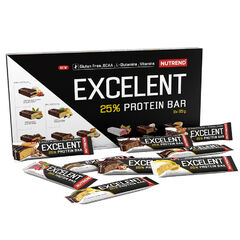
- Nutrend Excelent Protein Bar - EXCELENT Protein Bar contains branched chain amino acids (BCAA), L-glutamine and is fortified with vitamins. There are over 21 grams of protein per bar, the new formula is completely trans fat free and gluten free!
What to take away from the article?
The quality of protein bars varies greatly. On the market we can find really good quality products, but unfortunately also complete craziness , both nutritionally and calorically. The quality of the ingredients and the quality of the ingredients used logically translates into the price, which is also very variable. A product containing quality sources will therefore clearly be slightly more expensive than bars that use cheaper ingredients. However, it really is worth buying a good quality bar once in a while for more money rather than gorging yourself daily on cheap ones that contain palm oil, loads of sugar and lower quality protein sources. Focus on keeping the ingredients of the product you choose as simple as possible.
So it's pretty obvious that for an individual with a regular income, protein probably won't be the order of the day, but for occasional consumption, whether to fight off cravings or for lack of time, we can all reach for a quality product, even in a reduction. But a protein bar should definitely not be a meal replacement, at least not on a regular basis.
Sources:
https://www.ncbi.nlm.nih.gov/pubmed/17077058
https://www.ncbi.nlm.nih.gov/pubmed/1474076
http://ajcn.nutrition.org/content/99/1/86.full.pdf+html
https://jissn.biomedcentral.com/articles/10.1186/1550-2783-3-2-12
http://www.ncbi.nlm.nih.gov/pubmed/12566476
https://www.ncbi.nlm.nih.gov/pubmed/21677076
https://www.ncbi.nlm.nih.gov/pubmed/17684208
https://www.ncbi.nlm.nih.gov/pubmed/19087388
https://www.semanticscholar.org/paper/Chemistry-and-biochemistry-of-palm-oil.-Sambanthamurthi-Sundram/78c5758dc4edf5d9fafe0ad3ca0f2cf99056d6ff
No posts have been made yet.








