What is maltodextrin? Everything you need to know
 Author:
 Maltodextrin is a frequently mentioned ingredient in the fitness, sports nutrition and food industries. But why do we increasingly see its name on food or dietary supplement packaging? In the following article we will take a closer look at what maltodextrin is, its origin, uses and impact on the human body based on scientific studies.
Article content:
- What is maltodextrin and how is it produced?
- The use of maltodextrin in sports nutrition
- What is the effect of maltodextrin on health?
- Tips for healthy consumption of maltodextrin
- Is maltodextrin harmful?
What is maltodextrin and how is it made?
Maltodextrin is a carbohydrate (polysaccharide) derived most commonly from corn, wheat or potato starch. It is produced by a process called acid or enzymatic hydrolysis, which breaks down long chains of starch into shorter and more soluble forms of carbohydrate. The resulting raw material usually takes the form of white powder or crystals which dissolve easily in water and have no distinctive smell or taste.
Maltodextrin is widely used in the food industry due to its functional properties (thickening, stabilisation and energy supply). It can be found in:
- Sweetened beverages,
- Instant soups or sauces,
- Sports and fitness supplements,
- Children's nutrition.
The use of maltodextrin in sports nutrition
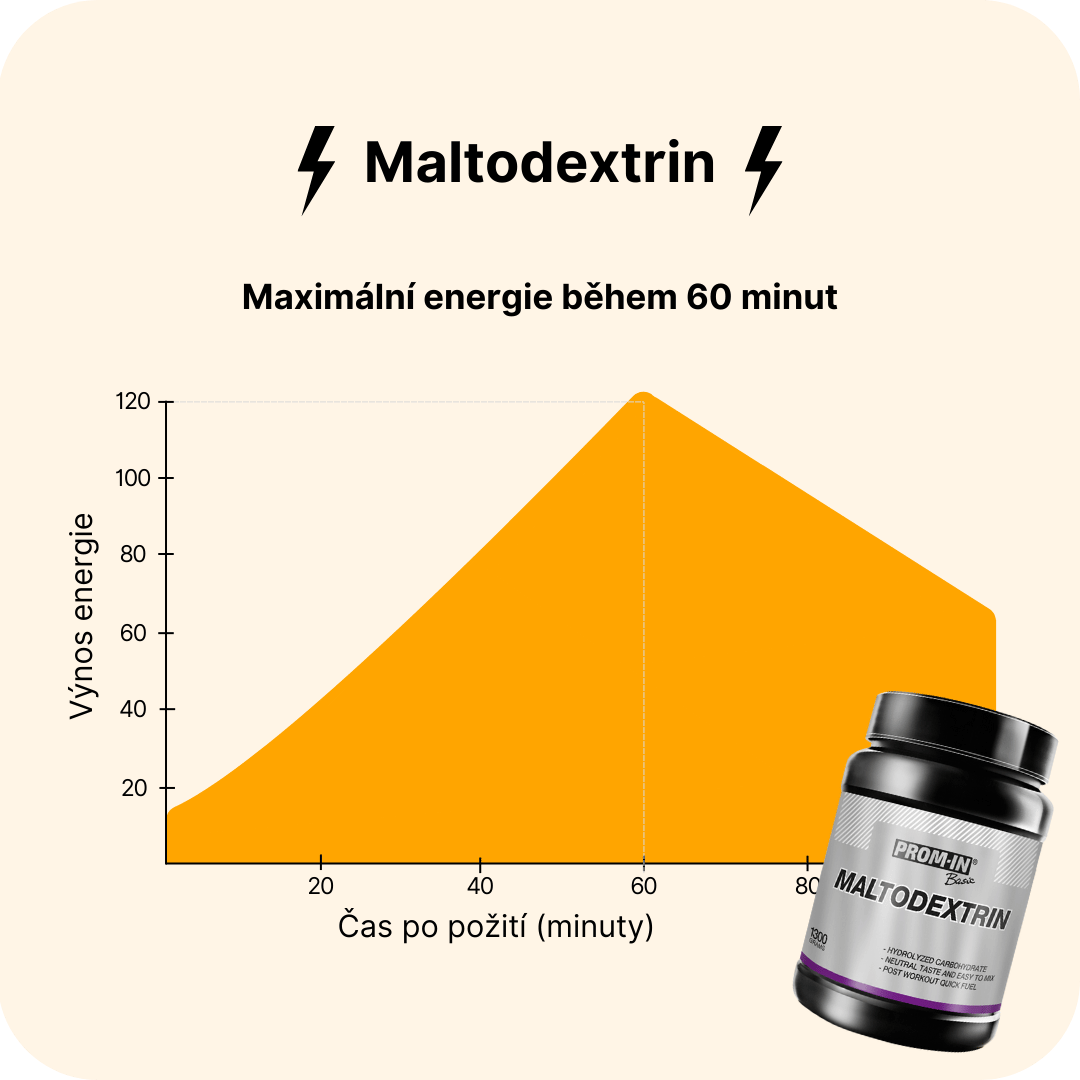
- Fast energy source: because maltodextrin is made up of shorter carbohydrate chains than the original starch, the body can digest it very quickly. This makes it popular among athletes and endurance athletes who need to replenish energy before, during or immediately after physical activity.
- Aftera hard workout, it is important to replenish not only protein but also carbohydrates to restore muscle glycogen stores. It is maltodextrin that can help to restore energy reserves more efficiently thanks to its good solubility and fast absorption.
- Easy combination with other nutrients: because maltodextrin has a neutral taste and high solubility, it mixes well with protein supplements or amino acid preparations. Therefore, athletes often include it in so-called post-workout drinks or stand-alone carbohydrate mixes.
What is the effect of maltodextrin on health?
Glycaemic index
Maltodextrin has a high glycaemic index, which means it can quickly raise blood sugar (glucose) levels. In healthy individuals, especially active athletes, this effect may not be a problem because the carbohydrates ingested are quickly used to replenish energy. However, in people with diabetes or with problems regulating blood sugar, extra caution is needed. High blood sugar can cause energy fluctuations, fatigue, or other health complications.
Digestion and absorption
Most people digest and absorb maltodextrin well. However, more sensitive individuals may experience digestive difficulties (bloating, cramps). If you have digestive problems, it is recommended to start with smaller amounts of maltodextrin and see how your body reacts.
Safety and allergies
Maltodextrin is generally considered a safe ingredient. Problems could occur in gluten-sensitive people if maltodextrin is made from wheat starch (must be declared on the packaging). However, most commonly sold forms of maltodextrin come from maize or potatoes and are therefore gluten-free.
Long-term health effects
As with other simple or rapidly absorbed carbohydrates, excessive consumption without a balanced diet and sufficient exercise can contribute to obesity, blood sugar fluctuations and other metabolic problems.


Tips for healthy maltodextrin consumption
Watch your diet
If you are an active athlete, maltodextrin can help you replenish your energy quickly. But if you're trying to lose weight or have a sedentary lifestyle, it's important to consider its benefits vs. a possible calorie surplus.
Combine with quality protein
If your goal is to build muscle or recover faster, combine maltodextrin with a quality protein (whey, casein or plant-based) and plenty of micronutrients from fruits or vegetables.
Read labels and watch out for additives
If maltodextrin is part of ready-made foods (e.g. instant sauces, sweetened drinks), these products may contain higher levels of added substances, sugars and salt. It is always advisable to check the complete ingredients on the packaging.
Consider time and dosage
For athletes, the best time to consume maltodextrin is around training (before, during or immediately after). The amount is usually in the range of 20-50g per serving, depending on the intensity and length of the workout.
Is maltodextrin harmful?
The question of whether there is harm in maltodextrin has generated a lot of debate among consumers and experts. According to the available scientific evidence and statements from professional institutions, maltodextrin is considered safe when used routinely and sensibly. Most studies agree that the main risk lies in its high energy value and rapid absorption, which can lead to fluctuations in blood sugar levels and excess calorie intake.
It is therefore important to monitor not only total carbohydrate intake and energy from other foods, but also one's own health status (e.g. diabetes or metabolic syndrome). When consumed in reasonable amounts and in the context of a healthy, balanced diet, maltodextrin remains a safe and practical component of the diet for the majority of the population.
Conclusion
So maltodextrin, what is it? It is a rapidly digestible and easily soluble polysaccharide that has a wide range of applications in the food industry and in sports nutrition. The answer to the question of what is maltodextrin can be summarized as it is an energy source especially suitable for athletes or for quick carbohydrate replenishment when the body needs to be fuelled. On the other hand, it should be borne in mind that its frequent and unbalanced consumption can lead to fluctuations in blood sugar levels and higher energy intake.
If you include it in your diet in a reasonable amount and at the appropriate time, it can become a handy helper during strenuous sports performance and recovery. Remember, however, that no single dietary component (including maltodextrin) should replace a varied and comprehensive diet rich in protein, fat, fibre and micronutrients.
Recommended
Prom-in Maltodextrin
Scitec Maltodextrin
Links to scientific studies
- Aragon, A. A., et al. (2017). international society of sports nutrition position stand: diets and body composition. Journal of the International Society of Sports Nutrition, 14(1), 16.
- EFSA Panel on Food Additives and Nutrient Sources (2016). Safety of use of certain food additives. EFSA Journal, 14(3), 4451.
- Freedman, N. D., Park, Y., Subar, A. F., et al. (2010). Carbohydrate, glycemic index, glycemic load, and cancer risk: a systematic review. American Journal of Clinical Nutrition, 91(6), 1533S-1539S.
- Jeukendrup, A. E. (2014). A step toward personalized sports nutrition: carbohydrate intake during exercise. Sports Medicine, 44(Suppl 1), S25-S33.
No posts have been made yet.