Vitamin C for the skin: your guide to reducing wrinkles
 Author:
 Vitamin C, also known as ascorbic acid, is widely known as a reliable aid in the fight against colds and for strengthening the immune system. However, modern dermatological science is revealing its much deeper and more fundamental role in skin health. It's not just a vitamin, it's a powerful antioxidant and an essential factor in the front line of defence against the daily assaults of sunlight and the associated premature ageing.
Article Content:
- Vitamin C and collagen
- The invisible enemy: UV radiation and its impact
- A double shield of defence: Vitamin C as an antioxidant
- Fighting the effects: reducing wrinkles and pigment spots
- How to use vitamin C effectively?
Vitamin C and collagen
To understand the importance of vitamin C, we must first talk about collagen. Think of collagen as the steel skeleton of a building. In our skin, it forms a strong but flexible network of fibers that provides structure, strength and volume. Thanks to collagen, our skin is plumped and smooth in youth. With age, however, the natural production of collagen decreases, leading to wrinkles and sagging contours.
This is where vitamin C comes in. The body cannot effectively create collagen without it. Vitamin C acts as a cofactor, an auxiliary molecule that is absolutely essential for key enzymatic reactions leading to the synthesis of stable and functional procollagen molecules, which are then formed into strong collagen fibres. Without sufficient vitamin C, this entire building process slows down or even stops. Scientific reviews have repeatedly confirmed that topical application of vitamin C is one of the most effective ways to promote this synthesis and combat the visible signs of ageing¹.
The invisible enemy: UV radiation and its impact
Sunlight, specifically its ultraviolet (UV) component, is the main external factor causing skin ageing, a process known as 'photoaging'. UV rays affect our skin in two destructive ways.
Firstly, their impact generates huge amounts of so-called free radicals in the skin cells. These are highly unstable and reactive molecules that damage everything they come into contact with - cell membranes, DNA and, above all, the aforementioned collagen fibres. This process is called oxidative stress. Fortunately, our skin has a natural defence system against these radicals, of which vitamin C is a key component. The problem is that exposure to UV light dramatically reduces and depletes the skin's vitamin C reserves², leaving the skin virtually defenceless.
Second, chronic exposure to UVB radiation directly stimulates the production of enzymes in the skin that actively degrade and break down collagen (called matrix metalloproteinases). This creates a vicious circle: the sun not only prevents the formation of new collagen by destroying vitamin C, but also actively destroys existing collagen. A study conducted on mice clearly demonstrated that administration of antioxidants, including vitamin C, was able to significantly reduce this destructive activity and, in turn, promote the production of new collagen, resulting in a visible reduction in wrinkles³.


Double defensive shield: Vitamin C as an antioxidant
Once we understand the destructive power of free radicals, we can fully appreciate the antioxidant capabilities of vitamin C. It acts as their "scavenger" - donating the missing electron to stabilize and neutralize them before they can do damage.
Its power is further enhanced when combined with another powerful antioxidant, vitamin E (tocopherol). These two vitamins work in synergy. Simply put, when vitamin E destroys a free radical, it becomes inactive itself. Vitamin C, however, can "recycle" it and bring it back into action. Their combined action thus creates an extremely effective protective shield. A double-blind study showed that combined oral administration of vitamins C and E led to a demonstrable reduction in the skin's reaction to sunburn (erythema), confirming their protective role at the cellular level⁴. This synergistic effect has also been confirmed in more recent pooled studies that highlight their joint role in repairing damaged skin cells⁵.
Fighting the effects: reduction of wrinkles and pigment spots
The scientific evidence for the benefits of vitamin C is not limited to theoretical models and laboratory tests. Clinical trials in humans have produced convincing results. In one key study, participants with sun-damaged skin were treated for six months with a cream containing 5% vitamin C on one half of their face and a placebo on the other half. The results were unequivocal. On the vitamin C-treated side, there was a statistically significant improvement in skin microrelief and a reduction in wrinkle depth⁶.
In addition to wrinkles, another manifestation of photoaging is the appearance of hyperpigmentation, i.e. unsightly pigment spots. Vitamin C also plays an important role here. It can inhibit (slow down) the activity of the enzyme tyrosinase, which is key to the production of the skin pigment melanin. By regulating its production, it helps to unify the skin, lighten existing spots and prevent the appearance of new ones¹.
How to use vitamin C effectively?
In order to get the most out of the benefits described above, vitamin C needs to be properly supplied to the body. A combination of two approaches is most effective: external and internal.
External (topical) application:
For a targeted effect on the skin, direct application of cosmetic products containing vitamin C (serums, creams) is most effective. This ensures its high concentration exactly where it is needed to fight free radicals and promote collagen.
Internal (oral) supplementation:
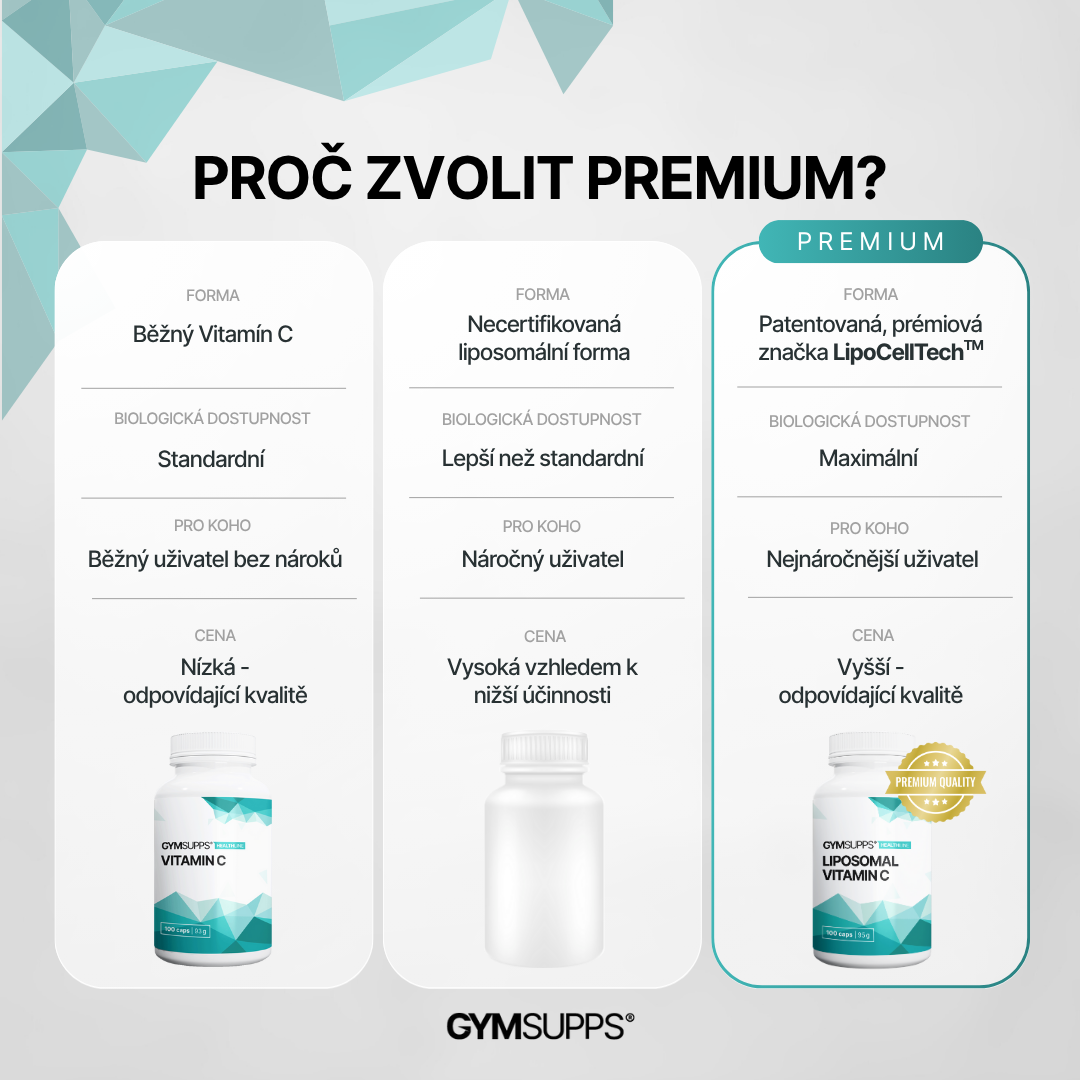
Taking vitamin C internally is essential for overall health and establishing baseline levels for all body tissues, including the skin. Here, however, the form of supplementation matters. Standard forms of vitamin C can be partially degraded in the digestive tract and their absorption is limited. This is where modern technology opens up. One of the most advanced forms is liposomal vitamin C.
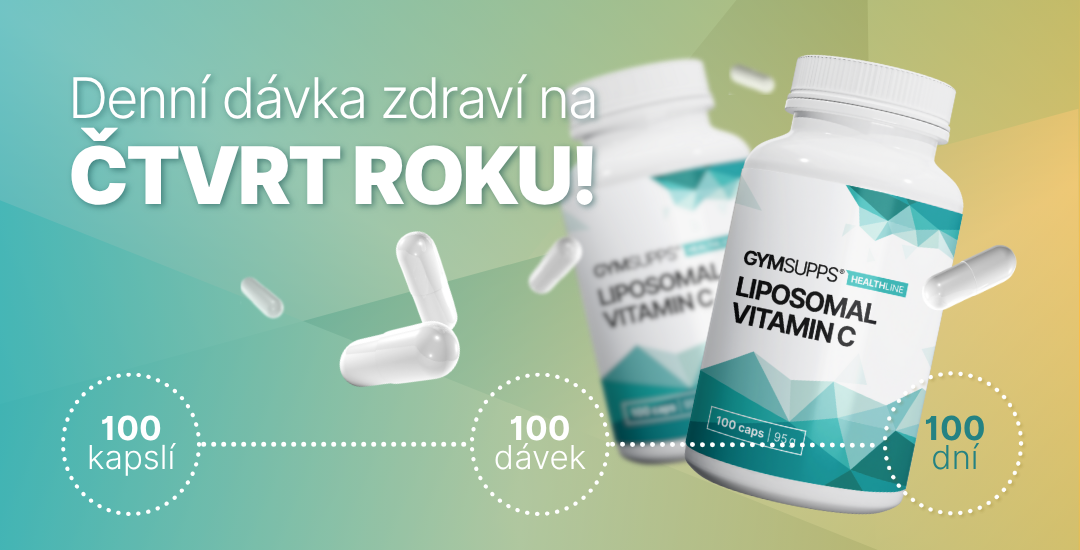
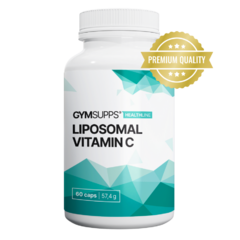
In this technology, the vitamin C molecule is encapsulated in a miniature fat capsule (liposome). This packaging protects it from stomach acids and allows it to penetrate the intestinal wall much more efficiently into the bloodstream and then into the cells. This dramatically increases the so-called bioavailability. An example of a product that uses this technology is GymSupps Liposomal Vitamin C, which delivers 715 mg of highly absorbable vitamin C per dose thanks to its patented LipoCellTech™ blend. This formulation is designed to efficiently deliver the active ingredient directly into the cells where it can perform its function.

Even among liposomal forms, there are significant differences. Unlike traditional liquid products, which can be damaged during manufacturing and are less stable, LipoCellTech™ technology uses dry powder (called proliposomes). This only forms fresh and highly stable liposomes in the stomach after contact with water, ready for maximum absorption.
This advanced approach dramatically increases absorption. While conventional vitamin C can drop below 20% at higher doses, LipoCellTech™ manufacturers report absorption rates in excess of 95%. This allows the body to effectively utilize almost the entire dose administered, making even smaller amounts many times more beneficial than high doses of the conventional form.
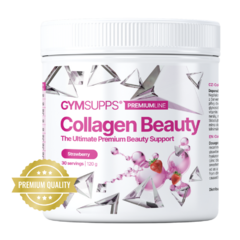
For maximum skin support and truly comprehensive care from within, a strategic combination is offered that harnesses the synergistic effect of two key ingredients. The combination of GymSupps Collagen Beauty and GymSupps Liposomal Vitamin C is the ideal approach. While Collagen Beauty supplies the body with direct building material - hydrolyzed collagen peptides that are readily usable to rebuild the structure of skin, hair and nails, Liposomal Vitamin C acts as an essential starter and key worker. It ensures that the body can efficiently process not only the supplied collagen, but also amino acids from other sources, and synthesize its own new collagen from them. Simply put, the collagen will supply the bricks, but vitamin C is the one who will bind them together. This combination thus ensures that the body has enough material and tools to fight skin aging as effectively as possible.
Conclusion.
Vitamin C is not just a fad in the cosmetics industry. Its role in skin protection and regeneration is backed by decades of serious scientific research. It is indispensable for the formation of collagen, which gives skin firmness. As a powerful antioxidant, it neutralizes free radicals generated by UV rays and thus protects the skin from their destructive effects. However, its reserves are mercilessly depleted by sunlight, so it is crucial to replenish it, either topically or through highly absorbable forms such as liposomal.
It is important to remember that vitamin C is not a substitute for sunscreen. SPF protection is and always will be the foundation of UV defense. However, vitamin C is a second, extremely important line of defense that works in tandem with sunscreen, enhancing its effectiveness and repairing damage that can occur despite all the protection. Investing in a quality vitamin C product is therefore an investment in the long-term health and youthfulness of your skin, backed by clear scientific evidence.
Recommended

Sources:
- [1] Farris, P. K. (2005). Topical vitamin C: a useful agent for treating photoaging and other dermatologic conditions. Dermatologic surgery : official publication for American Society for Dermatologic Surgery [et al.], 31(7 Pt 2), 814-818.
- [Cuhls, H., et al. (2000). Dehydroascorbic acid uptake in a human keratinocyte cell line (HaCaT): implications for the skin antioxidant barrier. The Journal of investigative dermatology, 114(2), 244-250.
- [3] Cho, H. S., et al. (2007). Anti-wrinkling effects of the mixture of vitamin C, vitamin E, pycnogenol and evening primrose oil.... Photodermatology, photoimmunology & photomedicine, 23(5), 155-162.
- [4] Fuchs, J., & Kern, H. (1998). Protective effect against sunburn of combined systemic ascorbic acid (vitamin C) and d-alpha-tocopherol (vitamin E). The American journal of clinical nutrition, 68(2), 470-471.
- [5] Gembus, K. K., & Jas-Gembus, D. (2024). Antioxidants for Skin Health. Nutrients, 16(16), 2548.
- [6] Humbert, P. G., et al. (2003). Topical ascorbic acid on photoaged skin. Clinical, topographical and ultrastructural evaluation: double-blind study vs. placebo. Experimental dermatology, 12(3), 237-244.
- [7] LipoCellTech™ (n.d.). The problem & The solution.
- [8] Shaker, D. S., Ishak, R. A. H., Ghoneim, A., & Elhuwatky, H. (2019). Aliskiren Hemifumarate Proliposomes for Improved Oral Drug Delivery: Formulation Development, In Vitro and In Vivo Permeability Testing. Nanomaterials (Basel, Switzerland), 9(8), 1183.
- [9] Rojanarat, W., Chang, L. C., & Ristroph, D. L. (2011). Isoniazid Proliposome Powders for Inhalation-Preparation, Characterization and Cell Culture Studies. AAPS PharmSciTech, 12(4), 1269-1279.
- [10] Davis, J. L., Paris, H. L., Beals, J. W., et al. (2016). Liposomal-encapsulated Ascorbic Acid: Influence on Vitamin C Bioavailability and Capacity to Protect Against Ischemia-Refusion Injury. Nutrition and metabolic insights, 9, 25-30.
- [11] Sinha, R., Sinha, I., Calcagnotto, A., et al. (2018). Oral supplementation with liposomal glutathione elevates body stores of glutathione and markers of immune function. European Journal of Clinical Nutrition, 72(1), 105-111.
No posts have been made yet.