





The most common mistakes people make in their quest for their dream body. Don't you do them too?
 Author:
 That reduction is sometimes not easy is probably nothing new, especially in the case of beginners. In fact, it's not surprising. The internet is full of opinions about which diet is the best, that carbs are evil, that you don't have to diet and just "eat healthy" and a lot more. Basically, anything you read on the internet may or may not work, and that's why a bunch of people struggle with stagnation, which depresses them and makes them revert to their original eating habits and are unable to see the reduction through. Today we're going to look at the most common reasons why you might not be reducing.
INABILITY TO ESTIMATE YOUR INTAKE
In my opinion and experience, it is the inability to estimate your intake that is the most common reason for unsuccessful reduction. People are often convinced that they are doing everything absolutely right when it comes to diet, but if the desired progress is not coming, there must be a mistake somewhere. In this case, there are two groups - those who significantly overestimate their intake, or I burn 1000 calories every day, even though I actually only go for walks and their intake is therefore higher than it should be. And then the other group is people who underestimate their intake and often eat at or below their basal metabolic rate. So yes, these are complete opposites, but both extremes can block your fat reduction efforts.
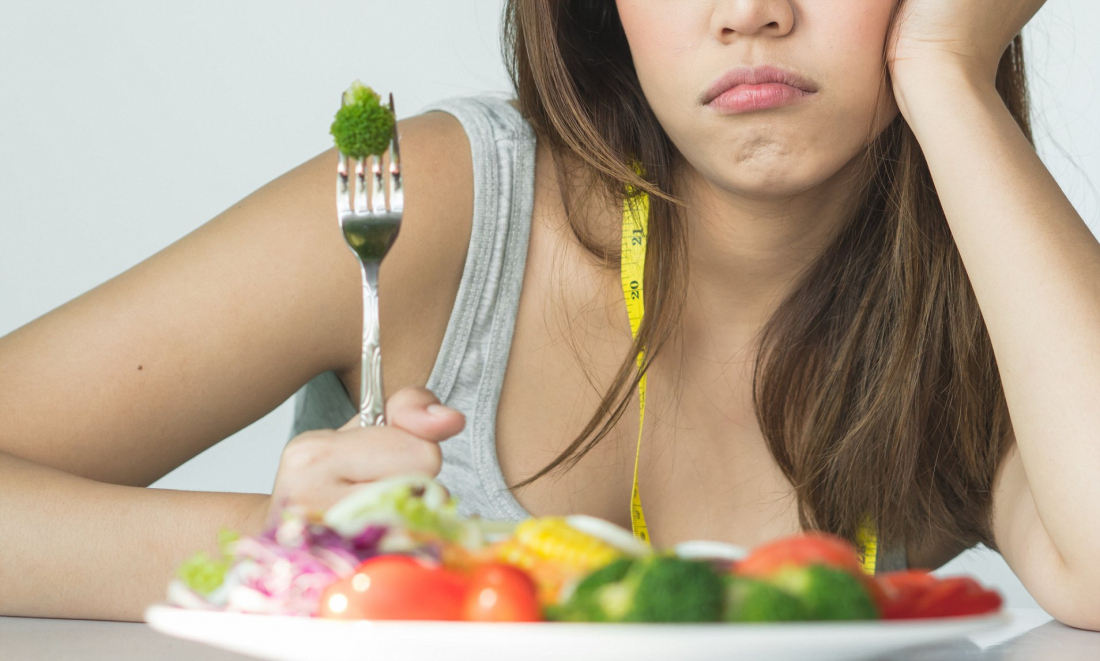
Basically, the underestimating your intake is the more common option, because there is still a sort of well-worn myth that if you lose weight, you must eat less. However, this rule sounds a little different - if you want to lose weight, you have to eat RIGHT. Many people believe that they don't lose weight because they eat too much, so they keep reducing their caloric intake to ridiculously low numbers. When you then calculate that person's intake you will find that their intake is really far from what it should be. There may be a reduction, but it will definitely not only be from fat stores, but the body will also reach into its own muscle, or on the contrary, it will start to store all the energy it has taken in to create an energy reserve to provide for basic life functions. In addition, the effect of eating too little is to reduce the metabolic rate, which is another stage of the body's adaptation to reduced calorie intake.
EXCESSIVE INTAKE OF PROCESSED FOODS
In addition to the total number of calories and macronutrients, you should also pay attention to the quality of the foods you ingest. If you want to achieve the desired results, you should limit your intake of overly processed foods, semi-processed foods and bulk meal replacements. Although the modern era offers all sorts of gadgets in the field of ready meals and meal substitutes, they will never replace a solid diet. When shopping, focus on whole foods such as fruits, vegetables, meat, eggs, dairy and grains - remember that eating food that is real food is always best for the body. Give your body quality fuel in the right amounts and it will reward you accordingly. Beware of all sorts of shakes and meal replacements, which are often not as good a choice as the advertisements for these products claim. We have addressed this issue in the article: Don't fall for fashion trends! Food from powders is not a miracle, quite the opposite.
OVERCONFIDENCE IN 80/20
While it's great that the 80/20 rule in terms of diet can really work, many people take it to mean that the 80 percent is more likely to belong to foods that should be a minority in the diet, or they claim to eat 80/20, but in the end it may be more like 50/50. Intuitive eating, or the 80/20 rule , requires some knowledge of your body and the ability to correctly estimate your intake. The moment such practices are applied by beginners, it usually doesn't end in success. This is simply because they simply don't know what 20% is or their intuition in this regard is simply not yet at a level where they are able to estimate their intake correctly. I'm not saying that all beginner dieters need to calculate their intake to the letter and weigh every bite, nor that the two methods mentioned don't work, but both require a certain ability to understand your body and an advanced knowledge of diet-related issues.And of course you can have "beginner's luck" and master this rule right away, but today we're talking about possible reasons why we may not be reducing and this could very well be one of them.
LACK OF VARIETY IN THE DIET
Most diets are based on rigidity: don't eat this, don't eat that, don't do this, don't buy this, cut out these foods and eat only what's left. Some diets even force you to cut out entire food groups or nutrients, like ketodiets with absolute carbohydrate restriction or, conversely, low fat diets with minimal fat intake. If a beginner in nutrition embarks on a diet that is too restrictive, he or she may give up simply because the diet becomes too monotonous or the person doesn't know what to eat and becomes "bored". Although a diet based on restriction of certain foods may cause short-term weight loss, it is very unlikely to produce lasting results.
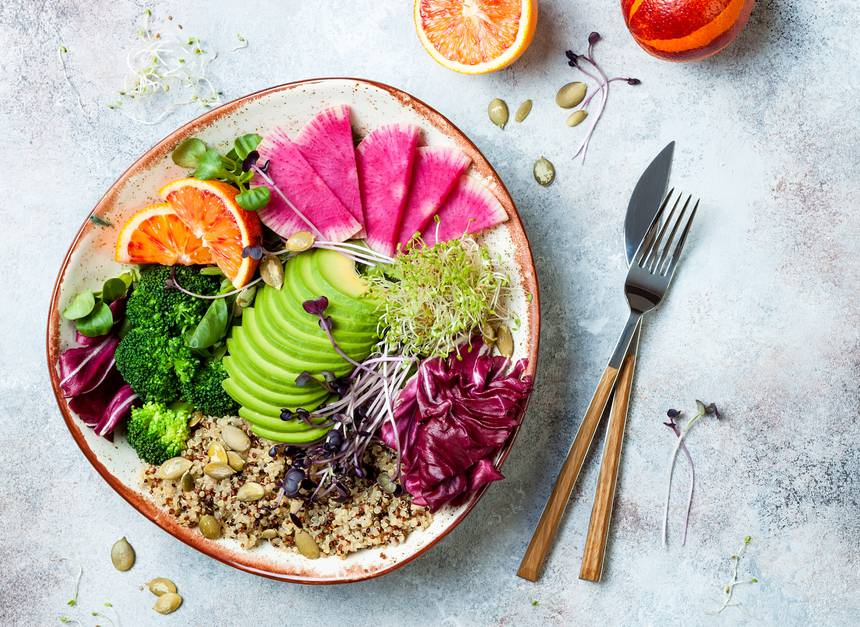
If you are starting out with healthy eating, make sure that your dietary direction gives you enough flexibility in your food choices and that you can eat pretty much anything you feel like or like, as long as it fits into your daily calorie intake.So it 's not about which foods you have to cut out and what's healthy or unhealthy, but what's most important for a good reduction is honouring the principle of a sensible calorie deficit, i.e. eating fewer calories than you expend. If you fancy a slice of Grandma's cake, have a slice, but adjust your other calorie intake accordingly - i.e. cut out carbs and fat somewhere and add plenty of protein. Reducing weight doesn't mean eating boringly, nor do you have to cut anything out of your diet, you just need to understand how to incorporate foods into your diet so that they 'fit into your daily intake'.
Any extreme is wrong - hencetoo much food restriction is completely unnecessary and can be binding for some people. So why do any extremes when you can do without them? For most people, the key issue is getting their calorie intake right and they attribute their failure to specific foods or food groups such as gluten, carbohydrates, fruit and so on. However, these foods themselves are not the problem , as eating just one food or another is never to blame for your fat stores. Fat stores are caused when you eat too much, that is, when your caloric intake exceeds your caloric output, no matter where those calories come from. In other words, you can eat almost anything as long as your intake meets the caloric deficit principle, and conversely, you can gain weight from vegetables if you simply eat too much of them.
SLEEP DEPRIVATION
Sleep is a hugely important factor that not only plays a role in how we feel and perform during the day, but is essential for a healthy body and the proper functioning of all its processes, fat reduction not excluded. Sleep is the most natural form of regeneration and rest. If you don't give your body enough space through sleep, or it is of insufficient quality, it will surely show sooner or later. In terms of fat reduction, sleep plays perhaps a much more important role than many people think.
Suitable supplements that will support your sleep can be - ZMA, magnesium, zinc, but also melatonin for example.
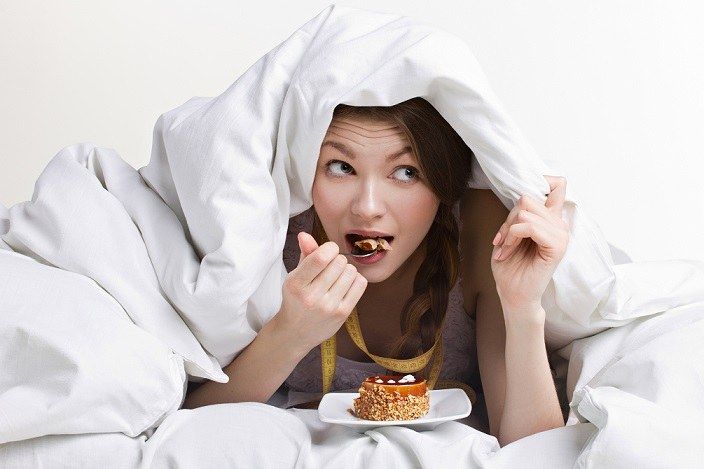
Lack of sleep has an effect on levels of cortisol, the stress hormone that controls our cravings, as well as on levels of leptin and ghrelin, the hunger hormones. If you don't get enough or good quality sleep, the levels of these important hormones are thrown out of balance and you will consume far more calories than your body needs because it is simply 'crying out for energy' and it is also possible that when you don't sleep well you struggle with cravings, just because of the hormonal imbalance. Sleep is perhaps one of the most underestimated factors, but a very important one.
DON'T SLEEP
Building smoothly on the previous point, we're going to delve a bit into training. If you've added some movement to your reduction, that' s only good! But you know, beginners tend to "overdo the beginnings" and in the excitement of their newfound love of sports, they then go to the gym or run every day. The body goes from extreme to extreme, again. We've all experienced this beginner's enthusiasm, but the sooner you realize that the body is truly an amazing machine, but one that can't run at full speed all the time, the sooner you'll take your results a step further. The other factor that contributes to people still prolonging their physical activity is the fact that the "exercise more, eat less" rule still rings true somewhere . Unfortunately, it's not about not eating enough, but exercising X hours a day. It's about eating right and exercising sensibly.
A lot of people don't see it that way, but even training, or any kind of physical stress, is stress for the body and if the body is under permanent stress, it has to react somehow, and it could be that you start gaining weight inexplicably or your reduction stops. You don't have to lie in front of the TV all day, but sometimes you need to reduce the tension, change your activity for a day, try yoga, swimming or any other form of active relaxation.
YOU HAVE A SEDENTARY LIFESTYLE
Conversely, there's the situation where you just don't get enough exercise. Yes, you can lose weight and reduce fat without exercise, but exercise is a perfectly natural thing that everyone should be doing, at least in its most natural form, walking, every day, and if you're not doing even that bare minimum, it's definitely not good for your health.Unfortunately , the demands of today's times often lead to the natural need for exercise being suppressed to a minimum. Sadly,for a growing percentage of people, even walking is no longer natural exercise. They spend most of the day behind a computer, drive to work ideally to the front of the office and when they come home from work, they do the bare minimum and park themselves in front of the TV. A lot of people have mentally demanding jobs, but taking 20 minutes a day to take a short walk in the fresh air will not only help you, but your brain as well. Don't have time to exercise, but spend X hours a day scrolling through instagram? Then you might need to rearrange your priorities a bit!

EXCERPTS
Well, let's face it. Are you the "if I can't cook/exercise" or "I don't have the time/energy to exercise" team ? Excuses are another very common reason why people are unable to reduce fat, and what makes it worse is that they often don't even acknowledge that this could be a problem. Let's dig into our consciences and honestly answer the question of whether we really need to watch the latest episodes of The Doctor's Office, or scroll through social media, or if we can even cook our lunch for work the next day in front of the TV. Are you really too tired to go for a workout or a walk? And what if doing just that helps you relieve stress and tension? You really need to think about what each activity does for you and if it aligns with your goals.
STRESS
The demands of today are often unreasonable, so it's no wonder that most of us are overly stressed. Stress is not good for the body, and certainly not if you are trying to reduce weight. Again, we come to elevated cortisol levels, and as we have already discussed, cortisol can have a significant negative impact on your fat reduction efforts. In fact, due to elevated cortisol levels, the body may require more caloric intake and also crave more calorie-dense foods, so our efforts to eat healthy and sensibly can actually be thwarted quite easily. In addition, due to the excess stress, we can start to struggle with sleep problems and begin to spin in circles.
MULTITASKING
Now really think about the last time you ate a meal in complete peace, i.e. without the TV on, your phone in your hand, or answering work emails at lunch. Can you remember? And do you do it often? Thanks to the demands of today's time, where we tend to be in a constant rush, and also thanks to advances in communication and technology, where social media and television are a big part of our lives, it's quite common to actually use the moment when you can sit down to eat in other ways. However, multitasking, or doing several activities at once, is something that can interfere with the perception of food and negatively affect the perception of hunger and satiety. The opposite of doing twenty other things at mealtimes is what is known as 'eating for the sake of eating'. MINDFUL EATING. A principle that involves noticing what we eat, when we eat, noticing cravings and learning to recognize the body's signals.

Mindful eating is not a diet, but a principle that is meant to teach us a healthy relationship with food and understanding the signals our body gives us. If we eat in a hurry, or with the TV on, we often focus our attention on activities other than eating, and as a result our perception of taste, and more importantly our feelings of hunger and satiety, are distorted. If you eat with the TV on, it is very easy to overeat because you are simply not paying attention to what your body is reporting. The same is true when eating in a hurry - if you eat too quickly, your brain doesn't have time to signal satiety. This process takes up to 20 minutes. That's why you need to pay enough attention to your food to enjoy it, eat calmly, chew and don't rush.
As already mentioned, mindful eating is not a diet, but it can still help you reduce fat, precisely because by eating calmly and at a slow pace you learn to understand your body's signals, enjoy your food and you can also consume fewer calories because you will feel satiety in time, thus avoiding overeating and overconsumption of calories, and mindful eating can even be a useful tool to fight cravings.
WHAT TO TAKE AWAY FROM THE ARTICLE?
Today we've looked at a list of the most common causes that make fat reduction impossible. Whether it's lack of exercise, calories, or conversely an excess of both, lack of sleep, or multitasking. The conclusion is pretty clear - why go to any extremes, whether in nutrition or training, when you can do without? Choosing the path of extremes is usually not a good solution and does not lead to long-term results or satisfaction. Better to take the path of a rational approach, both to nutrition and training, and also remember to build a relationship with yourself.
Sources:
https://www.ncbi.nlm.nih.gov/pubmed/20479763
https://www.ncbi.nlm.nih.gov/pubmed/17212793
https://www.ncbi.nlm.nih.gov/pmc/articles/PMC3632337/
https://academic.oup.com/aje/article/164/10/947/162270
https://www.webmd.com/diet/features/your-hunger-hormones#1
https://www.ncbi.nlm.nih.gov/pmc/articles/PMC2967652/
https://www.ncbi.nlm.nih.gov/pubmed/20129404
https://www.ncbi.nlm.nih.gov/pubmed/25431444
No posts have been made yet.








