The best vitamin C and which to choose
 Author:
 Vitamin C, professionally ascorbic acid, is undoubtedly one of the best known and most important micronutrients for human health. It plays a key role in immune function, collagen formation, protection of cells from oxidative stress and dozens of other biochemical processes. Although it is a basic and well-researched substance, the dietary supplement market offers a plethora of forms - from classic tablets to effervescent beverages to modern liposomal and proliposomal technologies. How to navigate this range and which form is actually best for the body? The answer lies not in marketing slogans but in the scientific principles of bioavailability and stability.
Article content:
- The problem with absorption: why isn't regular vitamin C enough?
- The liposomal revolution: a protective shield for vitamin C
- The hidden problem of liquid liposomes: instability and preservatives
- Proliposomes: the future of dietary supplements?
The problem of absorption: why is conventional vitamin C not enough?
The fundamental problem with conventional forms of vitamin C, such as tablets, capsules or pure ascorbic acid powders, is their low bioavailability. When we ingest such a dietary supplement, it must pass through the aggressive environment of the digestive tract. Stomach acids and digestive enzymes destroy much of the active ingredient before it ever reaches the small intestine, where it is absorbed into the bloodstream.
As a result, the body can only effectively use a very small portion of the dose taken. It is estimated that for higher doses (above 200 mg), the absorption of ascorbic acid falls below 50% and for doses in the order of grams it may be only 15-20%. The remainder is excreted from the body without benefit, which may also cause digestive problems in more sensitive individuals. While the body is protected from overdose, it also means that much of the money invested in such supplements is literally 'flushed down the toilet'.
The liposomal revolution: a protective shield for vitamin C
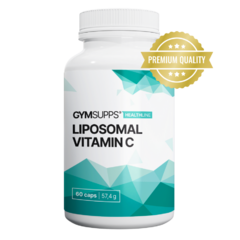
Liposomal technology has been developed as a solution to the problem of low bioavailability. The principle is ingeniously simple: a vitamin C molecule is "wrapped" in a microscopic fat bubble called a liposome. This shell, made up of phospholipids (similar to cell membranes in the human body), performs two key functions:
- Protection: the liposomal envelope protects vitamin C from destruction in the stomach and digestive tract.
- Transport: Due to its fatty nature, the liposome is easily absorbed through the intestinal wall directly into the bloodstream and is then transported to the cells where it releases its valuable contents.
Thanks to this mechanism, liposomal vitamin C has an absorption rate of up to 95%, as confirmed by scientific studies. For example, a study published in 2016 showed that liposomally encapsulated ascorbic acid led to nearly twice the blood concentrations of vitamin C compared to the non-encapsulated form.¹ This form is thus much more effective and allows for high plasma levels of vitamin C that were previously only possible through intravenous administration.
The hidden problem of liquid liposomes: instability and preservatives
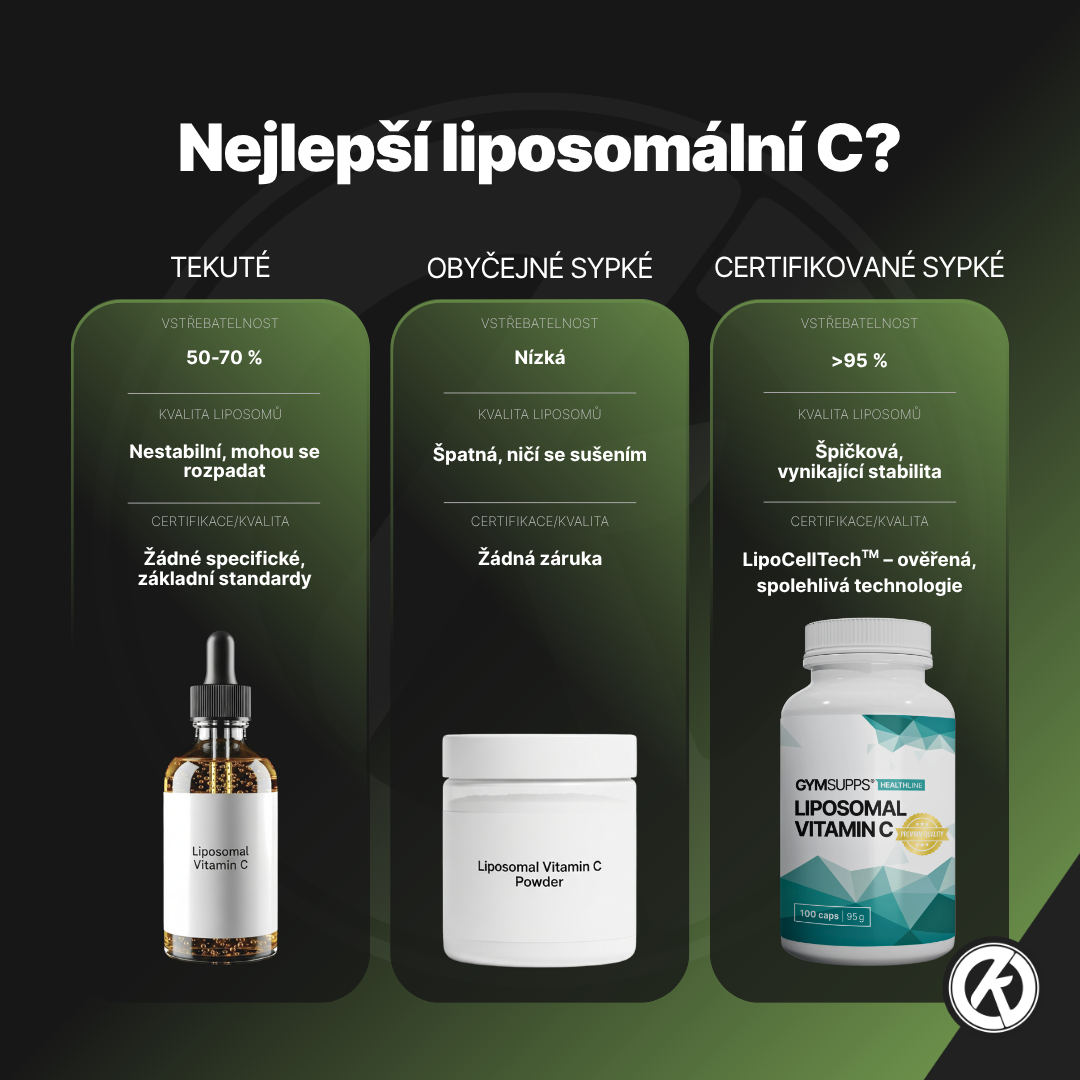
Although liposomal technology represents a huge advance, it is not without flaws. The biggest weakness is stability, especially in the popular liquid forms. Liposomes are inherently unstable in aqueous environments and degrade over time. As the active ingredient is released from them, the liposomes themselves clump or break down. Manufacturers try to solve this problem by adding preservatives such as potassium sorbate or alcohol (ethanol), which brings additional disadvantages.
.png)
In addition, the manufacturing process of liquid liposomal supplements itself can be problematic. The use of high pressure, heat, or chemicals can damage both the vitamin C itself and the phospholipid shell, reducing the final quality and efficacy of the product. Thus, the customer often pays a high price for a product whose claimed efficacy has been significantly reduced by time and manufacturing processes.
Proliposomes: the future of dietary supplements?
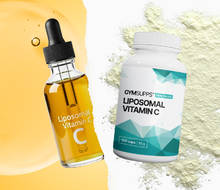
The latest innovation to address the stability issues of liquid forms is the so-called proliposomal technology. This is a dry, powdered form where all the ingredients needed to form a liposome are present in a stable state. The liposomes themselves only start to form after contact with water - i.e. in the consumer's digestive tract.
This approach, sometimes referred to as 'liposomes on hold', eliminates the problem of product degradation during storage. The result is a maximally fresh and potent liposomal product with a long shelf life that also needs no preservatives or alcohol. Studies confirm that proliposomal powders are an effective delivery system for delivering active ingredients to the body.² ³
Conclusion.
When choosing a vitamin C supplement, the key is to focus not on the absolute amount in milligrams on the package, but on the form and its realistic usefulness to the body.
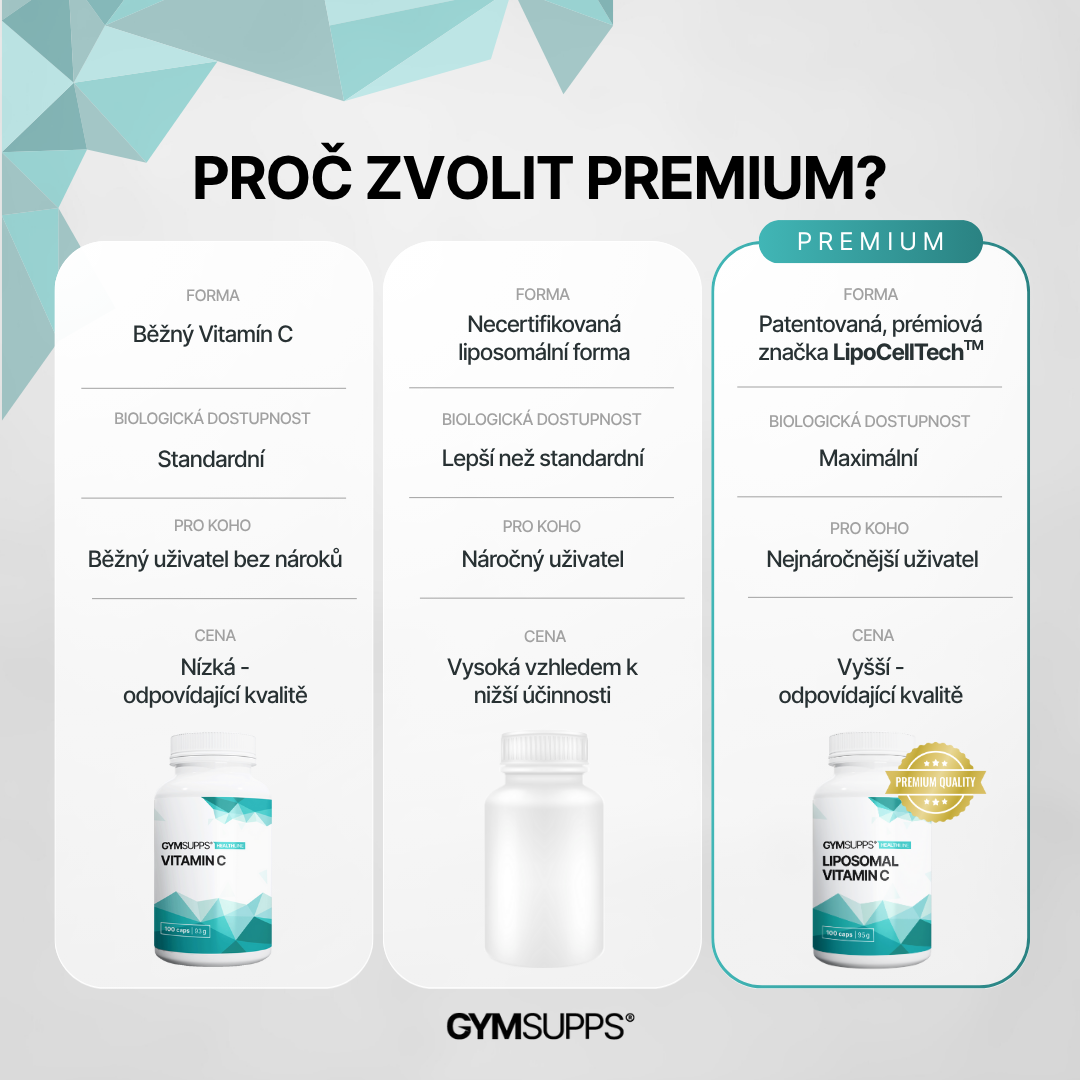
- Common ascorbic acid: It is cheap but has low absorption, especially in higher doses. Suitable for basic supplementation at low doses.
- Liquid liposomal vitamin C: Offers high absorption, but care should be taken regarding its stability and the presence of preservatives or alcohol. Efficacy may decrease with time.
- Dry proliposomal vitamin C: It is currently at the cutting edge of technology. It combines the high absorption of the liposomal form with the perfect stability of the powder. It ensures that the body always receives a fresh and maximally effective product without unnecessary additives.
When making a decision, it is therefore wise to invest in more modern forms that guarantee that the paid-for active ingredient actually gets where it is supposed to - into our cells. Although the initial cost may be higher, in terms of the actual amount of vitamin C used, it is by far the most effective and cost-efficient choice for supporting our health.
Recommended

Sources:
- ¹ Davis, J. L., et al. (2016). Liposomal-encapsulated Ascorbic Acid: Influence on Vitamin C Bioavailability and Capacity to Protect Against Ischemia-Reperfusion Injury. Nutrition and Metabolic Insights, 9, 25-30.
- ² Shaker, D. S., et al. (2019). Proliposomes for oral drug delivery: a review and a research prospectus. Journal of Liposome Research, 29(2), 101-113.
- ³ Rojanarat, W., et al. (2011). proliposome-based powders for inhalable drug delivery. AAPS PharmSciTech, 12(2), 643-653.
No posts have been made yet.