Magnesium threonate: Experience
 Author:
 Magnesium is one of the most important minerals for the human body. It is involved in more than 300 enzymatic reactions that affect everything from muscle contraction and nerve function to blood pressure regulation and DNA synthesis. Although its importance is unquestionable, not all forms of magnesium are created equal - especially when it comes to their ability to affect our most important organ, the brain. In recent years, a specific form known as Magnesium L-Threonate has come into the scientific spotlight.
Article Content:
- What is Magnesium L-Threonate and why is it unique?
- Experience with Magnesium L-Threonate
- Cognitive function and memory
- A new perspective on chronic pain
What is Magnesium L-Threonate and why is it unique?
To understand the uniqueness of L-Threonate, we must first understand the key barrier that nutrients must overcome to reach the brain: the blood-brain barrier (blood-brain barrier). We can think of this barrier as a highly selective guardian that protects the brain from toxins and pathogens, but also restricts the entry of many beneficial substances. Common forms of magnesium, such as oxide or citrate, pass through this barrier only very inefficiently.
This is where Magnesium L-Threonate comes in. It was developed by scientists at the Massachusetts Institute of Technology (MIT) with the goal of creating a form of magnesium that could effectively "unlock" this barrier. In this compound, magnesium is bound to L-threonic acid, a metabolite of vitamin C. It is this binding that acts as the key that allows magnesium to penetrate brain cells more efficiently. By increasing the concentration of magnesium directly in the brain, MgT can thus more specifically influence synaptic plasticity - the ability of brain connections to change and strengthen, which is the basis for learning and memory.

The magnesium threonate experience: objective data from a clinical study
Effect on sleep and daytime vitality:
One of the most commonly reported benefits of magnesium is the promotion of sleep. A recent clinical study from 2024 looked specifically at the effects of MgT in adults who complained of sleep problems. The study was conducted to the highest scientific standards - it was randomized, double-blind and placebo-controlled. This means that neither the participants nor the researchers knew who was receiving the active substance and who was receiving the inactive placebo, eliminating the risk of bias in the results.
The results were remarkable and were measured both subjectively (questionnaires) and objectively using modern technology (Oura smart rings). In the MgT group, the following occurred:
Improvement in sleep quality
Participants reported better and more restful sleep. Objective data from the Oura rings confirmed a prolongation of the deep sleep and REM sleep phases, which are crucial for physical and mental recovery.

Source: Hausenblas 2024, Sleep Medicine: X (RCT, 21 days)
Improving daytime functioning
The benefits are not limited to the night. Participants also reported improved mood, increased energy and better productivity during the day. This suggests that better quality sleep directly translated into overall daytime vitality.
This study provides strong evidence that Magnesium L-Threonate is not just another "sleep" supplement, but that its effects are measurable and comprehensively affect the sleep-wake cycle.¹
Cognitive function and memory: fuel for the brain
MgT's ability to effectively increase magnesium levels in the brain predisposes it to be a powerful ally for cognitive health. A 2022 clinical study conducted on healthy adults in China examined the effect of an MgT-based formula (specifically the patented ingredient Magtein®) on brain function.

Source: Liu 2016, Journal of Alzheimer's Disease (RCT, 12 weeks)
Results showed statistically significant improvements in cognitive function. This broad term encompasses several key abilities:
- Memory: the ability to store and recall information.
- Learning: the speed at which we acquire new skills and knowledge.
- Problem solving: The flexibility of thinking and the ability to find effective solutions.
- Attention: The ability to focus on the task at hand and ignore distractions.
By improving synaptic plasticity and synapse density, MgT provides the brain with the basic building blocks needed for optimal functioning.² You can think of it as supplying better quality materials for building and maintaining the information highways in your brain.
A new perspective on chronic pain
MgT research is not limited to the brain and sleep. Increasingly, there is evidence that magnesium plays an important role in nervous system regulation and pain perception. A 2023 study focused on a very specific and difficult-to-treat problem: persistent pain after breast cancer surgery.
This randomized, placebo-controlled trial investigated whether MgT supplementation could provide relief for patients suffering from this chronic pain. Although more research is needed in this area, the results indicated the therapeutic potential of this substance. The mechanism of action is probably related to magnesium's ability to block specific receptors in the nervous system (NMDA) that are responsible for amplifying pain signals.³ This research opens up new and promising possibilities for the use of MgT in algesiology, a field concerned with the treatment of pain.
Looking to the future: neuroprotection and gut health
Cutting-edge research is moving even further and exploring the so-called microbiome-gut-brain axis - the complex communication network between the bacteria in our digestive tract and our brain. A 2024 study conducted in animal models of Alzheimer's disease produced fascinating findings. It showed that Magnesium L-Threonate can positively influence the composition of the gut microbiome. This change in the gut subsequently led to reduced inflammation in the brain and improved cognitive function in the test animals.⁴
It is absolutely crucial to stress that this is animal research and the results cannot be automatically transferred to humans. Nevertheless, this study gives us a glimpse into future research directions and suggests that the effects of MgT may be even more complex than previously thought.
Conclusion
Magnesium L-Threonate represents more than just another form of magnesium. It is a specialized compound designed with a clear goal in mind: to efficiently deliver magnesium where its effect on the cognition and nervous system is most pronounced - directly to the brain.
Clinical studies confirm its powerful potential in improving sleep quality, increasing daytime vitality and enhancing cognitive function. In addition, ongoing research suggests its potential use in the treatment of chronic pain and in neuroprotection. For anyone seeking targeted support for their brain and nervous system backed by scientific evidence, Magnesium L-Threonate represents one of the most promising choices in today's nutritional supplement market. Yet, as with any supplement, it is advisable to consult your doctor or pharmacist about its use.
Why choose GymSupps Magtein® Magnesium L-Threonate
|
|
|
|
| 3 tablets: Magtein® Magnesium L-Threonate 2000 mg | ||
| Price after registration. | Price: 999 Kč | Price after registration: 960 Kč |
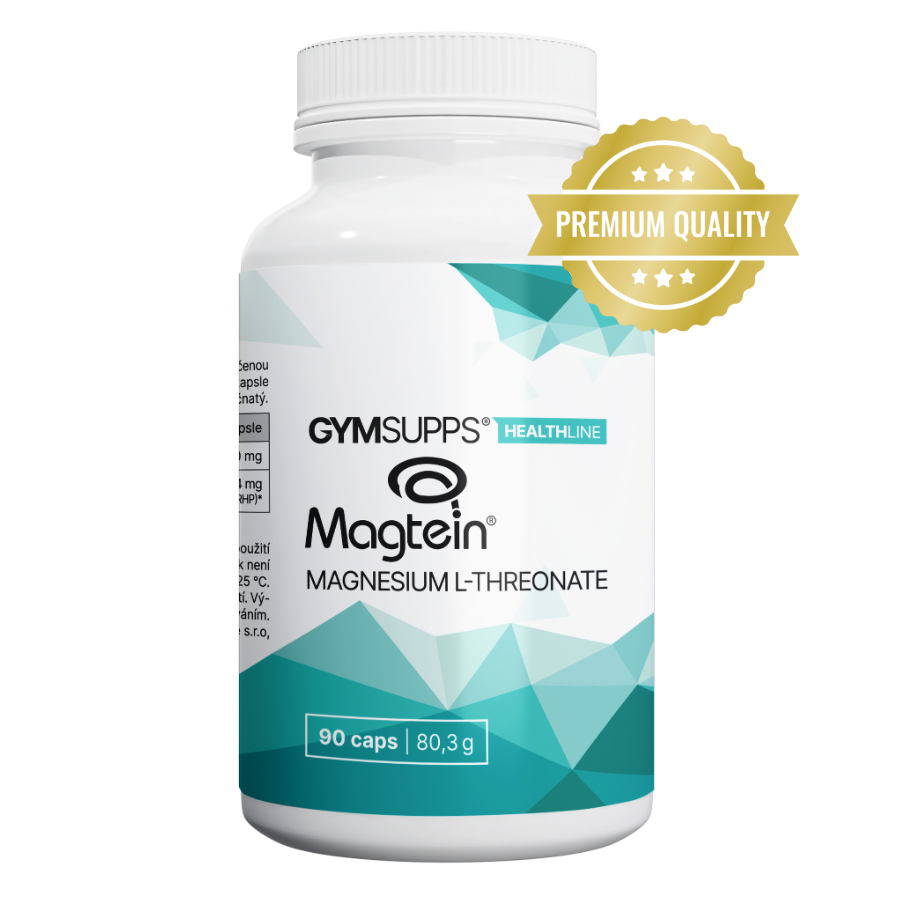
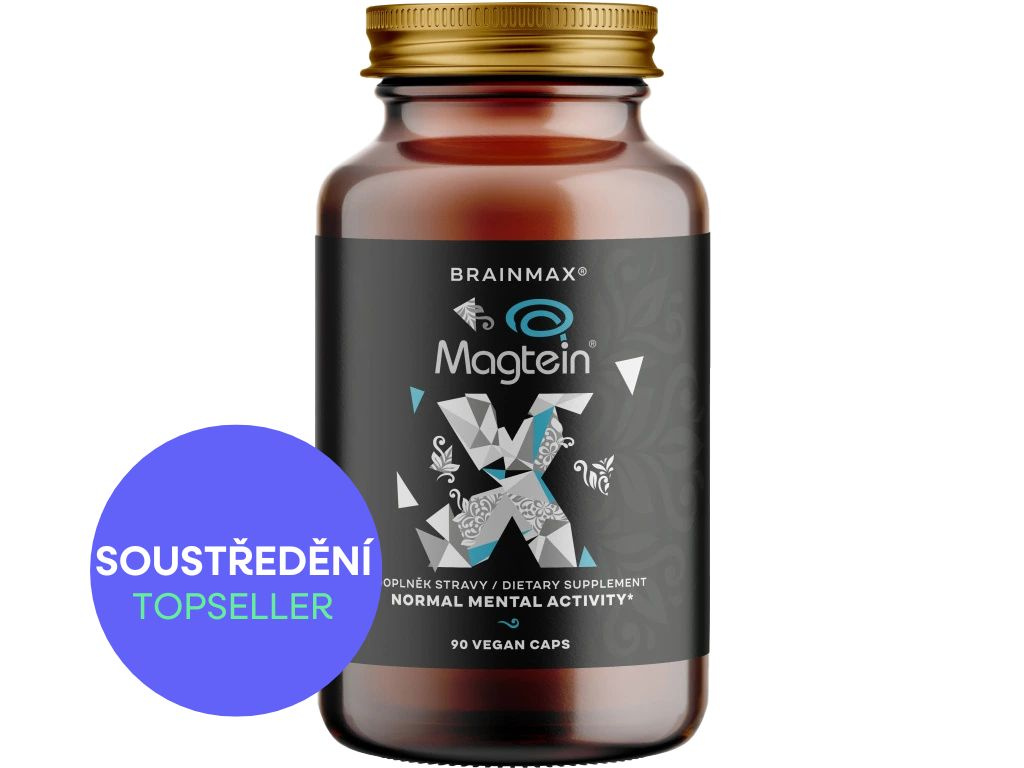
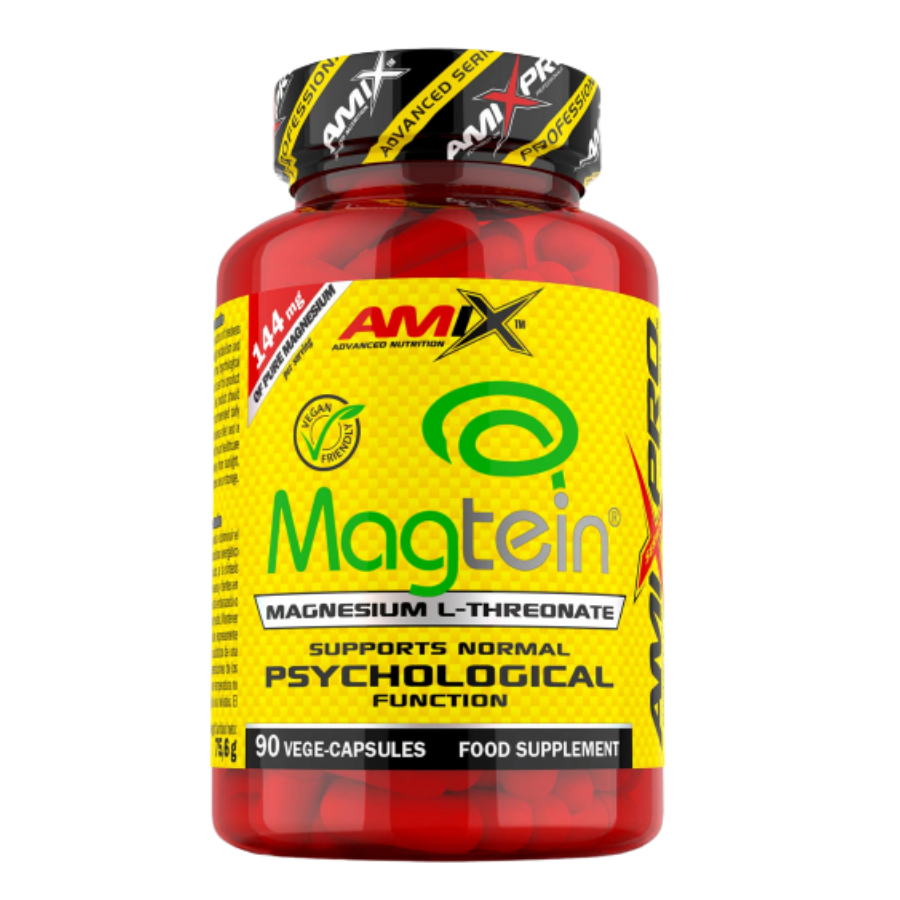
Products with the patented Magtein® ingredient represent the absolute top of the market. But why choose the one from GymSupps?
Our philosophy is simple: premium quality must be affordable for everyone. Instead of driving up the price, we focus on efficiency, and that's how we can offer you unbeatable value. By simply registering in our e-shop, you will receive a discount that makes the final price of 790 CZK the best offer on the market. So your investment in cognitive health has never been more profitable.
Recommended
Sources:
- ¹ Gaby G, et al. Magnesium-L-threonate improves sleep quality and daytime functioning in adults with self-reported sleep problems: A randomized controlled trial. Sleep Medicine: X, 2024.
- ² Zhang C, et al. A Magtein®, Magnesium L-Threonate,-Based Formula Improves Brain Cognitive Functions in Healthy Chinese Adults. Nutrients, 2022.
- ³ Huang YJ, et al. A Randomized, Double-Blind, Placebo-Controlled Trial to Evaluate the Therapeutic Effect of Magnesium-L-Threonate Supplementation for Persistent Pain After Breast Cancer Surgery. Breast Cancer (Dove Med Press), 2023.
- ⁴ Wu Y, et al. Magnesium-L-threonate treats Alzheimer's disease by modulating the microbiota-gut-brain axis. Neural Regeneration Research, 2024.
No posts have been made yet.