





Learn to read food packaging so you know what to put in your basket!
 Author:
 Eating healthy is a trend that is unfortunately becoming more widespread year after year. Why? Because diet affects not only how we look, but also how we feel. Yet for many of us, it can be confusing what to actually look for on food packaging, what shouldn't be there, what shouldn't be there in any case, and which foods are actually healthy and which are just another item in the companies' marketing enticements. You're probably already clear on the basic nutrients, how to combine them and what the optimal proportions should look like in your diet, but shopping for food may not be as much fun.
Plus, there's something a little different to look for in every food. Every food we put in our cart should be in line with our goals and daily intake. But how do we make sense of all those charts, labels, brands and acronyms? Is it really worth investing many times the amount of money in foods with fitness labels, or can we get by with "ordinary" products at a lower price? Let's read this little guide to food packaging today so you know what to put in your basket.
Article Content:
- 1. Ingredients
- 2. 1.
- 3. 2. Nutritional content 2.
- 4. Expiry date and country of manufacture
- What to take away from the article
1. Ingredients
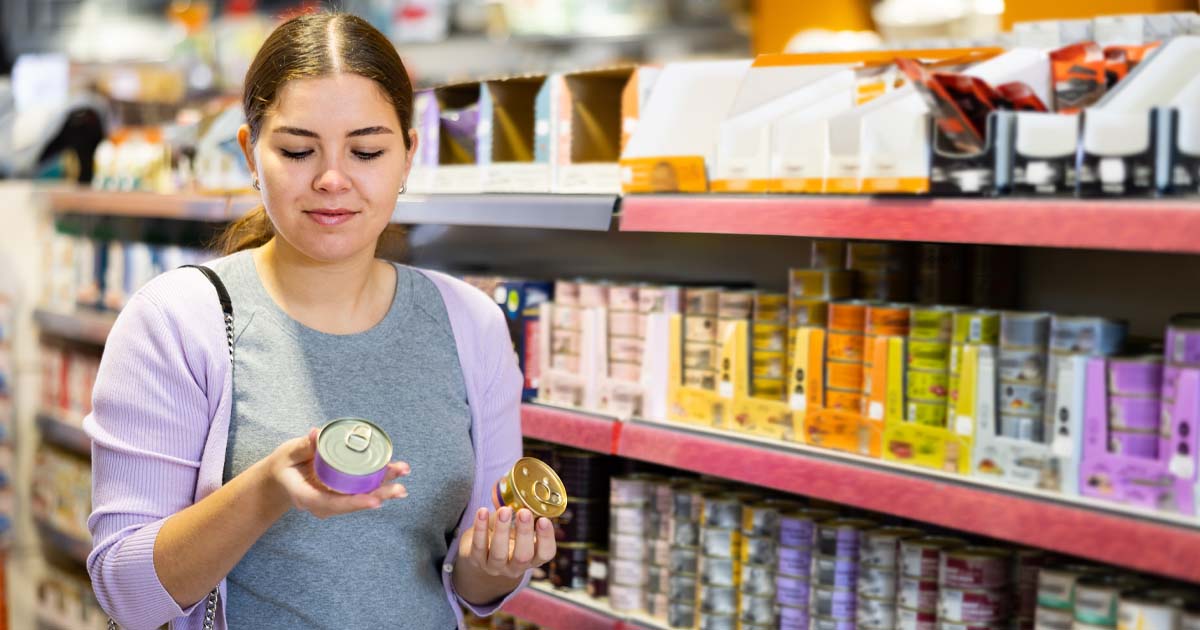
The first and most basic aspect that we should really look for in any food we put in our cart is its ingredients. The ingredients should always be as short, simple and 'clean' as possible. If you reach for a food with ingredients longer than the Lord of the Rings trilogy, it's probably not the best choice.
Simple as it may seem, many companies can lie in this regard as well. For example, rye bread probably shouldn't have wheat flour as the main ingredient, right? Plus, if the ingredients are long, they usually contain a bunch of complicated words that look more like incantations than ingredients fit for consumption.
Another nut to crack about food ingredients is the amount in which the ingredient is present in the food. Foods are usually ranked from the one that is most abundantly present in the food. Thus, if an ingredient is first, it is most abundant in the product. But that usually doesn't tell us anything specific about how much of it is actually there, or how much of the other ingredients are there.
On some foods today, we can find percentages after the ingredients that should reflect the proportions that the ingredient occupies in the food. If sugar, or some form of it, is at the top of the list, you'd better put the food back on the shelf and look for a better alternative.
2. Nutritional values
The second, equally important part of any food's packaging is the nutritional values, yet these seemingly simple tables are sometimes difficult to understand. Nutritional values should simply reflect the content of the ingredients used.
Nutrition Facts provide a simple overview of serving size, package size, caloric values, macronutrient representation, micronutrient content, salt content, and more. In essence, we could liken the nutritional values to the table of contents of a book, telling us what will actually be inside. Let's look a little more closely at what to actually track.
Individual nutrients
As mentioned above, the nutritional values should clearly reflect the content of the ingredients used. As far as the individual nutrients are concerned, no single figure should escape our attention. When looking at the column and number for carbohydrates, we should focus on what sources they come from.
If a product contains too high a proportion of sugar, which quite often are defined even more separately, we better look for another product. Complex carbohydrates should definitely be the main focus, ideally in whole grain form. Sometimes the total carbohydrate content will also include a mention of fibre, other times fibre is separated out and its content is listed separately.

As far as protein is concerned, we should not underestimate the data here either. It is very important to know where the protein in the product comes from. Many manufacturers tend to set the protein content using poor quality or less usable sources such as soya flour, gelatine, collagen, calcium caseinate or poor quality vegetable protein blends (careful, I am not saying that vegetable protein is bad!). For example, with hams, our goal should be to have as much meat in the product as possible, at least 90%.
The third macronutrient is, of course, fat. We have already explained the nature of fat in nutrition, but it is very important to understand the different types of fat and their importance. On the packaging we should usually find (at least) three indications - total fat, saturated fat and trans fat. Saturated fats are not necessarily the "bad" fats, but we shouldn't overdo it with our intake either. They can be found in dairy foods, meat, lard and other mainly animal products.
While a certain amount won't hurt, it's important to watch how much you're getting in total. Trans fats, then, are essentially hydrogenated vegetable oils. So they are modified oils with a very long shelf life. The problem is that their complicated composition makes them difficult for the body to break down and process, so they simply get stored as fat pads at higher concentrations, preventing the use of protein and other fats.
As a result, trans fats end up being frequently associated with elevated "bad" cholesterol, heart disease, increased inflammation, metabolic disease, arthritis, diabetes and stroke. So, if you see something like hydrogenated or partially hydrogenated oil on the label, these are trans-fatty oils that we should be consuming in minority amounts and focusing on better sources instead.
Foods also tend to list salt, vitamin and mineral content. The ideal salt intake is around 5g of table salt per day, which is 2g of sodium, which is good for the body, so we should not eliminate salt altogether. If you do a lot of sports and sweat, sodium is very important for you and a lack of it can lead to muscle pain and cramps. However, beware of excessive intake, which is not good for the heart, blood vessels and blood pressure. A lot of salt is found in sausages, cheese, salted nuts, etc.
The vitamin and mineral content is usually accompanied by a percentage that expresses how much of the daily requirement for that vitamin the product contains. However, the truth is that the data used to create these percentages are usually outdated and today's values are higher, so the vitamin content in the daily requirement statement will be lower. For this reason, it is better (and less confusing) to simply include nutrient-dense foods such as blueberries, potatoes, and also perhaps dark chocolate and many other whole, unprocessed foods in the diet.
Portion size
The recommended serving size, or serving content of a package, is something that many people often overlook. This is especially true when there is a specific serving weight and there are more than one serving in the package - especially on foods from America, for example. Or think back to the last time you opened your favorite Lenny & Larry's cookie, looked at the values, thought it wasn't that bad, but then realized that the values were only for half of this popular treat and that if you ate the whole thing, you were rapidly bending your daily intake about the same as if you had a full lunch. That's exactly what I'm talking about.
The recommended serving size is usually only a certain proportion of the total content, and you need to read carefully to see if the nutritional values refer to the serving or to the entire content. Manufacturers will often deliberately reduce the portion size to reduce the calorie content and give the customer the impression that their product is actually nutritionally sound. But if you stick to the serving size, you'll find that it's either very small, or conversely if you don't focus on it too much and eat the whole package, your intake will skyrocket astronomically and can be such a subtle cause of your weight gain.Nowadays, most foods that fall into the "one packet = one serving" category have an indication on them referring not only to the 100g quantity but also to the whole packet (e.g. yoghurt cups, cans of fizzy drinks, bars, etc.).
3. Label - light, fitness, protein, sugar-free, enriched, etc.
In fact, food labels can be virtually any product claim - from labels heavily regulated by government agencies, to simple marketing promotional slogans used by companies to increase customer interest in buying them. The label natural, for example, has no legislation or precise definition. Labelling a product with a word such as fitness, protein or even sugar-free could be compared to film trailers.
They only give you a brief glimpse of what is roughly inside, but they do not tell you everything. If you want to know what you're really buying, you need to look at the ingredients and nutritional values too, not just the enticing label on the packaging.

Often these labels are used as a marketing gimmick and by looking at the ingredients you will find that there is actually little or no difference between a "fitness" product and a "regular" product, but what is significantly different is the price. So don't be fools, the labels fitness, protein, healthy, sugar-free and god knows what else don't necessarily mean that the product is better than the regular version of the product for a few crowns.
Most importantly - even some foods with one of the aforementioned labels, which are regulated by decree, often fail to meet the parameters and many fines are issued annually for misleading the consumer. What labels are we talking about? Foods labeled light, low-fat, fat-free, calorie-free, reduced fat/sugar, and others must meet the rules.
Recommended
Intense Legíny GOLD Nebbia print 827
Extrifit Elastor
HMS Magnetický veslařský trenažer ZM1801

Nebbia Fitness tílko FLEXIN' 360
Furthermore, we can meet with the label gluten-free, lactose-free, organic or "NO GMO" - without genetically modified foods. In the Czech Republic, food quality labels such as klasa, regional food and Česká potravina are also used very often. These labels are a kind of guarantee of the quality of the food purchased and at the same time draw consumers' attention to local products.
4. Date of expiry and country of production
The last piece of information that should definitely not escape your attention is the expiry date of the product. There are two indications on the food - the best before date and the expiry date. What is the difference between them? If the minimum shelf life has expired (on the packaging "best before:..." ), this means that the seller is not responsible for the taste and nutritional quality of the product, but can sell it after this period, while the use-by date (referred to as "use by:...") is actually a deadline that cannot be exceeded and the seller can no longer offer it after this period because it may be dangerous to health. The country of manufacture is of course also important.
How to simplify all this?
A good tool for every shopping trip is to create a shopping list to avoid mindlessly throwing food into the basket. Buy foods that have simple ingredients with quality ingredients. You don't have to worry about reading the packaging because the most important thing is always the ingredients. The shorter and simpler the better. It's just a good idea, if you're buying a new food that you're not familiar with, to study the ingredients right in the store, because this will prevent you from bringing home something you don't really want.

What to take away from the article
Reading food packaging can be tricky, but after reading today's article, hopefully you're a little clearer on what to look for on the packaging and, conversely, what the ingredients of healthy foods shouldn't look like. It should always be a priority to buy foods with the simplest and shortest ingredients, as long ingredients usually contain names that we are not even able to read, let alone understand. Remember to compare the nutritional values with the ingredients and don't be lured by pretty packaging or fitness or healthy lifestyle signs, but these are usually just marketing gimmicks and such products cost more money than ordinary ones, but nutritionally they are no prize.
Sources:
https://www.bezpecnostpotravin.cz/kategorie/oznacovani-potravin.aspx
http://eagri.cz/public/web/mze/potraviny/aktualni-temata/oznacovani-potravin-1/
https://www.szpi.gov.cz/clanek/datum-minimalni-trvanlivosti-a-datum-pouzitelnosti.aspx
https://aaptiv.com/magazine/food-nutrition-labels-guide, images: www.shutterstock.com,
No posts have been made yet.








