





How is it really with coconut water? A miracle or a marketing ploy?
 Author:
 Coconut water has seen an unimaginable boom in recent years, with equal parts athletes, influencers and some companies' marketing. One cannot help wondering whether such a simple thing as coconut water can live up to all the miraculous promises made in advertising campaigns. Where is the truth? And is coconut water really a miracle drink for hydration, or is it just money wasted? That's what our article today will be about.
Article content:
- Coconut water is not coconut milk
- What is the nutritional value of coconut water?
- Does it hydrate or not hydrate?
- Is coconut water useless?
Coconut water is not coconut milk. Are you familiar with it?
To avoid some misinterpretation right at the very beginning of the article, it would be good to explain a few key terms. Coconut water refers to the clear liquid found in the very center of young (i.e. green) coconuts. Unlike coconut milk, which is made from the ripe pulp mixed with water, coconut water itself contains no fat and is therefore a completely dietary beverage that is very similar in composition to water. While coconut milk can be used in a number of recipes (such as the delicious shrimp soup, which you must try), coconut water is more or less only suitable for drinking.
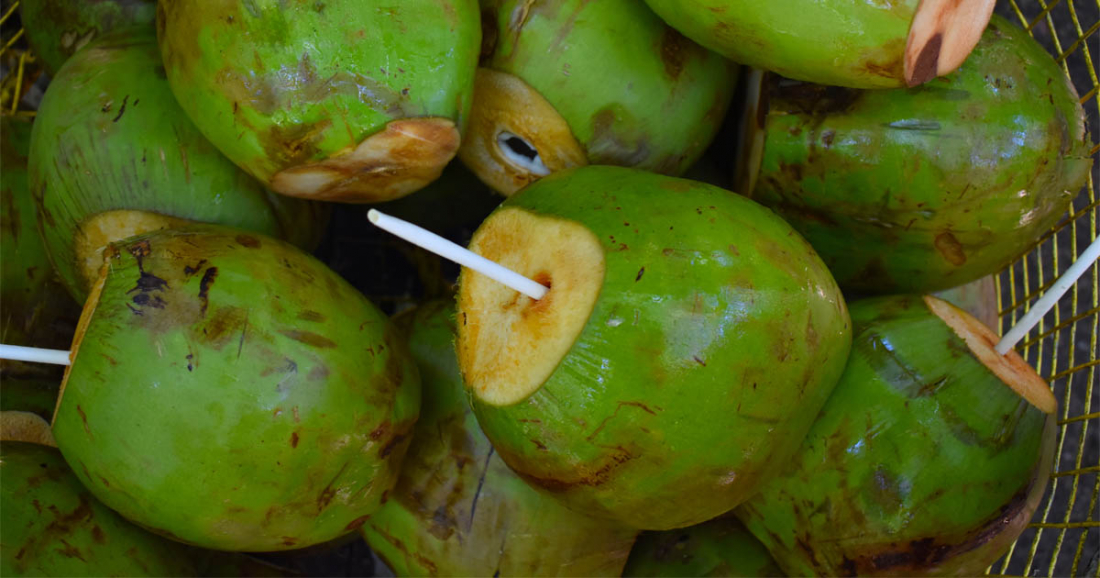
While coconut milk is made from ripe coconuts, water is extracted directly from the green fruit.
What is the nutritional value of coconut water?
To be able to answer for yourself whether coconut water is really such a miracle, you need to look at its nutritional profile. According to freely available information, it is certainly not staggering and in 100ml of coconut water you will find about 4 grams of carbohydrates, 0.2 grams of fat and even less than one gram of protein. As you can probably deduce, one gram of protein means that coconut water provides almost no amino acids - to illustrate, it is worth mentioning that it contains, for example, 0.053 grams of leucine or 0.008 grams of tryptophan. But it is the proteins that are essential for detoxification of our organism. Thanks to amino acids, the body can eliminate toxic substances, and without the right amount of amino acids, a certain product can be packed with vitamins and minerals, but it can never replace a full and balanced diet with plenty of protein.
Moreover, it must be added that coconut water is not rich in micronutrients. According to the above source, between 2 and 7 percent of individual vitamins and minerals are found in 100ml of coconut water. This means that you cannot cover the recommended daily intake of these elements even if you drink a litre of coconut water. And of course, given the price, this is not realistic.
Hydrating or not hydrating?
Although coconut water is often marketed for all sorts of effects, most of them are so impressive at first glance that you wouldn't dream of believing it. Coconut water really doesn't have the same pH as blood plasma, it is not a functional superfood, and it doesn't even detoxify the body. What is truly believable, however, is coconut water's ability to hydrate the body. So what is it really like? Coconut water hydrates, just as much as regular water hydrates. As various scientific studies have pointed out, the difference between the effect of regular water and coconut water on rehydration after sports performance is certainly not significant. So you may or may not drink it after exercise.
Is coconut water useless?
Coconut water, like so many other lucrative marketing products, has become a huge business and sellers are willing to get the product to customers even at the cost of making completely nonsensical claims. Nevertheless, I would not like to give the impression with today's article that coconut water is useless. It is after all (at least from my point of view) a very tasty drink that can refresh you even on hot summer days without having a huge load of calories and simple sugars. And even though it doesn't have many vitamins, it does contain some and its occasional consumption definitely doesn't have to be a bad thing.

Bottom line: if you like coconut water, you can definitely include it in your drinking regime. But it's definitely not something a healthy athlete can do without. For example, coconut milk or coconut oil, of which you can find several types here, is much better and more nutritious.
Recommended
LifeLike Kokosový olej
Wolfberry Kokosové mléko BIO
No posts have been made yet.








