





Gym closures are not a problem if you are taking vitamin D!
 Author: Šárka Randáčková
 In their three-month research, Japanese scientists subjected 47 outstanding college athletes to 1,000 UI of vitamin D per day. They wanted to investigate its effect on weight loss in combination with training. They took blood samples, ran all the tests and got to work.
But after a month of study, Covid struck. And just like us, the gyms shut down. Everything shut down, just like it did, unfortunately, in our country.

Scientists who had nothing to observe were killing time watching manga (I assume), which they stuck between the pages of their biochemistry textbooks. Top college athletes, meanwhile, like everyone else, got on a diet of sumo wrestlers and browsed the complete Netflix libraries.
But even though they turned into absolute sloths, 27 of them didn't stop taking their prescribed doses of vitamin D.
After the scheduled 3 months, the researchers examined the students just for form. The students who stopped taking vitamin D had increased their fat percentage by 1.9 percent, while those who continued taking it had only increased by 0.2 percent.
That's a hell of a difference in relative obesity. The researchers drew the following obvious conclusion..:
Vitamin D supplementation may have a beneficial effect on maintaining an athlete's physique under conditions of reduced sports activity.
Was this a coincidence, or are scientists on to something?
The researchers readily acknowledge that their study has limitations worth noting. The participants were not randomly divided into two groups, which opens up the possibility of selection bias.
Second, those athletes who voluntarily kept taking vitamin D may have been healthier at the start of the study, or at least more inclined to maintain their own health. The last point is that taking vitamin D was reported on a voluntary basis, or it is possible that some of them lied or exaggerated about their involvement with the study.
Fortunately, there are other studies on the topic of vitamin D and weight loss.
Arunabh et al (2003) found that body fat percentage is inversely proportional to the amount of vitamin D3 in the blood serum. Another study (Salehpour et al. 2012) found that increasing vitamin D supplementation led to a reduction in body fat.

When we add these findings to the study that confirmed the effectiveness of vitamin D for maintaining body fat levels even when inactive, we have a nice line of evidence for why it's good to take it.
More reasons why athletes should take vitamin D
So it seems that supplementing it could keep you more chiseled. You probably already know its role in the immune system, but its list of tasks is much longer, especially then in athletes. To name a few:
Vitamin D and skeletal muscle
Optimal vitamin D levels increase muscle protein synthesis, jump height, ATP production, and overall capacity during aerobic and anaerobic exercise.
Vitamin D and lung function in athletes
Reduced vitamin D levels have a strong correlation with reduced lung capacity. Its optimal levels ensure healthy lung structure, capacity, optimal oxygen exchange, and the ability to complete a task without gasping like an old steam engine.

Vitamin D and the heart of athletes
Without optimal vitamin D levels, blood vessels corrode and atherosclerosis becomes a real possibility. Without enough vitamin D, your circulatory system becomes an old garden hose that's been out in the sun too long.
Vitamin D and lounging in the covers
Of course, sex isn't just the prerogative of athletes, but women with higher levels have higher circulating levels of estradiol, testosterone, FSH, LH and DHEA, which logically increases the ability to achieve orgasm.
In men, vitamin D supplementation has been shown to significantly (53.5 nmol/l) increase testosterone levels.
The fundamental problem of vitamin D supplementation
Yes, there are many good reasons to take it, especially since most people are deficient. However, one thing most people, including doctors, overlook.
Vitamin D won't even get off the couch - that is, if we're talking about affecting the immune system - without the help of sufficient magnesium in the body. Moreover, without magnesium, it is very difficult to somehow significantly raise vitamin D levels in the body.
This is a problem because most people are magnesium deficient. And it's even worse news for athletes because they lose it through sweating.
The fact is, magnesium deficiency may very well be to blame for the lack of vitamin D in the population (and maybe even a little obesity?). The evidence for its effect on vitamin D levels is indisputable.

Two clinical trials in magnesium-deficient patients found that magnesium infusion alone raised serum levels of 25(OH)D (a pheromone formed by the liver during vitamin D3 hydroxylation) and 1,25(OH)2D (the active form of vitamin D in the body) slightly, while its infusion together with oral vitamin D administration raised serum levels significantly (4, 5).
Two other studies examined patients with rickets induced by vitamin D deficiency. Magnesium supplementation reduced resistance to vitamin D treatment in these patients, while intramuscular infusions of high doses of the vitamin alone (up to 600,000 IU) did neither.
So what to do?
Make sure you get enough magnesium in your diet, and unless you work near the equator, wear a loincloth, or are immune to skin cancer, supplement with vitamin D.
As for magnesium, you can supply it through food. Foods high in magnesium are as follows:
- Green leafy vegetables
- Seaweed
- Mangold
- Spinach
- Beans
- Nuts
- Avocado
- Bananas
However, athletes should get up to one gram of magnesium per day, which is a significant amount in the foods mentioned above (e.g. 10 cups of seaweed). Furthermore, the amount of magnesium in these foods can't be guaranteed because each one is grown differently, in different soil, etc.
It is safer to supplement magnesium, for example with ZMA.
Recommended

Prom-in 100% Magnesium Bisglycinate
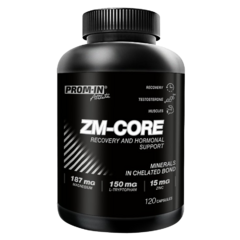
Prom-in ZM-Core
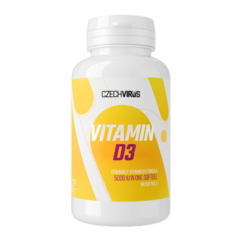
Czech Virus Vitamin D3
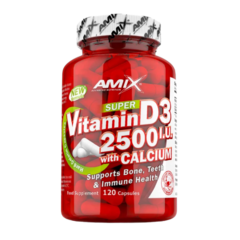
Achieving a therapeutic dose of vitamin D can also be quite tricky, even with the help of magnesium. Therefore, it is a good idea to take microencapsulated vitamin D3 (cholecalciferol). These are small, soluble spheres.
Studies show that this dosage of vitamin D is the best bioavailable and long-lasting. Its effects, provided there is enough magnesium in the body, last up to 14 days, which is better than most oil-based vitamin D3 supplements available on the market.
Although the Japanese used a dose of 1000 IU per day in their study, most experts recommend 5000 IU per day.
Source: www.t-nation-com - Gym Closed? No Problem. Take Vitamin D
By TC Luoma
Author: Šárka Randáčková No posts have been made yet.








