





Green tea: the path to better health
 Author:
 Green tea is undoubtedly one of the most popular drinks in the world. Like coffee or black tea, it contains caffeine, but it also offers a rather specific taste and a high content of antioxidants for which green tea is sought after by many people. Whether you're a classic green tea drinker or you're into specialty teas like matcha, you can definitely enjoy a variety of different benefits. In this article, we'll take a look at its benefits, recommended preparation, and the safety of green tea itself.
Article Content:
Introduction to green tea
Although green tea has experienced a significant boom in recent years, it has been drunk for thousands of years and its origins are shrouded in a variety of different legends. It is reported to have been drunk around five to seven thousand years ago and the tea plant originated in the Myanmar region, from where it spread to the Chinese province of Yunnan. There, it thrived so much that more and more bushes were planted and spread to other areas of China. Then, according to one of the most famous legends, came the Chinese Emperor Shennong, whose servants were heating water in 2737 BC when a few tea leaves suddenly fell into it. Since the emperor himself had a penchant for herbalism, he tasted the infusion and the tea was made.
What kinds of green tea are there?
There is a huge variety of green tea, and you can find just as many criteria by which you can classify teas. Probably the most common division you'll see is by country of origin, with Chinese green teas including gunpowder, for example, while popular sencha, premium matcha or gyokuro, or specialty teas like genmaicha, which is a de facto combination of green tea and roasted brown rice , come from Japan. Specific teas are also produced by Vietnam, Indonesia, India, Sri Lanka and there is even a European tea plantation located on the Azores island of Sao Miguel.

The largest tea producers are China, Vietnam, Japan, Indonesia and India.
How is green tea different from black tea?
Although many people think that green and black tea are diametrically opposed raw materials, they are still the same tea leaves. However, the difference is in the processing, where green tea is steamed after harvesting to retain its characteristic colour. Black tea does not undergo this process and, in combination with prolonged oxidation, the leaves change from green to black. Apart from the colour, there is of course also a difference in taste, because while green tea is usually fresh and slightly grassy, black tea tends to have a fuller and creamier taste.
Green tea vs. matcha: Which is right for you?
Matcha is also very often discussed. This is basically just a high-quality Japanese green tea, the basic specificity of which is that it is ground into a fine powder that is stirred in warm water as part of the preparation. As matcha tea is drunk whole leaf, it may have slightly more caffeine and some other active ingredients, but the price is relatively high. Until recently, matcha teas from China were also available and were of inferior quality and lower price, but a newly adopted decree has eliminated these products and now only ground tea from Japan can be labelled as matcha.
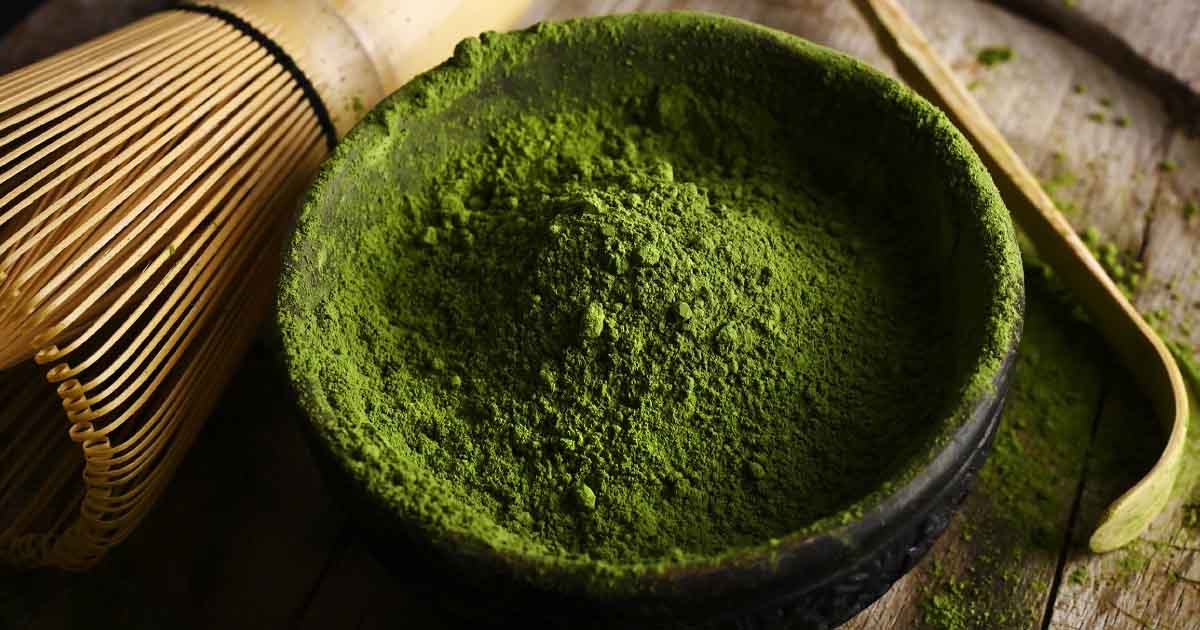
Matcha is essentially a ground tea that contains more caffeine and other substances than other green teas.
Health benefits of green tea
In addition to the distinctive taste for which green tea has many fans, some people also seek it out for its health benefits, of which there are many, according to scientific studies. In addition to its high antioxidant content, it also boasts a number of substances that scientific studies have found to have a positive effect on cognitive function and can reportedly help with fat burning. Let's take a closer look at the individual benefits.
It is a source of antioxidants
The most well-known substances represented in green tea are undoubtedly antioxidants. A typical example are the so-called catechins, which, according to studies, help prevent cell damage, for example. The epigallocatechin gallate (EGCG), which is abundant in various supplements, also belongs to the group of catechins.
Improves cognitive function
In addition to antioxidants, green tea also contains some caffeine and l-theanine, and it is probably because of these substances that some research suggests that regular tea drinking may have a beneficial effect on the brain - particularly on cognition, mood and cognitive function. Although more studies are still needed in this area, those already conducted look quite promising.

Drinking tea regularly can have a range of benefits.
Helps burn fat
Of course, green tea can also be appreciated by people on a weight loss diet. In fact, according to studies so far, it seems that green tea can positively affect metabolism during aerobic exercise. Incidentally, among other things, because of this effect, green tea extract is also added to various fat burners or pre-workout kickers - a typical example is the popular Agrezz. However, although some studies look quite promising, the US National Institutes of Health warns that the overall effect on weight loss is likely to be very small.
Relieves anxiety
As mentioned in previous paragraphs, tea is a source of l-theanine, among other things. And this substance has been linked by some research to a reduction in anxiety and stress - people taking 200 mg of theanine showed a greater improvement in anxiety, depression and sleep compared to placebo. On the other hand, this amount of theanine is much more pronounced than that found in green tea, where one cup contains about 30 mg of the substance.
It may be a prevention of some diseases
Although research in this area is not entirely conclusive, some studies suggest that regular drinking of green tea may reduce the risk of certain cancers (such as lung cancer). However, further well-designed scientific studies will be needed to draw valid conclusions.
How to enjoy green tea properly?
Although the recommended preparation may vary slightly for some green teas, there are a few common characteristics. For example, green teas should never be steeped in boiling water, and water at 80°C is considered ideal. In practice, it is best either to bring the water to the boil and then give it time to cool down, or to use a kettle with an adjustable temperature. Green teas also do not usually require such a long steeping time and it is therefore usually sufficient to pour the tea after just two minutes. However, the preparation procedure may vary for some specific types, so we recommend that you follow the label instructions first. Green teas are available on their own, but also in various blends, for example with dried or freeze-dried fruit, herbs or various spices. At the same time, in addition to drinking alone, green tea can also be used in smoothies, desserts or various savoury dishes.

Safety and side effects
It is no exaggeration to say that green tea has a huge number of positive effects and its moderate consumption should not bring any serious risks. However, when consumed in excess, the tannin content, for example, can cause problems with iron absorption, according to scientific studies. Excess caffeine has been shown to increase stress and anxiety levels, as well as impairing sleep and potentially leading to addiction, according to research.
Contraindications and drug interactions
If you regularly take any medications, it's a good idea to consult your doctor about drinking green tea. As green tea contains vitamin K, for example, it may not be suitable for people with impaired blood clotting. Caution should also be exercised when using so-called cholesterol-lowering statins.
Can green tea be drunk during pregnancy and breastfeeding?
Green tea is, of course, a source of caffeine, so extra caution is definitely in order during pregnancy and breastfeeding. Although it contains significantly less of this stimulant than black tea or coffee, it still contains some amount. While some doctors recommend cutting out caffeine completely in pregnancy, others recommend not exceeding 200 mg of caffeine per day. If you follow the latter advice, you can theoretically indulge in some cups of green tea, of course, but it's ideal to consult your doctor in this case.
Where to buy good quality green tea?
When it comes to choosing a quality green tea, we definitely recommend that you choose either brick-and-mortar stores or well-established eshops that sell products you can rely on as a customer. After all, freshness is extremely important in the final taste of the tea, as well as how it has been handled over time and whether it has been stored properly. For the best possible health effects, it is good if the tea has, for example, organic certification or the Fairtrade label, which, in addition to banning certain pesticides, also emphasises fair remuneration for producers. And if you don't like the taste of green tea but would still like to supplement with substances with promising potential benefits, you can reach for green tea supplements.
Conclusion
In conclusion, it remains to summarize the most important information from this article. The main thing you should take away is that green tea is a beverage that has been drunk for millennia, and although positive effects have always been attributed to it, modern scientific studies find a variety of benefits to drinking this beverage regularly. At the same time, however, green tea is relatively simple to prepare, offering a great taste as well as a serving of caffeine that pleasantly stimulates the body. Of course, if you drink it in reasonable moderation, it is perfectly safe for healthy individuals.
No posts have been made yet.








