





Don't succumb to fashion trends! Eating from powders is no miracle, quite often just the opposite.
 Author:
 Eating healthy can be a challenge sometimes - whether because you've been used to eating unhealthy, wholesome, balanced or regular food for years and find it hard to change your habits, or because you find it difficult to stick to a regime, have a demanding job, can't eat regularly, etc. And these are exactly the people that are being targeted by all sorts of meal powder companies and meal replacement shakes. Yes, powdered meals, shakes and "facilitators" have literally exploded nowadays. Companies are racing to see which one will create a more enticing promotion and grab a larger share of customers. Such products often cost hundreds to thousands of crowns. So does it make sense to invest in something like this? Are powdered meals a promising future or a looming threat?
In recent years, the popularity and production of such products has skyrocketed. Many companies claim that their products provide enough quality nutrients to ensure health, vitality and ideally, lower weight. But is this really true? Can a powdered food fully replace a solid diet? Well, let's take a closer look at this hot topic - especially at what the downsides of such products may be, to help you decide whether such an investment is profitable enough for you, or whether it's better to invest in a full-fat diet.
WHAT DOES A BULK MEAL REPLACEMENT ACTUALLY REPRESENT?
To better understand what we're actually going to talk about today, let's go to the traditional theoretical window. We'll talk about "powders" that, when mixed, can replace breakfast, snack, lunch or dinner (or maybe not) and also about ready-made shakes. As we mentioned in the opening paragraphs - people seek out these bulk or liquid meal replacements for many different reasons. Some take them to increase calories and gain muscle mass, others consume them to reduce their calorie intake, others still rely on them, seeing that they provide their bodies with key vitamins and minerals, we have the group of non-cookers who use powdered or shake meals to address the fact that they can't or don't eat regularly, and the last group are the slackers who don't want to cook and are looking for the quickest way to lose weight.
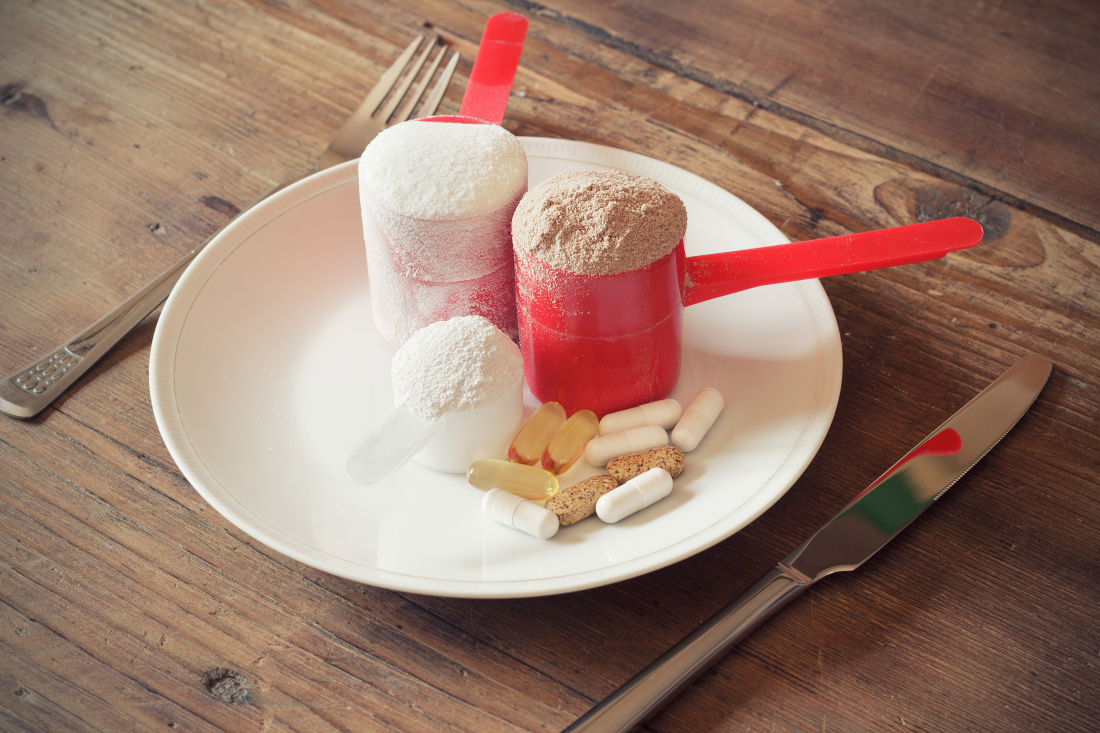
So the target groups we would have. Let's go to the composition of the products. Uh, straight up. In the vast majority of cases, these products are designed to be produced and sold in bulk, which means no fresh ingredients are used to make them. Why? The reason is simple. Such products sit in stores, vending machines or warehouses for months before they reach their consumers. Have you ever seen a salad or steak that lasts X months fresh? I haven't. In other words, these products aren't made with fresh ingredients because they need to be adapted to have the longest shelf life possible and can be kept fresh without the use of coolers and other ways to keep food fresh.
Therefore, in order to combine both of these qualities, some really crazy technological processing is needed. And as a direct result of all the processing that the food has gone through to make that magic powder, then there is only a seriously small amount of nutrients, vitamins and minerals left in the resulting powdered meal replacement (and that's why it tastes the way it does.) This means that many of the necessary components for optimal digestion, nutrient absorption are reduced or completely destroyed, and of course the nutritional content overall suffers. We add a label on the packaging stating that the product promotes health and contains maximum nutrients, vitamins and minerals. But... is that really true?
We can come across three types of diet replacement products:
1) Meal replacements for fat reduction
2) Detox shakes
3) Medically prescribed products
SO WHAT DO MEAL REPLACEMENTS ACTUALLY CONSIST OF?
One of the best ways to show you the disadvantages of such products and warn you against buying the products is, of course, a real-life example. In some of the most popular products ala "meal replacement" you will find a lot of "healthful" (yes, that's highly ironic) ingredients, such as:
- Maltodextrin
- Corn syrup
- Sugar
- Mixed vegetable oils (canola, corn, low-quality olive oil)
- Palm oil
- Pile of salt
- Beef collagen
- Soy protein
- All sorts of thickeners, preservatives and over 30 other ingredients!
Meal replacements usually provide approx:
- Around 300 calories or more
- More than 10 grams of fat
- More than 22 grams of sugar
- AND ZERO FIBER CONTENT
So here we have a product with a composition as long as the Lord of the Rings trilogy, insane nutritional content, with less usable (but cheaper, of course) protein sources, full of sugar, and zero fiber, i.e.,a lousy satiating effect. Add to that a really high price, which really doesn't even come close to reflecting the ingredients used to make it. Ask yourself - are you really interested in replacing real food with a product like this?
I think most of you are shaking your heads in disbelief right now, but since we have all sorts of ingeniously elaborate marketing tricks and enticements, let's explain why investing in such products is not a good choice for weight loss at all, and certainly not for health.
MEAL REPLACEMENTS CONTAIN FEWER CALORIES THAN A COMPLETE DIET
Meal replacement shakes and pills usually contain fewer calories than when you eat a normal meal. Well, that's a positive for weight loss, isn't it? Really? What's positive about ingesting fewer calories than our basal metabolic rate? Yes, diets based on eating shakes and meal replacement powders are often designed to contain significantly fewer calories than you need, and why? Because such products are made for mass sales, not for your individual needs. No company is going to "bother" making customized products, they just give you what they have and that's it. For some it roughly hits the caloric intake needed, for others it's a brutal concentrate.
THIS WAY OF EATING IS UNSUSTAINABLE IN THE LONG TERM.
Just because such diets contain far fewer calories than you actually need, they are unsustainable in the long term. Moreover, if we stick to the idea that dietary change should be permanent, try to imagine drinking such surely delicious shakes for, say, a year straight. The same thing over and over again. Thus, after a while, you start craving the full meal you were eating before and once you go back to it, you need to taste everything you've been denying yourself, bumprash and we have the yo-yo effect.And it's not just the monotony - believe me, you'll miss the classic chewing of food that just comes naturally to humans. If you do opt for some sort of cocktail as a meal replacement, it should definitely be for emergencies and rarely.
IT CONTAINS ALL THE NECESSARY MINERALS AND VITAMINS FOR HEALTH"
And here we have another marketing ploy. The vast majority of vitamins and minerals (if the product actually contains them) are synthetic. One look at words like: sodium molybdate, sodium selenate and potassium iodide and it should be clear to even a layman in nutrition that you won't find this anywhere in nature. Whenever you see a hard-to-pronounce ingredient on the packaging , it's an immediate red flag and means the product contains unnatural and highly processed foods.What's worst is the fact that none of these compounds come from real food, meaning they are COMPLETELY CHEMICALLY CREATED. Synthetic vitamins and minerals, according to studies , don't bring the desired effect, and may even have a negative effect. Admit it - isn't it better to reach for unprocessed foods such as fruits, vegetables, quality proteins, complex carbohydrates and healthy fats that contain more natural forms of nutrients for humans? I'll answer for you, you'll definitely do more for your health by doing so.
SUGAR, SUGAR AND MORE SUGAR
There are a plethora of flavors and variations in which you can get meal replacements on the market today. From soups, main courses of your favourite preference, to sweet meal replacements. It's amazing in its own way, but on the other hand... how do you turn a powder into something that actually tastes pretty good? Sure, we load it up with a bunch of sugar and artificials. In many cases, sugar or some kind of sweetener is the number one or three ingredient. That's crazy! Regardless of what your goal actually is, consuming added sugar is definitely not desirable. We all know that sugar is empty calories. But even more sinister is the link to all the negative health problems - from addiction, to stomach upset, to serious health problems.

A BUNCH OF ARTIFICIAL ADDITIVES
We've already bitten on this in all the previous points. Many shakes and meal replacements are literally loaded with ingredients that can hardly be classified as health foods, for example:
Refined vegetable oils, the consumption of which is definitely not one of the best things you can do for your health, plus such oils are CHEAP ingredients.
Thickeners and preservatives - one of the most commonly used additives in this category in meal replacements is maltodextrin. Not only does it have a very high glycemic index and can cause blood sugar spikes, but its overconsumption is also linked to negative health effects such as autoimmune problems and, last but not least, weight gain, which you really don't want when buying products for the purpose of weight loss. Maltodextrin also has a negative effect on the gut biome, making the body more susceptible to infections and disease.
Color and flavor "enhancers" - Oh sure, it takes a lot of added ingredients to make a substitute look and taste good. However, they put undue strain on the digestive system and you may be rewarded with a serious intestinal upset.
Incomplete protein sources - Are you tempted by products with high protein content? Read carefully where the protein in the product comes from. Often these are cheap and harder to use sources that may offer decent protein content, but you won't realistically get much out of them.
NEGATIVE EFFECT ON DIGESTION
And we can't conclude the list of negative effects of eating meal replacements with anything other than digestive problems. Many people see meal replacements as a saving grace and a healthy alternative to a full-fat diet. Smoothies are often devoid of fiber, antioxidants, probiotics and other substances beneficial to our digestive environment. This leads to constipation from lack of fiber and also increases the risk of developing gallstones. In addition, these products contain a lot of sugar, which not only has a negative effect on digestion, but excess sugar can also mess up your hormones, cause tooth decay and so on.

IS THERE ANY POINT AT WHICH MEAL REPLACEMENTS ARE A GOOD SOLUTION?
You'd be surprised, but yes, surprisingly there is. In fact, besides diets and meal replacements for non-stomach eaters, there are products that are taken for medical purposes. Usually in the form of nutridrinks, which are used by doctors for patients in post-surgical conditions, when they cannot eat solid food, or when the individual suffers from digestive disorders, ulcerative colitis or other intestinal complications. However, the consumption of such products is subject to medical supervision and is also used for a limited period of time.
TO DRINK OR NOT TO DRINK, THAT'S THE POINT.
The final decision whether to buy a meal replacement or a cocktail is, of course, yours. However, a diet based solely on the consumption of meal replacements and shakes is absolutely not suitable either for the health of the organism or for healthy weight loss.If you decide to invest in a product, it should definitely be a supplement to your solid and complete diet, an emergency option if you don't have time to prepare a meal, or when travelling, but it should definitely not be the mainstay of your diet. Study the ingredients of the product well before buying it.
Investing in a product promising to detoxify your body is an absolute waste of money. If you do not take drugs, are not an alcoholic and have a functioning excretory system, healthy liver and kidneys, then congratulations, because you will detoxify 24/7, even without any pills or detox cocktails.In the case of post-surgical conditions and digestive issues, liquid foods, nutridrinks and meal replacements can be a good tool to ensure adequate intake and relief.
WHAT CAN I TAKE AWAY FROM THIS ARTICLE?
All sorts of meal replacements are staring at us on every corner now. While advertisements promising hassle-free reduction, health benefits and the provision of optimal nutrition for health are seriously tempting, investing in such a product may not always be a good choice. Meal replacement products are often overly chemically processed, contain unwanted additives, heaps of sugar, and their composition, ingredients used and nutritional content absolutely do not match the high price tag. In addition, diets based on the consumption of shakes and meal replacements are more of a short-term affair, so it is much better to overpower yourself, learn the principles of eating and go the route of eating a full meal. Reduction diets based on eating these products also very often contain fewer calories than your basal metabolic rate, and this is a big contributor to the yo-yo effect. The choice is yours, but do you really want to replace a solid diet with something like this?
Sources:
Dubois L1, Farmer A, Girard M, Peterson K. (2007): Regular sugar-sweetened beverage consumption between meals increases risk of overweight among preschool-aged children. Jun;107(6):924-34; discussion 934-5.
Vanhauwaert E, Matthys C, Verdonck L, De Preter V. Low-residue and low-fiber diets in gastrointestinal disease management. Adv Nutr. 2015;6(6):820-827. Published 2015 Nov 13. doi:10.3945/an.115.009688
Davis LM, Coleman C, Kiel J, et al. Efficacy of a meal replacement diet plan compared to a food-based diet plan after a period of weight loss and weight maintenance: a randomized controlled trial. Nutr J. 2010;9:11. Published 2010 Mar 11. doi:10.1186/1475-2891-9-11
Michael R Lowe, Meghan L Butryn, Fengqing Zhang, Evaluation of meal replacements and a home food environment intervention for long-term weight loss: a randomized controlled trial, The American Journal of Clinical Nutrition, Volume 107, Issue 1, January 2018, Pages 12-19,
No posts have been made yet.








