





Does creatine help beginners more, or experienced exercisers?
 Author:
 There’s an unwritten rule in the fitness world: you have to earn your supplements. The logic is clear—as a beginner, you’re making progress fast enough on your own, so you don’t need supplements until you hit a plateau after a few years.
There’s a lot of truth to this statement. When you’re just starting out, you don’t need most supplements (and quite possibly none at all). But when it comes specifically to creatine, science has recently shown that your “training experience” doesn’t determine whether this supplement will help you.
Article Contents:
Beginners vs. Experienced Veterans
Researchers recently analyzed 61 controlled studies and divided the participants based on their training history. They discovered something surprising: creatine helps beginners build muscle just as effectively as it does seasoned lifters. Across the entire study group, people who took creatine in combination with strength training gained roughly 1.4 kg more lean muscle mass than those who received a placebo. And this was without any change in fat mass or body fat percentage.
How exactly does creatine work?
Creatine isn’t magic. It works by replenishing your muscles’ fast-twitch energy system. As a result:
- You’ll be able to squeeze out one or two extra reps.
- You’ll recover faster between intense sets.
- These small gains add up over the weeks and lead to greater increases in lean muscle mass.
Simply put, the energy and hydration benefits of creatine don’t care whether you’re a first-time lifter or have been lifting for fifteen years. Both groups outperformed the placebo.
The Dark Side of the Supplement Market
Just because your personal experience doesn’t matter doesn’t mean that every creatine product on the market will deliver the results you’re looking for.
In the clinical studies mentioned, the tested powder is rigorously verified before anyone consumes it. The product you buy off the shelf at a regular store doesn’t come with that kind of guarantee. Dietary supplements aren’t subject to strict pre-sale approval, and independent tests continually uncover products that:
- Do not match their labels.
- Are underdosed.
- Are diluted with cheap fillers.
- Contain contaminants from low-cost manufacturing.
You can do everything right—train hard, eat perfectly—and still fail to see results simply because what you scooped into your measuring spoon wasn’t what the packaging promised.

How much should you take?
If you’re considering adding creatine (ideally in the form of creatine monohydrate) to your routine, research recommends the following dosage:
- 3 to 5 grams per day to support physical performance and muscle growth.
- Up to 10 grams per day if you’re primarily aiming for cognitive benefits and combating mental fatigue.
Final tip: Combine it with strength training and be patient. Creatine alone won’t build muscle, but if you give it time and put in the effort at the gym, it will reliably support your goals.
Recommended
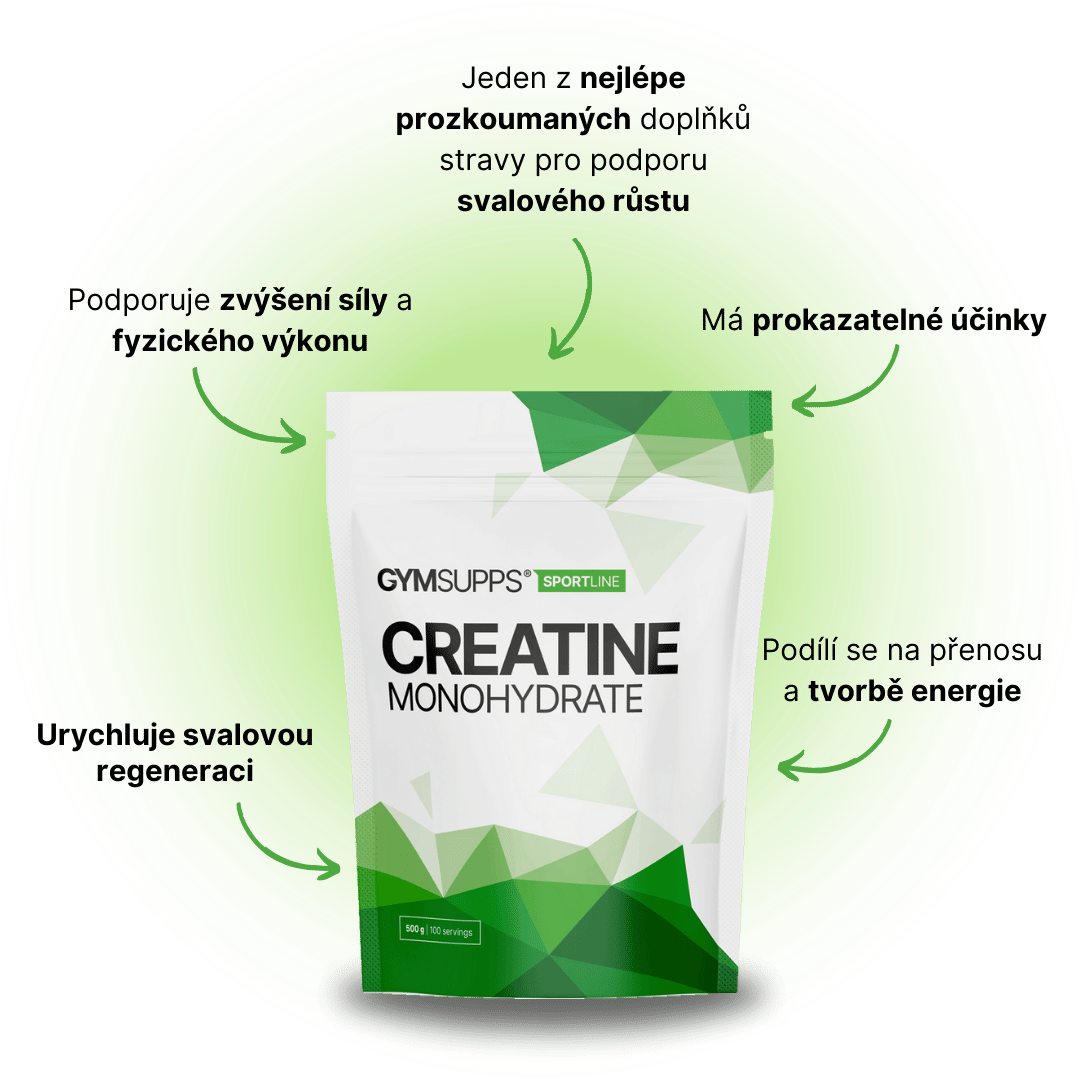
GymSupps Creatine Monohydrate

Creatine Monohydrate 500g 1+1
GymSupps Creatine HCL
No posts have been made yet.








