





Do you know how protein quality is assessed?
 Author: Šárka Randáčková
 Measures that can help us choose proteins are bioavailability and amino acid profile. But how do we understand their applications and limitations? More on this in the following lines.
Nutrition can certainly seem complex. You're already responsible for making sure you have enough protein in your diet, and now you should still be concerned about its quality?
And what does quality protein actually look like?
There are various measures that answer this question. These mostly rate protein according to bioavailability and amino acid profile.
1. Bioavailability
Biological value (BH), net protein utilization (CVB) and nitrogen balance (DB) evaluate proteins according to nitrogen values.
These indicators measure how much nitrogen people excrete, calculate how much protein this represents, and compare this number to the amount of protein ingested. This is how protein bioavailability is assessed.
All of these measures are based on two problematic assumptions. The first is that dietary protein is the body's only source of nitrogen. The second is that all uneliminated protein has been used to make body protein. However, some proteins are converted to glucose and some are fermented by microflora, especially if digested slowly.
The BH scale is still used today, but mainly in advertising materials. Our only reference to it will be to the effect that it is outdated.
A more modern measure is the Protein Digestibility Corrected Amino Acid Score (PDCAAS), which evaluates not only bioavailability but also the amino acid profile.
A highly bioavailable protein is one that is easily digested, absorbed and, when broken down into amino acids, readily produces new proteins.
2. Amino acid profile
Proteins consist of amino acids. Some of them the body can make itself, others not. Those that we need but cannot make are called essential amino acids (EAAs). Of these, the branched-chain essential amino acids (BCAA) are essential for muscle, of which leucine is the most anabolic.
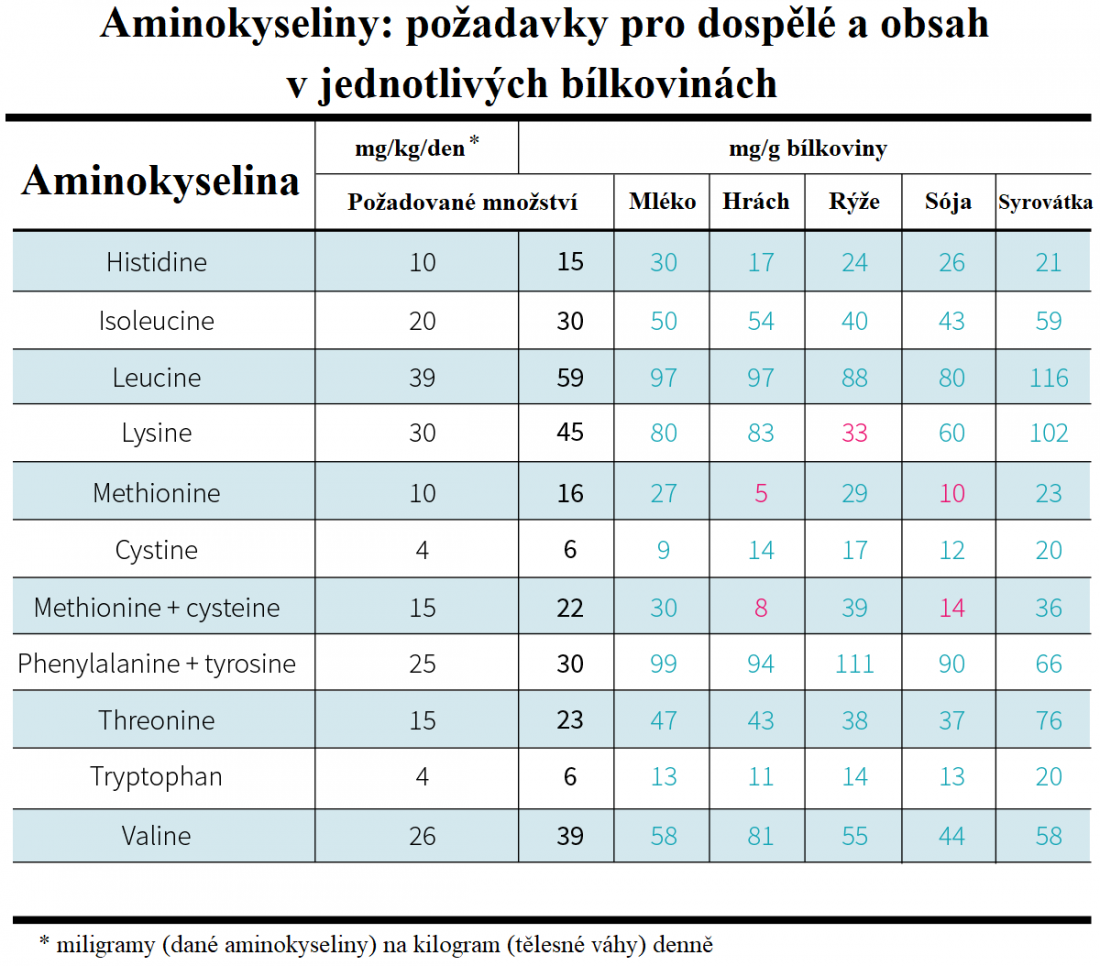
A protein is called complete if it has enough of each of the EAAs for its total amino acid content (this is shown by the mg/g protein column in the table above).
The main advantage of animal proteins is that they are almost always complete.
Almost! Takebeef protein powder, for example. You'd think it would probably be made from meat, but it's mostly collagen cooked from animal skin, bones, and other binders.
Collagen in the diet is very useful. It promotes joint and skin health, probably bone health too, but it's not a complete protein. Probably not the best for building muscle (although it has helped older women with protein deficiencies and older men).
Likewise, most plant proteins are not complete. However, according to the table above, protein from soy, peas, and rice are nearly complete.
However, incomplete proteins can complement each other - this is true of both foods and supplements.
The amino acid profile of the pea and rice mixture (70:30) is the same as that of whey!
However, soy and pea protein powders are usually full of salt. It must be used to make the powder and cannot be washed off. Read the label of your protein powders to make sure you are not exceeding the maximum recommended daily allowance of salt (sodium). For most adults, this is 2.3 g.
Rice and peas may be gaining in popularity, but soy still leads the way among vegans. Soy isolate is between 0.9 and 1.0 on the PDCAAS scale, or at first glance it seems almost equivalent to animal protein. However, this is due to the fact that the PDCAAS scale truncates any number higher than 1. Otherwise, whey isolate would still be above the maximum value, at about 1.12.
3. The real world
The PDCAAS scale has replaced the BH. This is not for accuracy, but for relevance. This is because it is more reflective of real human needs. However, it is still not perfect.
So the authorities are already calling for another new measure: The Digestible Indispensable AminoAcid Score ( DIAAS).
These two measures differ considerably in their sample collections. PDCAAS protein is determined using feces, DIAAS using small intestine.
In other words, the PDCAAS assesses how much protein is absorbed after passing through the small and large intestine, while the DIAAS assesses how much protein is absorbed after leaving the small intestine .
The food eaten passes through the small intestine, and then the large intestine, where most of the microflora is located. Since the microflora may use amino acids and peptides that you yourself have never absorbed, PDCAAS may overestimate protein bioavailability. DIAAS addresses this problem.
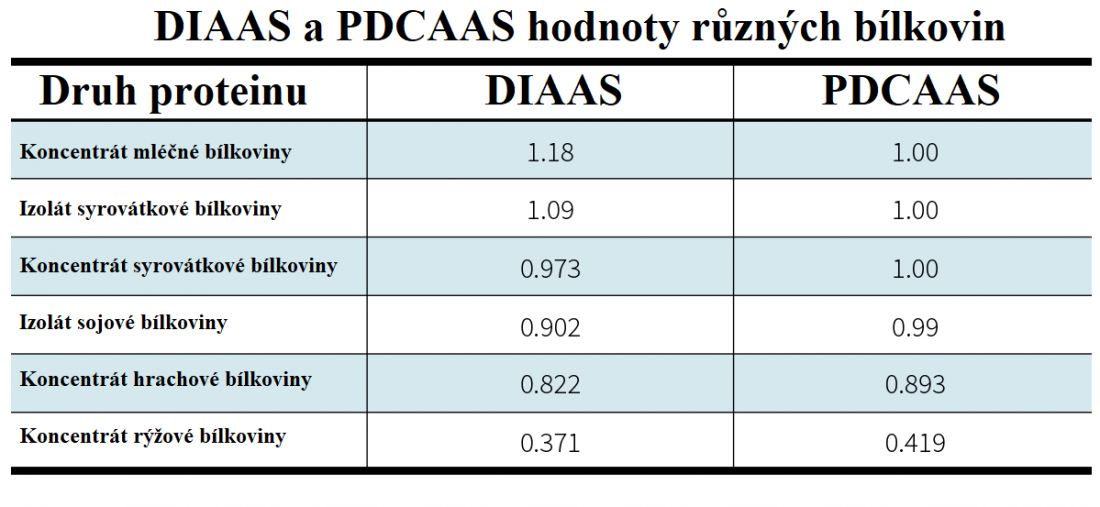
However, the DIAAS measure does not address the main problem of all protein assessments. While some of them address all the variables (bioavailability, glucogenesis, absorption rate, training effect, and endogenous protein - i.e. muscle), they still don't account for the real world.
Studies have to eliminate confounding factors, so their subjects eat only one type of protein, and on an empty stomach. And when do you find yourself eating only one kind of protein all day? And when, outside of breakfast, do you actually have an empty stomach? Protein absorption is further influenced by other factors such as fiber and anti-nutrients. And none of this can be found in studies on protein quality.
Source: www.examine.com -How can you assess protein quality?
Author: Alex Leaf
Translated by.
Author: Šárka Randáčková No posts have been made yet.








