





Animal vs. vegetable proteins
 Author:
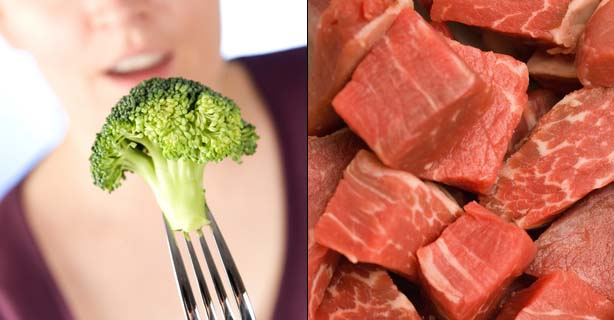
 Since the first article on protein was quite successful, today we will look at another highly debated topic regarding protein. Specifically, we'll focus on sources - are plant or animal sources better? In the fitness world, animal protein is promoted as a staple, and plant sources, on the other hand, are considered inappropriate or poorly utilized. You know, you don't eat meat, you can't be a good athlete, you can't really exist. Why then, when there is another group of people who claim that a meatless diet, i.e. a diet based on plant protein, is healthier. So how is that?
The human body is one-fifth made up of protein, which the body does not store, so it must be taken in every day through diet (and supplements). In recent years, there have been claims that vegans and vegetarians are the healthiest people, precisely because their diet is predominantly plant-based, i.e. meat-free. You will know that a high-protein diet is also often recommended as the best way to reduce fat, improve fitness and overall health, and also to treat diabetes II. However, does it matter whether we take in protein from plant or animal sources?
Protein is broken down into amino acids in our bodies. At the same time, it will also come as no surprise that proteins with amino acids are present in each of the metabolic reactions that take place in the body. And here comes the key - protein sources differ from each other in the spectrum of amino acids they contain. There are a total of 20 types of amino acids that make up proteins in the human body. We divide these amino acids into two groups. The essential ones, i.e. those that the body cannot make itself and must take in from food (and supplements). The second group are non-essential amino acids , which the body can make.
Animal proteins (usually) have a balanced ratio of essential amino acids, i.e. those that the body cannot synthesize and must take in from food. This is in contrast to plant sources, which have fewer of some essential amino acids. Amino acids that are only found in limited and often insufficient amounts in plant sources are, for example, methionine, tryptophan, lysine and isoleucine. However, for health we need all essential amino acids in optimal proportions. In this respect, animal protein seems to be a better choice. Animal tissues have a similar structure to human tissues and are therefore considered a sufficient and complete source of protein. They contain all the essential amino acids in the proportions required by the human body. Plant protein, on the other hand, is considered to be an incomplete source of protein, precisely because one or two of the essential amino acids are absent from the amino spectrum of plant sources.
Here we have a graph showing the leucine, valine and isoleucine content of both animal and plant foods for illustrative purposes.
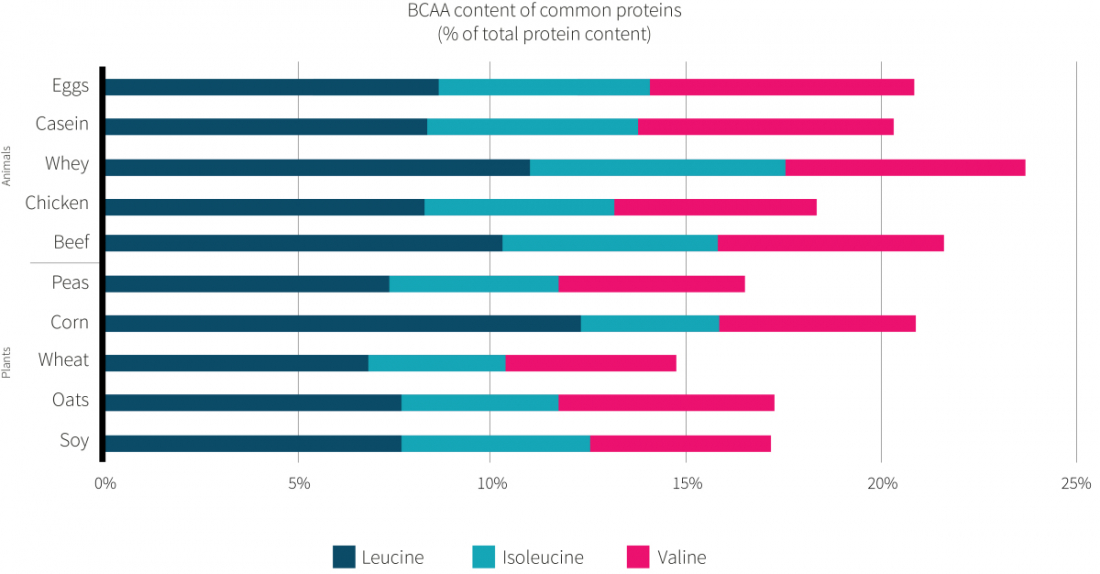
*source: examine.com
Of course, it's not just about comparing the availability of protein from plant or animal sources. Food, whether plant or animal, contains other nutrients as well. It is very difficult to compare different sources and determine which is better, because each has something different. Animal sources are important for the intake of heme (more absorbable) iron, vitamin B12, vitamin D, zinc and the essential omega-3 fatty acid DHA, which is very important for brain function and is very difficult to obtain from plant sources. On the other hand, plant sources also offer many interesting substances. For example, demonized soy contains a large amount of arginine, pea protein and rice have a balanced amino spectrum. Another interesting plant worth mentioning is goji. The Chinese cowpea contains 15-17% protein, and even a complete amino spectrum! In short, it is nonsense to completely dismiss plant sources! Logically, it is advisable to combine sources. People who do not consume animal products should be careful to ensure that they get enough of all nutrients and minerals and, if necessary, supplement their diet with appropriate supplements.
Now let's break down the plant and animal sources a bit
Plant-based diets and their risks and benefits
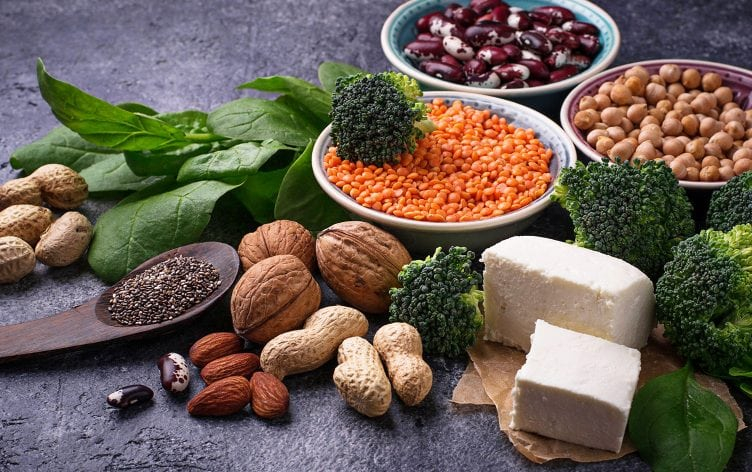
Although you may be knocking your forehead right now as a fitness fanatic... A diet based on eating plant sources of protein, such as a vegetarian one, brings many benefits to the body. People who do not eat animal protein have lower body weight, lower cholesterol and blood pressure levels. They also have a muchlower risk of developing vascular disease, cancer and cardiovascular failure than meat eaters. Studies suggest that a plant-based protein diet is much more effective in fighting cholesterol and high blood pressure than the recommended low-fat diet. A diet focused mainly on plant protein is also useful in the treatment of diabetes.
However, beware - it should be borne in mind that all these results are based on statistical data only. If we reduce our consumption of animal protein and somehow improve our health or lose weight, it is not possible to say with certainty that the change in health is actually for the better, simply because we are eating less animal protein.
Animal protein, or is it really such a hit parade?
Although the consumption of animal protein has been rather demonized lately, it does provide a lot of good for the body. Take fish for example - eating it has been linked to reducing therisk of stroke, blood vessel disease, heart attacks and other cardiovascular diseases. An animal source of protein that must not be omitted is eggs. Egg is considered a superfood that can influence cholesterol levels and is also considered one of the most suitable foods in diet. When you eat an egg, it will keep you full for a longer time than cereal alone due to its fat content. Eating poultry meat, fish and low-fat dairy products is also shown in studies to help protect against cardiovascular disease. What is essential to mention on our website is of course that animal protein is responsible for muscle growth.
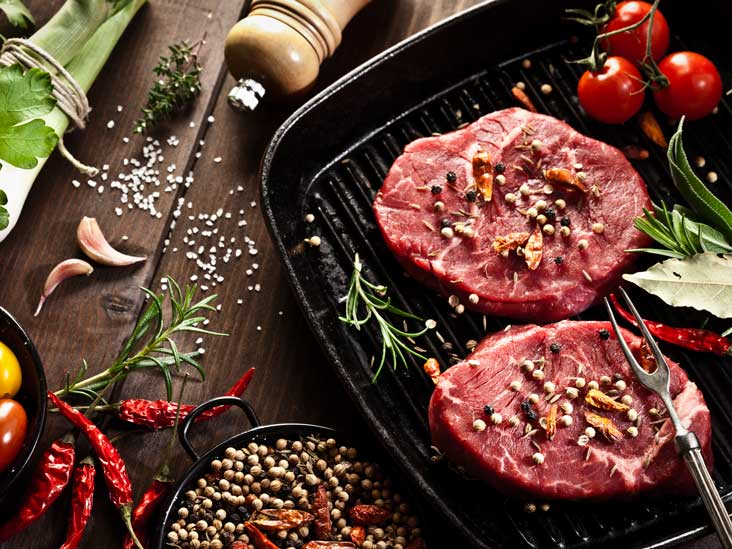
Recently, question marks have been raised around the consumption of red meat, which is said to increase the risk of cancer or other cardiovascular disease. A number of studies point to the negative impact of red meat on our health. In fact, it is believed that its consumption increases the risk of high blood pressure, stroke and cardiovascular disease. However, more detailed studies show that this issue is particularly relevant to red meat that has been processed in some way - for example, canned. In tests, the results are mostly consistent that canned red meat increases the risk of high blood pressure, diabetes and cardiovascular disease. So none of this applies to fresh meat. However, more recent studies are actually leaning more towards red meat not appearing as often in the diet.
So what are the takeaways from this?
If you're living under the assumption that animal protein is the only good one to use, it's not. The most appropriate diet, if we focus on protein, is a combination of different sources. You need to make sure you have a balanced ratio of amino acids and other nutrients, especially if you are, for example, vegetarian or vegan, you could be missing some substances. However, if you are an active athlete - an omnivore, you don't have to stick to the old bodybuilding classic meat, meat, eggs, cottage cheese. Incorporate plant-based protein into your diet and reap the benefits! If when counting calories you only count protein from animal sources and you don't count protein from, for example, oatmeal, rye, peas, or even broccoli if we go to the extreme, in your intake, that's not right either. A lot of people say they eat so much protein, but if you let them write a diet and calculate their intake carefully, you get a much higher number. Just because the protein comes from a plant source, it doesn't mean it doesn't count and the body doesn't process it.
Recommended

Nebbia SPORTY HERO crop top s dlouhým rukávem 585

Nebbia Classic Hero legíny s vysokým pasem 570

Nebbia Washed-off teplákové šortky NO BS 367

Nebbia Legíny s vysokým pasem ICONIC 209
Why are only the extremes compared? Eat only meat, or eat only "flowers". Why isn't it explained anywhere that it's much more about dietary diversity than whether you eat meat or tofu. Do you know what combination is considered the most beneficial? It's the combination of egg protein and potato protein. So if you want a brilliantly composed meal with the most usable protein, then it's the potato and egg combination.
If you were expecting a clear verdict on which is actually better, we're not going to give you one. Studies give the plus side to a diet based mostly on plant protein, but with a representation of quality animal sources such as poultry, eggs, fish and low-fat dairy. It is therefore ideal to combine sources appropriately to make the diet as varied as possible. As with everything, it is ideal to find a middle ground, to learn to work with plant sources but at the same time not to discard animal sources.
Sources.
No posts have been made yet.








