




Would you rather feel pain than have your own thoughts? Scientists have uncovered a surprising truth about the human mind!
 Author:
Imagine an ordinary evening. You’re sitting on the couch at home, nobody’s asking anything of you, and you finally have a moment of peace. But barely a few seconds pass before you automatically reach for your phone. You open Instagram. You scroll through a few posts. You check your messages. And when you realize that nothing new has actually happened, you open another app. Maybe you do this at the gym, too.
You finish a set, put down the dumbbell, and immediately glance at the screen. You’re not expecting any important messages. You don’t even have a specific reason to check your phone. Yet you pick it up anyway. What drives us to do this? Is it possible that our brains have become so accustomed to seeking out new stimuli that even a simple moment without distraction now feels uncomfortable? Psychologists asked themselves a similar question, and Arnold Schwarzenegger also referenced their research.
And the results are much more interesting than they might seem at first glance.
Article contents:
- An experiment in which people preferred an electric shock
- Why Are We So Afraid of Ordinary Boredom?
- Another study revealed something surprising: Silence can be more pleasant than we expect
- Cell Phones at the Gym: Can Constant Distraction Affect Your Workout?
- What happens when we limit phone use? Researchers tracked changes in attention and mood
- Ten seconds that can change your habit
An experiment in which people preferred an electric shock
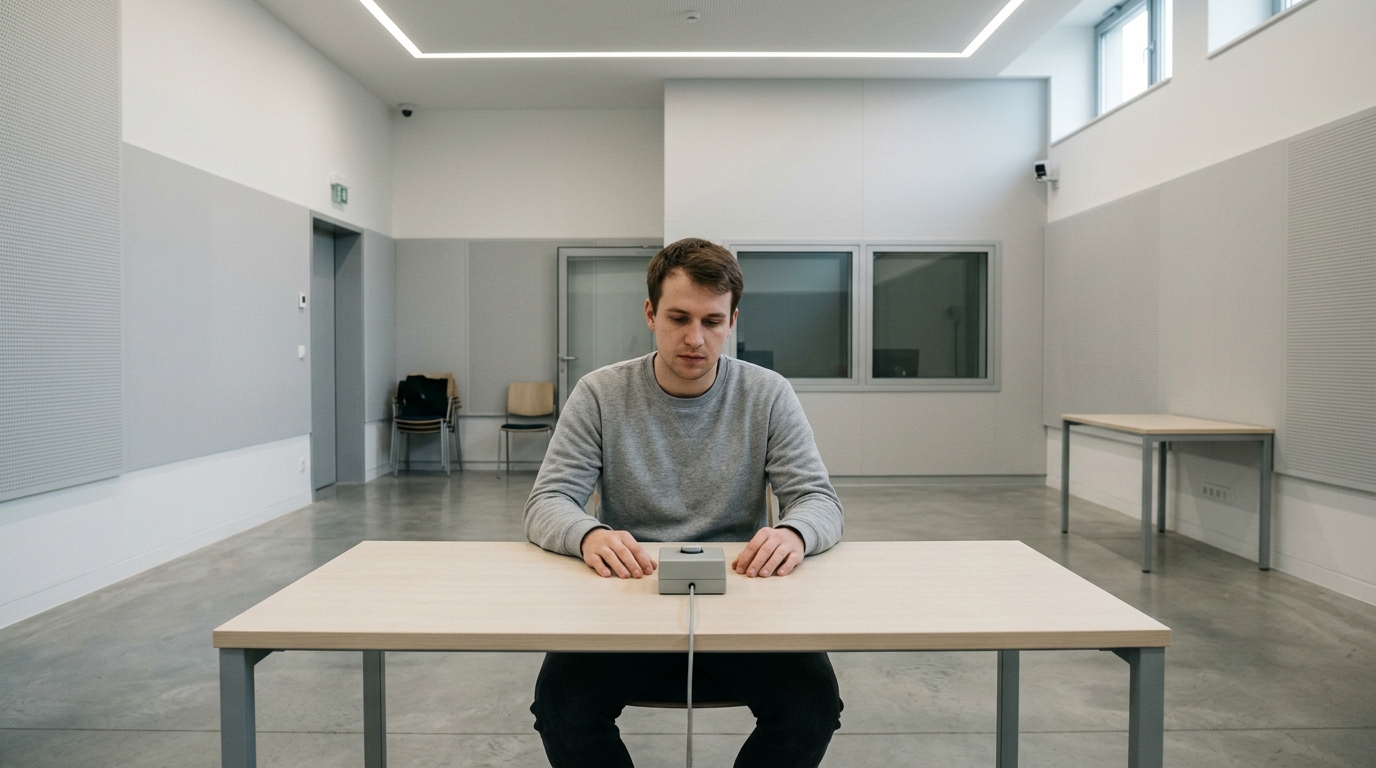
In 2014, psychologist Timothy Wilson and his colleagues published a study in the prestigious journal *Science* that examined people’s ability to spend time with nothing but their own thoughts. The researchers conducted a total of eleven experiments. In some of them, participants were given a simple task: to spend a few minutes alone, without a phone, book, or any other external distraction.
They could think about anything—their memories, the future, their plans, or pleasant experiences. Yet many found this experience surprisingly difficult. In one of the experiments, the researchers decided to take it a step further. Participants first tested various stimuli, including an unpleasant electric shock. They were then given the opportunity to spend 15 minutes alone in a room. If they wanted, they could voluntarily administer the electric shock to themselves again during that time.
The results surprised the researchers.
In the subgroup studied, 67% of men and 25% of women administered at least one shock.
Specifically, this included 12 out of 18 men and 6 out of 24 women who had previously stated that they would be willing to pay to avoid the unpleasant stimulus. In other words, some people voluntarily sought out the unpleasant stimulation, even though they didn’t have to do anything at all. It is important to note, however, that this was a relatively small experiment and its results cannot be automatically generalized to the entire population.
Nor does the research prove that people generally prefer pain to thinking.
It does, however, show that for some of us, it can be surprisingly difficult to endure the absence of external stimuli, even when we have the opportunity to entertain ourselves with our own thoughts.
And it is precisely this fact that raises another interesting question.
.jpg)
Why are we so afraid of simple boredom?
Boredom is often viewed as something negative. When we’re bored, we try to get rid of that feeling as quickly as possible. We put on music, turn on the TV, check social media, or start looking for something else to do. But why, exactly? One possible explanation is that external stimuli provide us with a relatively easy way to occupy our attention. Thinking without a specific task, on the other hand, requires us to determine the direction of our own mental activity to a certain extent.
That isn’t always pleasant or easy.
Our thoughts may return to unfinished tasks, unpleasant experiences, or problems we’ve been putting off throughout the day. At the same time, however, it’s not true that moments without external distractions automatically mean unpleasant thinking.
Quite the opposite. Recent research suggests that people often fail to properly imagine just how pleasant ordinary silence can actually be.
Another study revealed something surprising: Silence can be more pleasant than we expect
In 2022, researchers published a series of six experiments involving a total of 259 participants in the *Journal of Experimental Psychology: General *. Their goal was to determine how people predict their own experience while waiting for several minutes without doing anything. And the results showed an interesting discrepancy between expectations and reality.
Participants often imagined that they would be less satisfied and less engaged while waiting than they actually were. In one experiment, people even more frequently chose to browse online news rather than simply think.
Yet their actual experience of both activities did not differ in a statistically significant way.
Our expectations, therefore, may not always match how we actually feel during a particular activity.
If we automatically assume that a few minutes without our phone will be unbearably boring, we may start avoiding such situations before we’ve even tried them. And the more often we fill such moments with immediate distractions, the fewer opportunities we have to discover that they might not actually bother us. However, this doesn’t mean we should spend hours alone or that every time we use our phone is a problem.
What’s most important is the ability to decide how to direct our own attention. And that has surprisingly interesting connections to athletic performance as well.
Cell Phones at the Gym: Can Constant Distraction Affect Your Workout?
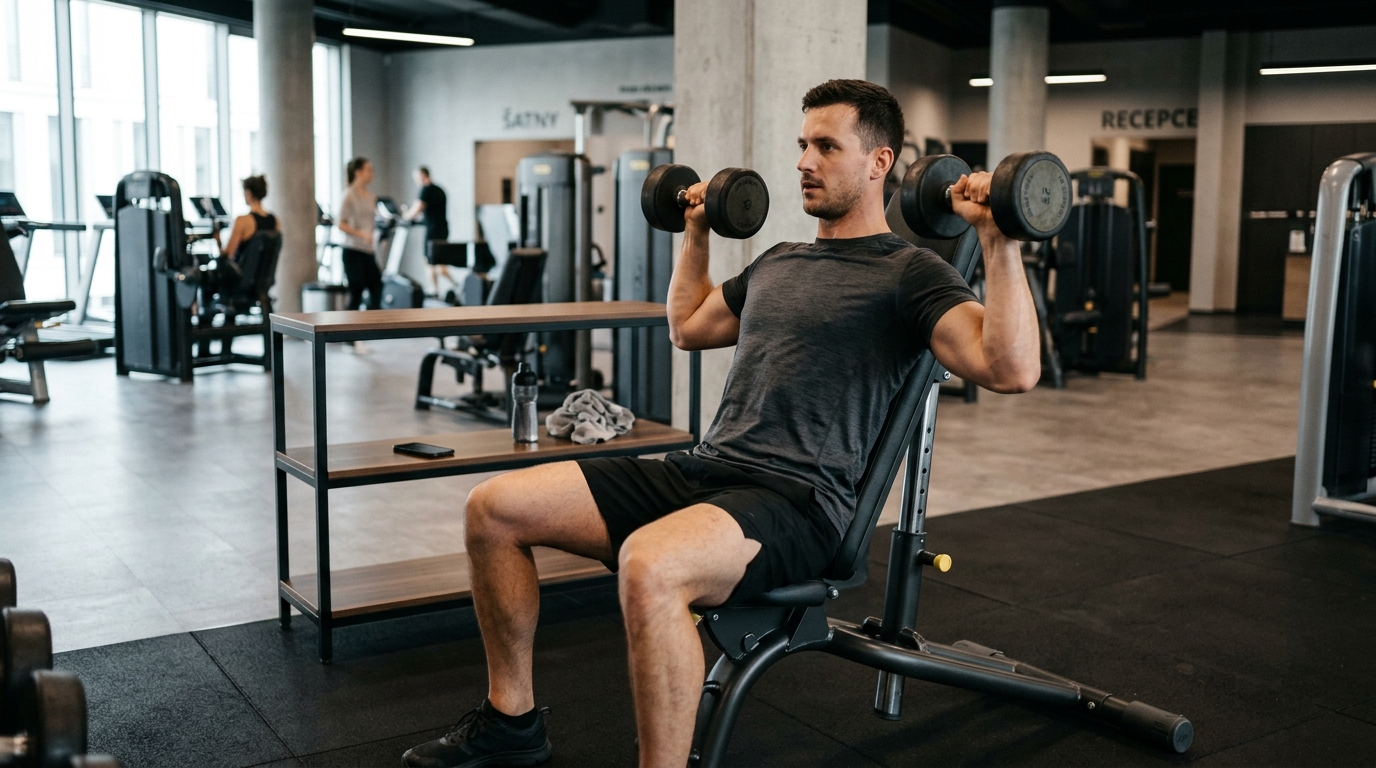
You might be familiar with this. You walk into the gym with a clear plan. You want to complete five exercises, focus on your form, and gradually increase the weight. But after the first set, you check your phone. One message. A short video. A quick reply to a friend. And suddenly you realize that much more time has passed since your last working set than you planned. The break itself doesn’t have to be a problem. Sufficiently long breaks are often desirable during strength training. The question is rather what happens to our attention during those breaks. Scientists published an interesting experiment on this topic in 2021.
They enrolled 16 recreationally active adults in a randomized, cross-over study. Before strength training, the participants went through two different scenarios. In one, they spent 30 minutes using social media on their phones.
In the other, they watched a documentary.
They then performed three sets of squats to failure. The researchers found that after using social media, the participants experienced greater mental fatigue and achieved a lower total training volume, expressed as the product of load and number of repetitions. This is interesting because the research suggests that mental fatigue can, under certain conditions, also affect physical performance.
However, the results are based on only 16 people and a very specific experimental protocol.
It cannot be concluded from them that every time you check your phone between sets automatically reduces muscle growth or strength.
Nevertheless, they give us reason to consider whether the way we spend our time before and during a workout truly supports our goals.
What happens when we limit phone use? Researchers tracked changes in attention and mood
An even more interesting set of results came from a randomized study published in 2025 in the journal PNAS Nexus. Researchers investigated what happens when people lose access to mobile internet on their phones for two weeks. They were still able to make phone calls and send regular text messages. So they weren’t completely cut off from other people. What was primarily restricted was the ability to be practically constantly online.
After the intervention, the researchers observed improvements in subjective well-being, selected indicators of mental health, and objectively measured attention span. Participants also spent more time in face-to-face interactions, being physically active, and spending time outdoors.
The research thus suggests that limiting constant digital availability may be beneficial for some people. However, this does not mean that cell phones themselves damage the brain or that a digital detox will automatically improve athletic performance. Another fact is more important.
We can use the time and attention we don’t devote to our phones for activities that truly matter to us.
And sometimes we don’t need to start with any dramatic change.

Ten seconds that can change your habit
Arnold’s newsletter mentions another interesting experiment. Researchers studied the “one sec” app, which creates a brief delay when you try to open selected apps and offers the option to cancel the action. During a six-week field study, they monitored the behavior of 280 users.
And the result?
After six weeks, the number of times the monitored apps were actually opened decreased by approximately 57%.
It wasn’t just that people changed their minds while waiting. Gradually, they also tried to open the apps less frequently in the first place. However, the study focused on volunteers using a specific tool. Therefore, there’s no guarantee that simply counting to ten will help everyone in the same way. The principle, however, is practical.
Instead of acting immediately, we create a brief space for decision-making between the impulse and the reaction.
Next time you automatically reach for your phone during a workout, try this simple step:
- Pause for ten seconds.
- Ask yourself why you want to open your phone.
- If you have a specific reason, go ahead and use it. If it’s just an automatic habit, consider whether you really need it right now.
This isn’t about banning technology.
It’s about making more conscious decisions when we use it.
| SITUATION | AUTOMATIC HABIT | A MORE CONSCIOUS APPROACH |
|---|---|---|
| A break between sessions | Mindless scrolling through social media | Resting according to a plan, checking the time, and preparing for the next set |
| A moment of boredom | Immediately picking up the phone | A brief pause and a conscious decision |
| Before a workout | Long scrolling through social media | A quick warm-up, stretching, and focusing on the workout |
| In the evening before bed | Repeatedly checking for updates | A calmer routine with fewer digital distractions |
Focus during training doesn’t start with the first set
The ability to concentrate isn’t just a matter of willpower. Sleep, overall fatigue, training intensity, and lifestyle also play a significant role. If you’ve been sleep-deprived or mentally overwhelmed for a long time, simply putting your phone away may not solve all your problems.
In some situations, athletes can also use caffeine before physical activity. For example, GymSupps Natural Caffeine NATCAFF® contains 200 mg of natural anhydrous caffeine from coffee beans in a single capsule. Caffeine acts on the central nervous system and can affect alertness. However, its use is not a solution to excessive phone use nor a substitute for adequate rest.
When making a choice, it’s important to consider individual sensitivity, other sources of caffeine, and the duration of the workout. Especially in the evening, even a lower dose can disrupt sleep, which is essential for recovery and long-term performance.
Recommended

GymSupps Caffeine

GymSupps Natural Caffeine NATCAFF®
Maybe we don't need more stimuli. Maybe we need to learn to go without them for a while
We live in an environment that offers us a virtually unlimited amount of information, entertainment, and ways to keep our attention engaged. With just a few swipes of a finger, we can go from sports scores to the news to videos of people we’ve never met in person—all in a single minute. There’s nothing wrong with that in and of itself.
The problem can arise when we no longer decide what to pay attention to, but simply react automatically to the next available stimulus. An experiment with electrical impulses reminds us that being alone with our own thoughts isn’t always easy. At the same time, however, recent research shows that such moments may not be nearly as unpleasant as we assume.
And sports psychology adds another important dimension. During training, we need to be aware of our technique, fatigue, intensity, and our own physical reactions. If our attention is constantly being diverted by something else, it can be harder to stay focused on what we’re doing. So perhaps it’s not necessary to look for another motivational video, a new app, or yet another way to psych yourself up before a workout.
Sometimes, a simple thing is enough.
Put your phone away, focus on the next set, and accept that a few minutes without a new stimulus might not be a waste of time.
Because the ability to control your own attention can sometimes be just as important as the ability to control a barbell.
Recommended

GymSupps XGen

XGen 90cps + Omega 3 90cps
No posts have been made yet.