





What does an unhealthy lifestyle look like inside the human body?
 Author:
 The deterrent example is the best example. Come with us to see what an unhealthy lifestyle looks like inside the human body.
Warning: this article is not suitable for the weak natured who are not comfortable with the sight of human organs.
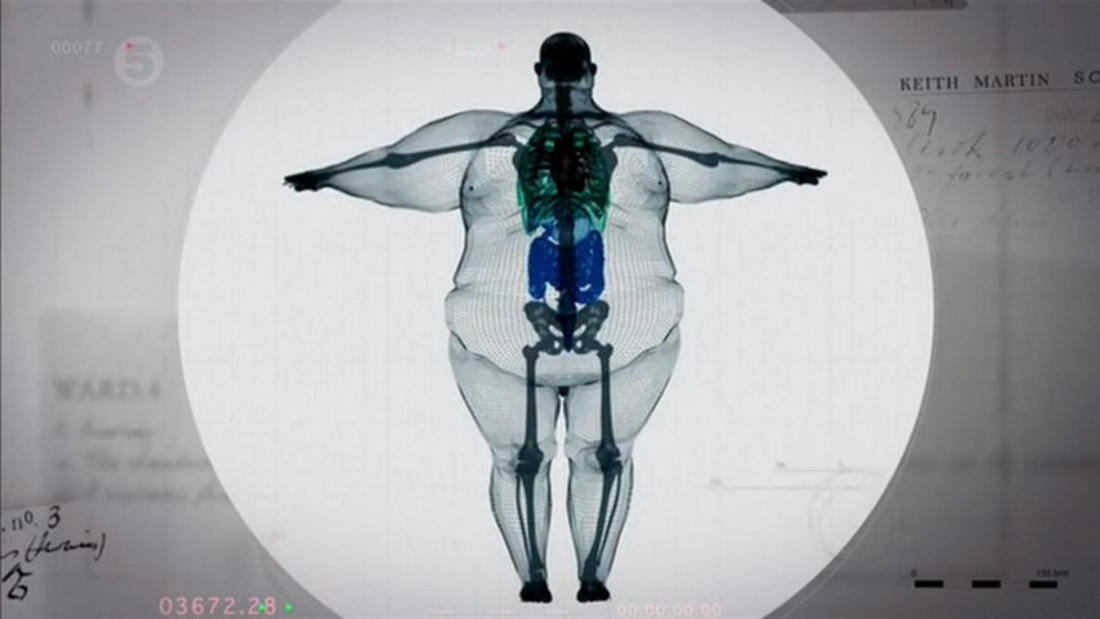
The heart - the most important muscle
A certain amount of fat in the body has a purpose - it protects the organs, the problem arises when there is too much of it. Excess visceral fat (= fat around the organs in the abdominal cavity) is one of the biggest risks to your heart. Many might think that this problem only affects obese people, but this is not the case. Even individuals with a seemingly normal body shape can have excess visceral fat.
Your doctor or nutritionist can measure the amount of visceral fat you have using a special device. Your waist circumference can also give a hint - women with a waist circumference greater than 88 cm and men with a waist circumference greater than 102 cm should beware.
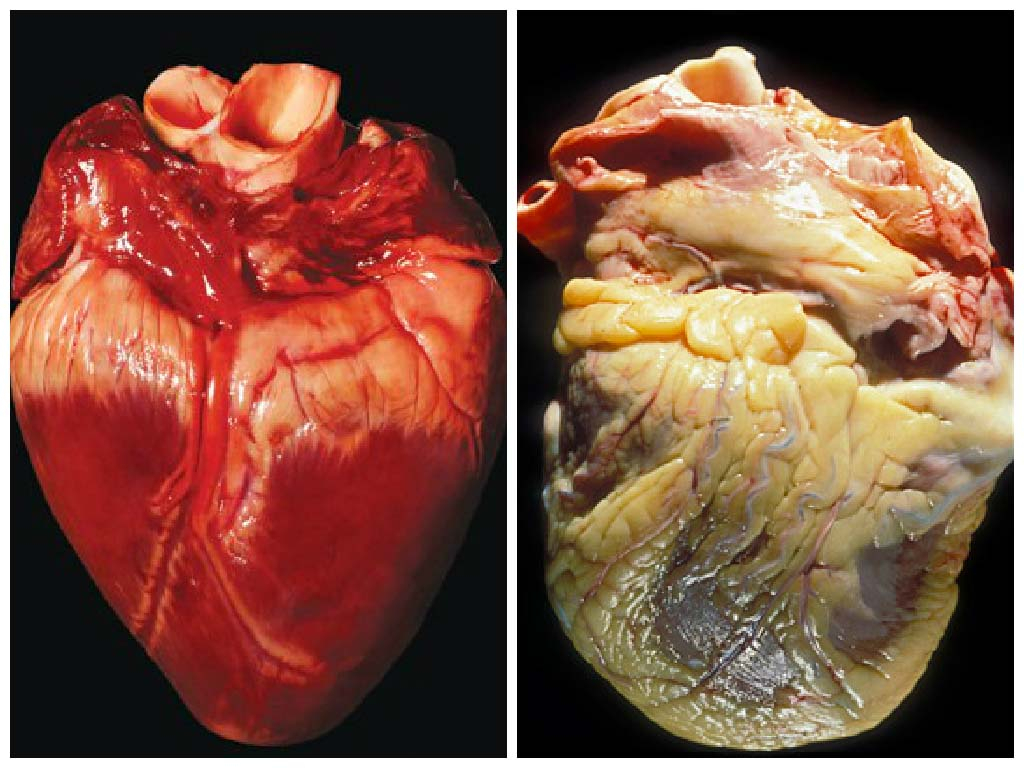
And what negatives does it bring to your heart to be surrounded by lots of fat? The heart has to work much harder to distribute oxygen and other nutrients throughout the body via the blood, resulting in an increase in blood pressure. Fat on the walls of blood vessels causes them to narrow, which can restrict blood flow. A higher risk of heart attack is directly linked to the narrowing of blood vessels.
You can see what a healthy heart and a heart covered in fat looks like in the picture below.
And since this is a bodybuilding site and we don't want to play games, it is also worth mentioning the negative impact of anabolic steroids on the human heart and other organs. As we know, they stimulate muscle growth, hence the heart also gets enlarged when these substances are overused. One study compared 86 men taking anabolic steroids for around 7 years and 54 men who had never taken them.
Both groups were actively involved in weight training. In the research, their cardiovascular systems were compared, and the former group (AS users) was found to have impaired left ventricular systolic and diastolic function, greater left ventricular hypertrophy, and increased coronary atherosclerosis. The group of bodybuilders who did not use steroids generally had normal values for all tests.
Points of interest
- An adult's heart is roughly the size of his fist; women have hearts smaller than men
- the heart can beat even when separated from the body, it has its own electrical impulse
Kidneys
The kidneys have a number of vital functions - excretory (excrete substances that are in excess in the body - e.g. water, urea, creatinine), endocrine (produce three important hormones - erythropoietin, calcitriol and renin), regulate blood volume and blood pressure and maintain acid-base balance.
Smoking has a negative effect not only on the lungs, but also on the kidneys - it leads to corrosion of the arteries, which impairs blood supply to the kidneys and their proper function. A number of studies have shown a link between obesity and kidney disease, and there may be direct damage in obesity-induced nephropathy or lesions associated with hypertension and diabetes. Anabolic steroid use may also compromise kidney health.
Points of interest
- You can live a full life with only one kidney - a separate kidney can take over the functions of the other
- according to Chinese medicine, the kidneys are the key organ of life energy
Lungs
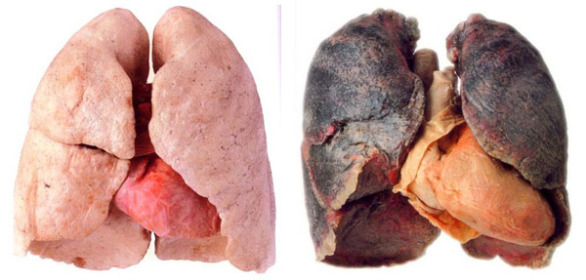
Few people think about having healthy lungs, we kind of take it for granted. Yet taking care of them is important at any age. We all already know that smoking damages the lungs and is associated with most lung diseases (chronic obstructive pulmonary disease, idiopathic pulmonary fibrosis, asthma, cancer). Cycling or running along busy roads, being in dusty areas, where irritating chemicals are used and in smoky environments also have a negative impact on the lungs.
Attractions
- Our left lung is smaller than the right because of the space for the heart
- the lungs are controlled by the brain, which tells them how much to inhale or exhale
Ministry of Health warns: smoking causes cancer, can slow blood circulation, causes infertility, can kill...The labels on the packs didn't put you off? How about a picture showing the difference between a healthy lung and a smoker's lung?
Liver
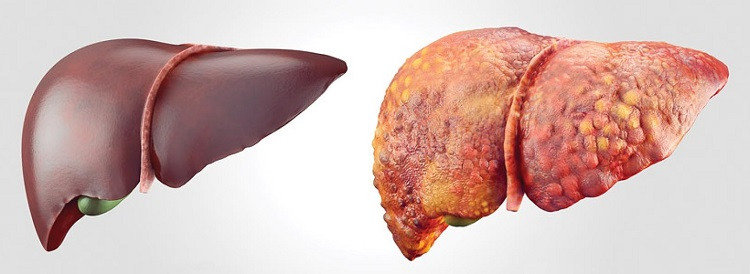
The liver is the largest gland in the human body, the central organ of metabolism and plays an important role in the metabolism of carbohydrates, fats and proteins. It is a digestive gland that produces bile, as well as an endocrine gland in which certain hormones are produced. They are especially known for their detoxifying abilities - they break down exogenous substances (e.g. drugs, alcohol) and endogenous products of metabolism. The most common causes of fatty liver include excessive alcohol consumption, obesity (inappropriate diet composition), elevated cholesterol, diabetes and the use of certain medications. These factors can trigger inflammation that leads to liver cell damage and fat deposition in the liver.
Fatty liver disrupts key metabolic processes. Often people are not even aware that this problem affects them; a doctor can tell elevated liver enzyme levels from a blood draw. Liver damage has several stages depending on the degree of liver tissue affected, with the highest stage being cirrhosis, which is life-threatening. The good news is that the liver can be regenerated if it is no longer irreversibly damaged. A healthy diet, abstinence, drinking or herbs (e.g. milk thistle) can help.
In the picture you can see the difference between a healthy and an unhealthy liver.
Interesting facts
- The liver has an extraordinary ability to regrow, which is very useful in transplantation. When 50 to 60% of the liver tissue is removed, the liver grows back to its original size within a few months
- the liver performs over 500 different functions in the body
Brain
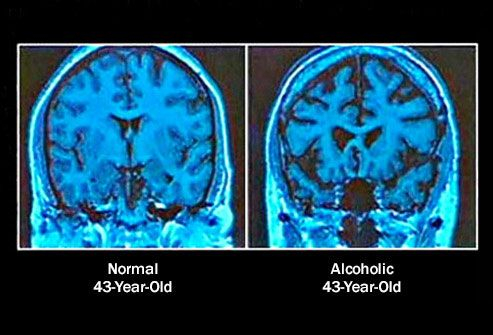
Obese people have a higher risk of stroke. Some studies also show a link between obesity and loss of brain grey and white matter, or mention that obesity can change the structures and functioning of the brain, which is associated with poorer memory, regardless of age, for example. Long-term excessive alcohol use has a negative impact on the central nervous system, particularly the frontal lobe of the brain, which is responsible for emotional control and short-term memory. There is also a loss of neurons (brain cells).
What does the brain of a teetotaler and a long-term moderate drinker look like?
Trivia
- the brain weighs about 1300-1500 g, women have smaller brains than men
- Brain size is not related to intelligence, rather it is due to better connections between the brain cells of the individual
Bottom line
The next time someone asks you the question why you eat healthy when you don't need to lose weight, you can refer them to this article. A healthy lifestyle is not just about losing weight, it's about how we approach our bodies and life in general. The body doesn't have to go to the grave malnourished as many like to claim. Take care of it and it will reward you with greater physical and mental resilience. Unfortunately, some illnesses, for example genetically determined, are unavoidable even with the best of lifestyles, but why prepare the breeding ground for diseases to break out?
Recommended
Image and information sources: healthline.com, ncbi.nlm.nih.gov/pubmed, sciencedaily.com, medicalnewstoday.com, buzzfeed.com, pinterest.com, pacehospital.com, medicinenet.com, steemkr.com
No posts have been made yet.








