





Let's enjoy Christmas without the stress of food this year!
 Author:
 Christmas is a holiday of peace and quiet. However, for many healthy lifestyle lovers or those trying to lose weight, it is a time of stress, especially about food, because let's face it, most traditional Christmas treats are calorie bombs. Today, we're going to explain that there's no reason to spoil the festive season for food and give you some important tips to help you stay calm and get through the Christmas period without unnecessary stress.
First things first - what's up with that damn weight, do we really need to gain weight at Christmas?
Most people go straight into Christmas with the vision that they have to put on XX kilos and are stressed out beforehand, afraid to taste the traditional treats and not really enjoy the holidays. It's unnecessary. Of course, I'm not encouraging you to overeat uncontrollably all through the holidays, because that's not okay either, but I am trying to suggest that if you can eat sensibly, you might as well indulge in a traditional Christmas menu. The problem isn't the traditional Christmas treats as such, but the fact that people often take Christmas to the extreme in the sense of "if I'm going to indulge, I'm going to indulge big time", and then the problem is all over the place. Three schnitzels, half a kilo of potato salad with mayonnaise, a box of sweets and zero exercise. That's really not a very "weight-friendly" idea of Christmas.
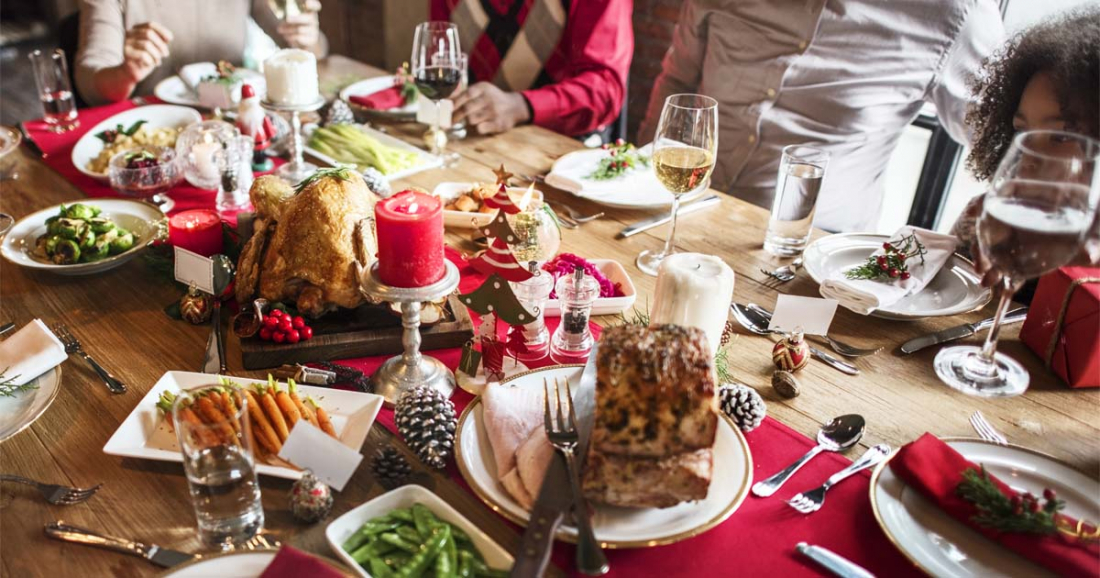
On the other hand, just because we bake healthy cookies and put yogurt in our salad doesn't mean we can eat unlimited amounts. Reducing or omitting sugar, substituting butter for coconut oil, peanut butter or ghee, and using whole wheat flour may give you more nutritionally valuable sweets, but it's certainly not calorie-free and it doesn't mean you can eat them from morning to night. So, the comment that quantity is key applies in both cases - whether you decide to try the would-be healthier candy alternatives or stick with the good old classics.
Therefore, to really pack on the fat over Christmas, we'd have to be in a very significant calorie surplus all through the holidays. Studies suggest that real calorie gains are most often in the 0.5 - 1kg range. Of course, even this is not an instruction to lie in front of the TV for the entire holiday season and gorge yourself on sweet, salty, whatever comes to hand. If you manage to balance the inclusion of classic versions of your favourite foods in your regular healthy diet, and if you take the time to exercise during Christmas, you needn't be alarmed by significant Christmas weight gain.
The truth is also that if you give yourself a break over Christmas and give your body plenty of energy (in the form of good quality real food, of course) you may even benefit from it. If you give your body a slightly higher dose of carbohydrates than you give it during the year, because you are trying to keep them down for the sake of cutting back a bit, the body will do its own thing with them - and in a good way. It will use them to regenerate and also provide you with plenty of energy.
Don't be fooled by the extra pounds, as carbohydrates can be stored as muscle glycogen, which also binds water, so that weight gain is not actually fat, but merely retained water. Equally, weight gain can be caused by increased gut filling or eating saltier foods, as you already know from our weight article, salt also binds water to itself, which can lead to weight gain without putting on fat.
Today, let's give you a few more simple tips to help you get through Christmas with complete peace of mind!
1. Don't overeat, eat calmly and don't get distracted!
As we mentioned above, traditional Christmas meals are quite calorific, and if you add a few more each day during the holidays, you are very likely to run into a calorie surplus. For example, 100 grams of classic potato salad has around 200 kcal. If you add three times at dinner (including an extra steak, of course), or load up on a hefty portion, you're suddenly somewhere else in terms of calories.
For example, you can use smaller plates to control portions, or simply use your normal eating portions. Put the sweets on a plate rather than eating from a tray on the table, as this will give you more control over how much you've actually managed to eat. You really don't have to eat a whole Christmas just because Grandma made it. You don't even have to taste every single cookie on your Christmas visits so carefully that there's nothing left on the table. It doesn't seem like it, but these Christmas trifles, which often sit harmlessly on the table in front of you, can really mess with your calorie intake.

It is also true that we should eat calmly and practice the mindful eating principle that I often mention in my articles. This principle is that we should concentrate fully on the food - that is, not engage in any distractions such as television or scrolling through social media, but savour it carefully, notice the flavours, aromas, textures, notice how the food looks on the plate, eat slowly and chew carefully. If you commit to it, you will gain more control over your feelings of hunger and satiety, how much food you eat, and you can stop in time if your body is already full and prevent overeating.
2. Eat a balanced diet
Most Christmas meals are very high in carbohydrates and fat. Protein, on the other hand, is often missing from our plates during Christmas. However, protein has the highest thermic and satiating effect of all macronutrients, so we won't be hungry immediately after eating it. If you're planning to have a few pieces of your mum's candy, reach for some white yoghurt and top the candy with it. We really shouldn't forget about protein intake during the holidays. They allow us to eat fewer calories because they fill us up sufficiently and therefore we are less likely to gain so much weight. Besides, complete meals satisfy our cravings more than incomplete ones.
Of course, here too we must mention one BUT - and that is the method of preparation. You may be thinking that fried steak is made of meat and meat is protein! That's true, of course, no question about it, but thanks to the triple coating and frying in a bunch of oil, a piece of meat picks up a huge amount of extra calories. So choose a more economical way of preparing it and vary your protein sources during Christmas - include eggs, yoghurt, cottage cheese, a piece of cheese, good quality ham, fish, poultry or even protein powder. Variety in your diet is also important during the holidays.
In addition to protein, we should also bet on a sufficient intake of fibre - i.e. plenty of fresh vegetables and fruit. As has been said several times, traditional Christmas meals are heavy, calorie-heavy and very poor in vegetables, which is a great pity, because fibre is very important for proper digestion and, of course, for satiety. So don't forget to eat plenty of fresh vegetables during the festive season - for example, after a heavy lunch at Grandma's, have a simple vegetable salad for dinner with an egg, chicken or tuna and top it up with wholemeal rye bread, which is also a source of fibre. If you snack on yogurt with a few pieces of candy, feel free to add half an apple, a banana, or even a tangerine. During the holidays, you can find exotic fruits in the stores that we don't get a chance to taste at other times, so don't be afraid to take advantage of this and lighten your diet from heavy, fatty and calorie-laden foods.
3. Beware of alcohol and other liquid calories
Christmas cheer also includes all kinds of toasts, homemade eggnog, or maybe a mulled wine while watching cartoons. However, the truth is that alcohol contains a lot of empty calories, which can also drive your intake up quite high and you may not even notice it. Liquid calories add up pretty damn fast. In addition, alcohol has the ability to stimulate the appetite and at the same time loosen your inhibitions, so it is possible that after a few glasses of mulled wine you will eat what you would not normally have. Alcohol also interferes with fatty acid metabolism and has a very negative effect on sleep quality. Both of these factors can also contribute to increased fat storage.
Therefore, it is very important to really control your intake of liquid calories, especially those from alcohol. Make sure you top up every glass of alcohol with plain water - alcohol also has a strong ability to dehydrate the body, which can cause a lot of pain.

4. Learn to say no
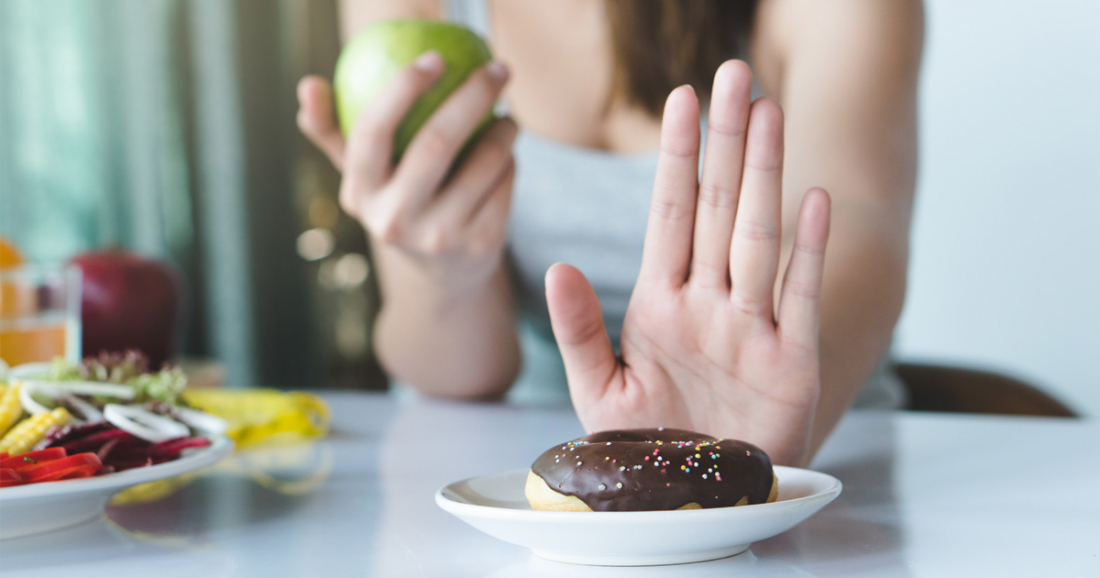
During Christmas, you're also likely to be visiting family members and have the opportunity to sample Christmas goodies from all the cooks in your family. But even here, you have the right to have only one portion and resist your grandmother's telling you to have one more damn steak because you're bone and skin! Simply explain to her that you've had enough and you don't need the topping. If you're opting for a lighter option during the holidays, take a box of food to the visit and explain to your family members that, simply put, the food they cooked doesn't correspond with your current eating habits, but that it doesn't mean they cooked poorly or that you didn't like it from them at all. Your grandmother will surely understand and be happy that you are keeping her company during the holidays.
5. Try healthier versions of your favorite Christmas treats
Are you worried that you can't control yourself with the classic versions of Christmas treats, or maybe you don't like them? Experiment and try a healthier take on the classics. Instead of mayonnaise, use Greek yoghurt in your salad, or substitute at least part of the calorific mayonnaise. If carp or triple-wrapped steak is not one of your favourite dishes, go for grilled salmon, trout or natural meat. You can try using wholemeal flour, nut pastry, substituting erythritol for the sugar or baking a spelt Christmas cake. Again, you can't consume as much as you want, but the higher nutrient content makes it much more likely that a few pieces will be plenty. Then, on other days, you can gratefully decline heavy side dishes and have a salad of fresh vegetables with your meal. On New Year's Eve, you can prepare cucumber nuggets, salmon tartare or rye bread sandwiches with hummus.
6. Be active during the holidays
You may be tempted by the idea of a Christmas spent lying in front of the TV, but if you're conscious of your weight, you shouldn't forget to exercise regularly. Since we won't be able to go to the gym this year, a family walk is an ideal activity, or a good skiing, skating or cross-country skiing trip during the holidays. Relaxation and well-being are inherent to Christmas, but again, we really don't have to just lie in front of the TV and stuff ourselves. Your body will thank you if you keep it reasonably occupied during Christmas. Half - an hour every day won't kill you and you'll see that you'll feel much better too.
Recommended
7. Don't stress unnecessarily and rest a lot
Do you have a demanding job, a lot of school work, or have you just had a busy year so you're really tired? Take advantage of the space and get a good night's sleep over the holidays! With all the pubs, bars and nightclubs staying closed this year, your choice of evening entertainment has been made a lot easier.
Plus, sleep is a key aspect for overall health, but also for weight management. Lack of sleep can really mess up the levels of the hormones leptin and ghrelin, the main hormones that control our hunger and satiety. Ghrelin, the hunger hormone, is at higher levels due to lack of sleep, while leptin, the hormone that signals satiety, is lower. Not getting a good night's sleep makes us hungrier the next day, and also makes us more likely to reach for a calorie bomb to give us the energy we're lacking due to sleep deprivation.
But it's not just about these two hormones. Sleep deprivation also raises levels of cortisol, a stress hormone that can also cause us to seek out more calorie-dense foods, or make us obnoxious as hell. Get at least 7 to 9 hours of quality sleep every day. Not only will you have more control over your caloric intake, but you'll also be kinder, more energetic and more productive, even if you don't have to go to work right now.
One final thing to mention. We shouldn't be stressed about the Christmas holidays or eating during them - or rather, we shouldn't let it. Christmas is a holiday of peace, quiet, relaxation and time with family, and stress really doesn't belong in the festive season. Stress has been over the top this year, so try to switch off your head at Christmas, enjoy the beautiful family atmosphere and don't spoil the holidays with unnecessary things, like thinking about being a cannonball after Christmas.
What to take away from this article?
The holidays are about things other than food, and while the iconic Christmas goodies are intrinsic to them, it's up to us how much they dominate them. As long as you can control the quantity, you can easily have a few pieces of classic candy, your mom's potato salad with mayonnaise and schnitzel, or maybe your grandma's famous Christmas cookie. It's always about quantity. You really won't gain XX pounds if you have a classic dinner and a few pieces of candy with your family.
But equally, no one is going to stop you from making a salad with yogurt and candy in a healthier version, or simply declining it with thanks. It's entirely up to you. In short, choose the path that's closest to your heart, lifestyle, taste preferences and overall mind-set, and choose it in a way that doesn't stress you out - whether because of fear of gaining weight or because of feeling restricted. Because both paths are right in the individual context.
Be active at Christmas, get plenty of rest, eat sparingly, don't stress yourself unnecessarily and enjoy the holidays to the full. On behalf of the entire Kulturistika.com team, we wish you a Merry Christmas and good luck in the New Year.
Sources:
Yanovski, J. A., Yanovski, S. Z., Sovik, K. N., Nguyen, T. T., O'Neil, P. M., & Sebring, N. G. (2000). A prospective study of holiday weight gain. The New England journal of medicine, 342(12), 861-867. https://doi.org/10.1056/NEJM200003233421206
Schoeller, D. A. - The effect of holiday weight gain on body weight. https://doi.org/10.1016/j.physbeh.2014.03.018
M. Barbara E. Livingstone, L. Kirsty Pourshahidi, Portion Size and Obesity, Advances in Nutrition, Volume 5, Issue 6, November 2014, Pages 829-834, https://doi.org/10.3945/an.114.007104
Westerterp-Plantenga, M., Lemmens, S., & Westerterp, K. (2012). Dietary protein - its role in satiety, energetics, weight loss and health. British Journal of Nutrition, 108(S2), S105-S112. doi:10.1017/S0007114512002589Leidy, H. J., Clifton, P. M., Astrup, A., Wycherley, T. P., Westerterp-Plantenga, M. S., Luscombe-Marsh, N. D., Woods, S. C., & Mattes, R. D. (2015). The role of protein in weight loss and maintenance. The American journal of clinical nutrition, 101(6), 1320S-1329S.
S N Kreitzman, A Y Coxon, K F Szaz, Glycogen storage: illusions of easy weight loss, excessive weight regain, and distortions in estimates of body composition, The American Journal of Clinical Nutrition, Volume 56, Issue 1, July 1992, Pages 292S-293S, https://doi.org/10.1093/ajcn/56.1.292SSharma, S., & Kavuru, M. (2010). Sleep and metabolism: an overview. International journal of endocrinology, 2010, 270832. https://doi.org/10.1155/2010/270832Thursby, E., & Juge, N. (2017). Introduction to the human gut microbiota. The Biochemical journal, 474(11), 1823-1836. https://doi.org/10.1042/BCJ20160510
Spiegel, K., Tasali, E., Penev, P., & Van Cauter, E. (2004). Brief communication: Sleep curtailment in healthy young men is associated with decreased leptin levels, elevated ghrelin levels, and increased hunger and appetite. Annals of internal medicine, 141(11), 846-850. https://doi.org/10.7326/0003-4819-141-11-200412070-00008
Matousek, R. H., Dobkin, P. L., & Pruessner, J. (2010). Cortisol as a marker for improvement in mindfulness-based stress reduction. Complementary therapies in clinical practice, 16(1), 13-19. https://doi.org/10.1016/j.ctcp.2009.06.004Yeomans, M. R., Caton, S., & Hetherington, M. M. (2003). Alcohol and food intake. Current opinion in clinical nutrition and metabolic care, 6(6), 639-644. https://doi.org/10.1097/00075197-200311000-00006
Patel, S. R., & Hu, F. B. (2008). Short sleep duration and weight gain: a systematic review.Obesity (Silver Spring, Md.), 16(3), 643-653.https://doi.org/10.1038/oby.2007.118Nedeltcheva, A. V., Kilkus, J. M., Imperial, J., Schoeller, D. A., & Penev, P. D. (2010). Insufficient sleep undermines dietary efforts to reduce adiposity. Annals of internal medicine, 153(7), 435-441. https://doi.org/10.7326/0003-4819-153-7-201010050-00006
No posts have been made yet.








