





Hyaluronic acid - a helper for youthful skin and joint health
 Author:
 Many people, especially women, spend hours and hours studying and choosing products that will give their skin a youthful and fresh look. Such products are usually not exactly the cheapest affair, so it is good to know what to actually look for in them. One of the ingredients that such a product should definitely contain is undoubtedly hyaluronic acid. However, apart from its ability to hydrate the skin and smooth out wrinkles, this substance inherent to the body can also bring us other benefits, which is why let's take a closer look at it today.

A theoretical window - what exactly is hyaluronic acid?
Hyaluronic acid is a clear liquid that our body creates itself. Hyaluronic acid is also a naturally occurring component of bone broth. In the human body, hyaluronic acid is found in the highest concentrations in the skin, inside the joints, in the eye sockets and in other tissues where it binds water to itself, providing hydration, elasticity and vitality. Hyaluronic acid, also called hyaluronan, is often recommended by dermatologists and other physicians for its ability to improve the texture and appearance of the skin.
In the past, hyaluronic acid was primarily extracted from rooster combs, but today it is preferred to be produced by a fermentation process in a laboratory. Hyaluronic acid can be encountered in both liquid and powder form. The powder form offers more benefits as it does not contain alcohol or preservatives. Hyaluronic acid is a common ingredient in a variety of beauty and skin care or anti-aging products - we can find various creams, serums and capsule supplements sold in health food stores. Most dermatologists even offer hyaluronic acid in injectable form.
The biggest advantage of hyaluronic acid is that it has a very high capacity to retain water, whether in the skin, eyes or soft tissues, thus ensuring their elasticity and vitality. Other parts of the body where hyaluronic acid is concentrated include tendons and joints, eye membranes, umbilical cord, synovial fluid, skeletal tissue, heart valves, lungs, aorta and prostate.
It is the positive effect of hyaluronic acid associated with joint health and vitality that is the subject of current research, and the results are quite promising.
The greatest benefits of hyaluronic acid in the body
Let's take a closer look at the benefits this substance can bring to our bodies.
Hydrates dry and tired skin
Yes, hyaluronic acid is a highly valued supplement for hydration. Many people report that their skin is refreshed after applying serums containing hyaluronic acid, the bags under their eyes lighten and the texture of their skin is smoother. The primary way that hyaluronic acid helps improve the appearance of the skin is by hydrating it. Dryness, flakiness and sagging or lax skin are among the main signs of aging. This happens because the molecules in our skin lose some of their ability to bind and retain water as we age. This causes dryness, but also a loss of skin volume, so that the skin looks 'saggy' and wrinkles appear.
Skin ageing is a natural phenomenon that occurs due to increasing age, exposure to harmful substances in our environment and, last but not least, UV exposure. Hyaluronic acid provides hydration to the skin, thus ensuring its elasticity and vitality and making the skin more radiant and smoother. Hyaluronic acid is often found in creams or serums together with vitamin C. The two substances complement each other perfectly. Vitamin C is a powerful antioxidant that helps heal, regenerate and cleanse the skin, while hyaluronic acid provides the necessary hydration. Together, they form a truly effective combo that your skin will appreciate.
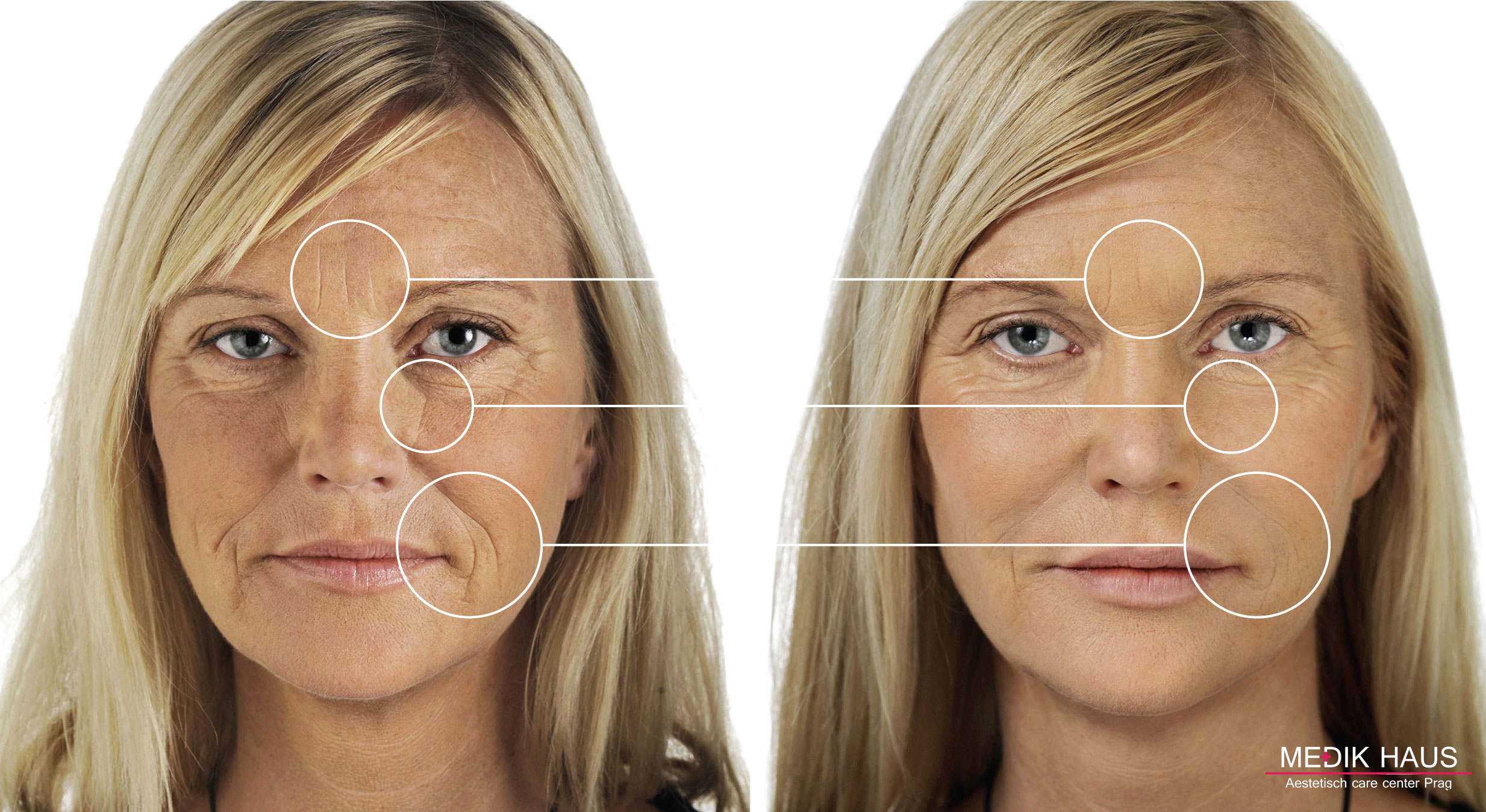
Helps reduce wrinkles
A much appreciated property of hyaluronic acid is its ability to reduce visible wrinkles as well as help prevent them from forming. When the skin lacks hydration, fine lines, wrinkles and skin texture become more visible and the skin looks rough. As mentioned in the previous point - hyaluronic acid hydrates the skin, smoothes it and gives it a fresh and youthful appearance. By increasing the skin's hydration, it will also strengthen the overall skin barrier.
Most research shows that it takes approximately four to six weeks for the effects of hyaluronic acid to take effect and for some visible improvement in the appearance of the skin and a reduction in wrinkles to occur. Some research has even reported that respondents have seen improvements after the first few applications, but you need to take these reports with a grain of salt and not expect complete miracles. For more significant and faster results in reducing the signs of aging, dermatologists also prescribe injections with its content. In this way, hyaluronic acid can be injected both into the skin and, for example, into the lips, where it adds volume and vitality.
It can help with sunburn, wound healing and minor skin inflammation
In addition to reducing the appearance of wrinkles and hydrating the skin, hyaluronic acid is beneficial in the treatment of cold sores and mouth ulcers, minor wounds, insect bites and burns, as it keeps the damaged tissue moist. In addition, it can also provide relief from sunburn. Many products for treating cold sores on the lips and mouth contain a gel with hyaluronic acid, which speeds up the healing process and prevents cracking or bleeding. Because hyaluronic acid binds to water, it hydrates the skin, tissues in the mouth and lips, and helps bring nutrients to damaged tissues, reducing inflammation and helping sore areas detoxify. Hyaluronic acid also has antibacterial properties, so it can help reduce the risk of infection when applied directly to open wounds.

In addition to the skin, it also provides hydration to joints and tendons
Hyaluronic acid is found in all bones, joints, tendons and helps maintain strong cartilage structures throughout the body. Particularly important is a type called hyaline cartilage, which is the most common type of cartilage in the human body and covers the ends of bones, providing them with cushioning. Because hyaluronic acid helps to cushion the friction of bone, providing resistance to wear and tear, it is useful in relieving pain and tenderness associated with degenerative joint disease. It is also found in another important part of our joints called the synovial membrane, which forms a coating on the two joint bones and produces synovial fluid. Synovial fluid is a viscous fluid that helps joints absorb shock, maintains their elasticity and delivers nutrients to the cartilage. Hyaluronic acid is therefore a popular substance used in supplements for the treatment of joint pain and osteoarthritis.

Helps moisturize the eyes
The fluid called vitreous humor, which fills the eye cavity, also contains a proportion of hyaluronic acid. Therefore, quite logically, eye drops containing it can help alleviate the problems of people who suffer from chronic dry eyes, as they provide the eye socket with the necessary hydration, aid tear production and restore the fluid balance. The sufficient amount of hyaluronic acid in the vitreous also protects it from mechanical damage. Some studies have also found that hyaluronic acid helps to counteract oxidative damage caused by UVB light in the cornea. Doctors commonly use lubricating formulas containing hyaluronic acid to treat eye injuries and vision disorders, including cataracts, especially before or after surgery when the eyes are most sensitive and dry.
Protects against inflammatory bowel disease
As already mentioned, hyaluronic acid is a natural part of our body. It is found in our intestines in the form of large particles that act as protection against the development of inflammatory diseases such as Crohn's disease and ulcerative colitis. Increasing the intake of foods rich in hyaluronic acid (such as bone broth) can help support the natural repair process of the gastrointestinal system and potentially protect against leaky gut syndrome. In addition, it appears that it may be a handy tool in dealing with reflux-related problems. Hyaluronic acid can help soothe an irritated esophageal lining and speed up the recovery process. However, overuse of concentrated hyaluronic acid, whose particles are smaller than naturally occurring, may increase the risk of developing inflammation in the intestines, so supplementation is not recommended beyond the recommended daily dosage.

Forms and uses of hyaluronic acid
As already mentioned, hyaluronic acid can be found in many different forms. It can be used externally in the form of skin creams, serums and other cosmetic products, in the form of dietary supplements, or injected. Below are the most common ailments and popular ways to address them using this substance.
Hyaluronic acid for healthy skin and eyes
Creams and serums with hyaluronic acid: Different brands contain different concentrations and types of hyaluronic acid molecules. The most effective types often contain more than one size of hyaluronic acid molecule, as different sizes work in different ways. Studies have found that daily topical application of serums containing approximately 0.1 percent hyaluronic acid can help to significantly improve skin hydration, reduce wrinkles and increase elasticity. The results, of course, hold true with regular application.
Hyaluronic acid injections: These are only administered by physicians, so if you are interested in using hyaluronic acid to significantly reduce wrinkles, improve and rejuvenate your skin, or increase lip volume, consult a trained dermatologist who can tell you more about injectables.
For the treatment of dry eyes
Eye drops: hyaluronic acid can be given as liquid eye drops three to four times a day for three months. Drops with a concentration of hyaluronic acid of around 0.2 percent to 0.4 percent are recommended to hydrate the eye mucosa. Ideally, you should first consult your doctor or pharmacist about the appropriate product.
For joint pain
Supplements: hyaluronic acid can also be taken in the form of a dietary supplement. There is no universally valid recommendation for a daily dose. Some manufacturers list around 200 mg, others as high as 1,000 mg. In this case too, injection directly into the joints is possible on medical advice.
Recommended
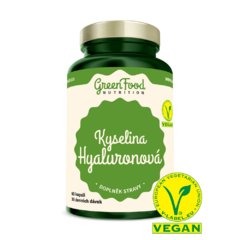
GreenFood Kyselina Hyaluronová
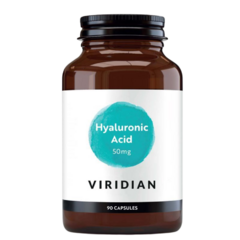
Viridian Hyaluronic Acid
Negative side effects and risks
Most health organisations consider hyaluronic acid products, whether taken orally or externally on the skin, to be safe. Since the body naturally produces this acid, allergic reactions are very rare. Supplements and injectable hyaluronic acid are not recommended for pregnant or breastfeeding women, as this group cannot be tested to confirm the safety of administration. There is some risk of negative side effects if hyaluronic acid is injected into the skin or joints. However, negative reactions are usually associated with the injection procedure rather than with the hyaluronic acid itself and in the vast majority of cases involve redness of the injection site.
What to take away from the article?
Hyaluronic acid is a fluid that is naturally found in the skin, eyes, joints and connective tissue. Because it has a high water-binding capacity, it is used in the form of supplements, lotions, creams, serums or eye drops to add hydration, improve texture and help address cosmetic and health concerns associated with the aging process. Some types of hyaluronic acid also have anti-inflammatory properties and help treat joint problems. Some of the main benefits of using hyaluronic acid include firming aging skin, reducing wrinkles, reducing joint pain, moisturizing wounds and hydrating dry eyes.
Sources:
Walker K, Basehore BM, Goyal A, et al. Hyaluronic Acid. [Updated 2023 Mar 7]. In: StatPearls [Internet]. Treasure Island (FL): StatPearls Publishing; 2023 Jan-. Available from: https://www.ncbi.nlm.nih.gov/books/NBK482440/Yang, Y. J., Lee, W. Y., Kim, Y. J., & Hong, Y. P. (2021). A Meta-Analysis of the Efficacy of Hyaluronic Acid Eye Drops for the Treatment of Dry Eye Syndrome. International journal of environmental research and public health, 18(5), 2383. https://doi.org/10.3390/ijerph18052383Moskowitz R. W. (2000). Hyaluronic acid supplementation. Current rheumatology reports, 2(6), 466-471. https://doi.org/10.1007/s11926-000-0022-xPapakonstantinou, E., Roth, M., & Karakiulakis, G. (2012). Hyaluronic acid: A key molecule in skin aging. Dermato-endocrinology, 4(3), 253-258 .https://doi.org/10.4161/derm.21923Palmieri, B., Merighi, A., Corbascio, D., Rottigni, V., Fistetto, G., & Esposito, A. (2013). Fixed combination of hyaluronic acid and chondroitin-sulphate oral formulation in a randomized double blind, placebo controlled study for the treatment of symptoms in patients with non-erosive gastroesophageal reflux. European review for medical and pharmacological sciences, 17(24), 3272-3278.Nobile, V., Buonocore, D., Michelotti, A., & Marzatico, F. (2014). Anti-aging and filling efficacy of six types of hyaluronic acid based dermo-cosmetic treatments: a double blind, randomized clinical trial of efficacy and safety. journal of cosmetic dermatology, 13(4), 277-287. https://doi.org/10.1111/jocd.12120Jensen, G. S., Attridge, V.. L., Lenninger, M. R., & Benson, K. F. (2015). Oral intake of a liquid high-molecular-weight hyaluronan associated with relief of chronic pain and reduced use of pain medication: results of a randomized, placebo-controlled double-blind pilot study. Journal of medicinal food, 18(1), 95-101.https://doi.org/10.1089/jmf.2013.0174Simpson, R. M., Meran, S., Thomas, D., Stephens, P., Bowen, T., Steadman, R., & Phillips, A. (2009). Age-related changes in pericellular hyaluronan organization leads to impaired dermal fibroblast to myofibroblast differentiation. The American journal of pathology, 175(5), 1915-1928 .https://doi.org/10.2353/ajpath.2009.090045Wang, C. T., Lin, J., Chang, C. J., Lin, Y. T., & Hou, S. M. (2004). Therapeutic effects of hyaluronic acid on osteoarthritis of the knee. A meta-analysis of randomized controlled trials. The Journal of bone and joint surgery. American volume, 86(3), 538-545. https://doi.org/10.2106/00004623-200403000-00012
No posts have been made yet.








