How does the circadian rhythm work and why should we not neglect it?
 Author:
 The body of most animals has a circadian rhythm, which we can simplistically imagine as a kind of internal clock. This system is influenced by external factors such as light and darkness, but stress, sleep hygiene, diet, exposure to blue light or even shift work also play a role. The brain receives signals based on our environment and activates certain hormones, changing body temperature and regulating metabolism, depending on whether we are asleep or awake.
However, in some people, the circadian rhythm can be disrupted, whether due to external factors and inappropriate lifestyle or sleep disorders. Today, let's take a closer look at the circadian rhythm and also give some tips that will make it easy to maintain its proper functioning.
Theoretical window - what is the circadian rhythm and how does it work?
So we already know that the circadian rhythm represents a kind of internal clock for each of us. The circadian rhythm helps to optimise all the daily processes in the body, hence the name. The term circadian comes from the Latin term "circa diem" which means "in about a day". Why "in about a day"? Because the period of that biological rhythm can vary between 20-28 hours. Circadian rhythms exist in all types of organisms - they help flowers open and close at the right time, for example, and prevent nocturnal animals from leaving their hiding places during the day when they would be more vulnerable to predators.
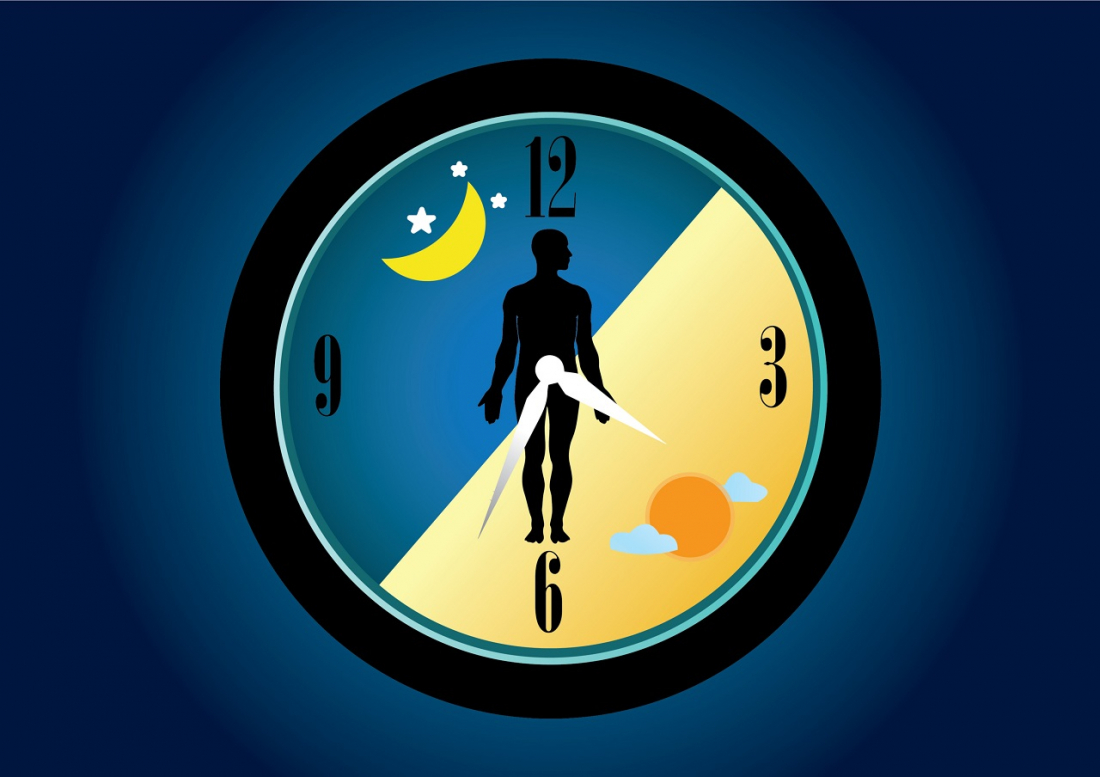
Circadian rhythms associated with the master clock, sometimes referred to as the circadian pacemaker, which is located in the brain. Specifically, in the hypothalamus and pituitary gland, and from there it remotely controls smaller clocks located in individual tissues and organs (we call them peripheral clocks), and the information continues to progress down to the cellular level, where even our DNA contains circadian genes.
So we can say that each of our cells has its own miniature clock. Previously, it was assumed that the circadian rhythm was spontaneously generated, but as science progresses, it is being discovered that the body regularly "updates" and shapes it based on external and internal factors. Cells in the brain react to light and darkness and send signals based on this that it is time to be awake or to be sleepy - due to ever-increasing exposure to screens and increasing demands for exercise, this natural rhythm is being disrupted in an increasing proportion of the population.

However, the circadian rhythm definitely does not only affect the sleep-wake cycle. It also plays a role in the production of a number of hormones. The most important ones are melatonin, sleep hormone, cortisol and growth hormone. Levels of all these hormones can increase or decrease as part of the circadian rhythm. For example, melatonin - the hormone that causes drowsiness and the body naturally releases more of it at night, and in turn suppresses its production during the day - is at its lowest level in the morning. Cortisol, on the other hand, can increase alertness and the body produces more of it in the morning.
Other processes that are affected by circadian rhythms include body temperature and metabolic activity. Body temperature drops when we sleep and rises during wakefulness. The same is true for the metabolic rate, which varies depending on different parts of the day. But other factors can also influence circadian rhythm - for example, shift work, physical activity and a range of other habits or lifestyle choices can shape it.
Circadian rhythms are innate to us, yet they are not timed the same for every person. During the day, people alternate between periods of wakefulness and wakefulness, sleep and wakefulness. At slightly different times for everyone. Someone is full of energy first thing in the morning and someone is full of energy in the evening. Literature describes this state as a different circadian preference or chronotype of an individual (morning - evening). We can say that there is a certain scale where at one end we find the state referred to as "night owl" and then at the other end "early bird". Most of us are somewhere in the middle of this scale and the closer we are to one end or the other, the number of "representatives" decreases.
The circadian system and circadian preferences change with age - a child in the prenatal state, infants, adolescents and adults all have completely different circadian rhythms. Babies do not have a fully developed circadian rhythm, so their sleep is quite erratic in the first few months of life. So children have a different sleep pattern, teenagers have a different sleep pattern, adults have a different sleep pattern, and then seniors have a different sleep pattern. As we age, the natural production of melatonin decreases, so, for example, sleep time becomes shorter or the quality of sleep deteriorates.
What happens when the circadian rhythm is not working properly?
When the body's natural rhythms are disrupted, more or less serious problems occur. The most common are sleep disturbances and insomnia, resulting in extreme fatigue and general exhaustion. Lack of sleep then leads to other physical but mainly mental problems, which is why people with disturbed circadian rhythms often suffer from depression and irritability. During the night, the body also gets rid of toxins and harmful substances, which is why we may experience digestive problems or the accumulation of toxins in the body. In addition, there may be problems with concentration, impaired memory and mental instability. Having less energy can also result in us reaching for more calorie-dense, not-quite-healthy foods, which can lead to weight gain in the long term.
What factors contribute to disrupted circadian rhythms?
There are a number of factors that can have a negative impact on the functioning of the circadian rhythm, and consequently on the quality of our sleep, which goes hand in hand with other processes and how we feel during the day. Most often, the blind suffer from circadian rhythm disorders because they are unable to distinguish between light and dark. The second largest group affected by circadian problems are then shift workers or people with irregular schedules, whose natural cycle of sleeping at night and waking during the day is violently disrupted. Fatigue, sleep difficulties, poor performance, concentration problems and an increased risk of cancer are common in this group.

The sleep cycle can also be disrupted by travel between different time zones - jetlag. But in this case, readjustment and harmonisation occurs within a few days. Other factors such as stress, illness, depression and mental illness can also contribute to changes or disturbances in circadian rhythm, as can excessive use of stimulants, caffeine or drugs, excessive screen viewing before bedtime and inappropriate sleep habits - lack of sleep, inappropriate diet before sleep, alcohol consumption, excessive physical activity shortly before bedtime, etc.
How to restore the natural rhythm?
If you notice that your biological clock is not working properly, you feel tired, have trouble concentrating or transforming your body, it might be time to think about your habits. The good news is that we can easily regulate our circadian rhythm and therefore "heal" it with daily habits. How to do it? Let's give you some tips to help maintain a healthy 24-hour rhythm.
Set a proper sleep schedule
We understand that shift workers won't be too thrilled with this advice, but try to set a schedule that will allow you to sleep at night and function during the day - that is, the way it comes naturally. Also avoid afternoon naps, at least those that are longer than 20 minutes or so. As adults, we should get 6-9 hours of quality sleep each day. We can also rely on a variety of sleep rituals - from a warm shower, to reading a book, to stretching, to sipping a dissolvable magnesium.
A suitable environment for sleep
Hand in hand with the optimal time for sleep is, of course, the environment in which we sleep. The room should be dark, well-ventilated and ideally only used for intimate moments and sleep. Equally important is the bed itself - the mattress should be tailored to our own preferences: some people need a firmer one, others the opposite. The duvet should not be too heavy and the pillow should also suit our personal preferences. Don't forget to wash the sheets regularly. You know that freshly washed, fragrant duvets are the best to sleep in anyway.
Recommended
GreenFood Melatonin
Czech Virus Melatonin
There's that diet again.
Harmonisation of the circadian rhythm is also linked to a suitable diet, not only at bedtime but throughout the day. We should keep in mind that our diet should contain enough calories and nutrients to give the body enough energy to function. At the same time, we should ensure balance, avoiding nutritional extremes and unreasonable restrictions, and we should not neglect the quality of the food we eat.
We should focus on food in its most natural form and, on the contrary, eliminate ultra-processed products, semi-processed products and fast food as much as possible. Equally important is the drinking regime, which should ideally consist of pure water. Alcohol consumption and excessive caffeine intake should be avoided, especially in the afternoon.
Regular exercise = an integral part of the health jigsaw
We must not forget to mention regular physical activity. The body simply needs movement and we should give it some form of daily exercise. You don't have to go to the gym every day - on the contrary, try to load the body from different angles and give it a variety of activities and don't be afraid to try new ones. If you go for a walk, for example, you will kill two birds with one stone - firstly, you will breathe fresh air and secondly, you will stretch your body, which is stiff after sitting behind a computer all day.
So we'll add the recommendation that we should try to spend at least half an hour in the fresh air every day, even in winter. Ideally, we should go outside during daylight hours to expose the body to sunlight.

Watch out for screens and monitors
We should not be exposed to blue light for about an hour before bedtime. Therefore, avoid excessive use of electronics before going to bed. In fact, the blue light that emanates from our phone, computer and TV monitors can disrupt the sleep process. If you want or need to watch an electronic screen before bed, wear blue light-blocking glasses or use a night light setting that turns the screen backlight orange rather than blue. But we recommend a book or perhaps a short meditation or stretch.
What to take away from the article?
The body of most living organisms has a circadian rhythm, which we can simplistically imagine as a kind of internal clock that, in the case of us humans, regulates not only the sleep cycle, but also the production of hormones, body temperature or metabolic activity. The circadian rhythm evolves and changes throughout life. It is often disrupted by hectic times, which can have fatal consequences for our health. People who work in shift work are most at risk, but also people under a lot of stress or with inappropriate sleep habits.
When disrupted, conditions such as excessive fatigue, insomnia, mental problems, difficulty concentrating, low performance and more occur. Fortunately, there are a number of factors that can be used to harmonise circadian rhythms - for example, by setting an appropriate sleeping pattern, regular physical activity, a balanced diet and regular exposure to fresh air.
Sources:
Edery I. (2000). Circadian rhythms in a nutshell. Physiological Genomics, 3(2), 59-74. https://doi.org/10.1152/physiolgenomics.2000.3.2.59
Fuller, P. M., Gooley, J. J., & Saper, C. B. (2006). Neurobiology of the sleep-wake cycle: sleep architecture, circadian regulation, and regulatory feedback. Journal of biological rhythms, 21(6), 482-493. https://doi.org/10.1177/0748730406294627
Hastings, M. H., Reddy, A. B., & Maywood, E. S. (2003). A clockwork web: circadian timing in brain and periphery, in health and disease. Nature reviews. Neuroscience, 4(8), 649-661. https://doi.org/10.1038/nrn1177
https://my.clevelandclinic.org/health/diseases/12115-circadian-rhythm-disorders
Reddy S, Reddy V, Sharma S. Physiology, Circadian Rhythm. [Updated 2021 May 9]. In: StatPearls [Internet]. Treasure Island (FL): StatPearls Publishing; 2021 Jan-. Available from: https://www.ncbi.nlm.nih.gov/books/NBK519507/
https://www.sleepfoundation.org/circadian-rhythm
https://www.nigms.nih.gov/education/fact-sheets/Pages/circadian-rhythms.aspx
Fu, L., & Lee, C. C. (2003). The circadian clock: pacemaker and tumor suppressor. Nature reviews. Cancer, 3(5), 350-361. https://doi.org/10.1038/nrc1072
No posts have been made yet.