





How do I know if I have an iron deficiency?
 Author:
 Iron is a mineral that is found in relatively small amounts in our bodies, but its role in overall physical and mental health is quite crucial. Although iron is readily available in food sources, a significant proportion of the world's population is deficient, according to modern studies.
Moreover, long-term iron deficiency in the body leads to anaemia, which is associated with other more or less serious health complications. Fortunately, iron deficiency is a relatively easy problem to solve - usually just a dietary adjustment or the addition of a supplement. Today, let's talk about what the function of this mineral in the body actually is, how its deficiency manifests itself, how to reliably detect it, how to treat it or even effectively prevent it.
Content of the article:
- Theoretical window - what is actually the function of iron in our organism?
- Recommended daily doses
- Symptoms of iron deficiency
- The population groups most at risk of iron deficiency
- How to detect a deficiency? Get a blood test!
- Where do I get my iron from? Fine-tune your diet!
- When is supplementation needed?
- And can I overdose on iron?
Theoretical window - what is the function of iron in our body?
Iron is one of the essential minerals and is of vital importance to our bodies. This mineral is essential for the production of haemoglobin, a type of protein found in red blood cells. The primary function of haemoglobin is to transport oxygen from the lungs to cells throughout the body. Optimal oxygen distribution affects a tremendous amount of bodily processes, overall health, athletic performance, and how we feel.
Iron also helps maintain stable energy levels, regulates body temperature, and is important for proper metabolic function and strong immunity. Everyone's body contains only about 4 grams of iron. Most of the elemental iron present in the human body is in the form of hemoglobin. The remaining iron is stored in the liver, spleen and bone marrow or is found in the myoglobin of muscle tissue.
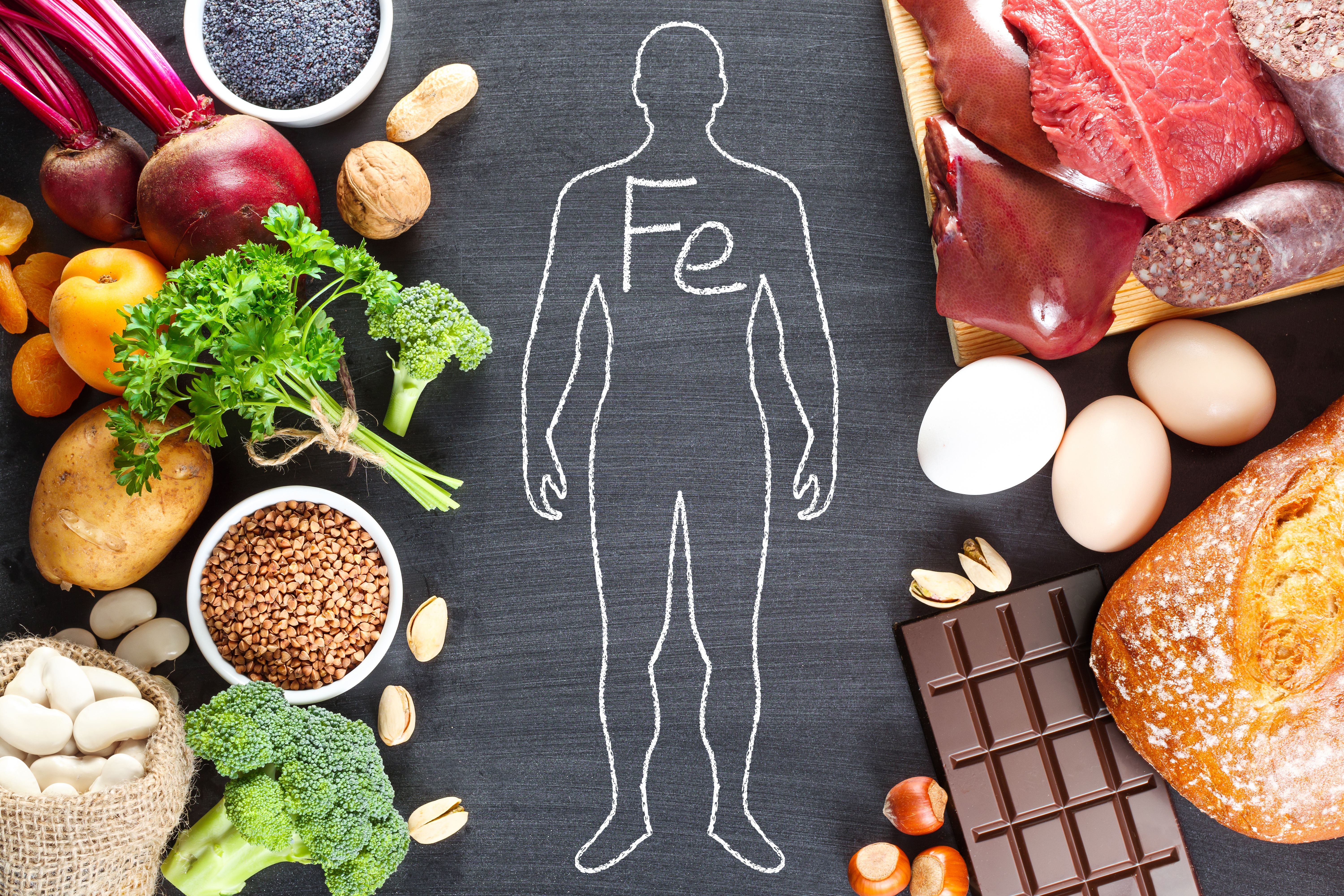
Adequate iron intake is also an important prerequisite for the prevention of anaemia, which is a relatively common phenomenon manifested by a reduced production of red blood cells and a lower concentration of blood colour (haemoglobin). However, this health problem can, in principle, be easily controlled by diet. In addition to preventing anaemia, iron is a nutrient needed to maintain general well-being, energy and, last but not least, for the optimal functioning of the metabolism, as it helps to support the overall health of the cells and is involved in many of the enzymatic processes that our bodies carry out on a daily basis.
Iron plays a role in a number of enzymatic reactions that help the body digest food and optimally absorb the nutrients it contains. These reactions also include balancing hormone levels and can positively affect the health of the brain, heart, skin, hair and nails.
As you may already know from our earlier article, iron can be found in two forms in food - specifically, the heme and non-heme forms. Heme iron is a component of haemoglobin, and therefore it is quite logical to find it in foods of animal origin. It is iron that gives these foods their characteristic red colour. Heme iron has a relatively good utilisation rate of around 30 to 35%.
It is probably not difficult to deduce that the source of non-heme iron is therefore plant foods. Compared to heme iron, however, the non-heme form has a relatively low bioavailability. Utilisation of this form is only around 10 %. The lower availability of non-heme iron is due to the presence of antinutrients that block its entry into the body. The absorption is also affected by fibre.
Recommended daily allowance
Before we discuss how iron deficiency manifests itself in the body, we should also consider what the recommended daily intake actually is. Women of working age (about 19-50 years old) need about 15-18 mg of iron per day and men need about 10 mg per day. Women need more iron mainly because of the loss of iron during menstruation, then during pregnancy and, of course, during breastfeeding. During pregnancy, for example, it is recommended to double the iron intake and the daily dose should be around 30 mg during this period.
After menopause, a woman's body needs about the same amount of iron as a man's, around 10 mg. Higher doses of this mineral are also required in conditions where individuals suffer from some bleeding disorder of the digestive tract, such as ulcers, hemorrhoids or various inflammations.
Symptoms of iron deficiency
When we look at the symptoms that can indicate iron deficiency in the body, one of the most common factors by far is excessive fatigue. This is because iron regulates energy levels and also helps to supply oxygen to our cells and organs. For example, when the brain is not getting the oxygen it needs, we may feel tired, irritable, out of tune, unfocused and have trouble sleeping.
Long-term iron deficiency is also associated with the development of anaemia, a condition in which there is a reduction in the production of red blood cells. We may know this health complication as anaemia. Iron helps metabolize proteins and plays an important role in the production of hemoglobin and red blood cells. This is why sufficient intake of this mineral is important for overall health, even preventing the development of anemia.
Iron deficiency anaemia is a fairly common but fortunately relatively easy to treat condition. Low iron levels are usually caused by a large single blood loss, inappropriate dietary composition or an inability to absorb enough iron from food.
Manifestations of low iron and anemia include:
- extreme fatigue
- shortness of breath or other breathing difficulties
- decline in physical performance
- difficulty sleeping
- weakness
- apathy
- headaches
- difficulty concentrating
- weakened immune system
- indigestion or IBS
- abnormal heartbeat
- pale skin
- moodiness
- nail breakage and hair loss
- cold extremities
- cracked corners of the mouth or other inflammation of the oral mucosa
The populations most at risk of iron deficiency
According to statistics, women are much more likely to suffer from iron deficiency than men. Women of childbearing age, especially those with heavy menstrual bleeding and pregnant women, are the most susceptible to developing anaemia. A common factor leading to iron deficiency in the body is also an inappropriately composed diet that contains too few sources of iron. Since the best sources of iron are offal and meat, vegetarians or followers of other plant-based diets who fail to meet their intake with plant sources or supplements are also at high risk.
Other groups at risk include people who have gastrointestinal disorders or have had gastrointestinal surgery, cancer patients, or people who donate blood frequently. Anemia is also quite common in infants and children, especially if the child is born prematurely. If you belong to one of these groups, make sure you get enough iron from your diet and supplements, and it's not a bad idea to have your blood levels checked by a doctor from time to time.
If you suffer from iron deficiency, it is also important to get enough vitamin C in your diet, as this antioxidant increases iron absorption. As mentioned, the recommended daily dose of iron is ten milligrams per day for men and older women, while pre-menopausal women need 15 to 18 milligrams per day. The RDAs for vegetarians are about twice as high as for meat eaters, due to the fact that the heme iron in meat is more bioavailable than the non-heme iron found in plant foods. It is possible to increase the absorption of non-heme iron by combining it with a source of heme iron - which, of course, does not make much sense for plant-based dieters.
How to detect a deficiency? Get a blood test!
If you are experiencing any of the above symptoms, you may be one of the individuals who are deficient in this mineral. Iron deficiency is usually very easy to identify with a simple blood test, which can either be done by your doctor or nowadays you can even do it yourself at home. Very often, people discover that they have an iron deficiency in their body the moment they try to donate blood.
In fact, it is before this uncharitable act that a screening test is carried out, which can reveal that their iron levels are low. As already mentioned, iron deficiency is quite common in some people, but especially in men or post-menopausal women, low iron levels may indicate a more serious problem (e.g. haemorrhoids or ulcers) and should not be taken lightly.
Where to get iron? Fine-tune your diet!
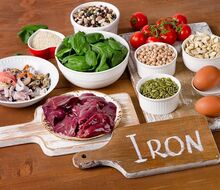
Now to the sources themselves - the richest sources of heme iron in the diet are lean red meat, tripe, eggs and seafood. Iron can also be found in plant foods. Good sources include spinach, spirulina, dark chocolate, beans, nuts and some cereals. But at the same time, if you consume these foods along with an animal, or heme, source of iron, the non-heme iron from plant sources will also be better utilized by the body. Another useful tip to facilitate the absorption of iron is to combine it with sources of vitamin C (e.g. citrus, gooseberry, kiwifruit or a supplement).
There are also naturally occurring substances in some (especially plant) foods that reduce the body's ability to absorb this mineral. Chemical compounds such as polyphenols, phytates or calcium make it difficult for the body to absorb and store iron. These substances can be found in foods such as tea, coffee, whole grains, legumes, nuts, seeds and dairy products.
When is supplementation needed?
Ideally, we should try to meet our iron needs primarily through food sources. This is because by incorporating a variety of iron-rich foods into your diet, not only will you get the necessary daily doses of iron, but you can easily increase your intake of other important nutrients, vitamins and minerals. However, there are situations where supplementation is, one might say, almost inevitable. Supplementation is generally recommended especially for women, as their needs for this mineral are higher than men. Vegetarians and other followers of a purely plant-based diet often suffer from iron deficiency because they are unable to meet their daily requirement for this mineral with non-heme iron food sources. Supplementation may be recommended for pregnant women after consultation with a physician.
Recommended
GreenFood Železo
Iron is often found in multivitamin complexes, where it is present in sufficient quantities so that in the vast majority of cases there is no need to supplement this mineral separately. However - as mentioned, there are situations where this option is also recommended. An iron supplement is recommended to be taken with food, as fasting can irritate the stomach and cause digestive discomfort. However, as already mentioned, it should be kept in mind that some foods contain substances that inhibit iron absorption, which may reduce the effectiveness of the supplement. For example, the consumption of coffee or dairy products can have a negative effect on iron absorption. Therefore, if you are taking a supplement, it is better to add it to a meal that does not contain these foods.
And can I overdose on iron?
Of course, it is not only a deficiency that is problematic, but also the opposite, i.e. an excess of iron in the blood. In this condition, there is an accumulation of 'excess' iron in the body tissues, which can lead to the development of a disorder known as haemochromatosis. It is very unlikely that this condition can occur only in response to the consumption of dietary sources of iron. Haemochromatosis is usually caused either by genetic causes or by taking iron supplements in excessively high doses.
High doses of iron in supplement form (45 milligrams or more per day) can also cause side effects such as nausea, vomiting, cramping and constipation, but otherwise it is thought that when this mineral is supplemented in reasonable doses, negative side effects do not occur or are very rare. Again, more is not necessarily better.
What to take away from the article?
Iron is a mineral that is of key importance to the human body. It is involved in the production of hemoglobin, a protein that ensures the distribution of oxygen from the lungs to all the cells of our body. In addition, it is important for strong immunity, mental health, athletic performance and overall health. However, iron deficiency is a fairly common and widespread phenomenon. Deficiency manifests itself in fatigue, irritability, pale skin, breathing difficulties, sleep problems and more. Among the most at risk groups are pregnant women, women with heavy menstruation and followers of plant-based diets. Fortunately, iron deficiency is relatively easy to address - often just adding more sources of this important mineral to your diet or reaching for a supplement.
Sources:
- Hurrell, R., & Egli, I. (2010). Iron bioavailability and dietary reference values. The American journal of clinical nutrition, 91(5), 1461S-1467S. https://doi.org/10.3945/ajcn.2010.28674F
- Taylor, C. L., & Brannon, P. M. (2017). Introduction to workshop on iron screening and supplementation in iron-replete pregnant women and young children. The American journal of clinical nutrition, 106(Suppl 6), 1547S-1554S. https://doi.org/10.3945/ajcn.117.155747
- Drakesmith, H., & Prentice, A. M. (2012). Hepcidin and the iron-infection axis. Science (New York, N.Y.), 338(6108), 768-772. https://doi.org/10.1126/science.1224577
- Short, M. W., & Domagalski, J. E. (2013). iron deficiency anemia: evaluation and management. American family physician, 87(2), 98-104.
- Gillooly, M., Bothwell, T. H., Torrance, J. D., MacPhail, A. P., Derman, D. P., Bezwoda, W. R., Mills, W., Charlton, R. W., & Mayet, F. (1983). The effects of organic acids, phytates and polyphenols on the absorption of iron from vegetables. The British journal of nutrition, 49(3), 331-342. https://doi.org/10.1079/bjn19830042
- Vannella, L., Aloe Spiriti, M. A., Cozza, G., Tardella, L., Monarca, B., Cuteri, A., Moscarini, M., Delle Fave, G., & Annibale, B. (2008). Benefit of concomitant gastrointestinal and gynaecological evaluation in premenopausal women with iron deficiency anaemia. Alimentary pharmacology & therapeutics, 28(4), 422-430. https://doi.org/10.1111/j.1365-2036.2008.03741.x
- Peña-Rosas, J. P., De-Regil, L. M., Dowswell, T., & Viteri, F. E. (2012). Daily oral iron supplementation during pregnancy. The Cochrane database of systematic reviews, 12, CD004736. https://doi.org/10.1002/14651858.CD004736.pub4
- Warner MJ, Kamran MT. Iron Deficiency Anemia. [Updated 2023 Aug 7]. In: StatPearls [Internet]. Treasure Island (FL): StatPearls Publishing; 2023 Jan-. Available from: https://www.ncbi.nlm.nih.gov/books/NBK448065/
- Lynch, S., Pfeiffer, C. M., Georgieff, M. K., Brittenham, G., Fairweather-Tait, S., Hurrell, R. F., McArdle, H. J., & Raiten, D. J. (2018). biomarkers of nutrition for development (BOND)-Iron Review. The Journal of nutrition, 148(suppl_1), 1001S-1067S. https://doi.org/10.1093/jn/nxx036
No posts have been made yet.








