Everything you need to know about vitamin A, which affects our overall health
 Author:
 Vitamin A is one of the fat-soluble vitamins, a powerful antioxidant, and absolutely essential for maintaining overall health. Not only does it play a very important role in the health and proper function of our eyes, but it also influences immune function, the reproductive system, bone strength and is equally important for the health and vitality of our skin. Its deficiency can lead to very serious problems such as grey-blindness, dry skin and in children, deficiency can cause growth arrest. On the other hand, it is worth not overdoing it, because even an excess can lead to unpleasant health complications. Today, let's take a closer look at this key substance for our health.
Theoretical window - what is vitamin A?
Vitamin A is a fat-soluble vitamin that also acts as a powerful antioxidant in the body. Vitamin A, called axerophthol, occurs naturally in two forms - vitamin A1 (also known as retinol) and vitamin A2 (3-dehydroretinol). The body can also make it by converting it from carotenoids. The most important and relevant carotenoids are lycopene, lutein and beta-carotene. This vitamin plays a key role in the health and proper function of our eyes, including colour recognition, influences neurological function, skin health and much more. Like other antioxidants, it is also involved in reducing inflammation by fighting free radical damage, helping to protect our bodies from various diseases. Vitamin A is important for both women and men in terms of reproduction, as it helps the proper development of sperm and eggs. Last but not least, it is also important for cell growth and proper fetal development during pregnancy.
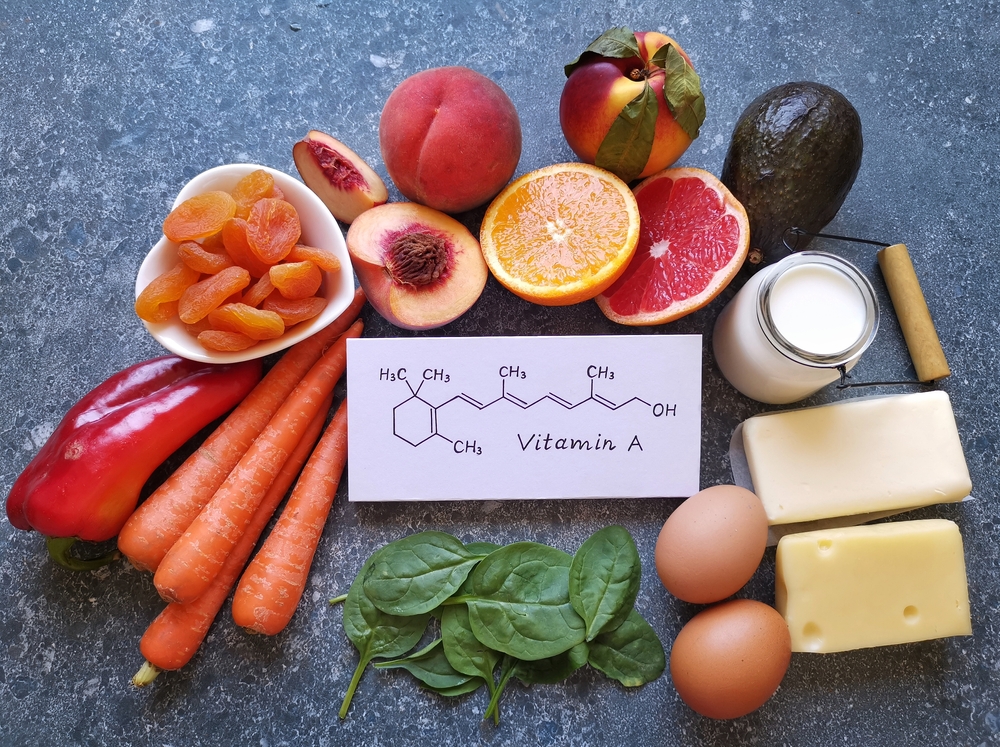
It is commonly found in food in two basic forms: active vitamin A (retinol) and beta-carotene. Retinol comes from foods of animal origin and is a type of vitamin A that can be used directly by the body. The other type, which can be obtained from plant sources, especially from colourful fruits and vegetables, is in the form of provitamin carotenoids. Beta-carotene and other types of carotenoids found in plant products must first be converted into one of the active forms of vitamin A (retinol, retinal or retinoic acid) before the body can use them. Because vitamin A is fat-soluble, it is stored in body tissue for later use. Most of the vitamin A in the human body is stored in the liver in the form of retinyl esters.
Recommended daily allowance and food sources
Because the correct dose is really crucial with vitamin A, before we get to the benefits it has for our bodies, we need to talk about just the optimal dosage. A deficiency, and in this case an excess, can cause quite serious health problems. As usual, the optimal dose of vitamin A that our body needs will be determined by the individual needs of each of us. The correct dose will therefore depend on age, current health and, last but not least, gender, as pregnancy and breastfeeding also play a role for women.
In general, however, the recommended daily dose of vitamin A is around 900 micrograms per day for adult men and around 700 micrograms per day for adult women. Adults therefore need 700-900 micrograms of "retinol activity equivalents" (RAE) per day. The recommended intake of vitamin A for pregnant or lactating women is between 1,200 and 1,300 micrograms per day, as a certain proportion of it is needed by the fetus or child for optimal development. Athletes also have increased requirements.

Under normal conditions, it is not difficult to reach the recommended daily dose through diet alone, or vitamin A can also be found in multivitamin supplements, so it is not necessary to supplement this vitamin separately. As such, vitamin A is only found in animal foods. The richest source is liver, and it is found in significantly lower concentrations in egg yolk, fish oil and meat. Vitamin A can also be obtained by converting beta-carotene, a source of which is red or orange vegetables and fruits. At the same time, if you only take vitamin A in the form of food, you do not have to worry about overdosing, whereas with supplementation there is a real risk. However, in supplements, the form of beta-carotene is most commonly used, and taking such supplements in reasonable doses should be without adverse side effects. We will come to this later, but pregnant women should not consume liver during the first trimester of pregnancy, as it is a very concentrated source of vitamin A, and in such high concentrations can cause fetal harm.
What benefits does Vitamin A bring to the body?
We've covered the theory, so now let's take a closer look at what benefits vitamin A actually has for our bodies.
It is essential for eye health
One of the most well-known benefits of vitamin A is its ability to support the health and proper function of our eyes. Vitamin A is needed to convert the light that hits the retina into an electrical signal that can then be sent to the brain, which is the impetus for us to see at all. Vitamin A is essential for the production of rhodopsin, the visual pigment that our eyes use in low light. This is why one of the main symptoms of vitamin A deficiency is called 'glaucoma'. Adequate dietary intake of vitamin A helps protect against certain eye diseases such as age-related macular degeneration.

Supports immunity
Vitamin A plays a vital role in maintaining the body's natural defences. For example, it supports the regeneration of mucosal barriers in the eyes, lungs, intestines and other tissues that help trap bacteria and other infectious substances. It is also involved in the production and strengthening of white blood cell function, which helps to trap and remove bacteria and other pathogens from the bloodstream. This means that a vitamin A deficiency can lead to a higher susceptibility to infections and can slow recovery when the body is already fighting off an illness by chance.
Helps fight both acne and wrinkles
Vitamin A is often prescribed by dermatologists as being very effective in fighting acne and wrinkles, and is generally highly regarded for its positive skin recovery properties. There are studies emerging that suggest that topical application of retinol directly to the skin can significantly reduce the signs of aging, and may even speed up skin recovery from minor injuries. Due to its anti-inflammatory properties, vitamin A may also be useful in the treatment of a wide range of skin problems such as psoriasis, eczema, or the aforementioned acne.
Strengthens bone health
Nutrients such as calcium and vitamin D are often mentioned in relation to bone health and strength, but did you know that vitamin A is also a key ingredient for strong bones? It's just a little more complicated than that, because as we already know, you can't have too little of it, but you can't have too much either, because both extremes are a big risk to bone health. In the right doses, vitamin A is a substance that helps keep our bones strong, and adequate intake is part of fracture prevention.

It is crucial for the health of the reproductive system and for fetal development
Vitamin A also has a strong effect on the reproductive system and helps sperm and egg development. Vitamin A is crucial when it comes to proper growth and development at all stages of life. In pregnant women, vitamin A is also involved in the development of many major organs and structures of the unborn child, including the skeleton, nervous system, heart, kidneys, eyes, lungs and pancreas. Despite its vital role, pregnant women are advised not to consume foods that contain concentrated amounts of this vitamin (especially liver) during pregnancy (at least not during the first trimester), let alone supplement it. Excess in the mother's body can lead to fetal damage or birth defects.

Helps regulate cholesterol levels
Cholesterol is a waxy, fat-like substance found throughout the body. The human body needs cholesterol to function properly because it is involved in the synthesis of hormones and forms the basis of its cell membranes. However, too high a concentration of cholesterol can build up in the blood vessels, causing them to narrow, and this radically increases the risk of heart disease. Some research shows that getting enough vitamin A in the diet can help naturally lower cholesterol levels and optimize heart health. However, more research is still needed to figure out exactly how vitamin A may work in this regard.
It may potentially protect against the development of various cancers
With a growing body of research demonstrating a strong link between what we eat and our risk of developing cancer, it should come as no surprise that increasing vitamin A intake by eating foods rich in it may help protect against the development of various types of cancer. For example, retinoids have been shown in several studies to have the ability to block the growth of skin, bladder, breast, prostate and lung cancer cells.
High doses of vitamin A
With vitamin A, keep in mind that in this case, it is true that more is not always necessarily better. So, to maximize potential health benefits, stay within the recommended daily dose range we discussed at the beginning of our article. Because vitamin A is stored in the liver, it may have an effect on the development of osteoporosis and thinning bones. It can also cause poisoning. Hypervitaminosis, however, is more likely to occur due to poor dosage of dietary supplements; dietary intake does not (except in rare cases). Caution should also be exercised when applying to the skin - retinoic acid is very concentrated and can cause irritation.
Recommended
What to take away from the article?
Vitamin A is a very important micronutrient that affects our overall health. It is especially beneficial for eyesight, healthy and vital skin, reproductive system, strong bones and proper growth. The good news is that we can conveniently get vitamin A from food sources, where we can encounter it in the form of active retinol or beta-carotene, which our bodies must first convert to the active form. Great sources are liver, meat, egg yolk, and colorful vegetables or fruits. It is possible to overdose on vitamin A, so it is better to concentrate on food sources only and not to overdo it completely with supplementation.
Sources:
https://ods.od.nih.gov/factsheets/VitaminA-Consumer/.Age-Related Eye Disease Study Research Group (2001). A randomized, placebo-controlled, clinical trial of high-dose supplementation with vitamins C and E, beta carotene, and zinc for age-related macular degeneration and vision loss: AREDS report no. 8. Archives of ophthalmology (Chicago, Ill. : 1960), 119(10), 1417-1436. https://doi.org/10.1001/archopht.119.10.1417.Semba R. D. (1994). Vitamin A, immunity, and infection. Clinical infectious diseases : an official publication of the Infectious Diseases Society of America, 19(3), 489-499. https://doi.org/10.1093/clinids/19.3.489. Maggio, D., Polidori, M. C., Barabani, M., Tufi, A., Ruggiero, C., Cecchetti, R., Aisa, M. C., Stahl, W., & Cherubini, A. (2006). Low levels of carotenoids and retinol in involutional osteoporosis. Bone, 38(2), 244-248. https://doi.org/10.1016/j.bone.2005.08.003. Silva, L. S., de Miranda, A. M., de Brito Magalhães, C. L., Dos Santos, R. C., Pedrosa, M. L., & Silva, M. E. (2013). Dietary supplementation with beta-carotene improves the serum lipid profile in rats fed a cholesterol-enriched diet. Journal of physiology and biochemistry, 69(4), 811-820. https://doi.org/10.1007/s13105-013-0257-4. Hunter P. (2012). The inflammation theory of disease. The growing realization that chronic inflammation is crucial in many diseases opens new avenues for treatment. EMBO reports, 13(11), 968-970. https://doi.org/10.1038/embor.2012.142. Kafi, R., Kwak, H. S., Schumacher, W. E., Cho, S., Hanft, V. N., Hamilton, T. A., King, A. L., Neal, J. D., Varani, J., Fisher, G. J., Voorhees, J. J., & Kang, S. (2007). Improvement of naturally aged skin with vitamin A (retinol). Archives of dermatology, 143(5), 606-612. https://doi.org/10.1001/archderm.143.5.606. Chen , M. C., Hsu, S. L., Lin, H., & Yang, T. Y. (2014). Retinoic acid and cancer treatment. BioMedicine, 4(4), 22. https://doi.org/10.7603/s40681-014-0022-1. Doldo, E., Costanza, G., Agostinelli, S., Tarquini, C., Ferlosio, A., Arcuri, G., Passeri, D., Scioli, M. G., & Orlandi, A. (2015). Vitamin A, cancer treatment and prevention: the new role of cellular retinol binding proteins. BioMed research international, 2015, 624627. https://doi.org/10.1155/2015/624627. Hogarth, C. A., & Griswold, M. D. (2010). The key role of vitamin A in spermatogenesis. The Journal of clinical investigation, 120(4), 956-962. https://doi.org/10.1172/JCI41303
No posts have been made yet.