Do you suffer from low testosterone? Testosterone replacement therapy may be the solution
 Author:
 To begin with, I would like to say that the article does not encourage the use of testosterone. On the contrary. It warns of the possible risks of abuse and describes options for how to most safely address the symptoms of low TST levels that can befall any of us in our older years, when our body's important male sex hormone declines.
REPLACEMENT THERAPY IS LIFELONG, MEANING YOU TAKE TESTOSTERONE FOR THE REST OF YOUR LIFE. IT DOESN'T CURE AND IT DOESN'T REPLENISH YOUR NATURAL PRODUCTION TO OPTIMAL LEVELS. THEREFORE, THIS STEP SHOULD BE CONSIDERED AND ALWAYS BASED ON BLOOD TESTS !!!
Really the only and effective treatment for low testosterone is just TRT (testosterone replacement therapy). If you are suffering from very low testosterone levels, whether due to advanced age when our TST levels naturally decline or due to your own stupidity/ignorance where you have mindlessly and especially long term taken testosterone and other testosterone derivatives for the vision of muscle gains, then there is no choice but testosterone replacement therapy.
If it is the second option, i.e. anabolic steroid abuse, there is always a chance to restore suppressed TST production with a PCT protocol (medication to help with post-cycle TST recovery). However, the longer the time on AS, the worse the return of natural TST production. The first thing to remember is that we are all different and where one succeeds with testosterone restoration, the other may fail. Even the AS cycle has its own rules when it comes to health and few people realise this. Get your head in the game and find out the information before you make a bad decision.
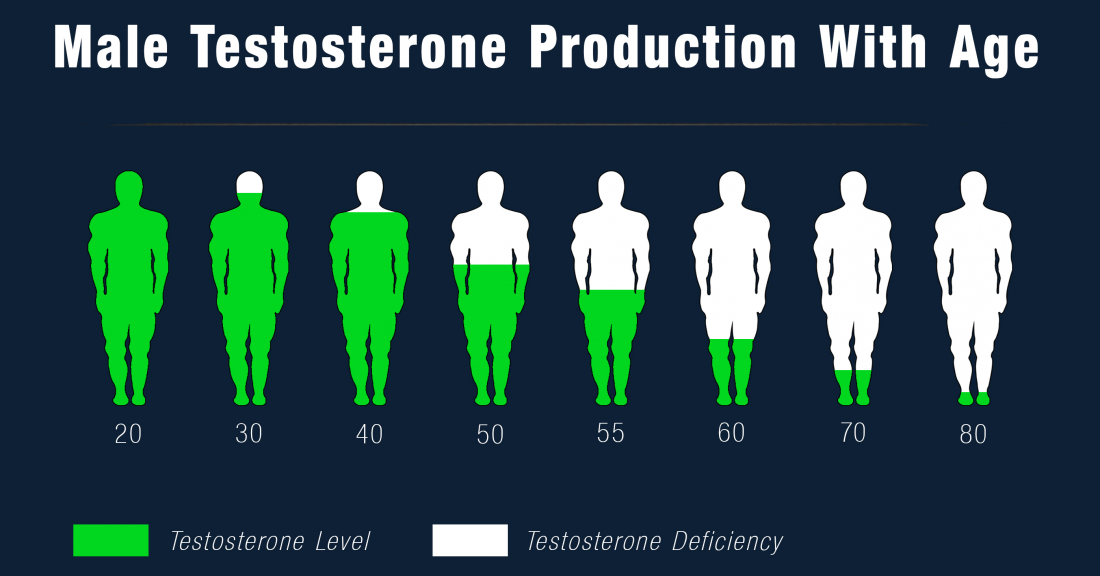
If you suffer from testosterone deficiency, it will affect your quality of life and carries certain health risks. If it's older age, it's a normal phenomenon that can happen to any of us. Of course, we are all different, we have different genetic makeups and different lifestyles and this will sign on our TST levels. I've already seen (blood test advice) both tests of older men who many times surprise me with great levels of both total and free testosterone, and they are 50 years old or more.
But then I've also seen tests of 20-30 year old guys who, due to steroid use and subsequent withdrawal, have levels worse than an 80 year old grandpa. They just didn't know anything about using AS, blindly trusted some Popeye from the gym and now they have problems. Again, some wanted to address their injuries and not muscle mass, but the result is the same. They suffer from depression, have no erections, no energy to exercise and their quality of life sucks. After seeing an endocrinologist they have just been recommended TRT, but being on replacement therapy from such an early age obviously carries far more risks than starting to address our testosterone later in life when our levels naturally decline. In this case, I would always still try a well set up PCT, even if it is for a longer period of time after discontinuation, rather than mindlessly jump on TRT, which I would only take as a last resort.
Of course, it all revolves around blood tests to show you how your TST levels are doing. Overall, you need to be able to read blood tests well and keep an eye on certain things regarding your health whether you are considering abuse or treatment.
Symptoms of low testosterone
You always need to do blood tests first before taking any action, but certain symptoms can give us a clue. Ask yourself:
- Do I still feel like I did a few years ago?
- When I get out of bed, do I feel energetic and ready for the day's work?
- Do I look forward to my workouts with the expectation of getting a little stronger again?
- Am I still grabbing my wife or girlfriend's butt?
- Do I have a morning erection and crave sex?
- Do I have a general erection problem?
The main symptoms are:
- Emotional changes
- Decreased sex drive
- Erectile dysfunction (or less hardness)
- Decreased strength/muscle mass
- Decreased mood or overall sense of well-being
- Decreased energy and stamina
- Less desire for activity and exercise
- Increased body fat
- Depression and loss of enthusiasm for daily life
If most of your answers are no in the first case and or you are suffering from some of the symptoms in the second case, then perhaps it is low testosterone that is preventing you from having the life you still want to have and doing the activities you love.
Why testosterone replacement therapy?
Everyone has testosterone use associated just with abuse for muscle growth, but you have to remember that synthetic testosterone is primarily a drug and the doses of therapy are substantially different from the doses of abuse. Before I continue, it's important to understand the difference between doing TRT and or abusing anabolic steroids.
Recommended

Nebbia Tričko THE BASE 377

Nebbia Legíny High-waist flared CLUB D’OR 630

Nebbia RE-FRESH Mikina 591
Carnigel 60g 5+1
If you are taking exogenous testosterone for TRT treatment, you will get to a level that occurs naturally in younger men. When men take steroids, they are usually taking much more testosterone than what anyone can ever naturally produce. The doses are ten times that of TRT treatment. So you can't think of TRT as abuse, but it is primarily a health issue. I'm not a doctor, but I'm smart enough to get enough information and study everything I need to. Which I have been doing for the last few years. Too bad, I'd like to address this with my doctor as well, but I'd have to live elsewhere or in a different time.
Yes, you can get endocrinology treatment, but your TST levels have to be woefully low or you won't get a tick. But shit, I don't give a shit about low levels and I want to have optimal levels because I still want to be active, do things I like, have sex often, enjoy life !!! Is there anything wrong with being an adult and wanting to be active and vital in the second half of my life too? That's for everyone to decide.
Both free and total testosterone levels tend to decline with age. This is perfectly normal and natural, but at the same time it is no joke. And if you also like to train and lift heavy weights, it will start to feel pointless and fruitless with low TST levels. I first started thinking about testosterone replacement therapy (TRT) at the age of 40, when an injury came on top of that. My reasoning was: If I can increase my testosterone to normal levels safely, improve my healing after surgery (beware here, only low dose TST or other drugs are appropriate, because in my case it was a tendon injury where testosterone and other derivatives are just harmful), I know all the essentials about the subject, I know how to work with blood tests and watch for possible risks, why wouldn't I do it and continue to have energy and do all the activities I like? Again, the decision is up to each of us and we all want something different out of life.
Testosterone therapy protocol
This post is only for older men who have a proven low TST level or newcomers to therapy who want to understand the basics of a "good" protocol. I'm not the smartest person in the world, but my own experience and sharing my experience with other TRT users is always the best mentor and will help you put the theory you've studied into practice. That's why the new forum on www.supertrener.cz will also be a forum for discussion on similar topics.
My general philosophy for TRT is that you want to keep it simple and sustainable. You want to strive for consistency and minimize side effects.
Testosterone type
I have no experience with gels or creams, but from what I've read they are unreliable and absorption is variable. Also, it is too difficult to absorb enough to help you if you have high SHBG. The older you get, the SHBG increases in your body and you have less available testosterone.
The best for your constant optimal level is therefore injectable testosterone and its long esters. You can use, for example, cypionate, enanthate or undecanoate available in our pharmacies under the name Nebido (more expensive, but application only once every 10 weeks, which can be an advantage). The injection is done intramuscularly, i.e. into the muscle.
Dosage
The dose for enanthate or cypionate should range from 100 to 150 mg per week. A blood test will help you determine the exact dose when you try the trial/error method. You start at 100 mg per week and after 6 weeks, have a blood test to see if the dose is sufficient and your TST level is optimal. It's always a good idea to take the lowest dose for optimal levels because the less you take, the less you risk raising your estradiol and hematocrit, which I would have checked during the tests as well. We are all different so 100 mg may be enough for some, 120 mg for some and 150 mg for some.
As far as injecting, once a week injections may not be a good option. Even if it is a long acting ester, at the beginning of the week your testosterone levels may be optimal, but at the end not so much. That's why it's a good idea to even split the dose, like every third day. I know, more frequent annoying application, but again, more stable TST levels.
Using hcg (Human chorionic gonadotropin)
Most clinicians recommend or prescribe HCG when on testosterone therapy because it prevents the complete shutdown of your own TST production when you're on TRT. I would definitely include HCG in the protocol. It replaces the lost LH/FSH signal and this is important for several reasons.
- It helps to maintain normal testicular size, as the testicles atrophy due to suppression of their own testosterone production. Yes, it's a cosmetic benefit, but what guy wants testicles like prunes?
- For younger guys, it helps maintain testicular function and maintains fertility.
- For all men, HCG is important for the synthesis of steroid hormones (like DHEA and Pregnenolone) that have various health-promoting functions in the body.
- It also helps maintain normal ejaculate volume. There is good histological evidence that the seminal vesicles, which produce approximately 60% of the ejaculate, need both testosterone and Luteinizing Hormone (LH) to function properly. HCG replaces the lost LH on TRT.
The recommended dose is about 450 IU (units) per week injected under the skin, divided into at least 3 doses (e.g. 150 IU Monday, Wednesday, Friday). Alternatively, you can take 150 IU every third day.
If you are planning to have a child on TRT, consider increasing the dose of HCG to 1000 IU per week. There are enough studies available to show that an increased dose of HCG improves fertility on TRT.
Use of an aromatase inhibitor (ai) or estrogen blocker
Yes it is a fact that estrogen is made from testosterone in the human body. So if you supply the body with higher levels of TST, it is possible that estradiol levels will also increase. If you follow the recommended protocol of low and frequent dosing, you should not need an AI or estrogen blocker. Never use an AI unless your blood tests show high estradiol. As long as you keep your TST in the normal optimal range at all times, estrogen should also stay in the normal range and that is important.
Estrogen is just as important to our bodies as testosterone. We also need it for normal libido and growth hormone secretion. It is certain that if you lower your estrogen levels too low, you will feel bad and TRT will not work. Blood tests are the only indicator of estradiol and you have to base it on that. It's important to keep estradiol in the optimal range, just like testosterone.
More on estrogen in a planned separate article.
Blood tests you need to do before trt
You must always have blood tests done before you start treatment. It's not about apples or pears, it's about your health. Private labs are available for a fee. You need to find out the following.
- Total and free testosterone
- SHBG, LH/FSH, PSA (prostate), estradiol, blood count (hemoglobin, hematocrit)
- Consider prolactin, TSH, T3, T4 (thyroid), cholesterol
Is medically controlled trt dangerous?
Compared to, say, skydiving? Or with taking dangerous drugs that kill thousands of people a year like high dose aspirin or painkillers? According to Dr. Crisler, one of the world's leading experts on testosterone replacement therapy (TRT), literally millions of men are enjoying the benefits of TRT without a single case of TRT ruining someone's health.
Although prudent testosterone therapy is safe, it is still not without contraindications. You must be a healthy male with no contraindications to TRT such as breast or prostate cancer or a patient with serious heart, liver or kidney disease.
Health risks associated with trt?
- There are a few things you need to watch for. The biggest concern seems to be the hematocrit level. If you are taking testosterone and hematocrit levels are over 50, you should think about reducing your weekly dose or donating blood, which are the only things that will safely and effectively lower your red blood cell count. A hematocrit above 50 in blood tests means your blood is too thick and, at least statistically, creates twice the chance of a myocardial infarction compared to values below 50. In my opinion one of the most serious things to watch for.
- You also need to monitor your PSA (prostate specific antigen) levels. While the relationship between prostate disease and testosterone is controversial, you don't want to be the only case that proves there is a real relationship between testosterone and prostate cancer.
- Third, monitor your estradiol levels and make sure they stay in the mid-range. If you are older or fatter, your aromatase levels increase, leading to higher estrogen levels in your blood. This makes a mess of your entire hormonal activity and even, according to some, contributes to prostate disease. It also increases blood pressure, water retention, and other problems associated with high estradiol.
Conclusion
Most men begin to notice the effects of TRT within 3-4 weeks. You won't suddenly grow muscle and lose body fat without any effort. But you will notice an increase in overall energy and mood. Most men will find that they can train harder and more consistently and this will definitely help muscle growth and body fat loss. Libido and the ability to handle stress also improve. Overall, most men simply feel younger and more energetic. Still, don't expect TRT to change your life. On the other hand, expect it to help you in several other activities that can definitely positively affect your quality of life.
As you can see, it is not easy to act on your own and it is always better to take professional help from a doctor as you need to monitor your overall health. There is no purpose to improve one thing in your body and, on the contrary, worsen the other three. Always use your head and don't believe everyone who tells you what to do. Check everything several times before making any decision.
No posts have been made yet.