





Want to lose weight better? Don't train on an empty stomach!
 Author: Šárka Randáčková
 People believe that training without food means they will have less energy ready to serve as fuel, which will lead to the breakdown of stores (fat and glycogen) to fuel the workout. This should, in theory, lead to better weight loss. Many studies even confirm that you mobilize more stored fat when you train on an empty stomach. But that's not the whole story.
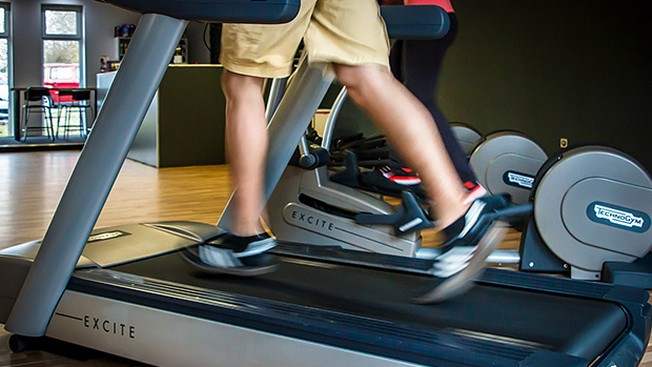
Weight loss isn't about what happens during the actual workout, it's about what happens in response to that workout, and throughout the day. What happens to your energy expenditure 24 hours after a workout? What kind of hormonal environment does that workout induce? And what will be its effect on muscle mass?
What happens during the workout?
Advocates of fasted training claim that adrenaline/noradrenaline rises more when you train on an empty stomach, and you will therefore have more energy to train. In fact, it's been proven that when you're fasted (especially if you've been fasted for a while), your work capacity and mental ability to do physical work decreases. This will lead to less training efficiency.
What happens to resting energy expenditure?
A study by Paoli et al (2011) compared 36 minutes of cardio at 65% of maximum heart rate, with and without food. Respiratory exchange ratio (RER) analysis found that more fat was used as fuel during the workout BUT the opposite occurred after the workout was over. Fat burning after the workout was noticeably higher in the non-fasted group, and only continued for 24 hours.
The fasted subjects burned slightly more fat during those 36 minutes of training, but burned much less fat 24 hours after. Thus, more fat was burned in the 24 hours after the workout when the workout was done after a meal.
This was confirmed by the fact that the group that ate before the workout had increased oxygen consumption 24 hours after the workout (more oxygen consumption means more fat burning because oxygen fuels aerobic pathways that depend on oxygen.)
Here's the study's conclusion: "If by moderate-intensity training is meant weight loss, fasting before activity does not increase fat utilization; rather, physical activity is recommended after a light meal."
Of course, you can keep mentioning those countless studies that say you lose more weight with fasted cardio. It's true. But here's the thing. Fasted cardio leads to less resting energy expenditure (fewer calories burned at rest), as well as less fat used 24 hours after the workout.
And what about the hormonal response?
Cortisol is known to exercisers for its catabolic effect on muscle tissue. We fear it because it can break down muscle and use it as fuel. However, cortisol has a useful function in training: it mobilizes stored energy.
In training, cortisol makes energy available. The more you depend on energy stores (glycogen and fat), the more cortisol is flushed out. The more cortisol flushed out, the longer it will take to return to normal after training.
As long as cortisol is high, the body is in a catabolic state. So if you are training on an empty stomach, it is likely that too much cortisol will be excreted in your body, which can put you at risk for muscle loss.
Cadio on an empty stomach will also increase AMPK more than cardio after a meal. When AMPK is high, it has a negative effect on protein synthesis. So fasted cardio will also make it harder for you to build muscle.
So why do competitive bodybuilders do this?
I don't like to resort to this because it doesn't explain everything. But here, unfortunately, it does. Professional bodybuilders chemically help themselves. Let's not lie to ourselves. Nowadays, even amateur bodybuilders are bulking up.
Spraying somehow suppresses all the problems listed above. Who cares about elevated cortisol when you're pushing so many anabolic steroids that you're in an anabolic state all day. AMPK doesn't care much about you in that state either. And the drop in your metabolism? You take stimulants like clenbuterol or thyroid meds for that one.
Not at all to say that bodybuilders on meds have it easy and don't train hard. I'm just saying that in some cases the same restrictions don't apply to them as they do to natural exercisers.
About the author:
Christian Thibaudeau specializes in producing physiques that are as powerful as they are sexy. He is one of the most sought after trainers among top athletes and bodybuilders.
Author: Šárka Randáčková No posts have been made yet.








