





Three tricks for faster weight loss
 Author:
 Don't skimp on the liposuction just yet.
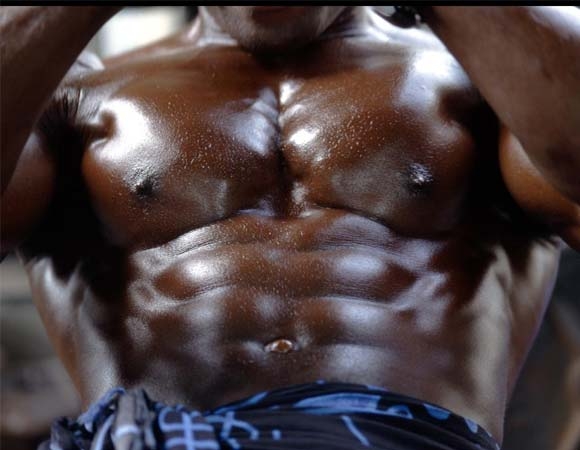
If every bit of your lifestyle says your abs should be visible and they still aren't, try these tricks. Going shirtless in the summer.
Trick 1: Upgrade your last meal before bed
What did you eat before bed last night? And what will you eat today?
This is crucial because eating the last two hours before bed has a huge impact on your appearance. Especially if we're talking about weight loss.
Rule of thumb: Eat according to what you're going to do.
Of course, some lucky people may find a few scantily clad models in bed. However, most mortals probably won't spend the last two hours before bed doing aerobic activity.
It is not necessary to eat traditional bodybuilding food at this time. It is necessary to prepare with this meal for what we are going to do; that is, almost anything.
Specifically, the need for sugar is dramatically reduced in sleep - perhaps even to zero. Sugars serve as fuel for high-intensity activities like weight training and sprinting. High-intensity sleep does not exist.
When the intensity of the activity we perform decreases, fat becomes the primary fuel. In fact, we use almost exclusively fat as fuel in sleep.
Thus, supplying the body with sugars before bedtime means dramatically increasing the likelihood that they will be stored and not burned. When sugars are not burned, they are stored as glycogen or fat.
If you happen to have exercised with a load in the last three or four hours before bedtime (cardio doesn't count), there is very little chance that the sugars you eat during that time will be stored as fat. Glycogen stores are low and will soak up any sugars.
However, most of us don't exercise three to four hours before sleep. Thus, we should eliminate sugars in our last meal. When I say eliminate, I don't necessarily mean zero grams. Don't be afraid of low-starch vegetables.
As for fat intake before bed. I stand by my rule of thumb, "If I don't eat sugar, I eat fat." However, I do recommend cutting your normal serving of fat in half.
There is evidence that eating large amounts of fat suppresses the hormone sensitive lipase (HSL), which breaks down fat. (1) Although the amount of fat accounted for in this study was higher than what a reasonable exerciser would eat in one meal (40g), I would recommend even more restraint. Allow yourself ten or fifteen grams of fat in your last meal.
Trick 2: Do cardio in the morning and without sugar
Don't starve yourself, but don't eat sugars. That makes a big difference.
Let's say you just had a bowl of Fruit Loops (cereal rings) and you want to do some cardio to lose weight. The problem is that for this cardio, those Fruit Loops are going to be used as the primary drive and not your love handles.
This is because sugar intake inhibits fat burning and forces the body to use sugar as fuel. But we don't want to use sugar as fuel when losing weight.
So how do we force the body to use fat as fuel?
Starvation - certain periods without food, for example during sleep - forces the body to switch to burning fat. Why? Liver glycogen and blood sugar are low after fasting and the body is forced to use fat as fuel.
Fasted cardio leads to noticeably higher levels of the fat-burning hormone norepinephrine. (2) That's why bodybuilders have been getting great results with this kind of cardio for years.
But this strategy is not flawless.
Recommended
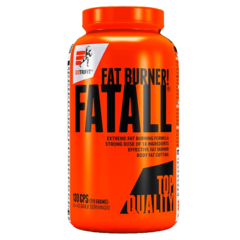
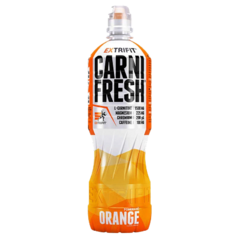
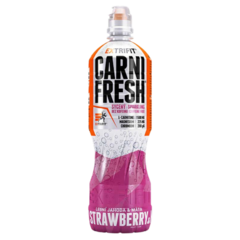
Extrifit Carnifresh
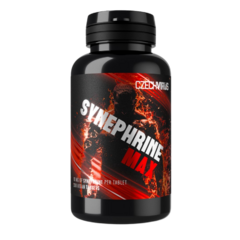
Czech Virus Synephrine MAX
In addition to burning fat, the body will also mobilize protein stores to help meet its energy requirements. And it gets these proteins, specifically (leucine, isoleucine and valine), from muscle tissue. Your muscles are depleting along with valuable branched chain amino acids. Mistake.
Yep, your body will break down muscle mass on the treadmill without your permission. And it gets worse the more intense the workout is. However, there is a solution to this problem.
Consuming BCAAs before cardio reduces, and even prevents, protein breakdown. (3) For you, that means more muscle and more demands on your metabolism.
If you do high-intensity interval training, research shows that it's not a good idea to do it on an empty stomach because it doesn't use fat as fuel anyway. Sugar is used. However, consuming BCAAs before this type of training is still essential. The importance of BCAAs increases as the intensity of the workout increases.
Trick 3: Replenish your muscles with food, not your liver
Fact: You need to eat sugars for muscle glycogen replenishment and optimal muscle growth and performance. Trying to build muscle without sugars is like driving a car with all the tires flat. It can be done, but it's not fast or fun.
But it's not enough to just eat sugars and hope they get into your muscles. You have to know they'll get there. Ditch the wishing upon a shooting star and start eating sugars according to scientifically proven methods.
Let's dust off the scientific facts about sugars. There are three types of monosaccharides we're interested in: glucose, fructose, and galactose. The latter is formed by breaking down the disaccharide lactose, which can be found in dairy products. I doubt very much that a noticeable portion of your sugars come from Lactose.
It will be split into glucose and galactose later anyway, and the galactose will be quickly converted to glucose; your body's favorite monosaccharide.
Glucose is the sugar your body prefers. Once in the body - from food or the breakdown of more complex sugars - glucose is used as an energy source, stored as glycogen and converted to fat.
The nice thing about glucose is that it replenishes muscle glycogen rather than liver glycogen. Skeletal muscle seems to have made some sort of deal with the body and gets the excess glycogen before the liver does. This is good for us because we desperately want the sugars to go to our muscles and not our liver!
Here comes fructose. This infernal villain seems to have made the same deal with the devil. The liver, that is.
When we ingest fructose, it's quickly absorbed and sent to the liver. There it will be stored as hepatic glycogen and slowly broken down to meet the needs of the blood.
And the problem? Storing sugars in the liver is useless to our muscles! Another problem is that once the liver fills up (and it only takes 100 grams to do that), it converts every additional glucose into triglycerides. This is bad. It's bad for appearance and health.
For us, it means we definitely don't need to overdo it with our fructose intake!
It also means that your pre-workout sugars should contain glucose and NOT Fructose.. because any fructose you eat will not get to your muscles that so desperately want and need post-workout sugars. So watch out for fructose, and also sucrose. Sucrose, or consumable sugar, is a disaccharide made up of one molecule of Fructose and one molecule of Glucose. In other words, it is half Fructose.
Soda is definitely not a good source of post-workout sugars, but there are less obvious examples to avoid. Fruit, for example. In the roughly twenty-five grams of sugars in an apple, fifteen of them are Fructose.
There is no need to avoid fruit altogether. In fact, I recommend most people eat fruit twice a day because it contains a wide variety of nutrients. What I'm saying is that it's a mistake to have a few pieces of fruit and think that fifty grams of sugars are going into your muscles. It doesn't.
A much better approach is to have just one piece of fruit each time. Feel free to do it in that imaginary window after your workout. And if you insist on post-workout fruit, think about a banana, which has more glucose and about half the fructose of an apple, for example.
Basics are more important than strategy
These three tricks will get you nowhere if you just layer them on top of poor eating habits and dysfunctional training.
However, I can tell you from experience that if you want to lose weight without these three tricks, your abs will stay hidden for much longer.
Support your performance with quality supplementation!
In our shop you can choose from a lot of proteins, gainers, amino acids(bcaa, glutamine, ...), vitamins and minerals, creatines,fat burners and much more. So don't hesitate and step it up a notch!
Sources:
1. Effects of an oral and intravenous fat load on adipose tissue and forearm lipid metabolism. Evans K, Clark ML, Frayn KN.
2. Effect of moderate incremental exercise, performed in fed and fasted state on cardiorespiratory variables and leptin and ghrelin concentrations in young healthy men. J.A. Zoladz, S.J. Konturek, K. Duda, J. Majerczak, Z. Sliwowski, M. Grandys, W. Bielanski
3. Effect of branched-chain amino acid supplementation on the exercise-induced change in aromatic amino acid concentration in human muscle.
Translated by Jaromír Uhlíř
No posts have been made yet.








